Rebirth of the Comfortable Days of the 1960s
Novel Info
  • Author:
  • 卿妩
  • Status:Ongoing

Summary

... Read More

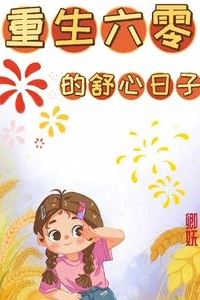
Liu Shuxin was a twenty-two-year-old survivor of a post-apocalyptic world where zombies and mutant beasts ruled. Possessing both super strength inherited from her father and wood-based abilities, she died saving a teammate during a mission. Upon awakening, she found herself reborn as a three-year-old girl in 1955 China, living in the Liulin Brigade with her extended family. Unlike her previous life, this new world was peaceful, though economically strained. Shuxin quickly realized she had transmigrated into a novel, becoming a minor character whose family members were destined to be tragic cannon fodder. Her cousin, Liu Shulan, was fated to be sold as a child bride during the upcoming famine, only to be exploited and abandoned by a man named Liu Fu. Her brother, Liu Jianguo, was destined to become a background character in a romance novel, drained of vitality by the female lead. Determined to alter these fates, Shuxin sought to secure her family's survival and happiness.

Shortly after her rebirth, Shuxin discovered that she retained her supernatural abilities and had acquired a spatial dimension linked to a Nine-Color Lotus seed. This space allowed her to store items, accelerate plant growth, and preserve food indefinitely. Recognizing the impending three-year Great Famine starting in 1959, she began secretly accumulating resources. She used her wood powers to grow crops in her space and hunted wild animals, ensuring her family would not starve. As she grew older, she won the affection of her stern grandparents through her intelligence and sweetness, gaining their trust and support. She also used her knowledge of the future to guide her family, urging her grandfather to purchase coarse grains like sorghum and sweet potatoes during a trip to the county seat, thereby stockpiling essential food supplies before the crisis hit.

Shuxin’s actions significantly altered the trajectory of her relatives' lives. She intervened to prevent Liu Shulan from becoming a child bride by exposing Liu Fu’s true nature to Shulan’s parents, allowing Shulan to marry a kind and capable man from a nearby village instead. This decision spared Shulan from a life of hardship and abuse. Meanwhile, Shuxin focused on her own education, skipping grades to enter a key high school in the county town. There, she befriended Huang Yao, the daughter of a police chief with military connections. Shuxin had previously saved Huang Yao and her mother from robbers, forging a lasting bond. Through this friendship, Shuxin secured employment at the newly built railway station as a train attendant, while Huang Yao became a ticket seller. This position provided Shuxin with the mobility and income she needed to further support her family and expand her resource network.

Throughout her youth, Shuxin balanced her studies, work, and secret cultivation of her powers. She continued to use her space to grow high-yield crops and raise animals, maintaining a steady supply of food and medicine. She also engaged in small-scale trade, selling dried herbs and homemade goods to earn money, which she used to improve her family’s living standards. Her physical strength and spiritual power grew steadily, allowing her to navigate the challenges of the era with confidence. By the time she reached adulthood, Shuxin had successfully shielded her family from the tragedies predicted in the novel. She lived a comfortable life, surrounded by loving relatives who were safe from the fates that had originally befallen them. Her journey from a desperate apocalyptic survivor to a protected young woman in a peaceful era highlighted her resilience, strategic planning, and unwavering commitment to her family’s well-being.

Latest Release
DateGroupRelease
2026-08-11shanghai fantasy c100
2026-08-11shanghai fantasy c99
2026-08-11shanghai fantasy c98
2026-08-11shanghai fantasy c97
2026-08-11shanghai fantasy c96
2026-08-11shanghai fantasy c95
2026-08-11shanghai fantasy c94
2026-08-11shanghai fantasy c93
2026-08-11shanghai fantasy c92
2026-08-11shanghai fantasy c91
2026-08-11shanghai fantasy c90
2026-08-11shanghai fantasy c89

Community Reviews

Rating(3.5 / 5.0, 40votes)
5 stars
10(25%)
4 stars
9(23%)
3 stars
11(28%)
2 stars
10(25%)
1 stars
0(0%)

Popular reviews

... Read More
Okay so the structure of this book absolutely blew my mind when I first realized what was happening. Shuxin isn't just transmigrated into a world — she's transmigrated into a NOVEL WORLD where the people around her are characters from other books. Her cousin Shulan is a cannon fodder from 'Era's Sweetheart,' and her brother Liu Jianguo is from 'Our Youthful Days in the Countryside.' The way the author uses these nested storylines is brilliant. It's like a Russian doll of fiction, and it gives everything such a rich context. The original plot of Shulan's story is absolutely devastating. Liu Fu — this guy who climbs the military ladder and marries a wealthy Shanghai girl — he's basically the worst human being. He takes advantage of Shulan before leaving, then abandons her for over a decade while she raises his son and toils for his family. And in the end, his own son dies alone and unclaimed in the village. The author doesn't even let Liu Fu have a redemption arc. He just claims it was unintentional when his son comes looking for him. Pfft. If it wasn't intentional, why sleep with her before leaving? What I love is how Shuxin's knowledge of these plots drives the entire narrative forward. She's not just surviving — she's actively rewriting fate. The famine backdrop adds real urgency, and her preparations in her space feel like a ticking clock. Every chapter I read, I'm waiting for the next disaster to strike. The plot moves at a great pace, never dragging, always pushing toward the next crisis.
... Read More
I need to talk about the family dynamics here because this is where the story actually lives for me. The opening of Chapter 10 where everyone corners Shuxin after she reveals the mountain discovery—Grandpa Liu smacking his lips, her mother Yang Yue chiming in, Dad yelling, Grandma Liu pulling out a BROOM—that's not just comic relief, that's a fully realized family. Every person has a distinct voice and reaction. And then the shift from anger to support when Grandpa Liu says 'Grandpa supports you; don't worry' hit me harder than expected. This is a family that scolds because they're terrified of losing her, not because they're controlling. Then there's Shulan. I know she's a secondary character but the author keeps finding ways to make me care. She was almost traded as a child bride, Shuxin intervened, and now she's being matched with someone from a nearby village. The scene where 'Shulan heard her parents and grandma confirm the date, she shyly lowered her head, feeling half excited and half embarrassed'—this girl went from being someone's emergency food currency to having her grandmother arrange a proper marriage. That's emotional progression in three sentences. The sibling energy between Shuxin and Shulan also feels genuine. They're not blood sisters but 'the only two girls in the Liu family, so they naturally have a good relationship.' It's quiet, earned affection, not melodramatic. I keep coming back to this family because they feel real.
... Read More
I need to just sit with this for a moment because Shulan's story is the kind of thing that stays with you. She's a child bride — traded for grain during a famine, which is already horrifying on its own. But then she actually tries to make the best of it. She considers Liu Fu's offer, thinks through the practicalities: if she doesn't secure him now, the Liu family will treat her even worse. She's not naive. She's a kid who's already been crushed by circumstance and she's still trying to survive. And then Liu Fu takes advantage of her and runs away. The passage about her raising his son with great difficulty, working until she dies, while he lives happily with another woman — it made my chest hurt. She never had anyone on her side. No grandmother like Liu Jianguo has to protect him. As a married woman, her own family can't interfere with Liu family affairs. She's completely alone. But here's what got me — Shuxin's determination to change this. When she thinks about Shulan's fate, she doesn't just feel sorry for her. She gets angry. She actually throws a sack over Liu Fu's head when she encounters him on the mountain. That scene had me laughing and crying at the same time. Shuxin cursing him internally — 'You want someone to support your parents while you also crave for someone's body. You're acting like a prostitute and still trying to maintain a façade of virtue' — this is the kind of righteous fury that makes the emotional core of the book so powerful. And the relationship between Shuxin and Shulan? It's not just savior and victim. Shulan watches Shuxin charm Grandpa Liu and thinks, 'If it worked on their grandparents, then surely her parents could be swayed as well.' She's learning from Shuxin. She's becoming someone who fights back instead of just enduring.
... Read More
Okay so let me just say this — the detail where Shuxin tucks a wildflower into Shulan's hair before her matchmaking meeting absolutely wrecked me in the best way. Not because it's dramatic or anything, but because it's SO specific. You can just see it. The girl standing in front of a mirror, this wildflower perched in her braided hair, and suddenly she's not just some rural girl getting married off — she looks like the protagonist of her own life. And that's the whole vibe of this book's worldbuilding, honestly. It's not about grand descriptions of palaces or anything. It's the small sensory details that make it feel real. The rickety bus Shuxin takes to the city. The government compound where the security guard just lets her walk in because he's seen her around for two years. The supply and marketing cooperative where they buy fabric. These aren't set pieces the author built for show — they feel like a lived-in place. Even the food descriptions do heavy lifting. Shuxin bringing dried wild chickens and monkey wine to the Huang family isn't just plot convenience; it tells you everything about what's scarce, what's valuable, and how relationships work in this world. You don't need a chapter of exposition to understand the era when the author can just have someone say 'Aunt Huang can use these to add some flavor to your meals' and you immediately get it — this is a time when wild game and homemade remedies are luxuries that open doors. The military green dress and black leather shoes Shuxin wears to the exam? That's costuming as worldbuilding. Every detail is doing double duty.
... Read More
There's a scene in Chapter 11 where Shuxin goes to her mountain cave and I kept coming back to it. She's packing up dried wild chickens and rabbits hanging on the walls, organizing pots and pans back into her space. 'That big pot was something she found previously, and its quality was good. Buying a new one now would cost about ten dollars and would require industrial vouchers.' This one detail does so much worldbuilding. It tells me about the economic system (industrial vouchers), the inflation or scarcity (ten dollars for a pot), and the fact that she's been maintaining this secret base for years without anyone knowing. The image of her carrying a full backpack down the mountain, 'covering it with a layer of wild vegetables for concealment'—you can literally see her moving through that landscape. And then there's the scene of the whole village preparing fields after three years of drought. 'Shuxin watched as the men, women, and children in the village busily engaged in farming once again, no longer seeing the desolation that had prevailed before.' The contrast between the barren fields and the sudden return of labor and life is cinematic. The author doesn't over-describe but the visuals land. The mountain cave, the village paths, the cooperative trip at night with sugar and oil—all of these settings feel lived-in rather than painted as backdrop.
... Read More
Here's the thing about these chapters — on paper, the stakes are tiny. Shuxin is selling pork at a black market. She's attending a cousin's wedding. Her partner is knitting sweaters. None of this is life-or-death. And yet I found myself genuinely invested in every single moment. Why? Because the author makes the stakes feel personal. When Shuxin is negotiating with Brother Hei, there's real tension — she could get scammed, she could attract the wrong attention, she could mess up her only supply chain partner. The risk isn't death, it's failure in a world where failure means going back to having nothing. The wedding chapter raises the stakes in a different way. Shulan is escaping a bad situation — the Liu family dynamic, the pressure of marriage in a patriarchal setting. Shuxin's presence at the wedding isn't just supportive, it's protective. The Luo family's other daughters-in-law are watching, comparing dowries, feeling threatened. One wrong move and Shulan could end up in a hostile household. And Luo Yue? His stakes are quieter but real. He's a man who lived in a noble residence, who learned needlework to survive, and now he's choosing to use those skills to make his wife happy. The tension between his past and his present, between who he was and who he's becoming — that's the kind of conflict that doesn't need explosions to feel dramatic.
See all reviews

Characters

See all characters

Custom lists

See all custom Lists