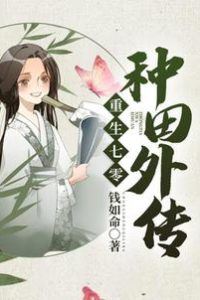
Rebirth in the ’70s: A Farming Side Story
Novel Info

Summary

... Read More

Liu Yu, a modern woman, dies in a bungee jumping accident and is reborn into the body of a seventeen-year-old girl in 1970s rural China. The original owner, also named Liu Yu, was a massive, 210-pound village girl known as "Lady King Kong" for her aggressive personality and obsession with an educated youth named Li Qinghua. After discovering Li Qinghua was secretly involved with her cousin, Bai Xueling, the original Liu Yu attempted suicide by drowning in the Duobao River. Upon waking, Liu Yu realizes she has been given a second chance and immediately resolves to change her life. She rejects Li Qinghua, declaring him worthless, and sets two primary goals: lose weight to regain her beauty and protect her family from exploitation.

The Liu family lives in a multi-generational household under the control of the matriarch, Chen Shi, who shows blatant favoritism toward her youngest son, Liu Jianmin, and his family. The eldest son, Liu Jianjia, is a kind but weak production team leader who allows his wife, Nie Xiaocui, and children to be financially drained to support the younger branch. Liu Yu quickly confronts this dynamic. When Chen Shi demands the family slaughter their cherished chickens to feed the uncle, Liu Yu outmaneuvers her grandmother by threatening to kill the uncle's own chickens, successfully protecting the family's food supply. She also stands up to her lazy uncle and aunt when they demand unfair work points, physically defending her brother and asserting that the eldest family will no longer be bullied.

A significant turning point occurs when Liu Yu discovers a mysterious copper basin in her home. After placing a few small potatoes in it, she finds they have multiplied overnight. Realizing the basin is a magical treasure capable of doubling food supplies, she sees an opportunity to solve her family's chronic hunger. She begins secretly using the basin to produce potatoes and other grains, which she uses to feed her parents and younger brother, Liu Ye, who had long suffered from malnutrition. This act of kindness strengthens her bond with her family and marks a shift from the original Liu Yu's selfishness to genuine care for her relatives.

Liu Yu also encounters Wang Changping, an educated youth who saved her from the river. Finding him ill with a fever, she cares for him and prepares chicken soup, earning his gratitude and a gift of canned fruit. Unlike the original owner, who was infatuated with the handsome but manipulative Li Qinghua, Liu Yu treats Wang Changping with respect and indifference toward the former. When Li Qinghua attempts to manipulate her for food, she publicly humiliates him by refusing his demands and exposing his hypocrisy. Meanwhile, she confronts Bai Xueling, who feigns innocence regarding the suicide attempt, and exposes the cousin's manipulative behavior to the village.

As the story progresses, Liu Yu works tirelessly in the fields to earn labor points and burn calories, enduring the harsh summer heat while covering her skin to lighten her complexion. She continues to use the treasure basin to generate food, carefully hiding the secret from her grandmother and extended family. The narrative follows her efforts to balance her weight loss journey with her new responsibilities, as she aims to improve her family's living standards and assert their independence from the parasitic dynamics of the extended Liu household.

The core conflict remains the struggle against the entrenched family hierarchy and the scarcity of the era. Liu Yu's transformation from a despised, overweight outcast to a capable and respected figure challenges the village's perceptions. Her actions force her father to begin asserting himself against his mother, and she actively plans for the family to eventually split from the main household to escape Chen Shi's control. The story establishes Liu Yu as a strategic and resilient protagonist who uses her modern knowledge and the magical basin to navigate the hardships of 1970s rural life, prioritizing her family's well-being and her own physical transformation.

Latest Release
DateGroupRelease
2026-08-11shanghai fantasy c30
2026-08-11shanghai fantasy c29
2026-08-11shanghai fantasy c28
2026-08-11shanghai fantasy c27
2026-08-11shanghai fantasy c26
2026-08-11shanghai fantasy c25
2026-08-11shanghai fantasy c24
2026-08-11shanghai fantasy c23
2026-08-11shanghai fantasy c22
2026-08-11shanghai fantasy c21
2026-08-11shanghai fantasy c20
2026-08-11shanghai fantasy c19

Community Reviews

Rating(3.5 / 5.0, 33votes)
5 stars
6(18%)
4 stars
12(36%)
3 stars
9(27%)
2 stars
6(18%)
1 stars
0(0%)

Popular reviews

... Read More
I have to say, Nie Xiaocui stole every scene she was in and I am here for it. This woman is fierce, strategic, and absolutely unapologetic. When Liu Yu suggests splitting the family, Nie Xiaocui doesn't dismiss it—she explains the real obstacle (the grandfather holding the power) and they plot together like a tag team. That mother-daughter dynamic is genuinely heartwarming. But the real character moment that got me was how Nie Xiaocui handles Bai Xueling. She doesn't fall for the tears and the pitiful act at all. "Crying, crying, crying—you only know how to cry!" This woman has zero patience for manipulation, and honestly, it's so satisfying to watch. She's the kind of mother who drags her daughter out of toxic situations and refuses to let her stoop to anyone's level. Then there's Liu Yu's evolution. The original owner of this body was a pushover who jumped into a river because someone bullied her. But this Liu Yu? She stands up, publicly denies any romantic involvement with Li Qinghua, and drops these perfectly calibrated jabs at Bai Xueling. "So no one gets the wrong idea and spreads rumors that I'm some toad lusting after a swan!" The way she flips the power dynamic in that scene is chef's kiss. And Bai Xueling—ugh. She's the kind of character who makes you want to shake her. The fact that she watched Liu Yu drown and pulled Li Qinghua away instead of helping? That's not just mean, that's borderline murderous. The author is setting her up as a proper antagonist, and I cannot wait to see what happens next.
... Read More
I need to talk about how this author controls pacing because it's genuinely impressive. Each chapter ends in a way that makes you immediately want the next one, and the scene transitions are so smooth. Chapter 21 starts with the family confrontation, then immediately pivots to Liu Yu discovering the basin's full potential. The shift from public drama to private discovery works perfectly—it gives you the emotional high of the family conflict, then drops you into the intrigue of the magical object. The chapter ends with her deciding to steal corn, which creates immediate tension. What if she gets caught? Read the next chapter. Chapter 22 transitions to Wang Changping's house, and the pacing here is different—slower, more intimate. The chicken soup scene is almost meditative compared to the earlier chaos. This contrast is intentional. The author knows when to speed up and when to let the reader breathe. The chapter ends with Wang Changping moved by Liu Yu's kindness, which sets up emotional investment for what comes next. Chapter 23-24 ramp the pace back up with the Bai Xueling confrontation. The structure here is brilliant—Liu Yu returns home to chaos, witnesses the conflict, then steps in with her dramatic denial. The pacing accelerates with each line of dialogue until the scene explodes, then immediately pivots to Liu Yu whispering her plan to her mother. No time to catch your breath—she's already three steps ahead. Chapter 25 ends with Liu Yu locked in her room, and that cliffhanger is perfect. Are she plotting? Is she upset? The ambiguity keeps you hooked. The author understands that sometimes the best pacing move is to stop right when the reader is most curious.
... Read More
I've been thinking about the deeper themes in this story and there's so much happening beneath the surface that I want to unpack. Food is obviously the central symbol here. In the 1970s rural China setting, grain isn't just sustenance—it's power, survival, and dignity. The treasure basin represents something bigger than just magical potatoes. It's about agency. Liu Yu goes from being powerless in a household where she's starved and mistreated to having the means to change her entire situation. The basin is literally a tool of liberation. The family structure itself is symbolic. The extended family living together under one roof represents tradition and obligation, but also oppression. Chen Shi controls the grain cabinet, the keys, the distribution of resources. When Liu Yu suggests splitting the family, she's not just seeking comfort—she's seeking autonomy. The grandfather's refusal to agree represents the old system's resistance to change. There's also this theme of hidden knowledge as power. Liu Yu's secret about the basin is the most important thing she possesses. It's something no one else knows, something she can control completely. In a world where she has almost no power, this secret is her leverage. It's almost like a fairy tale motif—the magical object that the hero keeps hidden until the right moment. And the river itself feels symbolic. It's where the original Liu Yu met her near-death, where Bai Xueling's true nature was revealed, where rumors and reputation are created and destroyed. Water as both danger and transformation. The author is layering meaning everywhere and I'm here for it.
... Read More
"Drink more hot water" — the quintessential line from a scumbag. But from a health perspective, it was necessary for a feverish patient to drink a lot of hot water. This line made me laugh out loud because it perfectly captures Liu Yu's voice. She's got this modern, slightly sarcastic inner monologue that contrasts beautifully with the period setting. She's not just blindly following social norms — she's evaluating everything through a lens of practicality and fairness. But let me talk about the REAL character moment here: the confrontation with her uncle and aunt. This is where the novel completely recontextualizes the family dynamics. The "big house" — her father's family — works themselves to the bone and lives in poverty, while the "third family" (her uncle's side) lives comfortably by leeching off them. And the father? He's too soft, too conditioned by Chen Shi's manipulation to ever say no. Liu Yu is the complete opposite. When her aunt Liu Li tries to play the victim after FALLING INTO A DITCH SHE CAUSED HERSELF, Liu Yu doesn't flinch. She literally pushes the aunt back — and then when the aunt falls in, Liu Yu is ready to take the fight to the production team. Liu Ye even backs her up, calling out his aunt's hypocrisy. These two siblings are a unit now, and it's gorgeous to watch. The father's arc is also interesting — he's not a bad person, just weak. His daughter's transformation from a pampered girl into someone who can stand up to the whole extended family is both heartwarming and a little heartbreaking. He's watching her and thinking... what exactly has happened to his daughter? And I love that the author doesn't make him a villain. He's just a good man who's been taken advantage of for too long.
... Read More
Can we talk about how good the dialogue is in this book? Because every character has such a distinct voice that I can tell who's speaking without even looking at the name tags. Liu Yu's dialogue is sharp and sarcastic when she needs to be. Her line about being "some toad lusting after a swan" is the kind of thing that made me laugh out loud. She's not afraid to throw shade, and the way she delivers it—calm, clear, with that public confrontation energy—is perfect. "I didn't jump into the river because of Li Qinghua... I tripped that day and accidentally fell headfirst into Duobao River!" The dramatic pause before the punchline? Immaculate. Nie Xiaocui sounds like a completely different person. Her dialogue is loud, direct, and hilarious. "If you keep this up, the roof beam's going to collapse from all your wailing." This woman speaks in proverbs and insults and I love her so much. She's the kind of character whose dialogue alone makes reading worth it. Bai Xueling's voice is crafted perfectly too—soft, tearful, always playing the victim. "Sister Liu Yu, what did I ever do to you? Why are you being so harsh?" The contrast between her voice and Nie Xiaocui's is so sharp it's almost painful to read. That's good writing right there. And Wang Changping? His dialogue is sparse but meaningful. He doesn't say much, but when he does—"Wait." "This is for you."—it carries weight. The author knows how to use silence and brevity as a character trait, which makes his moments stand out even more.
... Read More
Okay, I need to talk about this plot twist with the treasure basin because MY MIND IS BLOWN. So Liu Yu is just out here doing field work, covering herself like a bandit to protect her skin, and then she walks home and finds a BASIN FULL OF POTATOES. A copper basin that was her mother's dowry item, and it's just... overflowing with food? In a time where everyone is starving and her own mother can barely get potato skins? This is the kind of setup that makes you sit up straight and go "OH SO THIS IS ONE OF THOSE NOVELS." And here's the thing — the author doesn't just drop this and move on. Liu Yu's reaction is SO smart. She doesn't just eat all the potatoes immediately. She does an EXPERIMENT. She takes some out, leaves two at the bottom, hides the basin under the bed, and plans to test whether it really multiplies things. That's the kind of protagonist I can get behind — someone who doesn't just blindly trust magic, someone who approaches it with caution and curiosity. The pacing here is also really well done. The chapter starts with hard labor, builds tension with the uncle confrontation, then pivots to this domestic discovery. It's like the story is saying "yes, the world is harsh, BUT ALSO — hope exists." And that contrast is what makes it so addictive. I stayed up way too late reading this section because I literally could not stop turning pages. What happens next? Does the basin multiply anything? What's the catch? I need to know.
See all reviews

Characters

See all characters

Custom lists

See all custom Lists