Raising My Ex-Husband's Child Isn't Easy - Reviews

Raising My Ex-Husband's Child Isn't Easy
+Add to Custom List
Sort
Add review
... Read More
Okay so let me just process this for a second. The poisoned green vase. I literally gasped out loud when I read that part. Hendrick attacks the Teian envoys, which is already a MASSIVE escalation, and then THIS — a gift wrapped in the guise of diplomacy that could have killed Selaia or Rote or both. But here's the thing that really got me: Laska figures it out. Like, he just SEES it. "The glaze on the surface probably contains arsenic. Dren, the unparalleled painter, created that shade of green." One look and he knows. This man is frighteningly sharp. But the real plot twist isn't the poison itself — it's WHO sent it. Because Hendrick? He wouldn't bother with something this cowardly. If he wanted Selaia dead, he'd just do it openly. No, this is a message from someone ELSE. Someone with access to the imperial court. Someone who can't afford to be seen threatening the daughter of a foreign duke directly. The Empress or the Dowager Empress, most likely. And suddenly every interaction Selaia's had with the imperial family gets rewritten in my head. The subplot thread connecting Hendrick's military aggression with this domestic assassination attempt is brilliant. It shows how the political pressure from outside is bleeding into the household. Cheringen is now in the crosshairs on two fronts — external enemies and internal treachery. I love how the author uses a SIMPLE OBJECT to escalate tension so effectively. A vase. A fucking vase. One moment it's decor, the next it's a death sentence. That's how good plotting works — it hides the grenade in plain sight.
... Read More
OKAY. Let's talk about STAKES because this chapter does not play around. We open with a FULL-SCALE PALACE COUP. People are being executed. The previous emperor is dead. Three princes are dead. The crown prince is dead. This isn't background drama — this is the world literally reshaping itself in real time while Selaia is in labor. And the personal stakes? Casteen is dying. She gave birth and then just... wouldn't stop bleeding. ''Casteen, don't close your eyes — stay with me!'' There is NOTHING you can do. No physician can get through the carnage. The woman who loved Hendrick most in the world dies alone except for two women who aren't even supposed to be there, and Selaia is holding a newborn while screaming at a corpse. Then Hendrick turns on Selaia. Not just emotionally — he DIVORCES her, strips her of status, and gives her a cursed wasteland. But here's the thing that keeps me up at night: he could have had her killed. He had absolute power. The fact that he only exiles her instead of murdering her is somehow MORE unsettling. And the baby? ''The wretch who devoured her mother is not my child!'' That's a FATHER talking about his own daughter. The stakes just escalated from ''Selaia is exiled'' to ''this infant might not survive the night'' — and Selaia has to negotiate her own survival AND the baby's survival in the same conversation with a man who just massacred half the palace. Five years later, the stakes shift again. The new Empress is pregnant. Rote's identity is a secret. Duke Piel, Marquis Conrad, and Dowager Empress Leticia are the three people who COULD destroy everything. Elaine literally says ''Rote's safety could be in danger.'' The sword is hanging over this child's head and we're only on CHAPTER SEVEN.
... Read More
Okay so this entire batch is basically two narratives braided together and honestly it works really well. First strand is Selaia panicking in the market, losing Rote, finding her in this creepy alley with a wounded stranger—classic tension builder. But then the second strand hits and it completely reframes everything. We get Laska's POV, his backstory with King Cleos, the ambush, his heroic last stand. It's not just "some guy they found." He's royalty-adjacent, a royal brother, protecting envoys, brutally outnumbered. That's a huge escalation. The author's playing 4D chess here—dropping this information right when the reader is still processing the emotional whiplash of "mom almost lost kid." And Laska's closing line about half-death is such a great hook. It says he's alive but barely, and now they've taken a possibly dangerous stranger into their home. What could go wrong? Everything, presumably. The pacing in this section is immaculate. The market scene drags you through Selaia's panic, then the alley slows everything down with Rote's calm horror, and then BAM—action flashback. It's like the story inhales, holds, and then sprints.
... Read More
This is one of those chapters that makes you appreciate when an author really knows how to control the tempo. It opens LOW and cozy. Rote tripping over her shoes, Laska suppressing a laugh, the whole scene is basically a slice-of-life vignette. A pheasant trap. Feathers sticking out. The child being cheeky. You're not braced for anything. And that's the trap, because the reader—like Selaia—lowers their guard right before the ground drops out. Then comes the sound. Just rustling. Laska's shift is almost imperceptible in the prose but enormous in impact: 'The good-natured look on his face vanished, leaving only a man whose sharp gaze swept the surroundings.' Two sentences. That's it. The mood has completely inverted and you're suddenly reading with one eye on the text and the other scanning the tree line. The author stretches the tension deliberately here. Every sense 'sharpened to a point.' Selaia is running through bear protocol in her head. Laska draws his sword. You know someone's coming, you know it's not a bear, and you wait—patiently, cruelly—for the reveal. And then: 'D*mn these blasted trees!' The relief is physical. Your shoulders drop. You laugh. And immediately you're hooked back in because WHO IS THIS MAN. The pacing then settles into a slower, more conversational rhythm for the Benian scenes. This is smart because it gives the reader room to process the emotional whiplash while also building a different kind of tension—the social tension of being trapped with someone whose intentions you can't quite parse. Benian is funny but uncomfortable, generous but self-interested. The prose lets you sit with that ambiguity. The structure then does a second pivot when Benian reveals he sold everything and is fleeing to Hilbrante. The stakes escalate AGAIN. We go from 'weird cousin visit' to 'imperial exile crisis' in the span of a few paragraphs. And then the final escalation when he proposes leaving Rote behind. What I love about the pacing is that the author never lets you get comfortable. Three mini-climaxes in one chapter: 1. The forest approach 2. The revelation of Benian's flight 3. The demand to abandon Rote Each one raises the temperature. And then the chapter ends on Selaia's refusal—a moment of quiet power after three escalating crises. It's a release valve, but also a new kind of tension. What happens now? Benian concedes ('Fine, I get it! I was wrong!') but asks to stay a few days. The conflict isn't resolved, it's paused. That's expert-level structure. The only thing I'd tweak? The transition from the pheasant scene to the Benian reveal feels slightly rushed. A beat of breathing room between 'pheasant caught' and 'someone approaching' might have let the coziness land harder before the disruption. But that's a minor note. The overall pacing is tight and purposeful. This is how you write a chapter that doesn't let up.
... Read More
I need to talk about what just happened here because this chapter is doing some serious double-duty and I can't unsee it. On the surface, it's a visitation scene—Hendrick shows up drunk and threatening at Selaia's estate. Classic abusive ex-husband energy. But the real plot twist? It's Laska watching from behind the door crack. He saw everything. And you know what's wild is that he figures out Hendrick is the emperor but chooses to play dumb about it. "I don't know much about anything else, but I do know a thing or two about matters of the heart." This line is doing SO much work. Laska isn't actually here to give romantic advice to Selaia—he's gathering information. The whole conversation about Hendrick's "lingering feelings"? That's a spy dressing up his intelligence operation as casual chat. And Selaia, bless her, plays along. She has no idea he's fishing for imperial secrets while pretending to be some wise friend. But here's where my brain won't let go: Rote. That little girl sent him for help. She recognized danger and went to the first capable person she could find. Meanwhile Hendrick's drunk ranting about land grabs, about how Casteen was "a fool," about how Selaia "never belonged at my side." The fact that Rote could overhear this and immediately think to fetch Laska tells you everything about who survives in this world. She's sharp. Selaia herself admits it when she lies and says Rote is slow with speech. And then the morning after—Laska volunteers to be captain of the guard. His reasoning is perfect cover. Of course he wants job security. Of course he accepts Rote's offer. But we know why. He needs to be close to Selaia, close to the emperor's secrets, close to everything that matters. The question haunting me now: does he actually care about them, or is the mask slipping onto his own face?
... Read More
I keep coming back to the curtain scene. It's seemingly simple — Laska helps remove old curtains from the castle corridor — but the imagery just *lands* on me. "Sunlight poured unhindered into the corridor, bright and full, while the dust clinging to the fabric drifted into the air, glimmering like stars." That line. That is ALL that line. Light breaking through something that's been blocking it for years. Dust shimmering like stars — beauty in the decay. And then later, a dry wind whistles through, carrying the scent of earth, dust, and faintly — faintly — blood. Blood. Not just dust and light. The past doesn't stay buried. I think what's haunting me is the contrast between surfaces and reality. Selaia's castle looks shabby — Hendrick calls it squalid — but underneath it, there's dignity, love between mother and daughter, a guest who genuinely wants to help. Meanwhile the imperial palace is all splendor and fountains and ornaments, and it reeks of entitlement and cruelty. Hendrick brings a gift — the text cuts off at "At the word gift, Sela" — but you can already tell it's not a generous gesture. It's a reminder. A chain. The border between Teian and Tropes is another layer — forbidden markets where two kingdoms trade despite official hostility, a tacit understanding that survival matters more than policy. Selaia's life feels like that: existing in the spaces between what's supposed to happen, finding ways to make things work despite the rules and expectations pressing in from all sides.
... Read More
Let me just say this: the pacing in this stretch is absolutely filthy in the best way. The chapter opens at full intensity and never lets up, but it's not one note—it's three distinct movements played back to back, and the transitions are so seamless you almost miss them. First movement: Hendrick's monologue. This is pure pressure. Page after page of him grasping her wrist, demanding honesty, mocking Casteen, spilling state secrets like they're nothing. The tension is physical—you can feel Selaia's arm throbbing. This part drags on long enough that by the time Hendrick collapses onto the sofa muttering about Casteen's arms, I was exhausted reading it. Good. That's the point. Then—bam—the door crack. Laska's eyes appear. The entire energy shifts. Up until this moment, the scene was Selaia vs. Hendrick, oppressor vs. oppressed. Now there's a third presence, a witness, and suddenly every word Hendrick spoke carries new weight. He was performing. For an audience he didn't know existed. That single detail—"a narrow crack in the door"—recontextualizes the entire confrontation. Second movement: the conversation between Selaia and Laska in his room. The pacing drops like a stone here. After the fury and the shouting and the wine dripping from Hendrick's mouth, suddenly it's quiet. Candlelight. A smile. A man apologizing for not helping. This is where the chapter earns its emotional complexity. The reader breathes for the first time. But wait—third movement. Breakfast the next morning. Laska drops his volunteer news like it's nothing. The chapter closes on the quietest possible note after the loudest possible scene. And I sat there staring at the page going... wait, what just happened? The author doesn't use cliffhangers here. They use tonal whiplash. Hendrick is gone by page one third, but his shadow hangs over everything that follows. That's craft.
... Read More
Let's talk about the paper flowers. Vera explains it so casually—"Real flowers are too rare and delicate here. Paper ones are the next best thing." But what a devastating detail. Selaia used to love flowers, lived in fertile lands, and here she's never once asked for any. She doesn't demand luxuries she can't have. She just... adapts. Makes do. The paper flower crown on her loosened hair is her wearing a made-up version of something beautiful, which is basically the entire story of her life compressed into one image. Forest fairy instead of crown princess. Paper instead of petals. Festival instead of duty. And the festival itself! Vera says they used to hold a spring festival but "as life grew harsher, the tradition died out." A tradition that was extinguished by hardship, then revived by an act of generosity from someone else's resources. There's something deeply resonant there about community—not built on grand traditions or noble lineage, but on shared firewood and shared food and people deciding together that tonight, they're going to celebrate anyway. The bonfire keeps appearing throughout the scene. Firelight dancing across faces. Sparks flying. Heat rising. And then—cut to assassins in the corridor with swords. The fire that brings people together becomes the fire that almost destroys them. Maximilian drawing his blade right after that heartfelt conversation about why warriors fight... the shift from warmth to violence is so abrupt it's almost painful. The castle has changed—new curtains, repaired ceiling—but the danger hasn't. Nothing about this world is safe just because things look nicer.
... Read More
The stakes in this section operate on at least four different levels simultaneously and that's what makes it so tense. Level one: a mother losing her child in a crowded market. Immediate, visceral, everyone understands that fear. Level two: finding a wounded stranger with a blade wound and deciding whether to bring him home. Haider's objections are reasonable—this could be a trap, a spy, a dangerous man. But Selaia and Rote see a human being. Level three: Laska's backstory reveals he was protecting Teian envoys from an ambush by at least twenty assassins. He's not just some random victim; he's entangled in international politics, and whoever attacked him clearly wants him dead. Level four: the political layer we're only starting to understand. Hendrick and Marquis Conrad betrayed the Teians, branded them as war-provokers, and now the Teian royal family is in disarray with a sick king and a young prince. When Selaia brings Laska home, she's unknowingly taking in someone who is both a target and a key player in all of this. The author never lets you settle into just one type of anxiety. Every time you think "okay it's just a missing child situation," the ground shifts. And Laska's own words—"in a life where he had possessed everything yet held nothing, he was both rich and starving"—that's the thematic stake. He's fighting not just for survival but for meaning. What happens when someone who's already decided death wouldn't be so sorrowful suddenly gets dragged back to life by a mother and her daughter?
... Read More
This is the scene where everything tilts. Not because Hendrick threatens Selaia—that's background noise at this point. You've seen him do it before. No, this is the moment where the conflict changes shape entirely, because Laska became a witness. Let's break down the stakes like they're minefield markers: Hendrick reveals state secrets. Drunkenly, carelessly, like a man who genuinely believes his wife is the only person in the room. He talks about Teian envoys, military gambles, succession politics. If anyone else had heard this, it would be treason. But it's Laska—a former mercenary, a nobody with no political allegiance—who watched from behind that door. And Laska made a choice. He could have exposed Hendrick. He could have gone to the authorities, or the press, or anyone who would care. Instead he played along. He let Selaia believe he was just some guy giving dating advice while he filed every word away. "Judging by your ex-husband, I doubt he's the type to engage in charity or philanthropy either." He's not talking about charity. He's evaluating power. He's assessing whether Hendrick is dangerous enough to fear or useful enough to exploit. By morning, he's volunteered to be captain of the guard—right inside the house, right next to Selaia, right where he can hear everything. The stakes for Selaia are terrifying in a new way. She thought her danger came from Hendrick. Now there's someone watching her who isn't Hendrick, who isn't obviously hostile, and who has something on her. Meanwhile Rote—the child who orchestrated this whole chain of events by running to fetch Laska—seems completely unaware that she just inserted a spy into her mother's life. Her stake is simple: keep her family safe. His stake is something she can't begin to comprehend.
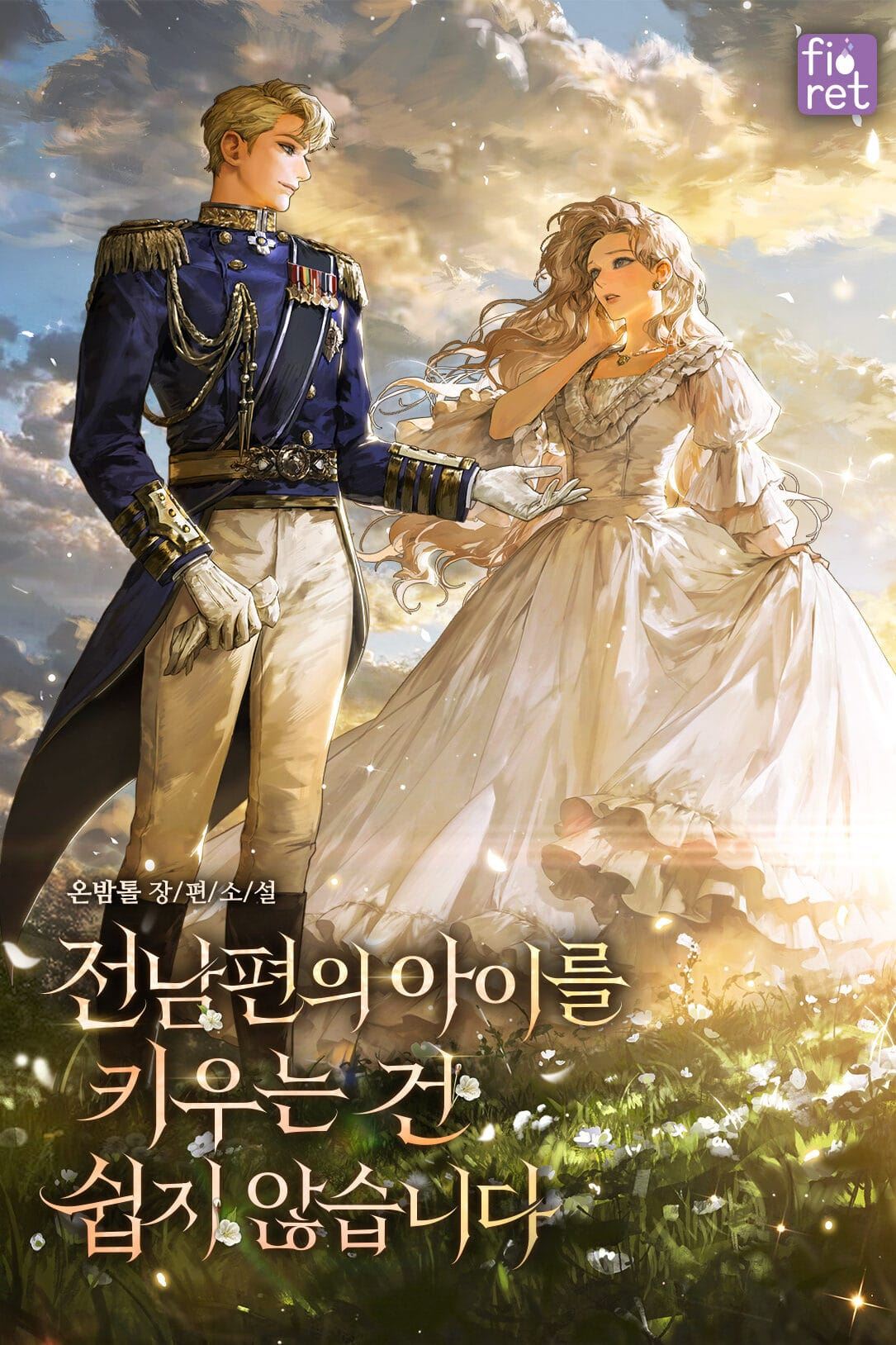
... Read More
Okay so this opening chapter absolutely DROPS you into the middle of chaos and I mean that in the best way possible. You've got this storm of BLOOD sweeping through the imperial palace, screams, the clash of steel — and right in the middle of all that carnage, you have this intensely intimate scene of a woman giving birth. The contrast is wild. The author literally cuts from ''Kill all who refuse to surrender!'' to a midwife crying ''I can see the head!'' and I was completely thrown off balance, which is exactly what it should feel like. The sensory details are unreal. ''His voice trembled as he called for the woman he loved. But there was no answer from someone who had already died.'' That line just... hits. You can hear the armor clattering, smell the smoke and ash on his clothes, feel the cold of the corpse. And then later, five years cut to Cheringen — this barren, wind-swept frontier land where wheat won't grow — it's such a stark visual shift from the opulent blood-soaked palace. The environment itself tells you everything about Selaia's fate. The most cinematic moment for me though? When Hendrick bursts in, squinting against the dawn light, his armor dripping with the blood of everyone he just murdered, and his first instinct is to run to the bed where Casteen lies dead. The image of this warlord-emperor collapsing into childlike sobbing over a cold body is something I will NOT be forgetting anytime soon.
... Read More
Let's talk about what's ACTUALLY at stake in this chapter because on the surface it's just a picnic but underneath it's a earthquake. Rote's confession is the bomb that detonates everything. 'Her father hates her. It's because she was born after she killed her own mother.' This isn't just sad backstory — this is the core wound that will shape every interaction Rote has for the rest of the series. She internalized her mother's death as HER fault. She believes she is a burden. And Selaia — dearest, fierce Selaia — named her Esperote, which means HOPE, and placed ALL her hope on a child who thinks she's unlovable. The stakes for Selaia are enormous here too. Her former husband is THE EMPEROR. A man who 'had to possess whatever he desired' and flew into rages when things were taken from him. Death itself couldn't satisfy him. And now Selaia is raising his hated daughter while presumably still entangled with the new lord of the estate. The political danger is IMPLICIT and it makes every sweet moment between her and Laska feel dangerous by association. Laska's conflict is more internal but no less painful. He's falling for his employer and he's trying to understand why she chose this life — choosing to protect Rote when she had every reason to abandon her. When he asks 'Have you ever pinned all your hopes on someone?' and realizes the answer is no, that's the moment his own loneliness becomes visible. He has no one either. They're two people who've learned to survive alone, accidentally orbiting each other on a spring hillside. The external threats are simmering in the background too — the bears in the forest, the ruined castle that needs rebuilding, the emperor who might decide he wants his former wife back or might decide she's a liability. None of it is spoken aloud but it's ALL there, hanging over this picnic like storm clouds. And the most terrifying stake of all? Rote herself. She's a child who already believes she doesn't belong. What happens when the people she loves most start drifting away? That's the conflict the author is building toward and I am NOT ready.

Leave a comment

You must be logged in to leave comments. or
