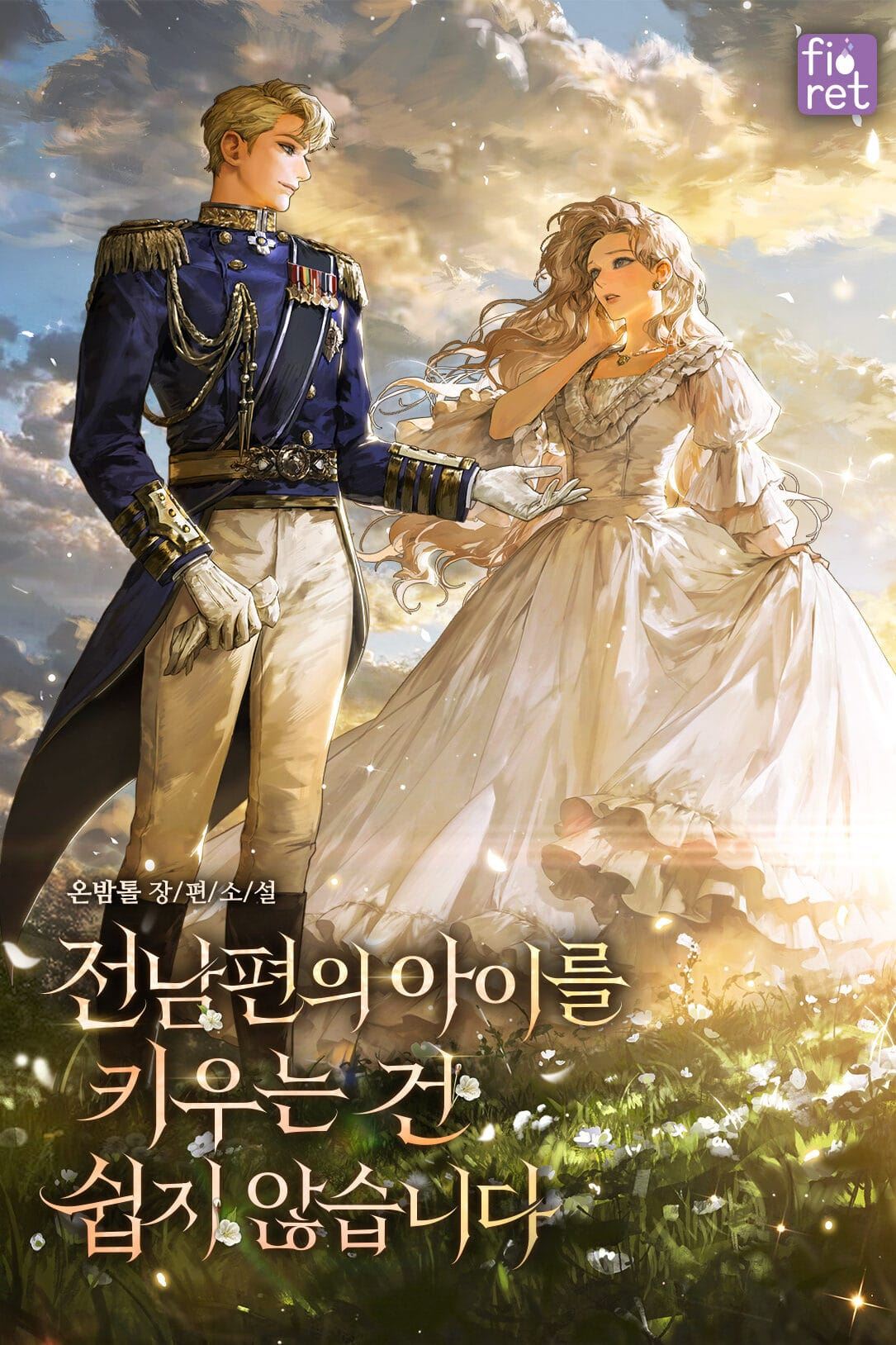
Raising My Ex-Husband's Child Isn't Easy
+Add to Custom List
Genres:
Novel Info
  • Author:
  • Status:Ongoing

Summary

... Read More
In the year 682 of the Roengrin Calendar, the Tropez Empire is plunged into chaos as Fourth Prince Hendrick Myers Bertan leads a bloody rebellion against the imperial palace. Amidst the slaughter, his mistress Casteen gives birth to a daughter, Esperote, in a hidden chamber. Casteen dies from blood loss before Hendrick arrives, consumed by grief and rage. He blames Selaia Tran, his political wife and the woman who assisted in the delivery, accusing her of poisoning Casteen to seize power. Hendrick, now Emperor, demands a divorce and disowns the newborn, refusing to acknowledge her as his heir. The child is seen as a dangerous reminder of his lost love, and Marquis Guillaume Conrad, Hendrick’s maternal uncle, initially threatens the baby's life before Selaia persuades him to let the child live in exchange for her own exile.Selaia agrees to be stripped of her title and exiled to Cheringen, a barren and desolate territory on the southeastern border shared with the hostile Kingdom of Teian. She takes her daughter with her, promising Casteen on her deathbed that she will raise the child without hardship. Five years pass. Cheringen is a poor, windswept land where wheat cannot grow, forcing Selaia to rely on potatoes to survive. She has spent her divorce settlement clearing the land, leaving the estate nearly broke. Meanwhile, in the capital, Hendrick marries Johanna Fiel, daughter of the powerful Duke of Piel, who supported his coup. Johanna is pregnant, securing the imperial succession and rendering Selaia and her daughter obsolete in the eyes of the court. However, their safety remains precarious due to the lingering threats from Duke Piel, Marquis Conrad, and the Dowager Empress Leticia.Rote, now five years old, displays unusual intelligence and maturity for her age. She reads scholarly histories and exhibits an intuition that unnerves those around her. During a trip to the local market to buy a retirement gift for Maximilian Devonshire, the aging captain of the guard, Rote becomes separated from her mother. She discovers a wounded man in an alleyway—an assassin or soldier who has been ambushed. Despite the risks, Rote insists that Selaia bring the stranger to the castle for treatment. Haider, the knight assigned to protect them, opposes the decision, fearing the man is a spy or enemy agent, but Selaia yields to her daughter’s compassion.The stranger, who introduces himself only as Laska, recovers under Selaia’s care. He is a member of the Spear of Ceylon, a reputable international mercenary company, and claims to have been attacked while escorting a Teian delegation. His accent and noble bearing raise suspicions, particularly from Haider, who remains watchful. Laska proves himself useful around the castle, helping with chores and engaging warmly with Rote, who seems to trust him instinctively. He suggests hiring him as Maximilian’s replacement, arguing that his skills could secure the estate.As spring arrives, the political tension between Tropez and Teian escalates. The Teian king, Cleos, is dying, and his brother Laska is tasked with ensuring stability. The ambush on the delegation was not random; it was part of a larger conspiracy involving Hendrick’s regime. Unbeknownst to Selaia, Laska is not merely a mercenary but a key figure in Teian politics. His presence in Cheringen disrupts the fragile peace Selaia has maintained. When Hendrick visits unexpectedly, he brings news of Johanna’s pregnancy and a gift for Selaia, masking his indifference with cold courtesy. The emperor’s visit underscores the precariousness of Selaia’s position, as she remains the forgotten wife of a tyrant who rose to power through murder. The arrival of Laska and the shifting political tides threaten to expose the secrets of the past and endanger the life Selaia has worked so hard to build for her daughter.

Latest Release
DateGroupRelease
2026-10-03dusk blossoms c135
2026-10-03dusk blossoms c134
2026-10-03dusk blossoms c133
2026-10-03dusk blossoms c132
2026-10-03dusk blossoms c131
2026-10-03dusk blossoms c130
2026-10-03dusk blossoms c129
2026-10-03dusk blossoms c128
2026-10-03dusk blossoms c127
2026-10-03dusk blossoms c126
2026-10-03dusk blossoms c125
2026-10-03dusk blossoms c124

Community Reviews

Rating(0 / 5.0, 35votes)
5 stars
0(0%)
4 stars
0(0%)
3 stars
0(0%)
2 stars
0(0%)
1 stars
0(0%)

Popular reviews

... Read More
This chapter does something I barely ever see done well—it makes you feel the ground shift under your feet. You're sitting there having the most intimate character moment, Laska and Selaia sharing their orphan backstory like it's nothing, paper flowers in their hair, firelight on their faces, and then—"Kh—!" A pained groan. An assassin's throat sliced open. Four total. Just like that. The entire emotional architecture of the previous thousand words gets dismantled in three sentences and I was NOT prepared. The escalation is brutal in the best way. We go from Max talking about his son picking up a sword because a girl admired knights—that wholesome, almost comedic father-son moment—to unsheathing his own blade with an aura shift that the text describes so distinctly. The Unyielding Knight of Chering doesn't sit by a bonfire and talk about sword philosophy. He exists for a reason. And Laska matches him strike for strike. "Much the same as usual." Casual. Routine. This happens after guests arrive. After lords visit. Right when things feel safest. But here's what really got me—the stakes aren't just physical survival. It's that every time safety appears, the narrative yanks it away. Selaia finally feels like an ordinary person for one evening, dancing freely, laughing without calculating propriety, and then they're walking through corridors knowing there are killers in the walls. Maximilian even curses about Vera cleaning the halls. The domestic details make the violence hurt more because we've been allowed to imagine this place as home, as somewhere people belong. Now it's a fortress again. Always a fortress.
... Read More
The dialogue in this batch is sharp because everyone's voice is distinct and they keep colliding. Haider is all clipped, authoritative sentences—"That will not do," "We cannot risk bringing an unidentified stranger," "Don't be so stubborn." He's a guard captain; his default mode is threat assessment and control. But the moment that stuck with me is when Rote flips his logic back on him: "How can you refuse when you don't even know who he is? If he dies here, isn't it our fault too for abandoning someone who was dying right in front of us?" She uses his own reasoning framework—risk assessment, unknown variables—and turns it into a moral argument he can't counter. That's excellent character writing. And Laska's dialogue, even in flashback, has this edged quality. When he tells the terrified envoy "I'm nothing more than a hired guard, my lord. If I vanish here, don't bother looking for me"—there's this strange gentleness underneath the cold delivery. He's sending the man away to save him. But then he turns to the assassins and that smile: "I'll be your opponent. Shall we exchange names first? Or will we start with the blades?" Rich and resonant, mocking, completely unhinged in the best way. The author's narrative voice also shifts register depending on whose head we're in. Selaia's sections are full of internal panic and sensory overload. Laska's sections are leaner, more philosophical, almost detached—until the violence hits and the prose becomes kinetic. It's a really sophisticated approach to point of view.
... Read More
Can we talk about how differently these two men speak? Because it's not just style—it's weapon. Hendrick's dialogue is all violence and velocity. Watch how he moves: "The Brett family." Two words. No context. He doesn't explain, he expects her to fill in the blanks. Then he keeps going, faster, sharper, more erratic: "You— and that brat you saved—ruined everything! Do you hear me?" That em-dash pause. That physical gesture mid-sentence. He doesn't speak in complete thoughts—he erupts. And the worst lines, the ones that actually stick to your ribs, come when he thinks he's being honest: "The only place I could ever rest my weary head was Casteen's arms." He says this like it's vulnerable. Like he's admitting something tender. But it's not tenderness—it's ownership. He's saying even his comfort belongs to someone he destroyed, and that's somehow his tragedy. The dialogue makes you hate him for being wrong about his own feelings. Now Laska. Completely different instrument. "I don't know much about anything else, but I do know a thing or two about matters of the heart." Smooth. Measured. Every sentence is placed, not hurled. He uses humor as a tool—"That's the very same question Miss Rote asked me"—to defuse tension he himself created. When he apologizes, it's careful and performative. Even his confession feels like a well-rehearsed speech: "I only hope that I, too, might be a piece of good fortune in your life." This man speaks like someone who has never said the wrong thing in his life. And that's exactly why you shouldn't trust him. Hendrick's dialogue reveals character through what he can't control. Laska's dialogue reveals character through what he controls perfectly. One is a drunk man who can't stop himself. The other is a sober man who can't stop performing.
... Read More
I need to just... sit with this for a second. Because the ending of this passage absolutely wrecked me. Selaia's line—' 'Watch your words. You may be my family, but so is Rote.' You know what, that is such a loaded sentence. Family versus chosen family versus biological obligation. And then she doubles down: 'Rote is my daughter—and I will be the one to care for her.' That's not just a rejection of Benian's offer. That's a declaration of war against every person who's ever told her she's a burden or that Rote doesn't count. She's drawing a line in the dirt of this remote estate, and it's gorgeous. But let's talk about Laska for a moment because his whole energy in this passage is quietly devastating. He doesn't just protect them from the forest—he protects Selaia from Benian's manipulation. When Benian tries to step forward, Laska moves like a shadow. And that smile? The one that terrifies Benian? That's the smile of someone who understands exactly what Benian is proposing and knows Selaia deserves better than to have to face it alone. The most heartbreaking moment though? It's not the big confrontation. It's earlier, when Selaia remembers Hendrick walking past her kneeling form 'casting them both a glance full of annoyance before moving on without another word.' She's still carrying that wound. Five years in isolation and she still flinches at memory of abandonment. And now Benian is offering the same thing wrapped in different packaging: 'leave the child, come with us.' The CP energy between Laska and Selaia here is... not romantic in a traditional sense, but it's something deeper. He anticipates her needs before she speaks. He diffuses Rote when she's about to clash with Benian. He shields Selaia physically AND emotionally. There's a moment where Rote gets lured away to look at the jewels and Selaia looks at Laska with 'you really know how to handle her' and Laska smiles and says 'I thought if I told her to find something for herself...' and you just... oh. They're building something. Together. Quietly. And Benian—ugh, the awful cousin energy. But also? He brought a carriage full of ham and jewels. Is he a villain or just selfish? The text keeps it ambiguous enough that you can't write him off completely. Which makes him more annoying, honestly. The friendship thread between Rote and Benian is also fascinating. She sees through him immediately. 'I remember what he wrote in his letters. He asked how much Cheringen would be worth if it were sold.' That kid holds grudges and file them away. I respect it. The family bond between Selaia and Rote is the emotional anchor here. Everything else—the politics, the exiles, the imperial threats—falls away when Selaia draws that line. Her daughter is hers. Full stop. I'm going to need tissues. And maybe more ham.
... Read More
Can we just take a moment to appreciate Rote? The kid is SIX and already running elaborate schemes to secure her mother's future. She doesn't just happen to notice Laska is helpful — no, she deliberately tells him how to assist, then pivots to "why don't we hire him?" when that doesn't work, and when THAT fails, she goes full rom-com matchmaker: "he suits you, Mother." But here's what gets me — and this is the part that makes me actually nervous — Rote says it with this underlying desperation. "I just... think Laska could be someone important for you, Mother." Important how? Important because Selaia is clearly in some kind of precarious situation that a powerful protector could fix? Important because Rote is scared? And then she mutters under her breath as she walks away: "But if not Laska... then there's no other way..." Like she's already mapped out alternatives that make her unhappy. The girl is carrying adult-level anxiety on a tiny frame and I am NOT OKAY. Meanwhile the plot keeps stacking. You've got the Teian border situation (invaded five years ago, withdrew, nobody knows why), Hendrick showing up unannounced at midnight like some kind of ghost from the past, the Emperor treating Selaia like furniture while demanding her compliance, and this whole sense that her quiet life in Cheringen is about to get shattered. The pacing is masterful — every chapter introduces a new pressure point and I can't look away.
... Read More
This chapter is PACKED with symbolic weight and I've been sitting with it for a while trying to process it all. The most obvious one: the baby being born INTO a blood storm. She enters the world at the exact moment her mother dies and her father murders his way to the throne. She is literally cradled in violence. And the fact that NO ONE wants her — not the grieving father who blames her for Casteen's death, not the political uncle who sees her as a threat, not even society that will erase her mother's existence — this child is the ultimate symbol of something alive in a world that wants her dead. Then there's the name ''Cheringen'' — this wasteland given to Selaia as alimony. It's described as barren, unwelcoming, a place where nothing grows properly. But Selaia goes there and starts building. The wind breaks potato stalks but she persists. There's something deeply symbolic about a woman who was told she was ''unworthy'' claiming a worthless piece of land and making it hers. And the erased records — ''every record of Lady Selaia was erased without a trace.'' This is about who gets to exist in history. The Empress who conceives after five years gets celebrated in newspapers; the real former wife gets reduced to nothing. But Selaia has the child. She has memory. She has herself. I keep thinking about what it means that the baby's ears are covered with cloth when Conrad talks about killing her — ''The infant could not yet understand, but still — she would not allow her to hear such words.'' Protection as an act of love in a world that offers none.
See all reviews

Custom lists

See all custom Lists