Raising Children in the Frontier with My General Husband [70s] - Reviews

Raising Children in the Frontier with My General Husband [70s]
+Add to Custom List
Sort
Add review
... Read More
Okay so this plot twist where Qin Qingman turns the tables on her relatives is absolutely chef's kiss. Let me break it down because I literally gasped when she said 'I agree to go on the blind date.' Like wait what? She's not falling for it—she's USING it. The setup is so elegant. Zhu Hongxia and the aunts come in thinking they're manipulating her into marrying Liu Hechang so they can secure factory jobs for their own kids. Classic move. But Qingman already knows the original storyline. She knows Liu is a married widower with four kids, decades older, and basically a trap. Instead of just refusing and burning the bridge, she plays along—but with conditions. She asks for food and supplies to 'improve her health' before meeting him. And the best part? The aunts are so desperate, so blinded by their own greed, that they actually PAY her to walk into the trap. She walks out of that house with grain, chickens, eggs, and mountain goods—all while pretending to be a compliant victim. Meanwhile Qin Caiyun is over there scheming about how SHE could have gotten all that power if she'd married Liu instead. The irony is delicious. The plot also has this beautiful layering: the winter survival subplot (running out of grain, the snow clearing, the health improvements) runs parallel to the family conflict subplot. They feed into each other perfectly. The siblings getting healthier makes Qingman more confident to confront the relatives. And the relatives' desperation for Liu Hechang's connections makes them more willing to give up their own scarce resources. It's cause and effect, all woven together. One thing that stood out to me: the author doesn't make Qingman's victory too easy. She has to carefully navigate each aunt's personality—Zhu Hongxia's greed, Li Meina's quick reactions, Qin Xiang's reluctant generosity. Each one has to be played individually. That's good plot craftsmanship. Also, the original storyline reference is a great device. It gives the reader dramatic irony—we know what's coming for the original Qingman, so we're constantly on edge watching the new Qingman avoid those same pitfalls. It raises the stakes every time a relative mentions Liu Hechang. The pacing of the confrontation scene at Second Uncle's house is particularly well-done. It starts with forced warmth, escalates through the aunts' relentless praise of Liu, then hits this moment of silence when Qingman reveals her true intention. The entire house goes quiet. Even the drinking in the next room stops. That's a scene I could feel.
... Read More
Okay so let me just say this—Qin Qingman waking up shivering in a drafty wooden cabin and realizing she's not the glamorous main character but the MALICIOUS STEPMOTHER? That is such a delicious setup. Most transmigration stories throw you into power fantasy territory within three chapters, but this one? This one drops you into absolute survival mode. Cold, hungry, outnumbered, and everyone already hates you. And yet the plot doesn't bore me for a second because she doesn't just complain—she moves. The moment she decides to storm Second Uncle's house to reclaim firewood instead of curling up and waiting to freeze is the exact moment this story grabbed me by the throat. "I'm going to ask for it." Five words. That's it. But after a lifetime of the original owner being walked all over, that sentence hits like a hammer. And then the scene with Zhu Hongxia? Chef's kiss. The original owner would've cried and backed down. This version? She pulls out a PROMISSORY NOTE. In the 1970s rural China setting! That is not just clever plotting—that's a woman who read the manual and is playing a different game entirely. The fact that she even anticipated the denial and had the evidence ready shows the author is thinking several steps ahead. The introduction of Secretary Zheng Anguo as a moral authority figure feels a bit convenient honestly, but I can't complain because it resolves the conflict in a satisfying way. The village setting gives him real power, and his presence shifts the entire dynamic from a domestic squabble into something with actual stakes. I'm genuinely curious where the plot goes next—does the husband find out? What about the four kids? Is the white lotus female lead already on the horizon? This first chapter alone made me want to binge the whole thing.
... Read More
Let's talk about stakes because this text doesn't mess around. Liu Hechang's unwanted advance isn't just an awkward moment—it's a threat to Qin Qingman's autonomy and safety. She's already lost her family structure, she's raising a child who depends on her, and now a man in power is looking at her the way he looked at his dinner. The disgust on her face isn't just personal—it's the recognition that the social structures around her offer no real protection. Then there's Liu Sangunzi. Lazy, greedy, easily intimidated—but when it comes to children, he's a predator. The fact that Chuchu ran fast enough to escape but never told his sister? That's the stakes speaking. A child who knows that reporting bullying might bring worse retaliation. Qin Qingman's guilt when she finds out is earned—she's been so focused on immediate survival (food, shelter, geese) that she missed the slower violence happening beside her. The goose trade itself is a stakes moment. Two feet of fabric ration tickets—her entire stash—gone, exchanged for two birds that might or might not work as guards. She's lying to Chuchu about having saved grain coupons. She's investing everything she has into a plan that could fail. And the author makes you feel every risk because the world is so clearly hostile. Snow blocks the mountains. Dogs are too expensive. Fences are useless against people. The geese are her only option and she's betting everything on them. What keeps me hooked is that the stakes keep escalating while the solutions keep getting more desperate. This is a character who is one bad decision away from catastrophe, and that tension never lets up.
... Read More
Okay so this whole section is basically two parallel schemes colliding and I love it. On one side, you have Liu Hechang getting played by the Qin Caiyun family—his own lust blinded him, he lets her stay over, and then when he sees Qin Qingman, suddenly he regrets everything. Classic "the grass is greener" move but executed really well because the author doesn't make him look stupid, just human. He's experienced, seen all kinds of tricks, and yet he fell for the most basic one. That's good writing. Meanwhile, Zhu Hongxia is already locking him in. The dinner table promise about his son's work—brilliant. She doesn't even need to beg; she just reminds him subtly that there's a deal on the table and he's already walked through the door. The line "Walls have ears" when Qin Lei tells them to shut up outside? That's the author telling us directly that someone is watching, someone is listening. The tension is already building for future conflict. Then the plot pivots to Qin Qingman, and this is where it gets interesting. She doesn't sit around crying about Liu Hechang's greasy look—she immediately goes into survival mode. Getting the geese, trading fabric tickets, protecting Chuchu. The narrative structure here is tight: threat introduced (Liu Hechang's unwanted attention), immediate reaction (geese purchase), and the stakes are raised (Liu Sangunzi bullying Chuchu revealed). Every scene pushes the story forward. No filler.
... Read More
The pacing in these chapters is really interesting because it mirrors the season itself. The first section moves slowly—almost meditative. Qingman clearing snow, the siblings bathing, lying on the warm kang listening to the wind. Two months pass in a few paragraphs. It's the narrative equivalent of hunkering down and waiting out winter. The author lets us breathe here. Then Zhu Hongxia arrives and the pace shifts dramatically. Everything accelerates. Dialogue becomes rapid-fire. The aunts' conversation in the hall reads like a machine gun—'Comrade Liu is a leader,' 'he's really outstanding,' 'such a marriage is like a pie falling from the sky.' The text even uses the phrase 'blah blah blah' to show how overwhelming the verbal assault is. This is where the story picks up speed. What I love about the structure is how the author uses silence as a pacing tool. When Qingman says 'I agree to go on the blind date,' the entire house goes quiet. Even the drinking sounds from the next room stop. That moment of silence is more powerful than any dialogue could be. It's the narrative equivalent of a drumbeat. The chapter transitions are also well-handled. We go from the intimate domestic scene (siblings on the kang) to the external threat (Zhu Hongxia's visit) to the confrontation (the visit to Second Uncle's house) without any jarring jumps. Each scene flows naturally from the last. One thing I noticed: the author doesn't rush the resolution. Qingman doesn't immediately expose the relatives or refuse outright. She takes her time, lets them hang themselves with their own words, and only reveals her true plan when she's already secured what she needs. The pacing of her reveal—first agreeing, then asking for a delay, then stating her condition—is perfectly timed. Each beat builds on the last. The cliffhanger at the end with Qin Caiyun's internal monologue is a nice touch. It sets up future conflict without resolving the current one. We're left wondering: will Caiyun try to sabotage Qingman? Will she try to steal the match for herself? The author knows exactly when to stop and let the reader want more. Overall, the pacing feels very controlled. No dragged-out scenes, no rushed emotional beats. The winter survival section could've been shorter, but it serves a purpose—it shows us how far these characters have come and raises the stakes for what happens next.
... Read More
The stakes in this book are established within the first five paragraphs and they don't let up. Qin Qingman wakes up in a body that is literally freezing to death. Not uncomfortable. Not slightly chilly. Her teeth are CHATTERING. Her body is shivering uncontrollably. And she has a five-year-old child depending on her. This is survival-level stakes, and the author makes it crystal clear that there is no safety net here. No golden finger. No system. No mysterious benefactor coming to save her. Just a cold wooden cabin, an empty stove, and relatives who would rather see her freeze than return what they borrowed. The external conflict is immediate and visceral: Second Uncle and Second Aunt have taken firewood and food that belongs to her family, and they refuse to give it back. But what makes this conflict so compelling is the power imbalance. Zhu Hongxia is loud, aggressive, and backed by the entire extended family. Qin Qingman is a woman in 1970s rural China with no husband's protection, no father, no money, and a reputation for being timid. The internal conflict is equally important. The original owner's trauma—the habit of avoiding confrontation, the fear of being seen as selfish, the desire to keep peace at any cost—is something Qin Qingman has to actively fight against. Every time she opens her mouth to demand what's hers, she's not just fighting her relatives. She's fighting a lifetime of conditioning. The moment she pulls out the promissory note is the climax of these opening chapters, and it works because the stakes have been so carefully built. We've felt the cold. We've seen Chuchu shivering. We've watched her struggle to carry five pieces of firewood. So when she finally stands in front of the entire village and demands justice, it's not just a plot point—it's an emotional release. But the author is smart enough not to resolve everything. Secretary Zheng Anguo orders the grain returned, but what about the husband? What about the four children? What about the white lotus female lead that the narrative clearly hinted at? The stakes have been raised, not resolved. And that's exactly what keeps me turning pages.
... Read More
The pacing in these chapters is absolutely perfect and I need to unpack why. Chapter 8 starts with Qin Qingman completely unbothered while next door chaos unfolds. She's making breakfast, thinking about food, worrying about Chuchu's nutrition. The chapter moves at a calm, almost meditative pace—until the chicken stew smell hits. Then suddenly, the entire village is affected. Every household with a chicken decides to kill it. The pacing accelerates like a ripple effect: one smell → one curious daughter → one angry mother → one compromised father → one chicken slaughtered → repeat across the village. And Chapter 9? It starts with Liu Hechang's rage and ends on a cliffhanger that had me immediately clicking to the next chapter. He sees Qin Qingman, his engagement to Qin Caiyun suddenly feels like a mistake, and the chapter cuts off right as his thoughts spiral. The author knows exactly when to speed up and when to slow down. What I love most is the structural contrast. Qin Qingman's scenes are quiet, domestic, grounded in food and care. The Zhu Hongxia scenes are loud, chaotic, full of scheming and celebration. These two worlds run parallel for most of the chapter, and then they COLLIDE when Liu Hechang sees Qin Qingman. The pacing of that collision is masterful—it doesn't happen with a bang, but with a glance. A fleeting look at an empty yard. And suddenly everything changes. The author also uses the weather as a pacing device. The snowstorm that trapped Qin Caiyun at Liu Hechang's house forced the engagement forward. The calm, windless day after gives everything a sense of eerie stillness before the next wave of chaos hits. It's subtle but effective.
... Read More
There's something deeply symbolic about firewood in this story that I can't stop thinking about. On the surface, it's just a practical necessity—without it, you freeze to death in a 1970s Chinese winter. But the way the author treats firewood throughout these opening chapters elevates it to something much larger. Firewood represents survival, yes, but it also represents dignity. The original owner of this body let people take her family's firewood, food, and resources without ever demanding repayment. She chose silence over survival. And the result? She died. Literally. The narrative implies she simply gave up and fell into an eternal sleep. Qin Qingman's decision to reclaim that firewood isn't just about warmth—it's about reclaiming her right to exist. Every piece of wood she carries back from Second Uncle's yard is a small act of defiance against a lifetime of being treated as invisible. Then there's the promissory note. This is perhaps the most powerful symbol in the entire passage. Paper. Ink. A signature. In a world where oral agreements mean nothing and the poor have no legal protection, the promissory note is a weapon. It's the original owner's family trying (and failing) to protect themselves through proper channels, and it's Qin Qingman wielding that same tool with the confidence the original owner never had. The cold itself is a recurring motif—physical cold representing emotional coldness, social coldness, the indifference of a community that watches people suffer and does nothing. But Qin Qingman generates her own warmth. She lights the kang. She creates heat through action rather than waiting for it to be given. And Chuchu—this five-year-old child who burrows into her chest for warmth—represents everything she's fighting for. Not just survival, but the chance to protect someone smaller and more vulnerable. The cycle of exploitation stops with her. That's the theme, isn't it? Breaking cycles.
... Read More
I have to give major props to the dialogue writing in this book because the contrast between the original Qin Qingman and the transmigrated one is SO visible in how they speak. The original owner—according to the narrative—was timid, blushing easily, avoiding eye contact. And I believe it. Because the dialogue of the people around her (Zhu Hongxia especially) treats her like someone who would crumble under pressure. But then transmigrated Qin Qingman opens her mouth and it's like a different person walks in. "Second Aunt, I knocked on your door. You just didn't answer." — calm, logical, unflinching. "Second aunt, my family has no firewood left. Could you please return the firewood you borrowed from us? If you don't, my family will freeze to death." — polite on the surface, devastating in content. "Second aunt, when you borrowed the food from my family, you wrote a promissory note. It's in black and white; I'm not making things up." — this line made me actually laugh out loud. She didn't just bring receipts, she brought LEGAL receipts in a rural 1970s setting. The audacity. Zhu Hongxia's voice is equally distinct—sharp, defensive, quick to anger. Her lines like "Who the hell dares to steal my firewood? Get out here, I'll chop you into pieces!" immediately tell you everything about her character. She's loud, aggressive, and used to getting her way through intimidation. Which makes her eventual silencing by the promissory note so satisfying. The narrative voice itself is close third-person, staying firmly anchored in Qin Qingman's perspective. It's not overly literary or flowery—which works perfectly for this story. The prose is functional but vivid when it needs to be, and the dialogue carries most of the emotional weight. There's a scene where Qin Qingman wipes away nonexistent tears while demanding her property back, and the narrator doesn't over-explain her emotions. It just happens. Natural. Real. My only minor critique: Secretary Zheng Anguo's dialogue feels a bit generic—authoritative but not particularly distinctive. He's clearly meant to be the moral compass of the village, but I'd love to see him develop a more unique voice as the story progresses.
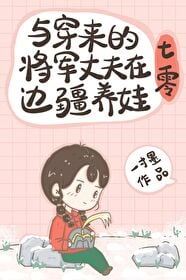
... Read More
I need to talk about Chuchu because this child broke me. The scene where he's squatting by the stove with a stick dipping in water to write? That detail alone tells you everything about their life—no books, no proper supplies, just imagination and survival. And when he immediately notices his sister is off and asks what's wrong, that's a five-year-old who has learned to read emotions because their safety depends on it. The moment that got me was when Chuchu says, "Sister, you've protected me well, really well." He's been through stuff—Liu Sangunzi bullying him, the constant worry about people "borrowing" things—and instead of complaining, he's grateful. He hides his fear so he doesn't worry her further. That's not a normal five-year-old's emotional capacity. This child has been forced to grow up too fast, and Qin Qingman is the only anchor he has. And Qin Qingman? Her reaction to finding out about the bullying—her expression instantly growing cold, then immediately pulling him into an embrace and apologizing—this is a sister who carries the weight of every failure to protect him like a physical burden. She doesn't rage at Liu Sangunzi; she holds Chuchu and says sorry. That's the kind of love that's quiet and devastating. The goose scene at the end is pure character work. Chuchu asking if the geese will peck them, his voice trembling. Qin Qingman gently patting his head and explaining they'll live ten years. She's teaching him that things can be kept, that not everything is consumed or taken away. That's huge for a child who's learned to expect loss.
... Read More
Winter in this novel isn't just a setting—it's a character. The text keeps reminding us: 'The northeast winters were cold and harsh. Whether it was work in the forest or the fields, everything came to a stop.' This is the time of year when people hunker down and wait. But waiting isn't passive here. The cold strips everything away—pretense, politeness, false warmth. What's left is raw survival. The snow is a recurring symbol. Qingman clears it from the roof every day. Zheng Anguo warns her about snow accumulation. Snow is both a threat and a test—it reveals who takes care of their home and who doesn't. But more importantly, the snow isolates. When everything stops and people are trapped indoors, family dynamics come to the surface like ice cracking under weight. Food is another massive symbol. The entire conflict revolves around grain, eggs, chickens, and government rations. Hunger is what drives the relatives' cruelty and Qingman's desperation. When Qingman says 'our stock of grain was steadily depleting,' she's not just describing a practical problem—she's describing the erosion of dignity. Starvation makes people do terrible things, but it also reveals who they truly are. The relatives choose greed. Qingman chooses survival with her brother. The kang—the heated bed—is symbolic too. It's where the siblings find warmth and safety. After their bath, they lie there 'too excited to sleep,' listening to the wind howl outside. Inside the kang is spring; outside is winter. It's a boundary between safety and danger, warmth and death. The fact that Chuchu sleeps on the same kang as his sister emphasizes their complete dependence on each other. They are each other's warmth. There's also the symbolism of Liu Hechang himself. He represents false promise—the appearance of salvation that's actually a trap. The aunts see him as a ladder out of poverty. Qingman sees him for what he is: a man who deceived the original owner into a disastrous marriage. He's the embodiment of how the system preys on vulnerable women, especially those with children. The most powerful symbolic moment, I think, is when Qingman lifts Chuchu and feels how soft and fragrant his body has become. Two months of proper nutrition and he's transforming. This is the story's thesis in miniature: care and resources change everything. The relatives have resources but use them to manipulate. Qingman has neither but uses her wits to survive. The cold doesn't discriminate—it just reveals who you are.
... Read More
Okay so let me just say this—this chapter is absolutely delicious because the entire scheme that was built to trap Qin Qingman just... collapsed and ended up benefiting someone else entirely. Zhu Hongxia and the family spent all this time trying to set Qin Qingman up with Liu Hechang, right? And what happens? Qin Caiyun swoops in and steals him. The irony is so thick you could cut it with a knife. But here's what really got me: Qin Caiyun's plan to trap Liu Hechang by having his youngest daughter walk in on them. That was actually clever of her, in a twisted way. She knew exactly how to force his hand—make it so he HAD to publicly acknowledge her or face a scandal. And it worked. Liu Hechang was backed into a corner and had to announce they were engaged. But then—AND THIS IS THE BEST PART—Liu Hechang sees Qin Qingman carrying firewood, and his entire world shifts. All those carefully laid plans, all that scheming, and he's just standing there staring at the one person his family tried to set him up with in the first place. The plot twist isn't even dramatic; it's quiet, almost casual. Qin Qingman doesn't even look up. She just buries her head in firewood and walks away like he's nothing. And that indifference? That's what makes him notice her. I love how the author sets this up. The family's desperation, the calculated moves, the chicken stew celebration—all of it leads to this single moment where Liu Hechang's gaze lands on Qin Qingman's empty yard. The plot is tightening around everyone except her, and that's exactly where she wants to be.

Leave a comment

You must be logged in to leave comments. or
