Pretty Kitsch - Reviews

Pretty Kitsch
+Add to Custom List
Sort
Add review
... Read More
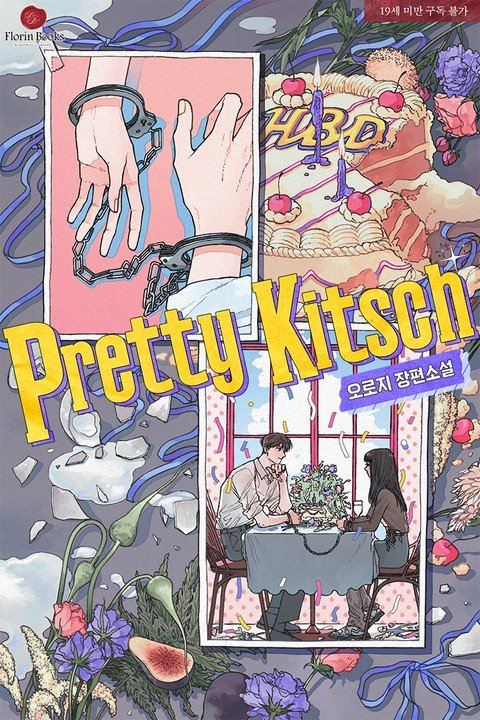
Okay so let me just say — I was fully bracing myself for this to be one of those books that gets weirdly dark and never figures out where it's going. But then Yeo Jin-won shows up and honestly? The plot took a turn I didn't see coming. Not a *happy* turn, but at least it's a turn. It's not just endless degradation without narrative purpose, which in my experience is the death knell for this genre. The way this chapter structures Eun-ah's captivity — the breakfast scene, the cherry blossom moment, the period scene, THEN the cousin's arrival — it's actually building something. The breakfast feels like a false calm, right? Like, okay he made you breakfast, maybe things are settling? Then you get the balcony scene and suddenly you're remembering she's trapped here. She's not a wife, she's a prisoner with a view of cherry blossoms, and that contrast is doing a lot of work. And the period scene? That felt like the emotional nadir before the pivot. When she breaks down crying on the floor and he just offers to send a subordinate instead of coming himself — that's not just cruelty for cruelty's sake, that's character. He's calculating. Every interaction is a power play. And then Jin-won walks in like a corrupted mirror image of his hyung? That's a plot move. That's someone new entering the board. I want to know what Jin-won wants. I want to know if he's here to help or to complicate things further. The fact that he called her attitude 'something' while tossing her a bag of pads — that's not kindness, that's recognition. He saw her. Or at least he saw enough to have an opinion. And that opinion was rude. Which somehow makes me like him more than I should. Also can we talk about how the phone system works? She gets a phone that only contacts him. That's such a specific, modern detail of control that hits different than, say, chains or locks. It's claustrophobic in a way that feels disturbingly plausible.
... Read More
Let me be real with you—the stakes in this section escalated HARD and I was NOT prepared. Earlier in the story she had options. She had her part-time job. She had school. She had a routine, a purpose, a path. By the end of Chapter 34, she has NONE of that. Her escape attempt fails. She's thrown into a room with no lock. She's told her leave of absence has been revoked. She can't jump from the window (would be half-crippled). The front door is locked. She is literally trapped with zero exit strategy. And yet—the tension doesn't drop. It SHARPENS. Because now her conflict has shifted from "how do I escape physically" to "how do I survive psychologically." The tantrum, the smashing, the refusal to cry in front of him—that's her fighting back now. The stakes aren't about freedom anymore, they're about not breaking. The physical danger is also escalating. She's bleeding from her hand. She's sick with a fever. He's the only person in the house. If something goes wrong—really wrong—there's no one coming. And the author makes you FEEL this constantly through her internal monologue: "If the door opened once more, I would bite Yeo Hae-jeong's ear off." That's not a threat, that's desperation. What's fascinating is that Hae-jeong himself seems to sense this shifting dynamic. He goes from aggressive captor to... concerned observer? Checking on her when she's sick. Calling her cute. It creates this unbearable push-pull where you're simultaneously terrified for her AND weirdly invested in whether he'll cross a line he can't come back from.
... Read More
'I have no choice, Eun-ah.' Those five words changed everything. Up until that moment, there was still a sliver of hope—a chance he might talk sense, untie her, let her go. Then he says he has no choice, and the reader understands: this isn't a negotiation. It never was. The external conflict is obvious—she's trapped, bound, physically overpowered by someone who holds all the power. But the internal conflict is where the real stakes live. Eun-ah is fighting not just for freedom but for coherence. Who is this man? What did we do before? Can I trust my own memory? The erasure of her past is itself a form of violence—it isolates her, makes her doubt her own mind. That's higher stakes than any physical threat because once you can't trust yourself, anything is possible. What I appreciated most is how the author raises the stakes incrementally rather than all at once. First, it's confusion. Then fear. Then anger. Then the devastating realization that he's serious. Each layer strips away another defense. By the time she's locked in the basement room, the reader isn't just worried about her body—they're worried about her psyche. The stakes have escalated from 'will she escape tonight?' to 'who will she be when morning comes?' The suspension of disbelief required here is significant—you have to accept that a seemingly gentle senior could become this violent so quickly. But the text earns it through detail: the disgust when hair touches his palm, the casual cruelty masked as affection, the way he hums a tune while planning her captivity. These small moments build a portrait of someone for whom violence is mundane, which is far scarier than cartoonish evil. The stakes feel real because the monster feels plausible.
... Read More
'I like you, Yeo Eun-ah.' Three words. That's all it should take. But coming from him, tied to everything that followed—the grabbing, the dragging, the locking—it feels less like a declaration and more like a sentence. My stomach dropped. Not because it was romantic, but because it was so sincerely delivered. That's the emotional violence here: he means it. He genuinely thinks this is love. I felt so many things while reading this. Disgust at what he did to her. Fear for her. Anger that made me want to throw the book across the room. But also—God help me—this strange ache for both of them. Because underneath all the toxicity, there's a thread of something almost tragic. He carried her home when she was drunk. He wrapped her in his clothes. He called her 'dustball' with tenderness. And now he can't let go. The same hands that held her gently are now yanking her hair. Eun-ah's emotional journey in this passage is devastating. She goes from confusion to horror to bargaining to rage to exhaustion. When she finally slides down the wall and buries her face in her knees, I felt that collapse in my own chest. It's not just physical tiredness—it's the moment when fighting stops being an option and survival becomes internal. 'The shock made the back of my head throb'—that's not just alcohol. That's the weight of realizing the person you admired is someone who would do this. The CP dynamic here is nightmare fuel, yes—but it's also surprisingly nuanced. There's intimacy without consent, care without respect, desire without reciprocity. Every tender memory he has of her is weaponized against her in the present. And yet, the text hints at something complicated: did she feel something before? Is that why the memory loss terrifies her? The emotional line isn't clean, and that messiness is what makes it linger.
... Read More
I keep thinking about what Eun-ah has left. She lost her job. She's off school. She's in a stranger's house with no way out and cameras watching her every move. And yet — and this is what gets me — she KICKS THE DOOR. She screams for help. She throws herself against an impossible situation instead of just... accepting it. That matters. The fact that she still has that fire, even after everything, even after what he did to her body, it's what makes her feel real. Not some damsel waiting to be rescued. She's angry and she's scared and she's doing everything she can with zero options. And Hae-jeong? He knows it. When he says 'I'm really scary when I'm angry' — that's not a threat to her, that's a warning to himself. He's the one who's afraid here. Of what happens when she stops fighting. Of what happens when she gives up. The stakes aren't just 'will she escape' — they're 'what will she become if she can't?'
... Read More
"Because there's no connection between you and me, senior." — and honestly, this line broke me a little. Eun-ah just laid it all out so casually while sitting there in her holey socks eating frozen pork belly like a stray cat, and this guy who apparently has everything responds to that rejection by... taking her home? Tying her up? I don't know whether to be terrified or weirdly touched on behalf of both of them. The emotional tension in these chapters is INSANE and I haven't even gotten to the good stuff yet. Think about it: he is literally the most desired person at their school. Women lose their minds, men are jealous to the point of venom, professors get embarrassed by his car. And yet he shows up uninvited to a department gathering that is clearly beneath his social circle and the ONLY person he wants to talk to is her. Not the girls fawning over him. Not the guys trying to network. Her. The invisible loner who sat in the corner and just ate meat. And then in the alley, he does something so specific and so tender—it's almost scarier because of how gentle it is. He blocks the wind with his hand so her cigarette doesn't go out. He compliments the way she smokes. He notices things about her that nobody else seems to have bothered with. 'You suck it really well. You don't look like you would.' It's such a small, strange observation but it made me feel something complicated in my chest. Her response was just... honest. 'No, not particularly.' No games. No pretending she's interested. And his reaction? He just kept going. Persisted. Not in a creepy way—at least not obviously—but in a way that suggested he'd been waiting for someone to actually tell him no for once. I'm not sure if I'm rooting for them or if I should be calling the police on both of them.
... Read More
The stakes in this passage operate on three levels simultaneously, and the brilliance is how they escalate without the protagonist ever having a moment to breathe. First layer: survival. Yeo Eun is captive. She has no card key, no escape route, and a man who decides when she eats, sleeps, and gets medical care. Her only weapon is information asymmetry—and even that fails when she pretends to be sick for four days and he sees right through it. Second layer: bodily autonomy. This isn't abstract. When he sits on her chest and she realizes what he's doing, the text doesn't soften it. She describes his prelude fluids, the wet sounds, the way he pins her arms with his knees. The conflict here isn't just emotional or psychological—it's physical, immediate, and she has almost no power to stop it. "All I could move were my feet at best." That line haunted me. Third layer: the psychological erosion. This is where the real stakes live. Every time he says something like "It's because I like you that much" or "Even if you're trapped here, you'll end up acknowledging my feelings anyway," he's not just making a threat—he's trying to rewire her reality. The conflict isn't whether she'll escape physically (she hasn't figured that out yet); it's whether she'll escape mentally. Will she start believing his version of their relationship? That's the slow violence. And the suspense—the author keeps raising the temperature without ever letting Yeo Eun gain ground. She tries illness as strategy. He counters by seeing through it. She tries silence. He won't leave. She tries to set boundaries ("If you put your hand in there, I'll kill you"). He treats it as flirtation. Each attempt to assert control only deepens her entrapment. The tension doesn't come from whether she'll escape—it comes from how much of herself she'll lose before she does.
... Read More
There are SO many symbols in this passage but let me focus on the one that hit me hardest: the door. She runs to it desperately. Yeo Hae-jeong's hand overlaps hers on the handle. He pries her fingers off one by one like she's a child. Later, she tries to lock herself in the room and discovers the locking mechanism has been completely removed. The door that should offer safety is literally disabled. Every door in this house is controlled by HIM. Then there's the banana—something small and simple that represents how he knows her basic preferences but she doesn't know ANYTHING about him. The banana is domestic, nurturing even, but delivered inside a captivity scenario. It's food as control. The blanket she wraps herself in is another one. When she's sick, she hides inside it like armor. When he comes in and sees her "rolled up like kimbap," the blanket becomes both her shield and her prison lining. She can't escape it either way. And the leave of absence—that's the symbol that broke me. School was her ladder out of poverty. Six months of hard work, triangle kimbap meals, everything saved for graduation and a job. And Hae-jeong casually dismantled it with a phone call. The "couple's leave of absence" phrase is particularly cruel because it reframes her entire academic trajectory as something that can be shared, decided together, or—when he says it—completely controlled by him. She had one path to freedom and he erased it with two words.

Leave a comment

You must be logged in to leave comments. or
