Poor Little Thing Reborn as a Spoiled Child [ABO] - Reviews

Poor Little Thing Reborn as a Spoiled Child [ABO]
+Add to Custom List
Sort
Add review
... Read More
The dialogue in this passage is deceptively simple but absolutely loaded. Look at Xie Zan: "Did you turn stupid because of the pain?" Casual. Almost joking. But underneath that is genuine bewilderment — because what Lu Yinghuai is doing IS abnormal, and Xie Zan knows it. Then there's the exchange about red gland fluid. Lu Yinghuai asks one question — "Under what circumstances will it be red?" — and that's it. He doesn't explain, doesn't dramatize. He just knows. And Xie Zan's response does all the heavy lifting: "That means Jiang Tang drew it himself." One sentence. No elaboration needed. The author trusts the reader to connect the dots. And then Lu Yinghuai's line to Jiang Tang in the morning: "Report, I'm going to the hospital." The word "report" — military language from an S-class Alpha to his Omega — but delivered with this domestic tenderness. It's their private language, their code. Meanwhile Jiang Tang just says "Okay" — hoarse, barely there, and then lights up at the word "gift." The author never overwrites. Every line does triple duty: advancing plot, revealing character, and building atmosphere. That's craft.
... Read More
There's this one line where the narrative tells us that even though it's spring and they're in a climate-controlled shopping mall, Chen Yuan feels like he's standing in an ice cellar when Lu Yinghuai turns his pheromones on him. That is some serious atmospheric writing right there. A single gesture — the cold smile, the icy blue eyes — and the entire temperature of the scene drops. The worldbuilding here is doing a lot of heavy lifting through sensory detail rather than exposition dumps. The restaurant scene itself is vividly rendered without being overwrought. Shrimp being peeled, legs touching under the table, the low hum of a public space that suddenly feels incredibly private when two people are sharing a secret that no one else at the table quite understands. Xie Zan noticing everything but staying silent, Sang Song rolling his eyes at Lu Yinghuai's pheromone manipulation — these background characters make the world feel lived-in. Then they step outside and boom — high school students, Chen Yuan in a wheelchair, the whole visual of him looking up from Jiang Tang's white shoes and going from white to red to white again. The color shifting on his face is such a cinematic detail. And the contrast between the mundane shopping mall setting and this charged dramatic confrontation is really effective. Normal life interrupting, normal life colliding with the story's deeper conflicts. The pheromone orbs themselves are a brilliant worldbuilding invention — semi-sentient manifestations of an Alpha's essence that can take shape, show emotion, rebel, and even serve as a proxy for physical touch. The rules of this world feel consistent and internally logical.
... Read More
This entire chapter revolves around food, and food is everything here. Let me just say it outright: in this book, food isn't sustenance, it's the primary language through which love, control, and abuse are communicated. Lu Yinghuai trying to feed Jiang Tang is his version of love—feeding you is how you show you care. But for Jiang Tang, food has always been a weapon. The meat at the birthday party wasn't about nutrition, it was about humiliation, about being forced to consume something gross because you existed in someone else's space and had to prove you were grateful. The vegetarian braised tofu that Lu Yinghuai pivots to is honestly one of the most tender beats in the whole book. "I've tried it, it's not very delicious. Tang Tang, have this." He's lying, probably, but he's also creating a safe alternative without making Jiang Tang feel like his refusal is a burden. The contrast between meat and tofu matters. Meat represents the past—abuse, obligation, disgust. Tofu is neutral, soft, something Jiang Tang can accept without triggering that old shame. And Lu Yinghuai's thought about how he used to have people prepare different meals for Jiang Tang in his previous life, and Jiang Tang simply never ate them—that's symbolism screaming at us. Food was literally the language Lu Yinghuai spoke, and Jiang Tang never responded because he'd never been fed with genuine care, only with performance. Now in this life, Lu Yinghuai is learning to speak a new dialect.
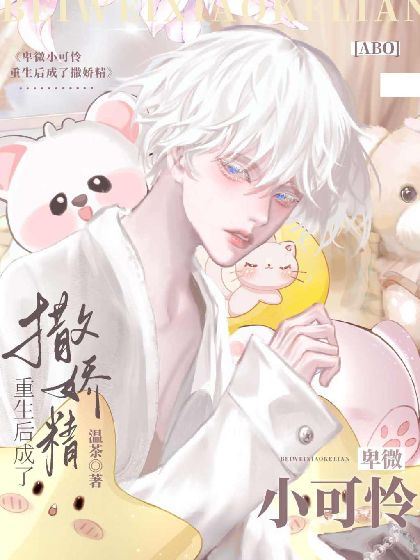
... Read More
There are so many symbols stacked in this chapter I could write an essay, but let me focus on the ones that actually haunted me. The mixed blood. When Lu Yinghuai interlocks his bleeding fingers with Jiang Tang's, it's not just romantic imagery—it's a literal and figurative merging of their fates. Blood in this universe isn't just biology; it's identity, it's pheromone, it's soul. Two lifetimes of separation, two lives of parallel suffering, and the resolution isn't words or promises. It's visceral. It's physical. It's sticky and messy and imperfect, just like their relationship has been. The two balls of light—the fir forest and the ocean—these are Lu Yinghuai's complete S-level pheromones, and they appear exactly when he needs them most. But notice what happens: the green ball (fir forest) looks angry and gets swatted away, while the blue one (ocean) calms it down. His emotions aren't unified. Part of him is furious at the situation, at Jiang Tang's self-destruction, at the universe. But the deeper, quieter part—the ocean—is what actually holds them together. The wind through the fir forest bringing the smell of the ocean... that's the synthesis. That's what love in this story actually looks like. And the pendant—"Return the property to its original owner." This phrase haunts me. Is Jiang Tang saying he doesn't deserve to be loved? That his feelings were misplaced property? Or is he returning the pendant because he believes he has no right to keep something that belonged to someone who loved him across lifetimes? The title of this whole arc should probably be "Second Life, First Trust." Because that's the real struggle here—not whether they survive, but whether Jiang Tang can believe he's worth surviving for.
... Read More
There's this really disturbing pattern running through these chapters that I can't stop thinking about: pain as a form of communication. Jiang Tang's whole relationship with suffering is twisted. He says the pain is 'what he deserved' — like he's been conditioned to expect punishment. When offered comfort, his first instinct isn't gratitude, it's apology. He literally considers MAKING his wound worse just so he doesn't have to stop getting Lu Yinghuai's attention. That's not just trauma, that's a person who has learned love is something you earn through suffering. And then there are the gifts. The ten-yuan test papers. The small, practically worthless items Jiang Tang gives Lu Yinghuai with his full heart, while Lu Yinghuai surrounds himself with things of actual monetary value. The contrast is brutal. Jiang Tang has nothing material but gives what he has. Lu Yinghuai has everything but didn't understand what was being offered to him until it was too late. The pink teddy bear is another layer I can't ignore — it's placed beside Lu Yinghuai in this cold black-and-gray villa, completely out of place, and Jiang Tang stares at it like it's something fragile. It represents the warmth Jiang Tang wants to preserve, the childish tenderness he's probably never been allowed to express openly. And Lu Yinghuai letting it sit there without comment? That's him silently saying 'your softness has a place here.'
... Read More
Okay so this chapter is basically a masterclass in how to deliver emotional damage through plot instead of melodrama. Lu Yinghuai takes Jiang Tang to dinner, gets him comfortable, tries to connect—and then literally offers him braised pork ribs. Not because he's cruel, but because he genuinely doesn't know Jiang Tang won't eat meat. The devastating beat? Lu Yinghuai realizes he ordered nothing but vegetables, which tells him he clearly didn't know half the things about Jiang Tang in their previous life. Classic regret-through-omission plot device done perfectly. Then the real gut-punch hits—Jiang Tang tries to eat the meat anyway because he can't refuse someone being kind to him, and we get this flashback to his childhood birthday where his stepsister Li Hu spat the meat back out and Li Mu's mother slapped Jiang Tang and stuffed that disgusting meat back into his bowl. "Eat, eat, eat. You want to eat meat? Here you go!" This isn't just backstory, it's the key that unlocks why Jiang Tang can't even chew the food in front of him. His body remembers what his mind has been trying to survive past. And then Lu Yinghuai snaps—"If you can't eat it, don't eat it anymore!" and immediately curses himself. The plot doesn't give us easy resolution here; Jiang Tang spits it out, apologizes, and they both say sorry at the same time. Two people who are trying so hard not to hurt each other and still doing it anyway. That's the kind of writing that keeps me up at night.
... Read More
The dialogue in this section is deceptively light. On the surface it's flirting-adjacent banter, but every line is doing double or triple duty. Let me start with Lu Yinghuai's most dangerous line in the whole chapter: 'Tang Tang, blow on it and it won't hurt.' What?? What is wrong with this man?? He's wounded, bleeding through his shirt, and his immediate instinct is to flirt with the person he just brought home. But here's the thing—that line isn't just cheeky, it's also a power move disguised as vulnerability. He's creating an excuse for Jiang Tang to stay in the room, to be close, to touch him. Jiang Tang's response is equally telling. He's flustered, ears turning red, wheeling himself two meters away before turning back with this adorable 'Will it really stop hurting if I blow on it?' He knows exactly what Lu Yinghuai is doing. He's playing along anyway. The repetition of the same line later—'blow on it and I'll be fine soon'—after Jiang Tang insists on actually applying medicine, is where it gets really good. Because now it's not just banter. Now Jiang Tang is seriously wiping blood, disinfecting, wrapping gauze, and he's still being told to blow on it like this is some cute moment instead of a nine-centimeter knife wound that involved an electric shock. And the narrative voice! The narrator's aside 'Such a terrible line' after Lu Yinghuai asks 'Did it hurt you?' while holding Jiang Tang's shoulders—this is the author winking at us, acknowledging the awkwardness, and I love it. The internal monologue about pheromones and whether Lu Yinghuai is 'sexually frigid' before realizing there was simply no one to spark desire—that's a hilarious and revealing narrative choice. It tells us everything about Lu Yinghuai's emotional landscape without a single word of dialogue.
... Read More
I need to talk about this scene because my jaw is still on the floor. So Sang Song shows up—pink hair, peach-scented Omega, absolute unit of energy—and immediately throws himself at Jiang Tang. And get this: Jiang Tang doesn't even have a rejection reaction! The text literally says his body's defense system seemed to fail, which honestly feels like the author winking at us like yeah they're friends not enemies. But Lu Yinghuai?? Oh honey. His expression changed INSTANTLY. Relieved AND extremely jealous. The text says: "Why should the pink one get the same treatment as him?" Sir, you just got your person back after running away, you don't get to be this possessive already. Also the whole dynamic where he then just goes aside to make a phone call to ORDER FOOD while fuming? That is such a Lu Yinghuai move—trying to maintain composure while internally screaming. And then when Jiang Tang looks at the kitten with SHINING eyes and Lu Yinghuai basically yeets it into Xie Zan's arms because of the allergy?? The care mixed with the control issues is giving complex man. Meanwhile Sang Song is over there calling him a bastard and threatening to bite him to death and I am HERE for it. These three have the most chaotic energy together.
... Read More
Okay so I need a minute because that scene in the basement? I thought for SO long that Jiang Tang was there to kill Lu Yinghuai and I was fully prepared to hate him for it. The narration practically seduces you into that assumption—syringe, dark red liquid, trembling hands, apologizing before the needle goes in. But then it hits you: he wasn't injecting poison, he was injecting HIMSELF. His own pheromones. All of it. To trigger Lu Yinghuai's dormant Alpha response at the exact moment he needed it most. This is master-level misdirection. The author plant every clue right in front of us and we walk right past it because the emotional weight of the moment blinds us. 'It may be a little painful...' — I re-read that line three times after the reveal and absolutely lost it. Jiang Tang knew exactly what he was doing. He was draining his own body to save someone who didn't even trust him anymore. And then the bullet. Jiang Tang throwing his broken body over Lu Yinghuai like it was nothing. Like he'd done it a thousand times before. The plot doesn't just twist here—it SHATTERS everything we thought we knew about their relationship. This omega who came alone, who was allegedly sent by the enemy, who has been playing both sides... he was never on anyone's side except Lu Yinghuai's. Every detail I need to go back and re-read.
... Read More
The way Jiang Tang's body literally breaks down in this chapter is not subtle but honestly it works. Every time I read about the smell of blood in his throat and his vision going dark, I feel it. The worst part isn't even the big dramatic reveals—it's the quiet moments. Like when Yao Yushu asks him if he's crying and Jiang Tang can't produce tears because his tear glands have shut down. His face becomes this porcelain mask. He tries to force a smile, looks at himself in the mirror, and can't even manage that small human expression anymore. And then the blood—he's literally coughing it up while Yao Yushu stands there complaining about his shoes getting dirty. The emotional violence is so casual, so everyday, and that makes it worse. But here's what really wrecked me: the message from Lu Yinghuai. "I'll pick him up right away and will be back soon." For whatever task he was doing, he's still thinking about coming back to Jiang Tang. And Jiang Tang reads it and feels his heart get twisted into a ball. He types back "Okay. I'll wait for you." even though he knows—deep down, bone-deep—that waiting is the only thing he has left. The tragedy isn't that he's being punished. It's that he would still wait anyway.
... Read More
'He is your elder!' followed by 'He is crippled and I'm disabled, we're both imperfect, so we're a good match, aren't we?' — this exchange is the entire theme of the book condensed into one paragraph. The story keeps coming back to this idea that brokenness is not a barrier to connection, it's almost the prerequisite. Jiang Tang has no pheromones and considers himself defective. Lu Yinghuai has an injured gland and can't fully control his own abilities. Neither of them fits the 'ideal' version of what their world values. And yet the narrative keeps insisting that this is exactly why they belong together. The pendant Jiang Tang lost — that's another symbol I can't shake. It was the only physical token connecting him to Lu Yinghuai, and now it's gone, which mirrors his fear that everything between them is fragile and temporary. Meanwhile the father represents the opposite philosophy: that relationships should be calculated, optimized, socially appropriate. The book seems to be asking a pretty radical question for its world: what if the thing that makes you 'defective' is actually the thing that makes you capable of genuine love? I'm not sure the characters have figured that out yet, but I'm definitely invested in watching them try.
... Read More
I've been thinking about the yellow flowers in the light sphere nonstop. This image of carefully cultivated yellow flowers at the edge of a Douglas fir forest, with the outer petals slowly turning into light fragments and disappearing — it feels like the central metaphor of the entire story compressed into a single visual. On one level, these flowers are clearly Jiang Tang himself. He's been carefully cultivated, tended to, but something in his environment is slowly killing him. The fact that only the EDGES are dying first suggests that the damage is spreading inward, and nobody seems to notice until it's too late — much like how no one noticed Jiang Zi Ang's true nature until he'd already done irreparable harm. Then there's the pheromone system as a symbol of connection and dependency. Lu Yinghuai has to use his own precious pheromones to sustain Jiang Tang, depleting himself in the process. The more he gives, the less he has left. And yet he can't stop, because Jiang Tang needs it before the temporary mark fully fades. It's a beautiful metaphor for care — the kind that requires sacrifice, that leaves you diminished but unable to walk away. The rain connects both symbols. It rains on Jiang Tang's funeral in the previous life, and it rains now as Lu Yinghuai tries to prevent that same fate. Rain as both death and cleansing, both an ending and a beginning. The author is weaving these images together with serious thematic intent.

Leave a comment

You must be logged in to leave comments. or
