Poor Little Thing Reborn as a Spoiled Child [ABO] - Reviews

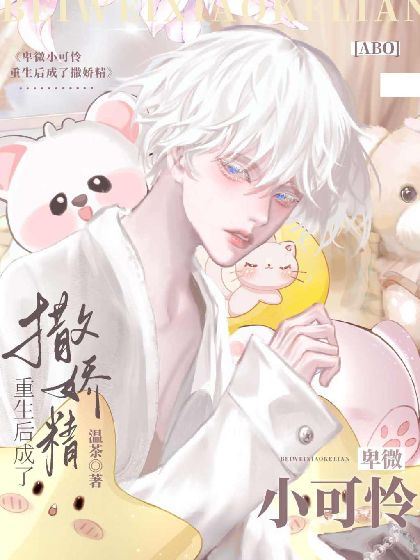
Poor Little Thing Reborn as a Spoiled Child [ABO]
+Add to Custom List
Sort
Add review
... Read More
'Jiang Tang stared at the address marked on the trash can with his eyes lowered.' That sentence alone painted such a vivid, heartbreaking image. I could see it clearly—the classified trash can label, the young man's tea-colored eyes fixed on it, the quiet acceptance of being erased. And then the villa setting itself is doing so much heavy lifting. The people on the sofa who think Lu Yinghuai has returned, the panic turning to disdain when they realize it's Jiang Tang, the contemptuous voice calling him a cripple from the first floor while Jiang Tang watches from the corner of the stairs with 'a mocking look in his eyes.' Every scene in this chapter is visually rich and thematically loaded. The wheelchair, the empty cup he never puts down, the master bedroom he retreated into instead of the guest room—these aren't just descriptions, they're emotional shorthand that the author trusts us to understand.
... Read More
Okay so let me just... what did I just read. The whole setup with the DNA results is such a devastating pivot point. Jiang Tang is told he's not actually a Jiang, not biologically related to either parent, and the way this information is weaponized is just brutal. They don't even bother hiding their true intentions. Lu Bufan slides that document across the table like he's closing a business deal, not dismantling someone's entire identity. And then Yao Yushu drops the second bomb—that the marriage was essentially a blood donation arrangement, that Lu Yinghuai married him so he could take his Omega blood for Yao Yushu himself. The plot here is just relentless. Every time you think things can't get worse, another layer of betrayal gets peeled back. What really gets me though is Jiang Tang's response. He doesn't fight it. He just says okay. To everything. That acceptance is somehow more heartbreaking than any dramatic refusal would have been. They came prepared with their car waiting, their plans set, and he just... agreed. The chapter ends with Lu Yinghuai calling and getting a dead number, which is such perfect timing. He's still trying to arrange dinner plans while his husband is being exiled. The narrative symmetry here is almost painful.
... Read More
Okay so let's talk about the cup. Jiang Tang sees it shatter on the ground and I literally felt that crack in my chest. He remembered something from a TV drama — lovers gifting each other cups, because the word for cup sounds like 'lifetime' in Chinese. That hit me like a truck. He likes Lu Yinghuai, so he can't be completely selfless. And now the cup is broken. His imagined future is gone. The author didn't even need to spell that out explicitly — they just showed him looking at the broken pieces and thought about how everything he'd pictured with Lu Yinghuai just shattered at the same moment. That is SO much more powerful than any internal monologue about heartbreak. And then there's the moon. Jiang Tang was wondering if he'd see it tonight, like some pathetic romantic trying to find comfort in the sky. But the clouds roll in. No moon. And suddenly his anxiety just... calms down. Why? Because he sees the end. The dark sky mirrors what he's realizing inside — there's no light left in this. The moon he imagined was far away and beautiful, but now he's actually close to it and realizes it was never meant for him. That whole line about 'When he got to the moon, would he find that it was different from what he imagined? It was indeed different from what I imagined.' — he thought he was looking at Lu Yinghuai from afar, not waking up in his bed. The intimacy he got was still an illusion to him.
... Read More
Okay I need to talk about THIS scene where Jiang Tang comes downstairs and sees Lu Yinghuai looking all sun-drenched and elegant by the window. You know, the part where he's describing Lu in this almost reverent way—black silk shirt, sleeves rolled up, thin gold-rimmed glasses, fingertips tapping on the keyboard like he's some kind of sophisticated drama male lead? And then the absolute gut-punch reveal that he wasn't even working, he was just zooming in on Jiang Tang through the SURVEILLANCE CAMERA. My hands literally flew to my mouth. This is the kind of detail that turns a romantic scene into something deeply unsettling in retrospect. The villa feels so luxurious and safe on the surface—floor-to-ceiling windows, glass elevators, a whole wing of rooms—but every time I re-read this I keep thinking about how Jiang Tang has zero privacy here. The golden light around Lu Yinghuai looks beautiful but it's also THE LIGHT UNDER WHICH HE WAS WATCHING HIM. I cannot unsee this now.
... Read More
Okay, I need to talk about Lu Yinghuai because this chapter completely reframed how I see him. In his previous life, he thought Jiang Tang never liked him. In this life, he thought Jiang Tang only started liking him after marriage. And the truth? Jiang Tang had been in love with someone he may never meet since he could remember. This man was carrying a pendant like a religious artifact for a person he'd never even seen properly. And Lu Yinghuai literally jumps off a bridge to save him. Not metaphorically—JUMPS. The man is unhinged and I am HERE for it. But the real character moment for me isn't the dramatic rescue. It's the blood. Lu Yinghuai grabs the glass fragment cutting Jiang Tang's neck, gets his own palm sliced open, then interlocks their fingers so their blood literally mixes together. He doesn't say anything clever. He just says sorry three times and holds him. This is a man who would rather bleed himself than let go of Jiang Tang even for a second. And Jiang Tang—God, Jiang Tang. After everything, after being Blackwood's captive, after killing Gou Sun, he still tries to push Lu Yinghuai away to protect him. His first coherent words upon waking in Lu Yinghuai's arms? Not gratitude, not relief. "I killed someone." He's broken down so far that self-preservation has rewired his entire sense of worth. And Lu Yinghuai's response—"Tang Tang did nothing wrong, Tang Tang is great"—that's not filler dialogue. That's a man who has spent two lifetimes failing to protect the one person he loves, and now he will literally rebuild Jiang Tang's sense of self from scratch if he has to. The double pheromones detail also hit different. Xie Zan's internal monologue about wanting those little light spheres and laughing at Lu Yinghuai when his glands were injured... it's funny but also kind of devastating. Lu Yinghuai's power literally disappeared when he was at his weakest, and now it's back exactly when he needs it most. Fate or authorial convenience, I don't care—it works.
... Read More
Let's talk about Lu Yinghuai because this man has been doing that thing where he acts like nothing matters except the mission. Since his rebirth, he's been hugging Jiang Tang frequently, sure, but never THIS desperate. Never like his hands were shaking and he couldn't stop wiping rain off a face that was already wet. The transformation is palpable. This is a man who joined the SA because he was S-level and that was that - not because he cared about protecting people, not because he had some noble vision. And yet here he is, literally breaking the laws of physics with ice powers and tree magic to save one person. The pendant is such a beautiful symbol of their whole dynamic. Lu Yinghuai gives it away without thinking, a trivial gesture in his life. For Jiang Tang, it becomes THE most treasured thing he owns. And now Jiang Tang wanted to return it, meaning to give it back to its original owner. Who would have guessed the original owner is standing right there holding him? The irony is almost too much. And Sang Song - the kid who ran two extra blocks, threw away his umbrella, held both the cat and Jiang Tang's clothes in his arms while crying and yelling at nobody to hurry up. A friend who refuses to let go. That's the contrast: Lu Yinghuai saves Jiang Tang's life with superpowers, but Sang Song almost destroys his knees trying to reach him. Both acts of love, different flavors, equally devastating.
... Read More
The pendant. That goddamn pendant. Jiang Tang treasured it like it was the only proof he ever existed in someone's thoughts, and it turned out the person thinking about him was the exact person he was thinking about the whole time. Both of them were drowning in separate oceans and neither one knew the other was swimming toward them. "Jiang Tang had always been so desperately in love with someone whom he may never meet in his entire life, so he treasures the pendant so much." I literally gasped out loud reading that. Two lifetimes of Jiang Tang carrying this weight, this ache for a face he couldn't quite recall, and Lu Yinghuai spent his whole first life thinking Jiang Tang despised him. The tragedy isn't that they didn't love each other—it's that they loved each other at completely the wrong time in the wrong life. And then the crying scene. Jiang Tang wakes up in Lu Yinghuai's shirt, pale as a ghost, and starts crying without realizing he's crying. His voice is hoarse, his body is shaking, and the first thing out of his mouth is an apology for existing. Lu Yinghuai wipes his tears with cold fingers and asks "why are you crying?" like he's terrified of the answer. And when Jiang Tang finally whispers that he killed someone, Lu Yinghuai doesn't flinch. Doesn't judge. Just pulls him closer and floods his system with pheromones like he's trying to physically overwrite Jiang Tang's self-hatred with something safe. The green ball of light—his fir forest pheromone—actually looked angry and bonked Lu Yinghuai's head. Even his emotions are throwing a tantrum because their owner is being reckless with his heart again. I'm not crying, you're crying.
... Read More
I need to talk about the plot mechanics at play here because this section is absolutely loaded with backstory reveals that recontextualize everything. So Lu Yinghuai mentions the marriage certificate should happen "soon," and then the narrative immediately pulls back to give us context about his gland injury and the S-level pheromone danger label. This is huge—it means his inability to marry isn't a lack of desire, it's bureaucratic and medical obstruction. And then the author drops the bomb about the previous life: "In the previous life, he always thought that Jiang Tang didn't like him and would leave him one day, so he didn't force Jiang Tang to get the marriage certificate with him." OH. SO THAT'S WHY. Everything clicks into place. His hesitation wasn't indifference, it was fear dressed up as respect. The current timeline complication—he hurt Jiang Zi Ang during some mid-process incident, which delayed the already-pending approval—adds this delicious tragic irony. He wanted to give Jiang Tang formal status so badly, and everything keeps getting in the way. Meanwhile Jiang Tang has no idea any of this is happening. He just hears "should be soon" and probably thinks it's a polite brush-off. The plot structure here is doing something really smart: it's layering dramatic irony on top of emotional tension. We know things that Jiang Tang doesn't know, which makes every interaction between them ache differently. When Jiang Tang asks to be treated like an adult, we're not just watching a cute misunderstanding—we're watching a man who carried the weight of a lifetime of regret trying to undo it in real time, while his partner just wants to feel normal. Also the golf club scene functioning as both social spectacle and family confrontation is efficient storytelling. Multiple plot threads—the bet with Shi Feicheng, the introduction of Lu Danchen, the Jiang Zi Ang conflict—all converging in one location. The author isn't wasting movement.
... Read More
This is the part where I had to put the book down and stare at the ceiling for five minutes. Not because of anything dramatic happening — actually the opposite. Nothing dramatic at all. Just two people in a bedroom, one telling the other he's going to stay, and the other barely believing it. The moment that wrecked me was when Jiang Tang says "good night, Mr. Lu" from across the room. That distance between them — physical and emotional — is SO much heavier than it needs to be. And Lu Yinghuai immediately recognizes it. He TRAVELS back to his previous life in that exact second and realizes: Jiang Tang used to say good night to him from a few steps away, and he (Lu Yinghuai) never understood why. What was Jiang Tang swallowing back? What was he about to say but didn't? "That night, Lu Yinghuai didn't understand why he was unaware of it. Was he blind or his brain was not working well?" I need a minute. The guilt here is palpable — Lu Yinghuai carrying the weight of a past life where he failed to see his own omega, and now in this new life he's hyper-vigilant about every word, every gesture. And Jiang Tang? He's so used to making himself smaller, to accepting less, that even when Lu Yinghuai says "I want to stay and accompany Tang Tang," his reflex is to say NO. It broke me. It genuinely broke me. The fact that he still can't let himself WANT things from this man.
... Read More
The atmospheric contrast between two spaces in this story is absolutely cinematic and I need to unpack it because it's one of those details that stays with you. The basement. Dark, confined, chemical-laden. This is where Lu Yinghuai spent a year—glands injured, pheromones suppressed, locked away like an animal. The author describes it with such visceral sensory detail: the smell of gasoline giving way to woody fir, the cold spreading up Lu Danchen's legs, the bodyguards staggering as phantom roots choke them. It's claustrophobic and violent and every word feels like it's pressing against your ribs. Then there's the scene where Lu Yinghuai holds Jiang Tang's body and walks out of that darkness into daylight, and Xie Zan sees them both covered in blood. The medical equipment scene—the tools falling from Xie Zan's hands, the shock on his face, the clinical impossibility of what he's looking at—this is where the worldbuilding hits hardest. In this universe, Alpha glands cannot be transplanted to Omegas. It's a biological rule, a hard limit, and the author uses it to seal Jiang Tang's fate. No deus ex machina. No last-minute save. Just the cold fact that some wounds cannot be healed. But the real masterpiece of atmosphere comes at the end. The balcony. One night. Rain pouring down like the sky itself is mourning. Lu Yinghuai sitting there with a blood-stained plush puppy pendant—a child's toy, stained with the love of his life—and the image of him is so specific it carved itself into my brain. His hair turning gray. His posture bending. The contrast between the man who once radiated so much power that enemies froze in terror, and this broken figure now reduced to holding onto a small stuffed animal. The weather mirrors everything without being heavy-handed. Dark clouds. Howling wind. Oppressive air. It's almost biblical in its scope—nature itself responding to a death that shouldn't have happened. And the last line about the rain just hanging there, unfinished, like the grief itself has no conclusion. This author knows how to use setting as emotional shorthand. Every location does double duty: it's a place AND a feeling. The basement was imprisonment and rebirth. The car was transition and helplessness. The hospital was hope and futility. The balcony was grief and memory. Four spaces, four stages of loss.
... Read More
Let me break down what is actually happening in these chapters because on the surface this seems like a simple visit to a cemetery but there is so much narrative machinery running underneath. The chapter opens with what appears to be pure fluff—Lu Yinghuai feeding Jiang Tang cherries in the car. Very cute. Very romantic. Very much the kind of scene that makes readers go AWWW. But if you pay attention, this opening is doing important work. Lu Yinghuai says: "Baby, it tastes better when you feed it, but it would be better if you try other feeding methods." His eyes fall on Jiang Tang's lips. This is not just flirtation. This is a man who is deeply, thoroughly obsessed with his partner and who communicates that obsession through food, through touch, through constant physical proximity. The feeding scene establishes their dynamic before we even get to the cemetery: Lu Yinghuai takes care of Jiang Tang, Jiang Tang reciprocates, and there is this underlying current of desire that neither of them are hiding from each other. Then the cemetery scene hits. The pacing shifts dramatically. We go from warm and intimate to cold and desolate in a single chapter transition. The author is using contrast as a narrative tool here—juxtaposing the sweetness of the cherry scene with the heaviness of the grave visit creates emotional whiplash that keeps the reader engaged. There is a subplot thread about Kong Yu that has clearly been building for a while. Jiang Tang's relationship with this dead friend is treated with immense weight. The fact that Jiang Tang came here before and pulled weeds, that he returns a month later and the grave still looks tended despite new growth, that he finally speaks to Kong Yu this time—all of this tells us that Kong Yu is not just a random character who died. He mattered. He still matters. And Lu Yinghuai's presence at this visit is a plot development in itself. He is integrating himself into Jiang Tang's past, into his grief, into the people who shaped him even after death. This is not a side character observing from the sidelines. This is a partner stepping fully into the messy complicated reality of the person he loves. The chapter ends with them driving home, Jiang Tang already asleep, Lu Yinghuai picking him up. A full circle from the car ride there—same setting, opposite emotional state. They went out with cherries and flirting, they came back with grief processed and something deeper forged between them.
... Read More
There's a moment early in this chapter where the text mentions Lu Yinghuai changed his profile picture to Jiang Tang's hand holding a puppy pendant. This is symbolism layered on symbolism and I need to unpack it. The profile picture change is Lu Yinghuai's public declaration—his S-rank status means everything is observed, and he's choosing to make his private devotion visible to everyone. But the PENDANT itself, the puppy pendant held in Jiang Tang's hand—that's about the theme of belonging and safety. Puppies are vulnerable creatures that need protection. Jiang Tang, who once couldn't even keep a hamster alive without tragedy, is now being protected by someone who refuses to let anything happen to him. And then the cat appears later—another small, vulnerable animal—and Jiang Tang's desire to hold it represents his longing for connection without the fear of loss. Lu Yinghuai intercepts this too, but his reason is allergy protection, not possession. The theme here is: who gets to care for vulnerable things? And the answer seems to be that Lu Yinghuai has decided Jiang Tang is his responsibility to protect, which ties back to that earlier line about the S-rank being meaningless if you can't be with the one you love. Rank becomes irrelevant when love is the actual metric.

Leave a comment

You must be logged in to leave comments. or
