Please Be Mindful of Noise Between Walls - Reviews

Please Be Mindful of Noise Between Walls
+Add to Custom List
Sort
Add review
... Read More
Let's talk about Alkaid Winterhold because this man is doing something very deliberate and I'm not sure the other characters realize it yet. He wears a helmet. All the time. In private. At a bar. When his adjutant is falling apart and asking him to lend her something to hide behind — he pulls out a spare helmet like it's a party trick. The fact that he has spares is either extremely prepared or extremely unhinged, probably both. But here's what actually gets me: the helmet comes off and goes back on like he's testing boundaries. In Chapter 1 he's bare-faced, feral, veins bulging, completely unable to contain himself around her heat. In Chapter 2 he's encased in steel again, calmly refilling her glass, saying 'I think it's better if one of us stays sober' while she downs five drinks. The visual contrast is staggering. Spica sees him differently in each state. The 'daytime' Alkaid she knows is gentle, eccentric, patient. The 'nighttime' Alkaid — the one she stumbles into — is a predator holding himself together by a thread. And she WANTS him to lose that thread. That line about 'She wished he would' when describing his gaze is not subtle but it's honest. Their dynamic as commander and adjutant is already complicated — she crossed a professional boundary first, apparently — but the text keeps reframing it. When she's wearing his helmet in the bar, the narrative explicitly calls it out: 'we look like a couple wearing similar masks.' Masks. Helmets. Both are barriers and both are intimacies. She asked him to lend her the helmet to cry, and he gave it to her, and then she felt safe inside it. That's not nothing. That's actually devastating in how casually it's written. Lepus, meanwhile, is drawn with just enough specificity to be hateable. Delicate features, quiet demeanour, emotionally performative only when it suits him. The fact that Alkaid internally notes 'Exactly the type Spica liked' while describing him is a tiny moment that says everything about romantic compatibility versus moral compatibility.
... Read More
Okay so the imperial banquet scene in these chapters is absolutely gorgeous. I need to talk about it because the author really went all out here. "A giant chandelier hung from the ceiling, scattering gorgeous light like the sun. Beautiful musical sounds echoed in the high ceiling, pouring down like stardust, and people dressed like peacocks displayed bright smiles and dances beneath it." That's the opening shot — it's cinematic. I could literally see this as a wide-angle establishing shot in a drama. The mask requirement adds this layer of forced anonymity on top of all the glitter and display, which is such a smart detail. People are performing even while being hidden. Then you have this cutaway from the lavish banquet hall to a dark corner where Lepus is being strangled against a wall. The contrast is brutal. One moment you're sipping wine under a chandelier that looks like the sun itself, the next you're watching someone's feet leave the floor as they're lifted by their collar. And the servants?! Standing ten steps away, watching a man choke, and not moving even if a cat rolled by. "Dirty nobles!" Lepus screams, but honestly — they're all in cahoots. The nobility protects its own. The commoner never stood a chance. Spica moving through this banquet alone is such a powerful image. No partner, no father, no siblings. Just her in a well-tailored navy uniform with a half-mask, navigating a room full of people wearing masks pretending to be happy. She's literally in the same position as everyone else — masked and performing — but she doesn't have the privilege of fitting in comfortably. She's looking for Alkaid, worrying about whether she embarrassed herself, wondering if he's actually injured from whatever secret operation he was on. The mask-to-helmet detail is also brilliant. The Crown Prince convinced everyone to swap helmets for masks at the banquet, but Alkaid? He still shows up in his silver helmet. Stubborn. The author writes: "To a party where they were told to come wearing masks, Alkaid had stubbornly appeared wearing his silver helmet again today. He kept his face hidden from her while it had been visible in front of Lepus." The visual of that helmet gleaming under the chandelier light while he chokes a man in a shadowed corridor — it's haunting. And Spica walking away from the banquet with Alkaid, holding hands, with no specific destination in mind. Just away from everything. That scene is so tender after all the violence. The author doesn't over-explain it. They just let it exist.
... Read More
Okay so let me just say this immediately: the moment Spica blurts out 'what about you, Commander?' when Alkaid is sending her to her room? MY HEART DID A FULL BACKFLIP. This girl who has been guarding herself after her father's betrayal and her broken engagement is having these little slips where she actually wants him nearby. And she immediately panics and tries to take it back, which is so painfully realistic. But then the whole helmet reveal sequence? Chilling. She sees his face—silver hair, red eyes, that sharply defined handsome face—and her entire framework of how she sees him shatters. She had this preference for delicate sickly handsome men, and Alkaid obliterated it in seconds. But here's what got me: after seeing him, she can't even bring herself to return the helmet. She's hiding behind a pillar, holding her breath when he passes by, and then later she notices he didn't greet her that morning. The helmet on the desk in his office—placed there specifically when she's around—becomes this devastating little detail. The knights are basically her unofficial hype squad too. When they're all defending her honor and Talitha tries to set her up with her brother, Spica's internal sigh about her standards suddenly becoming impossibly high because of the Commander was peak comedy. She looked at that portrait and only saw 'a person with two eyes, one nose, one mouth' because honestly, no one compares anymore. That's not healthy, that's romantic tragedy waiting to happen and I am HERE FOR IT.
... Read More
There's something about Alkaid's dialogue that drives me absolutely crazy in the best way possible. He says so little but every line he does say cuts through to the bone. Look at this exchange where Spica asks why he hasn't asked about his helmet yet and he finally drops everything at once. That burst of monologue — she's the only one special enough, she's the only one he's been hiding from — feels like a dam breaking after fifty chapters of deliberate restraint. It's not over-written. It's not some polished romantic speech. It's raw and desperate and completely unlike how he talks to anyone else. But the narrative voice is what really carries the whole thing. The author lets us inside Spica's head constantly without ever losing clarity. Her internal commentary — about becoming a trainer who tamed a wild beast, about whether she's reading things wrong like she did with Lepus, about wanting to see his face even though she should be mad — it reads like someone narrating their own life in real time. You're not watching a romance, you're trapped in it with her. The dialogue between them also has this incredible rhythm where they talk PAST each other half the time. Like when he says he brought her a cool drink because her face was red and she gets MORE flustered instead of less. That's not bad writing, that's actual human interaction. People don't respond to each other logically. They respond to their own anxiety and desire and then project it onto the other person. Diblin's interruption at the end is perfectly timed too — his cold, formal voice contrasted against everything that just happened between Spica and Alkaid. The author knows exactly when to break a scene open with external intrusion.
... Read More
Okay, I need a minute. I just read this chapter and my chest literally hurts from how much emotion was packed into it. Let me try to process this because WOW. So Spica hears these sounds coming from Alkaid's room at night and instead of ignoring them, she just... goes to him? The internal monologue here is everything. She's standing there in her pajamas, heart pounding, thinking about whether her face or eyes are the problem, and then she just blurts out "I like Alkaid" like it's the most normal thing in the world. And I was right there with her, screaming internally. The confession scene though—when she finally says it while he's tied to the bed? That line where she says "You said you don't like me yet" and he just buries his face in her neck like he's collapsing? I actually had to put the book down. The vulnerability in that moment was so raw. Alkaid's fear that his words would sound like cheap promises just to sleep with her, when really he means them so much more... chills. Actual chills. And Spica's journey from nervous amateur to someone actively trying to give him pleasure while admitting her feelings? The way she keeps getting bolder—starting with just kisses on his jaw, then his neck, then lower... she's terrified but doing it anyway because she likes him. That's the kind of courage that makes me want to scream at the pages. The chemistry is absolutely electric. Every touch, every sound, every hesitation between them feels so real. When she realizes her body is responding too, getting flustered about it... I felt seen as a reader. This isn't just physical anymore, it's emotional intimacy wrapped in something so tender and messy and human. Perfect. One question though: will Alkaid ever let her live down the fact that she asked him to tie his hands first? Because I think that's my favorite part—the trust it shows.
... Read More
I need to talk about one specific moment because it's been sitting in my chest since I finished this batch. Spica says 'I want to cry, so please lend me your helmet.' And Alkaid just... does it. He takes off his helmet — which he wears literally everywhere, according to Megrez — and produces a spare like he's prepared for exactly this kind of emotional emergency. She puts it on and the world shrinks to a small metallic prison, and inside it she feels safe enough to make crying sounds and he LAUGHS. Not cruel laughter. Not mocking. Just... warm. Her text says his shoulders were 'trembling slightly' and she catches him and calls him out and he deflects, and she pouts, and the bartender has abandoned ship, and they're both reflected in the mirror wall behind the liquor bottles. This is the scene where two people who have never been properly vulnerable around each other are having their first real moment, and neither of them knows how to name what's happening. She's wearing his helmet. He's watching her in it. They look like a couple in the mirror. And she thinks about it and moves on without processing it. That's not narration — that's character. The emotional architecture of this story is built on things unsaid. Chapter 1 is pure physical tension with zero emotional context. Chapter 2 is pure emotional devastation with zero physical tension. And they're the SAME relationship viewed through different lenses. Spica's loneliness underneath the anger — 'she had no close friends and no relatives' — hits different when you've just seen her literally begging to be consumed by someone's presence. The fact that her brother Heze adores Lepus too, that she's isolated on every side, makes Alkaid's calm presence beside her in that bar feel like the first solid ground she's had in days. And she doesn't even recognize it yet.
... Read More
Okay so let me just scream about this cufflink scene for a second because MY HEART. Spica buys Alkaid these RED AND WHITE STRIPE cufflinks — tiger colors, calm red background — and you can literally feel her anxiety radiating through the pages. She's sweating, twisting her hands, thinking 'it probably isn't high-quality enough to catch the eye of a ducal heir' and yet she gave it anyway because 'she immediately wanted to give it to Alkaid when she saw it.' That line hit me SO hard. She didn't think about appropriateness or social rank, she just saw something and thought of HIM. That's not a gift, that's a confession. And Alkaid — oh my god, Alkaid. He opens the box and for a split second his expression becomes STRANGE. 'Over pure joy, a pleasure like watching a well-fitted puzzle find its place cast a shadow. Fear also resided on one side.' FEAR. He's afraid. Of what? Of what this means? Of how much he WANTS this? Then he says 'I'd like to make an exception just this once. Will you keep it a secret?' And when she agrees, he looks at her and says 'Then now we're accomplices.' ACCOMPLICES. Not friends. Not comrades-in-arms. Accomplices. They're sharing a secret together that excludes everyone else in the Knight Order. That is such a loaded word and he chose it deliberately. But then the BEST part — he asks HER to put the cufflinks on him. He says it nonchalantly, like it's no big deal, but Spica is internally SCREAMING because 'Putting on accessories — wasn't that something only lovers would do?' And then the description of their hands touching — 'every time they lightly brushed and briefly touched before separating, she felt a strange sensation bit by bit' — I NEARLY PASSED OUT. The wrist bones, the thick knuckles, his body temperature higher than hers. She's noticing ALL of these things and trying so hard to pretend she isn't. And then he finishes putting them on, checks his sleeves front and back, and says with zero drama: 'Thank you. I'll wear them every day.' EVERY. DAMN. DAY. Spica is flustered into speechlessness and he LAUGHS. He heard her heartbeat quickening and he knew exactly what he was doing. The power dynamic here is EVERYTHING. She's his subordinate, he's the Commander of a ducal family, and yet in this private moment between them, he's the one who's vulnerable. He accepts her gift against protocol. He lets her touch him. He creates a secret bond that puts them on the same side against the world. Meanwhile she's over there having a full emotional crisis while he's just casually walking away with a smirk behind his helmet. Also can we talk about how Alkaid never raises his voice no matter what trouble the knights cause, but when the missing children story gets published and compromises their investigation, the door has WHITE FROST on it and Megrez says he's '100 times more irritable than usual'? This man channels his fury into existential dread and environmental temperature changes. Iconic.
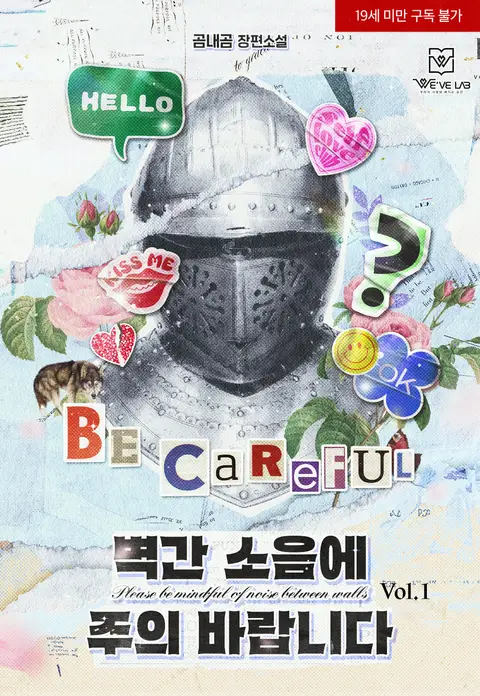
... Read More
Okay, I need to process the symbolism in this chapter because it's DEEPER than I initially realized. The heat period itself is such a rich metaphor. On one level, it's this biological imperative that threatens to override rationality and consent—but the author flips that script completely. Spica chooses to come to him despite the danger, despite the chaos it might bring. The heat becomes less about loss of control and more about TRUST. Can I let someone see me like this? Can I be vulnerable when my body is betraying my composure? Then there's the knot-tying imagery, which is absolutely Loaded. Spica ties Alkaid's wrists to the bed head using his own robe string—a student's knot, she remembers from training. This isn't just restraint; it's a ritual of surrender. He's giving her the power to control him, even though she's the inexperienced one. And the bed head creaking as she moves? That's the sound of two people finding their balance in uncharted territory. The wet stain on his underwear that Spica notices before she even sees him... it's such a brutal, honest detail. His body betrays what he can't say out loud. And her reaction—curiosity instead of disgust—speaks volumes about her character and their relationship. But the deepest symbol here is probably the kiss itself. Throughout the chapter, kissing becomes their language. First tentative pecks on his eye area, then deeper, hungrier contact, then her scattering kisses over his body like she's mapping him. Each kiss is a question, an answer, a promise. When she finally understands that his reactions are real, that he's responding to HER and not just the heat, that's when everything shifts. The theme of mutual discovery runs through every line. They're not just physical lovers—they're learning each other for the first time, and that's what makes this chapter so transcendent.
... Read More
Let me just lay out the stake map because it is genuinely impressive how many layers of conflict this story is juggling simultaneously. Spica's personal stakes are devastatingly clear: her father trusted the wrong person (Lepus), she's been publicly humiliated with a malicious nickname ('one-armed'), her engagement is shattered, and she's essentially starting over in an imperial capital where rumors move faster than carriages. Every decision she makes—from accepting Alkaid's hotel offer to quietly pursuing her father's debts—carries the weight of someone who has learned that trusting people leads to ruin. Yet she keeps trusting. That's the real conflict: not whether she'll get hurt again, but whether she'll stop reaching out despite knowing she might. The external stakes are equally potent. Viscount Atrain's house—her family home—is occupied by someone she can't confront directly. Lepus has maneuvered into a position of power through her father's trust, and reclaiming everything requires both legal maneuvering and personal courage she's still rebuilding. The servants who stayed behind? They're tied to that house by livelihood, not loyalty, which adds moral complexity to her revenge. But the most interesting conflict is the one neither character is naming: the attraction between Spica and Alkaid. Every scene builds this tension through what they DON'T do. He offers her a place to stay and frames it as practical necessity. She agrees and immediately calculates how to repay him. He hides his face from her. She hides behind pillars from him. When the knights suggest she move on, her mind goes to ALKAID. When he ignores her in public, she notices and is genuinely hurt. The stakes escalate brilliantly in the Talitha scene. What starts as comedic knight-wings-being-nosy transforms into Alkaid physically intervening—not to help Spica directly, but to remove the threat of someone else trying to place her in another man's orbit. The murderous intent behind his helmet toward the other knights, his coldness to his own subordinate about entering 'that house,' the helmet left on the desk like an unanswered question—every beat raises the stakes while pretending nothing is happening.
... Read More
The structural whiplash in these chapters is intentional and it works. You go from Spica getting absolutely wrecked by Diblin's presence—pure adrenaline, fight-or-flight, panic attack territory—and then suddenly you're in this quiet, almost domestic scene where Alkaid is checking her forehead for a fever and she's lying with his thigh as a pillow. The transition is so smooth you barely notice the shift from crisis mode to something almost peaceful. Then Megrez bursts in with her loud voice and suddenly it's comedic relief, lightening the mood, and Spica tumbles off the sofa in embarrassment. The author knows exactly when to deflate tension and when to let it build. Megrez's banter with Alkaid—'Whether I acknowledge that will depend on how quickly you handle your work'—is the kind of thing that makes you smile despite everything heavy that just happened. But then the quiet returns. Spica realizes the fragrance she's been smelling is Alkaid's. The 'strange sounds' from next door. Her dawning comprehension. And that note slipping under the wall. The chapter ends not with a cliffhanger but with something quieter and arguably more powerful—an invitation. 'What do I do, Spica. My mate.' That closing line from Alkaid is devastating in its vulnerability. The author didn't need explosions or dramatic reveals. Just two people communicating across a wall, tentatively reaching for each other.
... Read More
The way the author builds tension in these chapters is genuinely masterful. You have Alkaid's internal conflict layered on top of everything else — he wants Spica so badly it hurts him, he's actively fighting the part of himself that wants to lock her away and keep her all to himself, and he's doing this while fully aware that his own nature is a threat to the person he's trying to protect. That's not simple romantic tension. That's a character standing on a fault line. Then you have Spica's own conflict — she's genuinely trying to move on from Lepus and give herself to someone new, but she's doing it with a person whose love language is basically controlled obsession. Every time she gets close to understanding him, he pulls back slightly. Every time she thinks she has him figured out, he reveals something darker. The stakes here aren't about will-they-won't-they, they're about whether two people who could genuinely destroy each other can find a way to not. And then the banquet scene. Everything is finally clicking into place for them — they've both admitted something real, they're walking into that party together, and Diblin Sobek appears like a poison pill dropped into champagne. The author doesn't even give him much screen time before the chapter cuts off, which is honestly cruel in the best way. That interruption represents every external force that's ever threatened their connection — past relationships, family expectations, political maneuvering, the whole history of the knight order. What makes the stakes feel real is that neither character is passive about this. Spica initiates the visor moment. Alkaid initiates the confession even while trying to minimize it. They're both choosing each other actively, which means the danger of losing each other is genuinely felt by both of us reading it.
... Read More
The pacing in these chapters is a masterclass in tonal whiplash done with surgical precision. You start with what feels like a rom-com setup—Spica at a hotel, her flustered inner monologue about whether her superior is plotting something scandalous after giving her alcohol, the comedic panic of almost asking the Commander to accompany her to her room. It's light, it's funny, it's giving 'will they won't they' energy. Then BOOM. He shows his face. The entire temperature of the scene drops. The rom-com evaporates and you're left with this woman who has just had her entire category of 'what kind of man do I want' destroyed in thirty seconds. The pacing choice here is brilliant—the reveal happens in fragments. First she sees his back, recognizes him by height and outfit, then he turns and the description hits like a physical blow, and then he walks past her pillar and she can only hold her breath and remember. The next morning at the knight order is where the structure really earns its keep. You get this warm, comedic scene with the knights defending Spica's honor—which should feel like a resolution—but then Alkaid appears, ignores Spica entirely, and drags Talitha into his office while leaving his helmet on the desk. The door closes. The helmet stays visible through the gap. And then the chapter gives us this quiet moment of Spica sitting blankly, trying to process why he wouldn't even acknowledge her. That final transition to Pony and the carriage ride out of the capital? It's almost too sudden, almost too gentle after that emotional gut-punch. But it works because it mirrors Spica's own coping mechanism—redirecting attention to practical matters like finding a house, letting movement replace stillness. The author knows exactly when to accelerate and when to let the reader sit in the silence.

Leave a comment

You must be logged in to leave comments. or
