Placid Chang’an - Reviews

Placid Chang’an
+Add to Custom List
Sort
Add review
... Read More
Let me just say—this chapter is a masterclass in information escalation. Feng Yiming walks in and drops three bombs sequentially, each one bigger than the last, and Su Cen goes from confident investigator to personally threatened in about five minutes. First layer: The Secret Door is involved. Okay, that's big but Su Cen can work with that. It's intelligence he can use. Second layer: He Xiao is the real puppet master behind the salt price manipulation. Still investigative. Still manageable. Third layer: Your own brother helped facilitate this connection. The ground literally disappears under Su Cen's feet. Each revelation lands with increasing weight, and the pacing is ruthless. Feng Yiming doesn't pause between them. He just keeps feeding information like he's calculated exactly how much Su Cen can absorb before he fractures. And the fact that he mentions the matchmaker detail—the Su brother personally introducing He Xiao to the Wang family—is the kill shot. That's not just information; that's emotional ammunition aimed directly at Su Cen's core. Then the structure shifts entirely. After the confrontation, we cut to the next day with the public notice about bandits, the rumors spreading through Yangzhou, and Su Cen locked in his room. The quiet aftermath is almost more powerful than the confrontation itself. The author understands that the real drama isn't in the shouting—it's in the silence afterward when someone has to sit alone with devastating news. And then the chapter ends mid-thought with Feng Yiming's description cut off: "he was the type to wear you…" I'm still not over this cliffhanger. What does that mean? How does Feng Yiming wear people down? The incompleteness of it is agonizing in the best way.
... Read More
Okay so this entire scene is basically one giant pressure cooker and I love it. Li Shi walks in, drops the hammer on Liu Cheng for meddling in politics, and suddenly the whole court is frozen. But here's the thing that really got me — the author doesn't just give us a simple villain vs hero moment. Liu Cheng isn't some cartoon bad guy, he's a eunuch who survived court by being useful to the Empress Dowager, and now he's facing execution for something he thought was routine. Meanwhile the young Emperor is literally holding back tears because his own uncle is scolding him in public, and he has to personally sentence his childhood servant to thirty lashes. That detail about the eunuch who'd been with him since childhood? Broke my heart a little. Then Su Cen comes in and basically saves EVERYONE by pretending not to understand what's being discussed and instead pitching some random guy from Huzhou. The way he turns a life-or-death political debate into 'actually, have you considered this guy for Governor?' is genuinely brilliant plotting. It's like watching someone defuse a bomb with a joke. And the Emperor grabbing onto that escape route? Perfect. The plot didn't just resolve the conflict, it resolved it in a way that made everyone look smart except Liu Cheng.
... Read More
The pacing in this section is absolutely ruthless and I am here for it. Let me walk through how the author constructed this sequence because it's masterful. We open with Qu Ling'er asking innocent questions about ghost servants. It's atmospheric, almost folkloric. The legend itself is creepy and engaging, and for a moment I thought we were settling into a nice procedural mystery vibe. Then Su Cen drops the line about Lu Xiaoliu being a convicted criminal and even the King of Hell didn't want him. Instant tonal shift. From spooky legend to cold, hard reality in one sentence. Next comes the investigation thread—the fire, the pendant, the deduction about the Zhang inner quarters. This is the mystery plot tightening. We're moving from folklore to forensic reasoning, and the stakes are climbing. Then, without any warning, we cut to Su Cen at court. The scene transition is jarring but effective—it mirrors how Su Cen's own life works, jumping from quiet study sessions to lethal political maneuvering. The Huzhou appointment debate introduces the larger political landscape, and just when we're getting comfortable with court intrigue, Li Shi orders an eunuch beaten to death. The chapter structure basically goes: folklore → investigation → domestic tenderness → political drama → execution. That's four genre shifts in one stretch, and none of them feel misplaced. The author understands that tension isn't just about what happens—it's about how quickly things escalate. Every time I thought the scene was settling, something destabilized it.
... Read More
There's something deeply atmospheric about how this palace operates as a living, breathing entity. The examination hall with its dark doorway and distant flames—immediately I'm picturing this vast, shadowy space where important things happen and people die. The Xingqing Palace itself has this layered quality: grand residences laid out in an orderly fashion that contrasts with Su Cen's inability to navigate it, a lakeside pavilion with green-shelled tortoises hiding in hundreds of acres of water, bedrooms that belong to dead women and serve as quiet repositories for lingering presence. The Dragon Pond specifically—that's such a vivid image. Calling it a pond when it's actually several hundred acres is the kind of detail that tells me this world has its own sense of scale and self-importance. And the biluochun tea, early spring leaves unfurling in hot water, perfectly timed and at the right temperature—these sensory details ground the story in a physical reality that feels lived-in. Even the sandalwood incense becomes part of the world's texture, appearing like a motif that ties different spaces together. This isn't a backdrop; it's a place with memory and atmosphere, and the author makes every room and corridor feel like it has something to hide.
... Read More
"I'm not going! Brother Su, did I owe you something in my past life?" — Okay, this line alone tells me everything I need to know about Qu Ling'er's relationship with Su Cen. It's funny, sure, but there's a genuine desperation underneath it. This kid doesn't trust Qi Lin. He doesn't want to go near him. And yet he goes anyway. Then the whole dungeon sequence hits and honestly? I felt his panic. Like actually felt it. The moment Qi Lin switches his sword to his left hand—that's when Ling'er realizes he's actually going to die. He curses Su Cen under his breath, which is both hilarious and heartbreaking because yeah, buddy, you're in over your head and your mastermind friend absolutely did not protect you from this. But then the cage drops and they're trapped together, and suddenly this fight-or-flight creature just... sits down. He negotiates. He offers a truce. He draws a line on the damp ground like a civilized person and says let's just share this space until morning. And Qi Lin—stone-cold, silent, doesn't even respond—and yet he agrees by saying nothing. There's something weirdly tender about this. Two enemies forced into proximity, one shivering in wet clothes, the other meditating with his eyes closed like nothing in the world bothers him. Ling'er puts away his peacock plume weapon. That's a small gesture but it means everything—he's choosing to trust, however reluctantly. And Qi Lin doesn't exploit that trust. He just... exists. Doesn't attack. Doesn't gloat. What happens between these two when they finally get out of that cage? I need to know.
... Read More
I need to talk about the emotional whiplash in this section. It starts with the intense, almost claustrophobic scene where Su Cen corners Qu Ling'er. You can feel the pressure in the room. Then it shifts to the bizarre comfort of Qu Ling'er complaining about bland porridge and wanting orchid beans. It's grounded, it's funny. And then it just... drops. The new murder report. Then Xiao Sun releasing the 'lunatic' woman. And finally, that gaze from behind the messy hair. The author does this thing where they build up this sense of uneasy normalcy and then rip it away. My stomach actually dropped a little. It's not just about plot twists; it's about how the characters' safety is an illusion. That final image of someone watching Su Cen with 'firm and serious' eyes instead of crazy ones—it's creepy, it's concerning, and it completely changes the emotional tone of the whole chapter from procedural mystery to personal danger. I was not prepared for that shift.
... Read More
I need to talk about the dialogue in these chapters because it's genuinely funny and I laughed out loud more than once. The whole Qu Ling'er dressed as a woman subplot is gold. Like, the author could have made this one joke and moved on, but instead we get this whole arc where Qu Ling'er is miserable about it—he's seasick, he's humiliated, he's pining after Qi Lin in disguise, AND he keeps getting compliments he didn't ask for. The exchange where Su Cen says "You do look good dressed like this" and Qu Ling'er snaps "If it looks so good, why don't you wear it?" is perfectly in character—deflecting with aggression because he's flustered. Classic Qu Ling'er. But then Qi Lin walks up and says the same thing casually, and Qu Ling'er immediately turns shy and bashful. The contrast between how he treats Su Cen (irritated, defensive) versus Qi Lin (timid, flustered) says SO MUCH without any narration about it. The author trusts the dialogue to carry the subtext. And the captain's line about watching out because "my maid and servant might be having an affair"? That's the kind of background detail that makes the world feel real. People are noticing, commenting, making assumptions. It's not just our trio floating in a vacuum. Even the scholarly debate has distinct voices—each faction's couplets reflect their philosophical positioning. The north speaks in grand, expansive imagery; the south in restrained, natural beauty. The dialogue isn't just character; it's ideology.
... Read More
"Forgotten how, after crying himself out, he had wrapped his arms around Qi Lin's neck, refusing to let go, his drunken peach blossom eyes misty as he murmured, 'Brother Qi, I like you. But you have to keep it a secret for now.'" This single passage is everything. It's so vulnerable, so pathetic, and so achingly sweet. Ling'er, in his intoxicated state, lets his guard down completely and pours out his heart, only to immediately undermine it with the condition to keep it secret. It's a classic case of wanting connection but fearing rejection. Qi Lin's reaction is what really sells it, though. He doesn't pull away. He leans in. He kisses him. It's a small, tentative gesture, but in the context of their whole history, it's monumental. Qi Lin is usually so composed, so fearsome among the Turks, yet here he is, willing to share a moment of drunken intimacy. The subsequent morning-after tension is palpable—Ling'er is dizzy with hope and confusion, rubbing his sore backside and giggling like an idiot, while Qi Lin acts like nothing happened but has clearly internalized the entire event. It's a beautiful, messy, unspoken romantic development that hasn't been formally acknowledged but is absolutely driving the emotional core of these chapters.
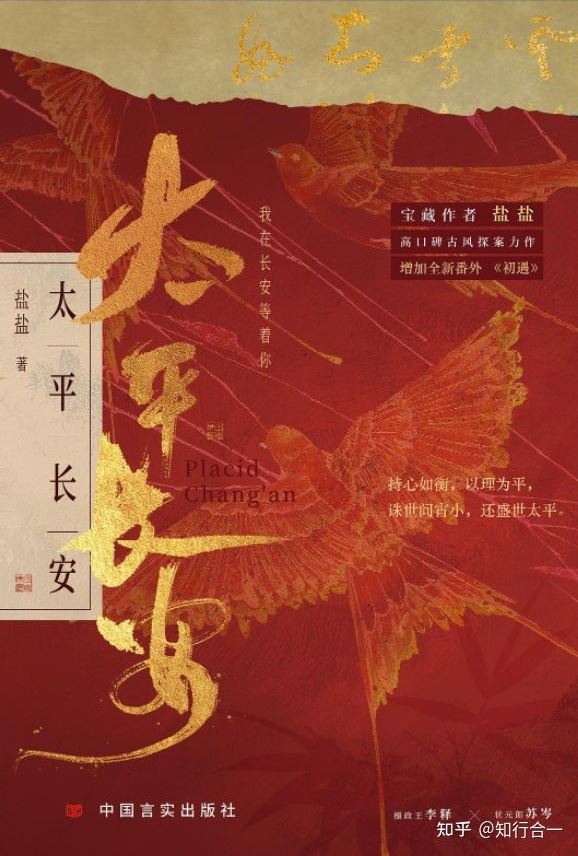
... Read More
The atmosphere in this chapter is absolutely dripping with mood, and I want to talk about how the setting does so much heavy lifting. It starts with the curfew drums—three echoes through Chang'an. Su Cen hadn't realized how late it had gotten. That single detail establishes the entire temporal landscape: a city that shuts down, that enforces silence after a certain hour, where being out past curfew would be dangerous. The world feels governed, controlled, and yet Su Cen is still moving through it freely because of connections and privilege. Then there's the sedan chair waiting in the cold. Su Cen feeling guilty about making servants wait all night, tipping them generously—this tiny moment tells us so much about the social hierarchy and the economic reality of the city. People are waiting in darkness while officials solve mysteries. Xingqing Palace at night is described with such restraint. Cool night air, lantern light, the rear hall, the sleeping quarters with lights still on. Li Shi not being in the habit of keeping lights on—that detail alone paints him as a man of routines, of discipline. The fact that Su Cen notices this speaks to how well he knows this environment now. The study at Dali Temple with towering stacks of memorials and a single lamp—this image of solitary investigation against overwhelming paperwork is almost cinematic. You can see the dust motes in the lamplight, feel the fatigue. And finally, Li Shi on his bed in the dim light, book in hand, hair like a waterfall. The visual poetry of that scene—darkness and light, authority and intimacy, power and vulnerability—all compressed into one frame. The world feels lived-in, humid with the specific atmosphere of imperial Chang'an at night.
... Read More
Let's just talk about Li Shi for a moment because this man is absolutely ruthless in the best way. He calls Su Cen naive and — I cannot stress this enough — HE'S RIGHT. Su Cen fetches his own official attire, looks up at him with bright eyes full of stars, and says something like 'What's wrong with being naive? I want to show you.' And Li Shi's response is basically a smile and silence. Not affirming, not denying, just... observing. This is a man who knows exactly what he's doing and has zero intention of explaining himself. But here's what gets me — the scene where Su Cen tries to hide behind a book because he's barefoot and half-dressed, and Li Shi just stares at him with pure desire in his eyes. Su Cen bolts. Of course he bolts. Every time these two get close to something real, Su Cen runs. And yet he keeps coming back. That's the tragedy and the comedy of it. Then Li Shi discusses court politics — Wang Yan's opposition, Lang Jie's scheming, the young emperor's indecisiveness — while... you know... continuing to exert force. The juxtaposition is incredible. Serious political drama happening while he's physically dominating the person he wants. It reveals everything about Li Shi: he doesn't separate his desires from his power, and he doesn't see any contradiction in that.
... Read More
I cannot stop thinking about Liu Cheng's line: 'Your Highness, even when punishing a dog, you should consider its master!' That is such a devastatingly perfect thing for a sycophantic eunuch to say in a moment of desperation. He's essentially saying 'you're hitting my boss, so watch what you do' but framing it as some kind of polite advice. And Li Shi's response? 'Are you suggesting that someone instructed this eunuch to meddle in politics?' Just dismantled him in six words. Absolute legend. But honestly the dialogue that gets me most is Su Cen's entire performance when he's called upon. 'I do not know who the Registrar of Huzhou is. I only know that after the sudden death of the Governor...' He's playing dumb so well it's almost painful to watch. Every line is perfectly calibrated — feigned ignorance, respectful tone, completely missing the point of what everyone's discussing. The Minister of Personnel's reaction is the best: 'Lord Su, were you even listening just now? Do you know what we're discussing?' That line captured the entire court's confusion in one sentence. And then Su Cen's dismissive 'Oh, that. That is a family matter of His Majesty, not something I should comment on.' CHILL. That is the single calmest sentence in the most tense scene I've ever read. The dialogue in this chapter never once feels like exposition or filler — every single line is doing character work or advancing the power dynamics. Even Zheng Yang's casual 'Isn't it more fun than your Dali Temple, where it's all about dead bodies?' tells you everything you need to know about their friendship.
... Read More
This sequence is a masterclass in controlled escalation. The author doesn't rush the reveals—they drip them out like poison, which is fitting given the story's themes. We start with the courtesan backstory, which lands heavy but contained, then pivot to Su Lan's confession about being deceived, and THEN—right when you think we've hit peak emotional weight—the author introduces the old servant. That's when the gears start turning faster. The transition from Jia Wangchun's defensiveness to his breakdown works because the pacing gives each beat room to breathe. When Su Cen reveals the servant, the text lingers on physical details: "The man knelt on the ground, huddled in fear." We're not just told he's afraid—we see it. Then the slow, stammering confession follows, and the author lets the silence between lines do the work. "You... you!" Jia Wangchun can barely get the words out before the coughing fit begins. That physical reaction says more than any internal monologue could. But here's where I have a minor gripe—the section about the poison's name and effects feels slightly expositional. "Thousand-Day Drunkeness" is a vivid name, sure, but the explanation that it's "a secret concoction not available on the market" reads a bit like the author making sure we understand the mechanics. It works for plot purposes, but it's a tiny hitch in an otherwise smooth narrative machine. The real structural brilliance comes with the pivot away from He Xiao's punishment. Just when we think this is building toward a satisfying confrontation—when Jia Wangchun has the ledger in his hands, when all the pieces are falling into place—the author shifts the goalpost. "I'm not after He Xiao—I'm after the Salt Monopoly Decree." This reframes the entire preceding sequence. Every revelation, every emotional beat, was leading toward systemic change, not individual revenge. That's a pivot that rewards careful reading. The ending lands with deliberate finality. The ledger changes hands, Su Cen accepts it with a solemn "Thank you," and the chapter closes. No cliffhanger, no dramatic flourish—just the quiet acknowledgment that the real work is just beginning. The pacing here trusts the reader to understand that this isn't resolution; it's preparation for what comes next.

Leave a comment

You must be logged in to leave comments. or
