Summary

... Read More
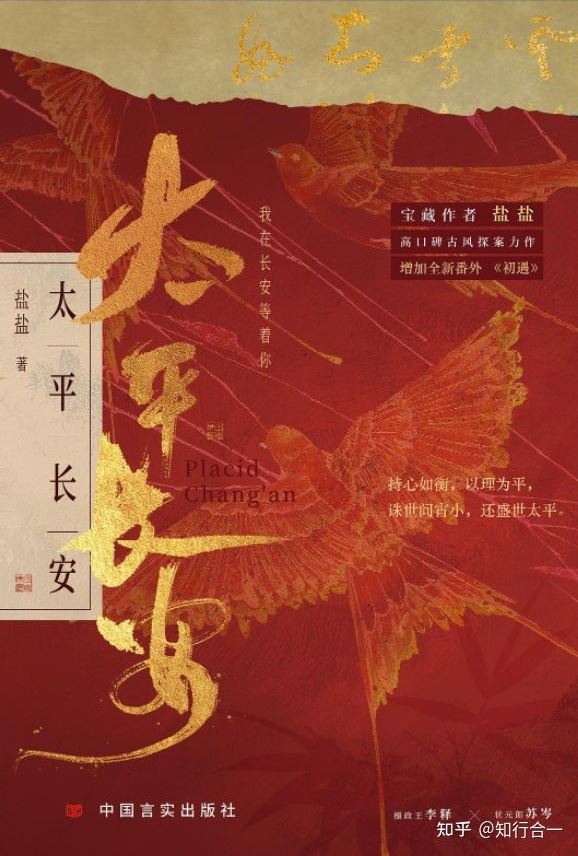
Su Cen is a brilliant but rebellious young scholar from a wealthy merchant family in the fictional Great Zhou Dynasty. Despite his exceptional talent, having topped provincial exams at sixteen, he spends his youth traveling the country rather than pursuing officialdom. Forced by his father to return to Chang'an for the imperial examinations, Su Cen arrives with his servant Ah Fu and begins gathering intelligence by listening to conversations in the Eastern Market. He learns of the delicate political balance between two powerful factions: the Empress Dowager Chu, who supports the young Emperor, and Prince Ning Li Shi, the Regent and the Emperor's uncle, who commands the military and wields the Nine-Dragon Whip.During a tea house incident, Su Cen encounters Qu Ling'er, an assassin attempting to kill Prince Ning. When Qi Lin, Prince Ning's terrifying guard with amber eyes, tracks Qu Ling'er down, Su Cen intervenes to protect the assassin, not out of altruism but out of defiance against the oppressive aura radiating from Prince Ning. The encounter leaves a lasting impression on both men. Soon after, Su Cen takes the imperial examinations and completes his papers early. His essay critically analyzes the current political climate, openly condemning the harmful effects of factional strife. Although he initially fears his honesty will cost him his life, he is shocked to discover he has become the Zhuangyuan, the top scorer of the metropolitan examination.The palace examination further intensifies the conflict between Su Cen and Prince Ning. During the audience with the Emperor, Prince Ning personally interrogates Su Cen, forcing him to articulate the specific nature of the political corruption he described in his essay. When asked to identify the core ailment of the state, Su Cen boldly answers "factional strife," directly challenging Prince Ning's authority. Rather than punishing him, Prince Ning finds Su Cen's fearlessness amusing and allows him to pass. However, this public defiance marks Su Cen as a target in Prince Ning's eyes. After receiving the imperial edict confirming his top rank, Su Cen realizes that Prince Ning has been manipulating events from the start, having spared Qu Ling'er in the tea house merely to observe Su Cen's reaction. Determined to survive and succeed, Su Cen resolves to play the dangerous game of court politics.At the subsequent Qionglin Banquet hosted by the Emperor for the top scholars, the political divide becomes stark. Su Cen, Zheng Yang (the second-place scholar and Prince Ning's nephew), and Cui Hao (the third-place scholar) are seated in a manner that forces them to choose sides. Zheng Yang aligns with Prince Ning, while Cui Hao gravitates toward Chancellor Liu Cheng, the leader of the Empress Dowager's faction. Su Cen finds himself isolated in the center, caught between the two opposing powers. The banquet features a couplet contest where political alliances are subtly displayed. Liu Cheng sets a sophisticated tone, followed by Cui Hao's allusion to Zhuge Liang, and Zheng Yang's seemingly simple but culturally resonant response. The event highlights the intricate web of relationships and the immediate pressure on Su Cen to navigate the treacherous waters of court allegiance, with Prince Ning watching him with intense, predatory interest.

Latest Release
DateGroupRelease
2026-09-26knoxt c71
2026-09-26knoxt c70
2026-09-26knoxt c69
2026-09-26knoxt c68
2026-09-26knoxt c67
2026-09-26knoxt c66
2026-09-26knoxt c65
2026-09-26knoxt c64
2026-09-26knoxt c63
2026-09-26knoxt c62
2026-09-26knoxt c61
2026-09-26knoxt c60

Community Reviews

Rating(3.9 / 5.0, 370votes)
5 stars
108(29%)
4 stars
118(32%)
3 stars
144(39%)
2 stars
0(0%)
1 stars
0(0%)

Popular reviews

... Read More
Okay so this scene between Su Cen and Qu Ling'er is literally everything. When Qu Ling'er is out there in the backyard clutching his waist, desperately digging through grass for his hidden weapons—that's not just comic relief, that's character revelation. The guy is SO vulnerable and we get it. He's a street rat trying to survive, and those weapons are HIS life. But then Su Cen just... lets him stay? With conditions? That's a whole relationship arc right there. What got me was Qu Ling'er's moment where he's like 'I can't give them up' and then Su Cen doesn't actually force him to. Instead he says 'You can stay, but hand them over for safekeeping.' That's basically the literary equivalent of a hug wrapped in barbed wire. Su Cen is like 'I don't trust you, but I also don't want you to leave.' And Qu Ling'er? He's already planning to repay him someday like some kind of tragic hero. Man, these two are gonna make me ship them so hard. The pen twirling scene? Chef's kiss. Qu Ling'er literally practicing with weapons while being interrogated shows how much his identity is tied to being an assassin-type figure. And Su Cen just... watches? Doesn't stop him? That's a whole lot of unspoken understanding right there.
... Read More
Let me just say this first: the dialogue in this passage makes every character feel like they have their own fingerprint on it. Su Cen's voice is this calculated, careful thing—he talks his way out of execution like it's second nature. 'Only I can uncover the truth and give the heir justice.' That's not panic talking; that's someone who knows exactly what lever to pull. Even when he's being kicked across the tent floor, his words stay measured. Xiao Yan's dialogue is all short, sharp commands. 'Speak!' 'What do you mean?' 'You said you know where the murderer is?' He's emotional but restrained, and that tension between his rage and his need to control himself comes through in every line. The man in black robes though—his voice is pure contempt. 'This man is slick-tongued, skilled at sowing discord.' 'Of course he'd say that. How else would he stay alive?' Every sentence is a sneer. You can hear the disdain without any stage directions. Li Shi is a completely different animal. His dialogue is minimal but devastating. 'An old friend has arrived; of course, I had to come and see for myself.' 'You wouldn't dare? I think you're quite daring—marching your troops into the capital.' The casual cruelty in that second line, delivered while he's just leaning against a chair like he's at a tea house, is incredible. He doesn't need to raise his voice because his authority does the work for him. And the narrative voice itself—it's this third-person limited that dips into Su Cen's head just enough to show his calculations without over-explaining. We get thoughts like 'If your son had such skill, he wouldn't have been assassinated in prison' and 'He was playing 4D chess' type energy without ever breaking immersion. The tone balances between grim danger and this dry, almost darkly humorous observation of political theater. Dialogue-driven, character-driven, perfectly balanced.
... Read More
I need to talk about the umbrella. Just… the umbrella. Because I re-read that passage three times and I still don't know how to feel. So Su Cen wakes up soaked, hugging this umbrella like a security blanket, and goes back to find those two lines of poetry written on it. And the poem itself — "Clouds cross Qinling, where is my home? Snow blocks the Blue Pass, the horse won't move forward." This is literally a famous Tang dynasty poem about exile and displacement, about being stuck between worlds and not knowing where you belong. And Qi Lin wrote it on an umbrella he GAVE to Su Cen. Let me process this for a second. The man who spends the entire chapter being cold and dismissive and physically aggressive — he takes a pen, he writes something vulnerable, he wraps it in an object of care (an umbrella, no less, something to PROTECT someone from the rain), and then he just… leaves. No explanation. No follow-up. And Su Cen notices but doesn't know what to do with it. The scene where Su Cen is staring at that handwriting under candlelight, wondering "what kind of state of mind makes these lines feel like they were written in blood" — I genuinely got chills. That's not just good writing, that's emotional precision. The fact that Su Cen immediately rationalizes it away because "Prince Ning wouldn't lament where his home is" tells us everything we need to know about how much Su Cen doesn't actually understand the person he's gotten entangled with. And then the next morning he's rushing out hoping to avoid Qi Lin but ends up getting a ride from Zheng Yang instead. The avoidance! The missed connection! I'm suffering and I love it.
... Read More
The atmospheric writing in these chapters is genuinely cinematic. Let me start with the Dali Temple kitchen scene—Su Cen eating plain noodles, regretting not grabbing dumplings and red bean cake from the Eastern Market. It's such a small detail but it grounds the whole story in real physicality. You can TASTE his disappointment. The author doesn't need to tell us he's tired and overworked; we see it in the way he's 'staring blankly at plain noodles, chopsticks in hand and tears in his eyes.' A grown man reduced to tearful noodle regret. I felt that. Then the rain starts—'the rumbling of thunder in the sky, and the daylight suddenly dimmed.' And Su Cen feels RELIEF. Not dread, not annoyance. Relief. That single word does so much character work. The umbrella scene in the alley is where the writing really elevates. 'The rain fell like a curtain from the ribs of the umbrella, and the surroundings seemed shrouded in a light mist, making everything indistinct.' You could film this. Literally frame by frame. Mist, umbrella edges dripping, two figures in grey rain—this is a movie. And then Prince Ning's entrance: 'Although it was raining, the man's body remained spotless. It seemed he had just come down from court and hadn't changed out of his official attire yet. Dressed in black robes with a crimson hem and hair as dark as ink, every strand was clearly visible.' This guy is either supernatural or the universe bends around him. He walks into a violent confrontation like he's strolling through a garden. The world feels lived-in too—the court gate saying 'without money, don't come in,' the stone lions that 'could bite someone and make them bleed,' the different prison systems (Dali Temple vs. Ministry of Justice). This isn't a generic historical setting; there are actual rules and hierarchies here.
... Read More
'These are my lifeline,' Qu Ling'er said. And honestly? That line destroyed me. Like, you're telling me this whole time he's been carryingAround lethal weapons because that's literally ALL he has in the world? No family, no home, just a belt with hidden blades and a tube full of needles he made himself. And then Su Cen slams the table and yells 'You're not even twenty yet, and you're carrying all these deadly weapons into my yard—what exactly do you intend to do?!' and I'm over here like WOW he actually cares. That's not interrogation, that's a worried older brother energy and I am HERE FOR IT. But then the soft part: 'Take care of yourself.' Just three words from this ice king and suddenly I'm emotional. The way Qu Ling'er smiles wryly and says 'I doubt there's anything you need me to repay'—he's already bracing for rejection, already expecting to be alone again. But Su Cen basically says 'Stay anyway.' The crab pastry moment with Ah Fu was the cherry on top though. 'There won't be a next time,' Qu Ling'er says, and I swear to god if this isn't the start of something beautiful I'm gonna scream.
... Read More
The passage about commerce being considered the lowest of all trades stopped me cold. This isn't just worldbuilding detail—it's the entire thematic backbone of Su Lan's tragedy. "All trades are lowly, with commerce being the lowest of the low." Merchants couldn't ride carriages or wear silk. They had wealth but no status. And Su Lan—brilliant, capable Su Lan—voluntarily took on this burden so his younger brother could pursue the scholarly path, the respected path, the PATH. The author contrasts this with Cui Hao, who despite having a blind elderly mother to care for, still chose the scholarly route because officialdom was the only respectable option. Su Lan saw this and made his choice: he would become one of the despised merchants so Su Cen wouldn't have to. That's not just sibling love; that's a complete erasure of self in service of family legacy. Now the question hanging over everything is whether Su Lan's merchant dealings—specifically his connection to He Xiao—represent corruption or exploitation. Was he complicit in the salt conspiracy, or was he, as Su Cen desperately hopes, fooled by someone he trusted? The theme here is crushing: Su Lan already sacrificed his status, his education, his identity. If he's also sacrificed his integrity, then he lost everything and got nothing in return. The salt itself is symbolic too—this essential commodity that's being manipulated, hoarded, weaponized. The people below the smugglers are left without salt. The network collapses. Power flows through something as basic as salt, and everyone in Yangzhou is drowning in it. How many Su Lans are there, giving up everything for people who'll never know the full cost?
See all reviews

Custom lists

See all custom Lists