Peerless Little Misfortune - Reviews

Peerless Little Misfortune
+Add to Custom List
Sort
Add review
... Read More
Okay so let me just say—Ye Ci is the most interesting character in this entire book and I am HERE for it. The guy wears a mask, barely speaks, and yet every single interaction he has tells you SO MUCH about what he's feeling underneath. When he tosses that document into the brazier and says 'Don't ask about her affairs,' you can practically feel the walls he's built. And then Zhou Hong goes and mentions that Zhang Quezi told him about Ye Ci splitting a mountain with his bare hands at SEVEN. At seven. And Ye Ci's reaction—frowning beneath his mask, voice turning cold—that's not just annoyance, that's someone whose entire childhood was weaponized and now he won't let anyone reduce him to a story. But the real gold is how he treats Luo Yinyou. Think about it: he declares she'll be commander-in-chief of the Never-Night Army. Then he personally offers to teach her cultivation, military strategy, and killing. Not because he likes her—well, maybe a little—but because he sees something in her. And when he says 'Your soul isn't just three years old, is it?'—that moment! He doesn't expose her. He doesn't threaten her. He just... acknowledges it. And then he pokes her pineapple head and zaps her with electricity. That's basically his love language at this point. And Yan Futong? She waited outside in the snow ALL NIGHT with dark circles under her eyes just to talk to the Little General. That's devotion. That's the kind of loyalty that makes you want to shake her and say 'girl, he's a masked mystery man who might be plotting rebellion, why are you like this?' But also, I respect it. The dynamic between her and Zhou Hong is pure comedy gold though—fighting over who gets to train the kid while the whole army watches and places bets. Ye Ci just stands there in his mask judging everyone and I am living for it.
... Read More
Let me just say this out loud: Luo Yinyou has THREE YEARS TO LIVE and the author is making me care about her pineapple hairstyle. How is this fair? How is this allowed? The stakes here are absolutely brutal and I need to unpack why they hit so hard. She has the Dragon Seal of Ten Hells on her soul—a seal so powerful it's described as 'a dragon pressing down on you' making it impossible to 'lift your head to live normally and cultivate.' Every three years she faces a hurdle. If she can't remove the second nail within three years, she dies. And not just dies—she can't reincarnate. That's the kind of finality that makes your stomach drop. But here's the thing that makes it work: the author doesn't just dump this information on us and move on. We feel it through Luo Yinyou's panic. 'Her mind raced through countless thoughts in an instant, her brain spinning so fast it felt like she had hit a dead end.' That's not exposition—that's a character experiencing terror in real time. And then she tries to deflect with 'Palace jade liquid wine?' and Ye Ci just looks at her like she's lost her mind. The humor doesn't undercut the stakes; it makes them more real because it shows how desperately she's trying to maintain control. And Ye Ci's revelation that he doesn't have much time left? That changes everything. He's not just her teacher—he's someone running out of time too. Two people racing against death, bound together by secrets and necessity. The stakes aren't just personal anymore; they're shared. And that's what makes me desperately want to keep reading.
... Read More
There's this one line early in the chapter that just hit me like a physical force: 'In this bitterly cold land where resources were scarce, war and suffering were everywhere. It seemed that only tonight was truly peaceful.' That's it. That's the entire world in one sentence. You don't need a chapter of exposition to understand the setting—you just need to know it's cold, it's harsh, and peace is a luxury that doesn't last. The imagery throughout these chapters is so vivid. The long footprints in the snow as the three of them walk out of the courtyard. The map of the imperial city spread out in Ye Ci's study like it's the most natural thing in the world. And then there's Luo Yinyou outside the window, pacing back and forth in orange-yellow clothes with her explosive hair, looking like a giant pineapple. The contrast between the deadly serious political world Ye Ci inhabits and this absurd, chaotic child who just fell from the sky—it's genius. The world feels lived-in and real, but it's also weird and funny and full of characters who argue over training methods in front of an army that places bets on everything. The martial zone scene where Zhou Hong and Yan Futong fight their way from the living area to the Martial Zone, drawing tens of thousands of soldiers to watch, is another standout. You can practically hear the crowd, smell the dust, feel the energy of an army that's so bored and fed up with the Dark Division that they're turning a personal dispute into a spectator sport. The worldbuilding isn't in big exposition dumps—it's in the details. The Ghost Summoning Instrument. The cultivation realms. The betting cloth unfurled by a 'friendly-faced soldier.' Every detail makes the world feel real and alive.
... Read More
The pacing in this section is genuinely masterful and I need to talk about how the author slides from absolute comedy into full-on horror without any warning. We start with a green sea urchin landing on someone's leg. A sea urchin. Luo Yinyou's hair standing on end like she's been electrocuted, Bian Gu rolling on the floor laughing — it's pure slapstick. The Wen Dong and Chui Xue kitchen scene is basically a sitcom interlude. Everything feels light, fun, ridiculous. Then Ye Ci pulls out the Soul Suppressing Nail and suddenly we're talking about lifespan costs, ten-year drains, and a seal so evil it erases your bloodline, talent, and karmic ties from existence. The tonal whiplash is intentional and it works because the comedy had already made us care about this kid. We were laughing at her Medusa hair one paragraph and the next we're learning she has three years to live. The structure also does something clever with information delivery. Ye Ci explains the Seal in layers — first the Soul Suppressing Nails, then the Spirit Sealing Nails, then the full horror of what the Dragon Seal of Ten Hells actually does. Each reveal raises the stakes higher. By the time he explains that the seal was designed to make sure "no one would know if she died, and her remains would never be found," you're genuinely disturbed. And then the chapter ends with her charging into a mud pit yelling about radishes like nothing happened. That juxtaposition — existential dread followed by a toddler in mud — is exactly why this book is addictive.
... Read More
I need to talk about Zhou Hong because this man is a NATIONAL TREASURE. Every time he opens his mouth I am wheezing. Let me just quote a few lines that absolutely destroyed me: 'One should learn the theory before cultivating. Only after understanding clearly can one begin, otherwise what if your meridians become disordered and you succumb to qi deviation?' This man is arguing about cultivation philosophy like he's a tenured professor and then immediately follows it up with: 'Oh, and your theories work so well they turned you into a muscular doll? Look around the entire Bei You Country – what other girl looks like you, trained to be so brawny?' And Yan Futong's response: 'Bullshit! Nonsense! This is the symbol of strength, what do you know?' I cannot stop laughing. The dialogue between these two is so natural, so sharp, so perfectly calibrated to their personalities. Zhou Hong is sly and sarcastic, Yan Futong is hot-tempered and earnest, and the author lets them collide in the most entertaining way possible. But then Ye Ci speaks and the whole tone shifts. 'From now on, I will personally teach you cultivation, military strategy, and killing.' That line is delivered with such deadpan seriousness and it's absolutely perfect. And his follow-up—'Your soul isn't just three years old, is it?'—delivered like he's commenting on the weather. The contrast between his sparse, precise dialogue and everyone else's chaos is what makes the voices feel so distinct. Each character has a rhythm, and the author never lets them blur together.
... Read More
Okay can we just talk about how Ye Ci and Luo Yinyou's relationship is the most chaotic father-daughter energy I have ever encountered and I am HERE for it. The whole "I'm not your father" → "Then should I be your daddy?" exchange had me absolutely losing it. Ye Ci's emotional fluctuation points spiking like a stock market crash every time she opens her mouth — +1 this, +1 that, he's literally losing his mind and he knows it but he can't escape. But then there's this one moment that actually hit me in the chest. When Ye Ci tells her the Seal can't be undone and she'll die in at most three years, and her hair just... droops. Like, her entire body language shifts from hyperactive sea urchin to a deflated balloon in one beat. And Ye Ci notices. He notices her hair changing with her mood and actually pauses to think about it. That's when something shifts in him — he starts seeing her as more than just a weird kid who keeps calling him Daddy. He starts wondering "what exactly are you?" and I think that's the moment he becomes invested in her survival, not just curious. The milk scene too — giving her the Mustard Seed Space pot and then being called "Uncle" on purpose just to farm points. It's petty and hilarious and somehow deeply affectionate. He could've just ignored her but he didn't. And when she asks for the Crescent Nail back, he hesitates. That awkward silence? He could've kept it. He didn't. "You little brat, if you keep laughing in that mocking tone, don't blame me for slapping you dead with one hand" — this is the love language of a man who has no idea what he's doing but is trying anyway.
... Read More
There's a recurring image in these chapters that I can't stop thinking about: falling. Luo Yinyou dreams of falling from a great height. Every dream ends the same way. She literally fell from the sky into this world. And Ye Ci keeps saying 'she fell from the sky' like it's the most important explanation for everything. But it's not just a plot device—it's a metaphor. She's someone who doesn't belong. Someone who was thrust into a life she didn't choose, with a body she doesn't understand, in a world that's already at war. The Dragon Seal of Ten Hells pressing down on her is another layer of this. It's not just a magical restraint—it's the weight of destiny, of expectations, of a fate she didn't ask for. And the fact that she has to slay a dragon to break it free? That's the core of the story right there. She has to conquer something impossible to be herself. And then there's Ye Ci's line: 'Human rulers—I look down on them.' What does that mean for someone who's about to teach a child rebellion? Is he rejecting the system because he's seen too much? Because he's been hurt by it? The masks everyone wears—Ye Ci's literal mask, Luo Yinyou's hidden age, Yan Futong's devotion masking her vulnerability—these are all about identity and what we choose to reveal. The thunder bloodline is interesting too. Lightning is sudden, destructive, unpredictable. It's the opposite of the slow, grinding oppression of the Dragon Seal. Maybe that's the point—her power is already inside her, waiting to break through.
... Read More
The pacing in these chapters is absolutely masterful and I need to talk about how the author moves from one tone to another without any warning. You start with this quiet, almost meditative scene—Ye Ci burning a document, the three of them walking in the snow, Yan Futong wanting to say something but holding back. It's restrained. It's atmospheric. And then—Zhou Hong mentions the compass. Yan Futong says don't touch it. Zhou Hong says 'then you handle it.' And suddenly it's a full-blown argument about cultivation methods that escalates into actual combat while the entire army watches and places bets. The shift from 'bitterly cold land where war and suffering were everywhere' to 'COME ON, PLACE YOUR BETS!' is so abrupt it's hilarious. But then the chapter cuts to Luo Yinyou waking up, and we get this whole internal sequence where she's processing everything—the spy she killed, the generals arguing outside, her own confusion about why everyone calls Yan Futong 'Fu Jiangjun' when her surname is Yan. The author lets us breathe here. We're inside Luo Yinyou's head, feeling her disorientation, her panic, her dark humor about whether she wants to 'board the pirate ship' with Ye Ci. And then the climax—Ye Ci revealing he knows about her soul, the three-year deadline, the Dragon Seal pressing down on her like an actual dragon—and the chapter ends with a cliffhanger that's both terrifying and kind of funny because of the betting crowd. The structure here is so deliberate. Quiet tension, comedic release, emotional depth, then stakes that hit you like a truck. Every section earns its place.
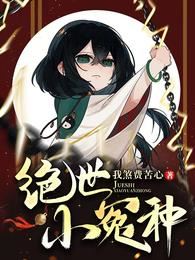
... Read More
I keep coming back to the hair. It's not just a running gag — it's actually a really clever symbolic device. Luo Yinyou's hair physically manifests her emotional state: puffed up when she's excited or angry, drooping when she's defeated. It's a visual language the author uses constantly, and it ties into something deeper about her identity. She's called a "green sea urchin" repeatedly. A sea urchin is soft inside but covered in spikes — that's basically Luo Yinyou's entire character. She presents as chaotic, prickly, impossible to hold onto, but underneath there's this terrified three-year-old who just wants to survive. The spikes are her defense mechanism. And the seals themselves are such rich symbolism. The Dragon Seal of Ten Hells doesn't just restrict her power — it erases her from the world's memory. No bloodline, no karma, no trace. It's the ultimate act of erasure. Someone went to extraordinary lengths to make sure this child would never exist in any meaningful way. And yet she's here, loud and electric and impossible to ignore, literally generating sparks from her hair. The milk pot that never runs out is another symbol I can't shake. Ye Ci gives her something that represents sustenance, continuity, survival — and calls it a Seal. Even his acts of care are wrapped in something restrictive. That's the world this story lives in: everything is both gift and cage.
... Read More
Let me just sit with the stakes for a second. Luo Yinyou has been marked for death by one of the most evil seals in this world. Three years. That's it. And the author makes this devastatingly clear through Ye Ci's cold delivery — "You'll die. At most, in three years." No drama, no crying, just facts. Which makes it infinitely worse. But here's what's brilliant about how the conflict is structured: the seals create a catch-22 that feels genuinely insurmountable. She needs to strengthen her physique to loosen the Soul Suppressing Nails, but the Spirit Sealing Nails on her head have erased her talent and bloodline, making cultivation tens of thousands of times harder. The seals literally prevent her from breaking the seals. It's a perfect trap. And yet — and this is what keeps me hooked — she doesn't break. Not really. After the three-year death sentence, after learning she has zero cultivation talent, after being told the seal can't be undone... she immediately pivots to "I will definitely break this lousy Seal!" Her response to existential doom is not despair, it's determination. The external conflict is clear: someone out there did this to her and they want her dead and erased. But the internal conflict is what gets me. She's a child who doesn't fully understand what's happening to her body, who keeps calling a masked stranger "Daddy" because she's lonely, who laughs in the face of death because what else are you supposed to do? The stakes are maximum and the protagonist is maximum chaotic. There's no way this doesn't end either tragically or triumphantly.

Leave a comment

You must be logged in to leave comments. or
