Man Who Would Be King - Reviews

Man Who Would Be King
+Add to Custom List
Sort
Add review
... Read More
I need to talk about the sword because I think it's doing way more thematic heavy lifting than the narrative gives it credit for. When Farne straps on that sword, it's not just a plot device that confirms "yep, this is definitely not modern day Japan." It's the symbol of everything the protagonist has been cautiously observing from behind baby walls. For an entire chapter, we've had this adult mind trapped in a body that can barely walk, watching, listening, calculating, staying invisible. And then—SWORD. Violence. Power. The ability to actually DO something. The sword represents the transition from observer to participant. Up until that moment, the protagonist is collecting data, making mental notes, trying to survive infancy without blowing their cover. The sword is the first concrete sign that this world operates on force, that status is enforced by threat, that a seven-year-old boy carries a weapon because his father taught him to. And then there's the taxation system the protagonist discovers—60% of the harvest, layered taxes, the feudal hierarchy stretching up to a Marquis. The sword and the tax are two sides of the same coin. One extracts loyalty through fear, the other through economics. Both are systems of control that the protagonist, as a second son with no inheritance, is positioned to either benefit from or be crushed by. The recurring motif of hiding is also worth noting. Straw mat over the basket. Protagonist crouching low, gripping the sickle handle, trying not to be seen. This mirrors their entire existence—physically hidden as a baby, mentally hidden as a reincarnated adult. The basket becomes this tiny metaphor for their whole situation: enclosed, covered, dependent on others to carry them through a world they're still figuring out.
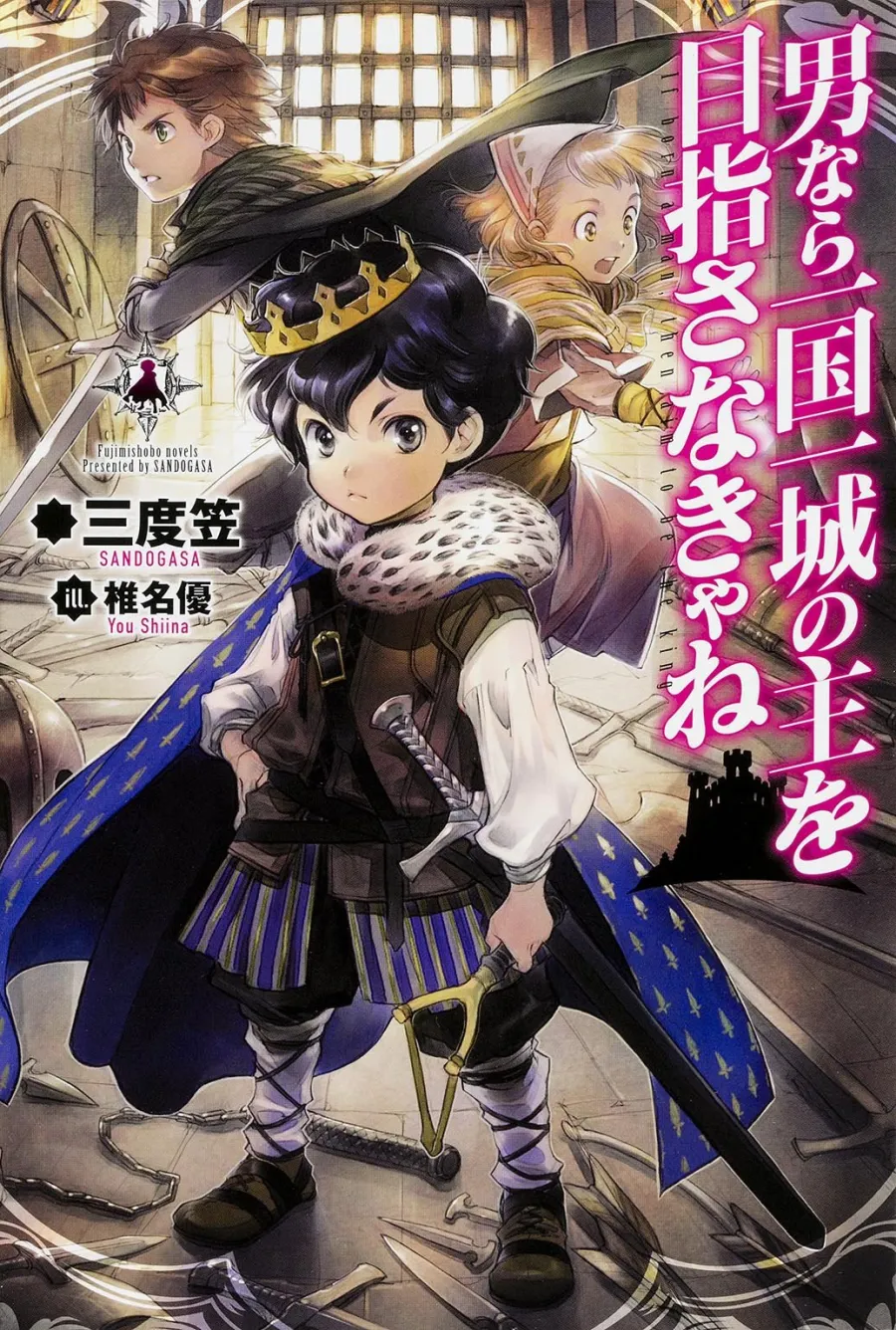
... Read More
Okay so I need to talk about the sheer audacity of this fight scene. A seven-year-old boy vs a full-grown goblin. That's not anime logic, that's just straight-up insane. And yet here we are and I cannot look away. The plot structure around this confrontation is surprisingly tight. You've got the slow buildup—Farne taking Al out for a stroll, meeting the village kids, learning about the werewolf tribe, Kelly going to fetch adults—all of this lulls you into this cozy, slice-of-life feeling before the goblin literally jumps into the training field. One second it's a peaceful afternoon, the next it's life or death. The pacing shift is jarring in the best possible way. What really sold it for me was the escalation. Farne gets stabbed in the leg. Then he keeps fighting. Then Mill throws stones. Then Al is practically directing from the basket like a tiny military strategist. The stakes climb with every beat and you never feel like anything is padded. Every action has consequence—Farne's sword is too heavy, his hands shake, he's clearly struggling but refuses to back down. I also appreciate how the fight resolves. It's not some deus ex machina rescue. The adults take ten minutes to show up and honestly? That felt realistic. Kelly going to get help was the right call, and the siblings handling it themselves gave the scene real weight. When Mill finishes it by beating the goblin's head in with a sickle—that's brutal and unexpected. Not romanticized at all. Just two kids doing whatever it takes to survive. The chapter ending with Farne carried off and Al being held by Mill's hand as they walk into Kelly's house? Perfect transitional moment. It gives you a breath but also reminds you that things have fundamentally shifted. This world is dangerous. The kids aren't just playing anymore. I did wonder one thing—goblins are pretty standard fantasy fare. Was there a way to make this feel fresh? I think the answer lies in how the narrative frames it. This isn't a heroic tale. It's desperate. It's messy. Farne gets hurt badly. They win by grinding the enemy down through attrition and teamwork, not brilliance.
... Read More
So here's the thing that keeps me up at night about this book—the stakes are simmering under the surface like a pot that's about to boil over and nobody's watching. On the surface level, it's a baby going on an adventure with his siblings. Cute, right? Wrong. Because the protagonist explicitly thinks: "Some measures will have to be taken before it's too late." Too late for what? Being disowned? Being pushed aside? The feudal system is already laying out exactly where second sons end up—nothing. Backup sons. Disposable. And the protagonist knows this. They've done the math on the taxation, they understand the succession, they're calculating their position in a world that has zero interest in protecting someone like them. Then there's the internal conflict, which is honestly where the real tension lives. This person has 45 years of life experience, an adult mind, strategic thinking—and they're trapped in a body that can barely walk. When they get hungry for more than an hour, they lose control. When something bumps their head, they cry. The gap between who they are mentally and what their body allows them to do? That's daily tension. That's a pressure cooker. And the external stakes? A kingdom called Ron Belt, a feudal system with a Marquis at the top, villages paying 60% in taxes, swords being carried by children. This is a world where weakness gets you killed or exploited, and the protagonist is currently the weakest possible version of a human being. But they're also the most dangerous—because they know things. They understand decimal systems and modern governance and the concept of reincarnation. The question isn't whether they'll survive. It's what happens when they finally stop pretending to be just a baby. I'm already stressed for them and they haven't even left the village yet.
... Read More
This world has healing magic. And the protagonist notices something that absolutely no one else seems to have considered: healing magic has actively STunted medical science. "Because of the existence of healing magic, the people have been inhibited from researching medical science and development in this area might have been obstructed because of this." This is such a brilliantly observed thematic point. It's not just worldbuilding—it's a commentary on how convenience kills innovation. The moment you can wave a spell and fix a wound, nobody feels the pressure to study anatomy, develop sutures, or understand disease. Magic didn't just replace medicine; it made medicine irrelevant. And that's a metaphor that hits way harder than it should in a fantasy novel. But the bigger symbolic thread here is the concept of the WELCOME outsider. Thirty-nine people transmigrated to this world. Eight are already dead. Alein is one of the thirty-one who survived. These transmigrators represent something—humanity's ability to adapt, to bring foreign knowledge into primitive systems, to reshape environments that weren't designed for them. But most of them died. Why? Because knowledge without discretion is fatal. Alein survived because he understood that the first rule of entering a new world isn't to change it—it's to survive long enough to change it. The great-grandfather Samato symbol is also loaded. He was the founder of the Greed Household, a Marquis's fourth son. In feudal succession systems, fourth sons have no inheritance path—they either serve someone else or forge their own way. Samato forged his way. And now Alein is being told—in a dream, no less—to do the exact same thing. The ancestor becomes a symbolic mirror, a projection of what the protagonist could become if he follows this path. Whether the dream is real or fabricated, it functions mythologically the same way: it gives Alein a divine mandate to build something from nothing. The three children and their MP values also feel symbolic. Farne (2 MP), Mill (1 MP), and Alein... well, Alein's MP is the variable we're waiting to see. The numbers feel arbitrary on the surface but they represent something deeper: each sibling's potential, their capacity to affect this world, and the inequality that fate has already built into their existence.
... Read More
Okay so we pick up right where the last batch left off — the goblin is still coming at us, Farne is clearly not okay, and my heart was pounding the whole time. Let me tell you, the author did a really smart thing here: they let Farne make the call. Instead of trying to run with everyone, he decides to stand and fight. That is such a good character moment because it shows he's not just some reckless kid — he's calculating, he assesses that Mill and Al can't keep up, and he makes the hard choice to buy them time. And then the injury! I thought for a real second he was done for. The blood, the fact that the spear was rusted — I was genuinely worried. But then the pivot into the healing scene totally shifted the tone. You go from blood and panic to this glowing blue light and everyone's just… okay? It's almost jarring in the best way. And Al's reaction — "all five of my orifices were open in shock" — I literally snorted out loud. That line stayed with me. The pacing in this whole section is really tight though. No filler, just incident after incident: goblin fight, escape, healing, return home, naming ceremony, status reveal. Each one lands and pushes you to the next. The Status Open ending is such a perfect hook. Up until that point, Al has been this observant but mostly reactive character. Now he suddenly has agency. He can open windows in his vision, check stats, use Appraisal. That's a massive turning point and I immediately wanted to keep reading.
... Read More
Let's talk about the most quietly brilliant scene in this whole chapter. Alein is alone in his room, testing the Appraisal skill, and he notices something weird — he can't make just his right hand glow. He can't isolate body parts. So he does this incredibly simple, almost childlike experiment: he pulls out a single strand of hair and holds it up. And it works. The hair shines on its own. 'I'm getting the hang of this.' And immediately — WHAM — drowsiness hits him like a truck. I love this moment because it's pure Alein. He's not some chosen one who figures things out through destiny. He's a guy who treated his new power like a science experiment. Test. Observe. Hypothesize. Try again. The hair trick is the kind of thing anyone would try if they were in his position, but the fact that the author chose this specific moment — right before the dimensional shift — makes it feel like a turning point. He was one step away from understanding his power, and the world took that opportunity to pull him into the cosmic backstage. There's also something deeply intimate about this scene. He's alone in a baby body, in a strange world, talking to himself, testing glowing lights on furniture. It's lonely and funny and a little pathetic and absolutely human. Before the god appears and drops universe-altering revelations, we get this small private moment of a guy just trying to figure out how his new reality works. And then the transition — from that quiet bedroom experimentation to this infinite white void with a voice that identifies itself as God — is jarring in the best way. The contrast between 'oh cool my hair glows' and 'you died in a train accident caused by divine negligence' is comedy gold and existential horror at the same time.
... Read More
I'm not ready for how much I invested in the relationship between Al and his mother Sharl in literally three chapters. Think about it — she's the one who casually mentions she saw his Status, which opens the door for him to ask about reading and writing. She's patient, teaching him with sand and letters, humming lullabies. And the scene where he tries to eat by himself and accidentally says something weird in front of the whole family? That was genuinely funny but also kind of heartbreaking when you think about it. He's a grown man's consciousness trapped in a toddler's body, desperately trying to pass as normal while everything around him is new and overwhelming. The way he panics internally after blurting out 'even I can do it' while his family is just looking at him with admiration — that's such a specific, human kind of anxiety. Then he has to backtrack and pretend it was someone else's words. Meanwhile the father Hegard is level 15, the maid Myun is level 2, and the sister Mill is already being noted as 'first born daughter' like she has some assigned role. I keep wondering what the sibling dynamics are going to look like. The text gives us almost nothing about Farne beyond his name and status, which feels intentional — like the author is saving the family tension for later.
... Read More
「Doing something like eat myself, even I can do it!」 For three whole paragraphs I was trying to figure out why this sentence sounded wrong, and then it hit me — that's not how a child would speak, and it's not quite how a Japanese person would speak either. That's how a modern Japanese office worker who's been reincarnated as a baby and is desperately trying to sound natural would accidentally slip up. The narrative voice inside Al's head is this perfectly calibrated mix of cynicism, panic, and genuine excitement, and it's what makes the whole thing work. When he thinks "What a jest" after the god's speech, that's so dryly funny. When he internally yells "Ohhh Yeah!" after discovering he can learn magic, it's genuinely enthusiastic. When he's panicking about his dinner table blunder, the voice becomes this rapid-fire stream of consciousness that's almost comedic in its intensity. The external dialogue is more restrained — the family speaks in this slightly formal, translated-light-novel style that fits the isekai genre — but it's the INTERNAL monologue that gives this book its personality. The god's dialogue is also worth mentioning because it has this detached, almost bureaucratic tone that contrasts perfectly with Al's increasingly desperate attempts to seem like a normal toddler. The gap between internal voice and external performance IS the joke, and the author lands it every time.
... Read More
"After all, I am a man with four parents. Just from the fact that I was loved by all four of my parents, makes me feel like I have been blessed and I am really happy about this fact." — I literally stopped reading and sat with that line for a solid minute. This is the emotional core that makes everything else work. On the surface, this is a transmigration/reincarnation story with status screens and magic training. But at its heart, it's about a kid who had love in his past life and is consciously choosing to give it in this one. He wasn't dutiful to his parents before, and now he's making a promise to himself to be better. Not because he has to. Because he wants to. And look at how he treats the people around him. Farne and Mill tried to protect him from goblins. He felt gratitude. Most reincarnation protagonists would just see their siblings as obstacles or pawns, but he genuinely appreciates them. He decides to help increase their MP potential instead of exploiting them. That's not calculation—that's affection. Then there's Myun. She's not technically family. She's the older sister's servant, essentially. But when Alein brings her into the confidential conversation about his plans, his parents immediately vouch for her: "Myun is like family to us." And Alein trusts that. He doesn't hesitate. He includes her. The father-son dynamic is also fascinating. Hegard is clearly a rough-around-the-edges local lord who gets genuinely surprised by his son's intellect. Every time Alein does a calculation, Father's eyes go wide. There's a real warmth underneath that—Hegard isn't resentful, he's proud, even if he doesn't fully understand what's happening. And Alein is carefully calibrating how much to reveal, watching his father's reactions like a chess player reading his opponent. I also want to mention how Alein appraises everyone at the dinner table while pretending to just eat. It's this quiet, almost predatory behavior that shows how layered his relationships are—he's simultaneously loving his family and strategically assessing every single one of them. That tension between genuine care and cold calculation is what makes these character dynamics so compelling.
... Read More
The stakes in this chapter are low-key terrifying, and that's what makes it so gripping. On the surface, nothing bad happens. A baby plays with his powers, his mom tucks him in, his dad leaves for a trip. But underneath all of that domestic calm, there's this constant, gnawing awareness: the protagonist is sitting on information that could get him killed. He knows about Inherent Skills. He knows they're rare enough that people react differently to them. He knows the religious society has the power to brand someone as a devil spawn—or a reincarnated god—and both labels are dangerous in their own way. And he's using these abilities in front of people who love him, who would report him if they knew the full extent of what he is. The drowsiness from Appraisal adds another layer of risk. Every time he uses his most useful skill, he gets weaker. What happens when he needs to use it most—during an actual crisis—and his body just gives out? He's a baby. His physical limits are real and unforgiving. Then there's the departure with Hegard. They're leaving together with the priest. The religious society is literally traveling with the family right now. How long before someone notices a one-year-old who can read, or whose status window shows something different from everyone else's? The protagonist's own words echo here: "If I somehow ticked off the religious society, down the track it would be irreparable." The suspense isn't in action scenes or battles. It's in the quiet moments—when Sharl enters the room and he has to pretend he's just a baby, when he can't go outside for more than a minute, when every use of his power costs him something. The danger is everywhere, and it's invisible.
... Read More
I need to talk about this one moment because it wrecked me. After all the world-building, the god mechanics, the questions about skills and civilizations — Alein just casually asks: 'Is my wife doing well?' And the god's response is... 'for about half a year she was in a considerably painful mental state, however, now she is living each day energetically.' That's it. That's the whole devastating beat. Alein died protecting a stranger's kid, got yanked into another world, and his first instinct wasn't power or revenge or even understanding the rules — it was his wife. And she suffered for six months after he died and now she's moving on without him. The god can't even offer comfort, just facts. 'It is impossible' to contact her. 'You have cut all ties with your previous existence.' What broke me was how restrained Alein's reaction is. He doesn't explode. He doesn't beg. He just says 'That makes me relieved' and moves on to the next question. That restraint is everything. This is a man who died at 45, lived a full life, loves his wife, and is now trapped in a one-year-old baby body in a fantasy world — and he processes this emotional bomb with the composure of someone who's already accepted the worst possible outcome. The god's attitude is also fascinating. It's not cruel, exactly. It's more like... indifferent efficiency. It answers honestly but without warmth. When Alein calls the no-contact rule 'unreasonable,' the god doesn't defend it emotionally. It just says 'no, there have been people before you.' Like this is routine. Like human hearts are just data points. I keep thinking about what Alein is carrying right now. A dead wife he can't reach. A body that doesn't match his mind. A world where gods treat human lives like collateral damage in their ego battles. And he's still asking questions. Still trying to understand. Still functioning.
... Read More
Okay so this chapter dump just yeeted us from a mundane fishing club outing straight into a soul-crushing train wreck and then—poof—we're a baby? That's not a plot twist, that's a plot landslide. The author doesn't ease us into the reincarnation trope; they drop us right in the middle of the protagonist's last memory ("Miki…") and then immediately force-feed us the newborn confusion. It's chaotic, yeah, but honestly it mirrors how sudden death actually is. No time to process, just *bam*, new reality. The fishing club stuff at the start feels almost like a red herring—why spend all that time on boat seating arrangements and seasick warnings before we get to the death scene? Maybe it's grounding us in the protagonist's ordinary life before shattering it. But then the chat log about his birthday? That's a quiet, domestic moment that makes the accident hit harder. We've seen him joking around with Shiina, complaining about age, and then—*crash*. The plot doesn't waste time with a "dying vision of your life" montage; it just slams the door on his old world and opens another. I'm still trying to decide if the pacing from Chapter 7 to 14 feels like a rush job or just efficient storytelling. One minute he's analyzing the fishing boat's budget, the next he's trying to crawl in a wooden house where nobody speaks his language. Where's the transition? Where's the "oh I'm a baby" contemplation? It's all just… happening. Yet it works, maybe because the protagonist's own voice is so wry and self-aware ("Please tell me its a lie, ○ーnie.") that we trust him to guide us through the absurdity. But does the plot have holes? Why was he on that train in the first place? Was it really just a random accident, or is there some larger design? The text doesn't say, and that ambiguity is either bold or lazy. I guess we'll see.

Leave a comment

You must be logged in to leave comments. or
