Summary

... Read More

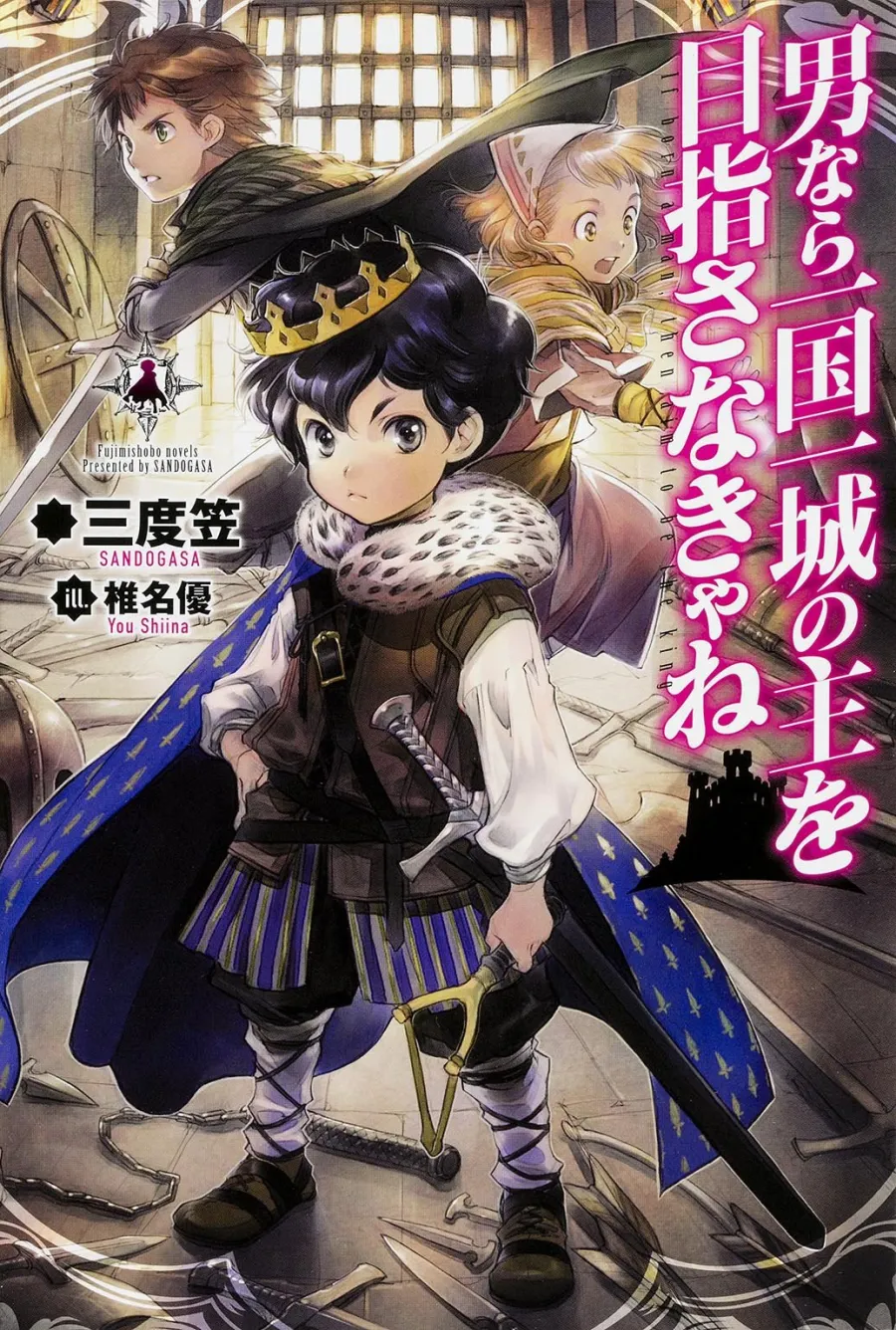
Takeo Kawasaki, a forty-four-year-old salesman and former member of the Japanese Self-Defense Forces, leads a mundane life in Tokyo. Haunted by his resignation after a legal dispute following a self-defense incident where he defended a friend from juvenile delinquents, he works in a food trading company and maintains a quiet marriage with his wife, Miki. During a routine train commute to meet with a subordinate, his memories flash through significant life events: his proposal, his wife's battle with uterine cancer, and daily interactions with colleagues. The narrative shifts abruptly when the train suffers a catastrophic derailment. Takeo uses his military-trained reflexes to shield a young child from falling debris, sustaining fatal injuries. As he dies, he reflects on his unfulfilled potential and the brevity of his life, expressing no desire to return to his previous existence.

Takeo awakens not in a hospital, but as a newborn infant in a foreign land. He retains his adult consciousness and memories, though he is trapped in the helpless body of a baby. Over the first year of his new life, he observes his surroundings, noting the absence of modern technology such as electricity, radios, or clocks. His family consists of his father, Hegard, a village headman; his mother, Shirl; his elder brother, Farne; his elder sister, Mill; and a housemaid named Myun. The setting is identified as Bakudo, a village within the Kingdom of Ron Belt, which operates under a feudal system. The social structure is rigid, with heavy taxation placed on the local populace by the ruling Marquis. Takeo, whom the family nicknames "Al," remains largely silent to avoid suspicion, using this time to gather information about the world he has entered.

The reality of this new world becomes undeniable when Farne, at age seven, carries Al outside to meet friends. Al witnesses Farne wielding a sword and encounters a girl named Kelly, who possesses wolf ears and a tail. This confirms that the world contains fantasy elements, including non-human tribes and monsters. The danger is immediate and visceral when a goblin attacks the group. Despite his young age, Farne engages the monster in combat, assisted by Mill throwing stones and Al providing tactical advice. Farne sustains a spear wound to his leg but ultimately defeats the goblin, showcasing a level of bravery and skill that impresses Al. After the battle, an elder woman named Shiemi heals Farne using magic, further confirming the existence of supernatural forces in this realm.

Following the incident, the family undergoes a naming ceremony conducted by a priest. During the ritual, the priest invokes "Status Open," granting each child a name from the heavens and seemingly assessing their potential. Intrigued by this phenomenon, Al experiments with the ability in private. By touching objects and focusing his will, he successfully activates a translucent blue interface that displays detailed statistics and information about himself and his surroundings. The interface reveals his name, race, and two inherent skills: "Appraisal" and "Gift of Natural Talent." The Appraisal skill allows him to analyze objects and creatures, highlighting their stats and weaknesses.

Armed with this knowledge, Al begins to understand his position in this feudal society. He recognizes the inefficiencies in his father's management of the village, particularly the excessive tax burden on farmers. With his adult intellect and new magical abilities, he resolves to adapt to his second life. He decides to embrace his identity as Alein Greed, planning to utilize his appraisal skills and modern knowledge to improve his family's standing and potentially reshape his destiny in this dangerous, fantasy world. The story concludes with Alein accepting his fate, ready to navigate the challenges of magic, politics, and survival in a world far removed from the one he left behind.

Latest Release
DateGroupRelease
2026-10-01light novels translations c30
2026-10-01light novels translations c29
2026-10-01light novels translations c28
2026-10-01light novels translations c27
2026-10-01light novels translations c26
2026-10-01light novels translations c25
2026-10-01light novels translations c24
2026-10-01light novels translations c23
2026-10-01light novels translations c22
2026-10-01light novels translations c21
2026-10-01light novels translations c20
2026-10-01light novels translations c19

Community Reviews

Rating(4.2 / 5.0, 49votes)
5 stars
21(43%)
4 stars
15(31%)
3 stars
13(27%)
2 stars
0(0%)
1 stars
0(0%)

Popular reviews

... Read More
Okay so this chapter hits different because we finally get answers but they come wrapped in this absurdly layered reveal. Alein uses the Appraisal skill, gets pulled into this white void dimension, and meets... God? Or at least a god. And the whole origin story of why they're all reincarnated is basically that two deities got into a toddler-level tantrum match, broke a barrier, killed 40 people including Alein, and then pretended they were doing it out of charity when they really just wanted to smugly prove the other guy was cruel. I love that the story doesn't shy away from making the gods look petty. The ant nest analogy is brutal — the gods are literally compared to kids who crushed an ant colony and then argued over who's more responsible while a third party mediator told them to just build a new water tank. It recontextualizes the entire isekai premise. These people didn't get reincarnated out of compassion or cosmic justice. They got reborn because gods were showing off. But here's what made me sit up straight — eight out of 39 reincarnated people are already dead. One from mental breakdown after the transfer, four from poverty-induced illness, one starved, one crushed in a riot, one eaten by a beast. This isn't a cozy fantasy world. The book drops this casually in conversation and it hits like a truck. The god just lists deaths like inventory. Meanwhile Alein's response is basically 'my luck is pretty good then.' Dark humor from a man who's clearly trying to stay level-headed in an insane situation. Also the twist that Alein is the ONLY person with two inherent skills — and it's tied to him saving a child at the moment of death — feels like the author is quietly setting up a special role for him without announcing it loudly. Smart foreshadowing disguised as exposition.
... Read More
Let me start with the train. The protagonist specifically goes to the END of the train because "the chances of it being empty is much higher." Twenty passengers in the entire car. He chooses solitude within a public space. This is a man who has spent his entire adult life performing professionalism—performing loyalty to the JSDF, performing competence as a salesman, performing gratitude toward an institution that betrayed him. The empty train car is the only place where he doesn't have to perform. Then there's the Suica card balance: 12,345 yen. He finds amusement in the sequential numbers. "What an interesting array of numbers." In a life where nothing feels meaningful—where his forced resignation destroyed his career identity, where his wife's illness threatens his family, where his subordinate's sales are crumbling—he can find joy in a numerical pattern. This is a man whose entire emotional life has been compressed into manageable, countable units. The knife. The delinquents have knives. He has nothing but his hands and four and a half years of military training. The weapon imbalance is striking—these boys with their cheap blades against a man whose body was literally engineered for violence. And yet he frames it as self-defense, as necessity, as something that happened TO him rather than something he chose. The knife represents choice; his bare hands represent obligation. And the fishing club. This symbol keeps coming back to me. A man who was expelled from the military for showing too much courage builds a recreational fishing organization where the unspoken rule is: if you catch a fish, you eat it. No catch and release. Nothing wasted. This feels like his philosophy of life distilled into a hobby—honor the kill, use what you take, don't pretend it's anything other than what it is. The fishing club is his attempt to create a code of conduct that his own institution abandoned. The poster on the train: "Behind the Scenes, the Great Efforts of the JSDF in 3.11." He stares at it absentmindedly and thinks about how he would have died in the earthquake disaster if he'd still been serving. This is the ultimate irony—a man punished for saving a stranger now watches the institution that cast him out receive glory for saving thousands. The prose doesn't resent this. That's what makes it devastating. What is this story actually about? I think it's about a man who learned that doing the right thing gets you fired, so he decided to do nothing at all—except fall in love with his wife anyway, and buy her a ring with gambling money, and ride empty trains to meetings he doesn't care about. The deepest theme here might be the simplest one: how do you live after you've learned that virtue has no reward?
... Read More
This batch is quietly obsessed with identity and what it means to start over. Al is caught between two names — Takeo Kawasaki, the person he was in his past life, and Alein Greed, the child he is now. When he says "the person known as Takeo Kawasaki has ended, I should embrace the new life" — that is a death and a rebirth in one sentence. It hit me harder than I expected for something happening inside a baby's head. The "genius" label is another layer here. Mill calls him a genius, he reflects on it, and then does this whole internal debate about whether he actually deserves the word. In his past life he learned language faster, but is that really genius or just… remembering? He wrestles with this honestly. There's a kind of imposter syndrome running through these pages that feels very human despite the fantasy setting. Then there's the Status system itself as a metaphor. Here's a world where everyone has a visible label — name, race, inherent skills — and Al discovers he can see them all. It's almost like the ultimate form of self-knowledge, or the curse of it. What does it mean to know your numbers? Is he better or worse than others? The Appraisal skill in particular is loaded — it's not a combat ability, it's the ability to *see truth*. That feels symbolic of Al's entire position: he's an outsider who can perceive things others take for granted because he comes from somewhere else entirely. And Farne standing his ground against the goblin to protect his siblings — that's a different kind of theme about what it means to be a big brother, to choose sacrifice. All these threads about identity, worth, and responsibility are woven together here.
... Read More
Here's what I think this chapter is actually about beneath all the level-grinding: self-mastery through suffering. The MP system isn't just a magical resource—it's a metaphor for discipline, and the author is building a whole philosophical framework around it disguised as game mechanics. Let me break it down. MP decreases when you use willpower. It recovers slowly. But if you hit zero and survive, your maximum MP has a chance to permanently increase based on your age. The older you are, the harder it is to trigger that growth. The implication is brutal and beautiful: you need to push yourself to the absolute brink of losing control—where "any sense of self-control, motivations, discipline and or devotion will be decreased to reflect the value"—in order to grow stronger. The text says it explicitly: "In order to be in complete control of one's desires, they would need to reach an age of 26." Willpower is portrayed not as an innate trait but as a muscle that must be starved and then fed in order to expand. This is almost Stoic philosophy wrapped in JRPG terminology. And Alein—the protagonist—understands this intuitively. He doesn't just accept the system; he recognizes its implications and immediately starts thinking about how to apply it to his siblings. The theme here isn't power. It's responsibility. Power acquired through suffering demands that you use it to help others suffer productively. That's not a coincidence, folks. That's the thesis statement.
... Read More
Okay so I need to talk about how this novel handles its worldbuilding because honestly it's one of the quietly smartest things I've read in the isekai space. The god explains that special skills are divided into inherent skills (granted at birth/reincarnation) and acquired skills (mostly magic-related), and this distinction immediately opened up SO many plot possibilities in my head. Like, the protagonist already has two inherent skills — Appraisal and Gift of Natural Talents — which means he's starting ahead of the other 38 reincarnated people. But here's the thing that got me: the god also says abilities are very difficult to obtain and depend on talent and suitability. That's a built-in limitation that keeps the power fantasy from going completely off the rails. And then there's the shrine mechanic — gods visiting shrines once a year to renew friendships and select Shinto priests. This feels like a Chekhov's gun that's just sitting there waiting to go off. The protagonist specifically asks if he can meet the gods again by going to shrines, and the answer is 'unlikely but not impossible if you play an active part.' Translation: the plot is literally setting up future encounters. Also love how the god basically tells him 'if you can't get ahead with these tools, you're a terrible idiot,' which is both funny and narratively significant — it raises the stakes without saying so explicitly.
... Read More
Alein is absolutely unhinged in the best possible way. Here's this kid who physically can't even walk properly but is sitting there doing spreadsheet analysis on his own magical ability growth like a middle-aged actuary. The contrast is genuinely hilarious and kind of touching at the same time. But what really got me is the Farne and Mill section at the end. When Alein starts thinking about how to help his siblings increase their MP through deliberate exhaustion—"I really want to make them use up their MP so that it can increase"—you realize this isn't just a power fantasy. This kid genuinely cares about the people around him. He's already mapping out a strategy to consult Sharl, already worrying that his siblings can't even read yet. He's thinking three moves ahead while being literally one year old. The relationship with his father Hegard is just a name drop so far, but the Greed household itself feels like it's setting up something bigger. The sub-window revealing the household's founding date (7353) and lineage from Marquis Webdosu—that's worldbuilding as character history, and it's elegant. Also the moment when Alein laughs at himself for not playing enough RPGs back on Earth? That tiny bit of vulnerability underneath all the calculating? Perfect. You can tell he's a transported soul trying to make sense of a game-like world with pre-game knowledge that turns out to be woefully insufficient.
See all reviews

Custom lists

See all custom Lists