One Night Bride - Reviews

One Night Bride
+Add to Custom List
Sort
Add review
... Read More
I have to be honest — the first few scenes in this chapter were brutal and I was sitting here like "ok, noted, moving on" and then the author took me to the beach and I was COMPLETELY undone. Let me paint this for you: sunset, sea breeze that dissipated the heat with a trace of coolness, thousands of fish with different patterns roaming freely in blue and green water like a separate kingdom. Hua Rong crouching down and touching a fish that doesn't hide. The teenager grabbing a red fish and putting it back. Qin Shang Cheng kicking the kid away because he's in the way. And then Hua Rong herself wanting to leave but getting pulled back. This is such a deliberate contrast. You have the free fish in free water next to the woman who cannot leave, next to the pirate lord who owns everything around him. The cow candle lighting earlier, the simple meal they share, the teenager showing off calligraphy — these are domestic images. Warm images. The author is building a world where tenderness exists alongside horror and it makes both feel more real. The political backdrop is also woven into the scenery so naturally. The ship routes, the Flower Stone Network, the storm that sank a thousand-year tree and killed everyone aboard — this isn't just a romance novel setting, it's a living world with history, economics, and violence built into its geography. When Qin Shang Cheng says he'll grab some good things from the ships for her, he's not just being a pirate, he's participating in a system of extraction that mirrors exactly what he's done to her: taking what isn't freely given.
... Read More
Qin Shang Cheng's dialogue is almost entirely commands and threats, and that's the point. "Tomorrow I want to see you stand up well, serve me" - no explanation, no warmth, just absolute authority. His threat to the teenager is almost casually violent: "If it were not for your hair that doesn't grow, I would have gouged out your thieving eyes" - this man doesn't just kill, he describes exactly how he would mutilate people as an afterthought. That casual cruelty in his voice is what makes him terrifying. When he tells Hua Rong to wipe him clean while he's bathing, it's domination as language itself. But the teenager? His voice is completely different. Simple sentences, honest yearning: "I heard that the capital city has many literary talents and outstanding people, I would like to go to the capital city to see." No manipulation, no hidden agenda. He just... wants to see the world. And when he says "sister, if we escape, will be together" - it's innocent, desperate, and heartbreaking all at once because we know how dangerous that wish is. Hua Rong's own voice is the most interesting. She barely speaks aloud much of the time. Most of her dialogue is whispered, half-formed, internal. Her external voice is minimal and functional, but her inner monologue? That's where she becomes fully alive. "She has been running away for so long, not to admit herself to fate." That line reveals her entire philosophy in one sentence. The woman who serves her food has a completely different register too - resigned, fatalistic, almost maternal: "in this kind of place, no matter how bad your body is, you won't be able to endure it." Her voice carries the weight of someone who stopped fighting long ago.
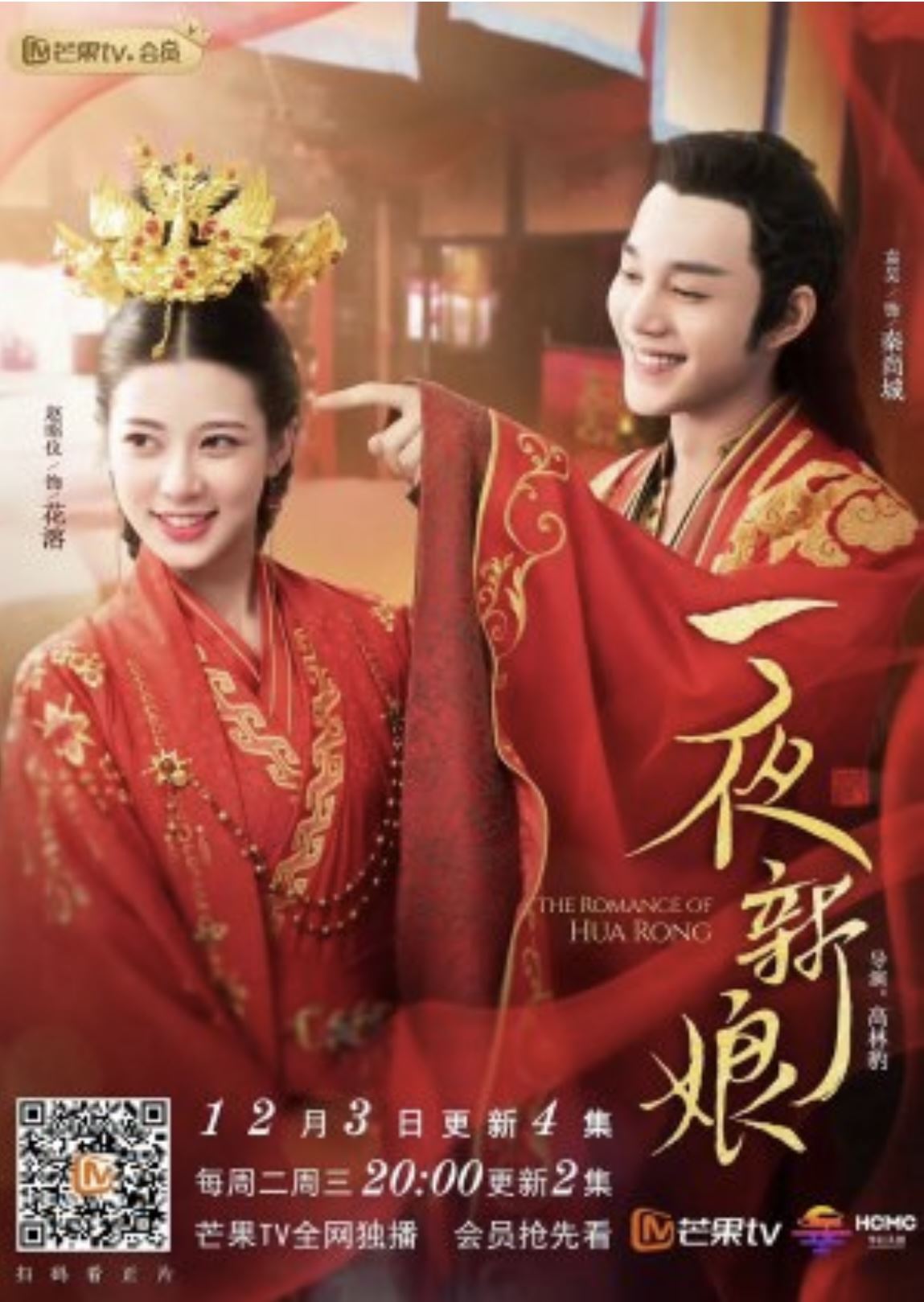
... Read More
The stakes in these chapters escalate so fast it's dizzying. Let me trace it: Hua Rong tries to kill herself → the King prevents it and claims her life → she's sexually assaulted → she recovers enough to plan his murder → she fails → he holds her and promises 'it won't hurt in the future.' Each beat raises the temperature. What makes this work is that the stakes are simultaneously physical and psychological. Physically, Hua Rong is in immediate danger of death—either by her own hand or by his violence. But psychologically, the stakes are about who gets to define reality. The King insists her life belongs to him. She insists her will belongs to her. When she reaches for the knife, she's not just trying to kill him; she's trying to reclaim ownership of her own choices. That's why the line 'I want to kill you, not to kill myself' hits so hard—it's an assertion of agency in its purest form. But here's what keeps me up at night: the conflict is expanding outward. The teenager exists. The King has sent him to WATCH Hua Rong. So now there's a third party in this equation who could be an ally, a spy, or both. The conflict is no longer just a binary of captor and captive—it's becoming a web, and I'm terrified of what the King's true intentions are. Also, that chest wound. The one he accidentally presses during their encounter. It matters. It clearly matters. She's injured, he noticed, and yet he continues. What happens when that wound becomes lethal? What happens when she becomes physically unable to resist? The stakes are climbing and I genuinely cannot predict where they'll top out.
... Read More
So let me just say this once and for all: Qin Shang Cheng has the MOST distinctive voice in this entire novel and I am obsessed. The man does not speak in complete sentences. He speaks in bursts, in exclamations, in things he Half-says and then shoves through with volume instead of vulnerability. 'Hahahahaha, little brat, you also have a name??' — that laugh alone tells you everything about this man. He's loud where others are quiet, physical where others are gentle, immediate where others plan ahead. And the way he talks to Hua Rong is a whole different register entirely. With the kid he's rough but there's curiosity underneath. With her it's commands ('Come here.') mixed with these weird almost-casual observations ('You've been writing with that little brat all day, aren't you hungry?') like he's trying to normalize the situation even though clearly NEITHER of them can. The dialogue never feels over-written or literary — it sounds like actual people talking, which is rare. Hua Rong's silence speaks louder than any monologue could. She doesn't explain herself. She doesn't argue. She just... doesn't answer. And that non-response becomes its own kind of dialogue, its own weapon. The author knows when to let characters stop talking and it makes every word they DO say carry more weight. Meanwhile Yue Pengju's lines are sweet and straightforward — 'this is my name, I really like it' — and that simplicity is exactly what makes his character feel genuine rather than manufactured.
... Read More
The worldbuilding in these chapters is doing SO much heavy lifting and honestly it's giving me whiplash in the best way. You've got this lush subtropical forest — fishy-scented branches, strange rocks, big flat stones that double as desks — and on the surface it reads like some idyllic island escape. But then you remember WHO owns this place and EVERYTHING changes color. The author keeps layering beauty on top of dread and it creates this incredible dissonance that makes the setting feel genuinely alive rather than just pretty backdrop. My absolute favorite image has to be the banana tree scene: long green leaves like natural fans, vivid against an evening sky that's 'blue like unadulterated crystal.' Underneath it all there's a small table with stolen jade, carefully cooked sea fish, a jar of wine — it's almost domestic, almost romantic, like something out of a painting. But Hua Rong is terrified. Her legs are like lead. She's walking toward what the text literally calls 'the banquet of the King of Hell' and the setting is trying to convince you this is some kind of date. That contrast? Chef's kiss. Even the brief moment where she steps outside and sees 'the azure sky, the sea and the sky, the breeze' and thinks 'if not for the horrible environment... it would be a beautiful place' — that one sentence does more worldbuilding than entire chapters of description. The island isn't just a setting, it's a character in itself. A gilded cage. A paradise that happens to be built on somebody else's suffering.
... Read More
The pacing here is deliberately jarring, and I love it. The chapter opens with frantic action—the seizure, the struggle, the fall into the sea. It's disorienting, just like Hua Rong's experience. Then, abruptly, we cut to silence. She's unconscious, waking up on a leaf, unable to speak. The shift from external chaos to internal stillness is so sharp it feels like a physical blow. The author uses this contrast to control our engagement. We're not allowed to catch our breath; we're forced into Hua Rong's limited perspective, which heightens the tension. Every movement is slow, every gesture loaded with meaning. The coconut scene, with its casual cruelty and strange tenderness, acts as a breather before the final power declaration. But it's not a real respite; it's the calm before the storm. The structure mirrors Hua Rong's psychological state: fragmented, overwhelmed, then numbly accepting. By the end, when she's told she's a slave, the pacing settles into a dreadful rhythm. We know this is just the beginning. The chapter doesn't conclude; it suspends us in that uncertainty.
... Read More
There's so much symbolism packed into this section it's almost suffocating — which I guess is the point. The salt is the first thing that hits you. Her clothes are 'hard and uncomfortable,' like a layer of salt on her body. Salt preserves. Salt wounds. Salt is what you use to make something last forever by stripping it of moisture and life. Hua Rong is being preserved in her own suffering — kept alive but not allowed to live. The seawater in her wounds turning every movement into torture is such a brutal image. She's literally soaking in pain. Then there's the seabird. A bird lands on her shoulder and stretches its beak toward her cheek, and instead of repelling it, she just... lets it. 'A burst of gold stars in front of her eyes, death seems to be waving to her.' The bird isn't threatening her — it's indifferent. Nature doesn't care if she lives or dies, and that indifference is somehow more terrifying than any pirate's cruelty. It's the universe telling her: you are small, you are alone, and nothing is coming to save you. The historical context about the Silk Road being severed and maritime trade flourishing is also deeply symbolic. The empire's political failures created the conditions for monsters like King Qin to rise. This isn't just background — it's the thesis. Personal cruelty and political collapse are the same disease, and Hua Rong is caught in both. 'The dead have been thrown in the sea, the living drink their own blood and the blood of others.' This line echoes through the whole section like a curse. The sea gives and the sea takes, and in this world, there's no difference.
... Read More
Let me just be clear about what's at stake here because this author does not pull punches. Hua Rong is physically weak - recovering from serious wounds, still putting ointment on her chest, sweating through fever. She's been threatened repeatedly: the King of Qin explicitly told her servants "Otherwise, you all have to die" and hurled the teenager across the room like garbage. The teenage boy risks his life just by approaching her. The women on those rafts? Their only crime was being captured. They literally drift into the ocean with zero chance of survival. And the pirate raid that just returned empty-handed? This changes EVERYTHING. Usually they bring back women, and there's some twisted social contract here where survival means serving the King. But they brought only gold and silver, no new captives. This means Qin Shang Cheng is coming back frustrated and violent, and there will be no distraction, no new "goods" to rotate through. Hua Rong knows this. She's been sitting in the yard knowing exactly what tonight means, and her response is... to prepare to kill herself? Or to actually fight? The teenager offers her something no one else has: a partner in survival. He can row. He wants to escape too. For the first time, her conflict isn't just internal - it's shared. Two people against a system that treats them as commodities. The patrol man spotting them is another layer of danger; one wrong move and both of them die. The waiting, the three days of false hope, the moment the sails appear on the horizon - every beat raises the stakes higher. This isn't just about one woman's survival anymore. It's about whether two powerless people can outsmart a man who literally throws people like kites. The question that haunts me: does Hua Rong raise that shell to her own throat or to someone else's?
... Read More
That red conch shell. Let me just sit with this symbol for a moment because it does SO MUCH work. It arrives as a gift from the teenager - an act of pure kindness in a place built on brutality. It's described as shimmering, beautiful, extraordinary. In a setting where everything about Hua Rong is being stripped away - her clothes torn, her body used, her autonomy destroyed - this shell is the one thing she CHOSES to keep. She admires it "countless times." It becomes her private sanctuary. But then it transforms. The text specifically notes: "the long shell has a pointed mouth which is very sharp and can definitely cut the neck." What was a token of hope becomes a tool of death. The same object that represents the teenager's innocence and connection to the natural world (beauty, shimmering patterns) becomes an instrument of ultimate agency - the only choice she truly controls over her own body. And the water imagery throughout this passage is relentless. Sea breeze, drifting rafts, vast ocean, bathing, pouring water. Water is both escape route and execution method. The women are "released" onto rafts that carry them into the endless sea. Hua Rong stands near the sea, contemplating whether to end her life by the water. And Qin Shang Cheng is literally washing himself when she watches him - power displayed through water, vulnerability through nudity. The sea is simultaneously beautiful and merciless, just like this story itself. "There are some things that are really worse than death" - this line keeps echoing in my head. What is worse than death? Loss of self? Survival without meaning? The shell asks this question without ever speaking.
... Read More
I need to talk about how this author handles pacing because the structural choices here are honestly impressive in a way that's almost manipulative (in the best way). Chapter 3 opens at maximum intensity. We're dropped into a scene of systematic abuse—women tied up, screamed turning to wails turning to silence, bodies bruised purple like living corpses. No warm-up, no gentle entry. Just: here is hell, deal with it. And then we narrow the focus immediately to Qin Shang Cheng and his interaction with Hua Rong. The chapter becomes this claustrophobic, sweat-soaked encounter that feels like it could go any direction at any moment. Will he hurt her? Will she fight back? Will someone interrupt? The tension is sustained through small beats—his drinking, her defiance, the bite, the stare-down, his strange departure, his protection of her from his own guards. And then Chapter 4. The entire tone shifts like a door closing between two rooms. Overnight, the revelers are gone, the fierce criminals feel like they were dreamt rather than lived, and Hua Rong is walking barefoot on a beach at sunrise. This is a deliberate structural breath—a release of tension that makes you realize how held-your-breath you were. The chapter moves slowly, deliberately, almost meditative. She walks. She sits. She watches a crab. She talks to a boy. What's clever is that the pacing isn't just alternating between intense and calm—it's using the calm to make the intense parts land harder on reread. When you know what comes after the beach, the beach becomes precious. When you know what night follows morning, morning becomes fragile. The author understands that structure isn't just about what happens next—it's about what the reader carries forward.
... Read More
When is the next posting?
... Read More
I need this in libraries. I have just about finished the first book. I have spent $40 on this book. I have like 8 chapters left and the rest then are bonus chapters, but I've run out of money to spend. so sad. I can't find book 2.

Leave a comment

You must be logged in to leave comments. or
