Summary

... Read More
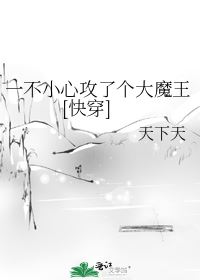
Qin Shang Cheng is a brutal pirate leader who commands a fleet of warships in the treacherous Angry Sea. After fleeing the mainland following a major crime, he established a hideout on a remote island, living off robbery and plunder. His crew consists of hardened outlaws who terrorize passing vessels without mercy. The narrative begins when Qin’s scouts spot a wooden boat carrying high-value captives, including several young women. Qin personally leads the boarding party, slaughtering the male passengers and taking the women captive. Among the survivors is Hua Rong, a seventeen-year-old woman disguised as a man to escape imperial authorities. Despite her rough appearance and dirt-covered face, Qin notices her refined features and slender feet, characteristics that distinguish her from common criminals. He claims her for himself, ignoring the other pirates who eye her with desire.Hua Rong immediately attempts to assassinate Qin with a hidden dagger, but her blade fails to pierce his dense muscle. Realizing she cannot kill him through force, she endures his captivity while secretly plotting her revenge. Qin, intrigued by her defiance, forces her to become his personal servant. He discovers her literacy and demands she write his name, a simple act that becomes a point of contention between them. Hua Rong refuses to write his name until he grants her freedom, leading to a tense standoff where Qin oscillates between violence and reluctant fascination. During this time, Hua Rong befriends Yue Pengju, a malnourished thirteen-year-old boy forced into piracy after his family was killed. She teaches him to read and write, providing him with a semblance of hope in their hellish environment.The dynamic shifts when Qin learns that a royal vessel belonging to the Ninth Prince is traveling nearby. Despite his men’s warnings about the risks of attacking royalty, Qin’s greed prevails. He launches a full-scale attack, looting the ship and capturing valuable treasures. However, the raid leaves the island vulnerable during his absence. Seizing the opportunity, Hua Rong attempts to escape but is discovered hiding near the cliffs. A storm rolls in, and she collapses from exposure and fever. Qin finds her half-dead in the rocks and, against his better judgment, carries her back to save her life. He tends to her wounds and breaks her fever, an act that confuses both himself and his subordinates.While recovering, Hua Rong remains defiant, continuing to plot her escape and revenge. Qin threatens the young boy Yue Pengju to ensure her compliance, revealing that his cruelty is matched only by his possessiveness. He forbids any pirate from touching her, treating her as his exclusive property. When Hua Rong recovers, she agrees to write his name in exchange for a brief respite from his advances. The act of writing connects her to a world of culture and order that contrasts sharply with the pirate life. Qin’s interest deepens as he realizes she is not merely a broken captive but a woman of intelligence and strength. The story concludes with Qin preparing for another raid, unaware that his obsession with Hua Rong is complicating his ruthlessness and planting seeds of vulnerability in his tyrannical rule.

Latest Release
DateGroupRelease
2026-09-26knoxt c14
2026-09-26knoxt c13
2026-09-26knoxt c12
2026-09-26knoxt c11
2026-09-26knoxt c10
2026-09-26knoxt c9
2026-09-26knoxt c8
2026-09-26knoxt c7
2026-09-26knoxt c6
2026-09-26knoxt c5
2026-09-26knoxt c4
2026-09-26knoxt c3

Community Reviews

Rating(4 / 5.0, 50votes)
5 stars
18(36%)
4 stars
17(34%)
3 stars
14(28%)
2 stars
1(2%)
1 stars
0(0%)

Popular reviews

... Read More
I need to talk about the absolute emotional whiplash of this section, because reading it felt like being tossed between two different genres. On one hand, you have King Qin and Hua Rong, and honestly, some of this is genuinely disturbing and I don't want to pretend otherwise. The scene where he bites her lips—starts violent, gets light and sweet, gets excited, leaves a red mark, then picks her up and carries her to bed like she's some kind of prize. "Her white face and blue lips, three strange colors mixed together turn into an indescribable beauty." That line gave me chills, not in a good way. It's beautiful prose but it's describing a man who has reduced a woman to an aesthetic object in his mind. And yet—here's the thing that keeps pulling me back into this story despite my reservations—the author is clearly building some complicated emotional tension between them that I can't ignore. The bullhorn warning interrupts their intimacy and Qin Shang Cheng hurries out, leaving her with that command to stay put. He's worried about something bigger, and she's left alone with her swollen lips and aching body and this terrifying uncertainty about whether he'll come back. Then Yue Pengju appears and everything shifts. The tenderness between Hua Rong and the boy is so pure it hurts, and that tenderness exists in direct contrast to everything King Qin represents. She smiles at the boy. She promises to teach him. She takes a beating for him. These are moments of genuine warmth in a story that is otherwise cold and dangerous. The romance subplot—if you can even call it that yet—is making me incredibly conflicted. Part of me wants to protect Hua Rong from this man, and another part of me is sitting here analyzing every interaction like it matters, which means the author has hooked me whether I want to be hooked or not. That's the problem with bad-boy captivity narratives—they're manipulative in ways that are hard to resist.
... Read More
Okay so let me just say this sequence of events is absolutely MESSY in the best way possible. We start with Hua Rong trying to kill herself—removing her shell, attempting it right in front of the King—and he FLIES into a rage. But here's the thing that made me sit up: he doesn't just let her die. He literally says 'Your life is mine.' That line hit me like a truck because it completely reframes the entire power dynamic. She's not a prisoner who might escape; she's property he won't even let die on her own terms. Then the Storm Attack chapter hits and the plot just goes OFF THE RAILS. He takes her into his house, tears her clothes off, and what follows is... intense. I won't go into graphic detail but the sexual violence aspect is undeniable and it's written with this rawness that made me physically uncomfortable. And then—AND THEN—she tries to kill HIM instead. She waits until he falls asleep, slips out of bed like a ghost, reaches for his belt knife, and whispers the single most devastating line in the entire passage: 'I want to kill you, not to kill myself.' That reversal is chef's kiss. She went from trying to end her own life to attempting regicide in the span of one night. The plot has gone from captivity narrative to something far more dangerous. And the fact that the King responds by picking her up and putting her back to bed while saying 'Really, it won't hurt in the future'?? The psychological manipulation is next level. Also, I need to talk about the teenager. He's mentioned as 'the boy who gave her the shell' and now he's been assigned to watch her by the King himself. That's a plot thread I am NOT ready to see pay off.
... Read More
The stakes in this chapter are layered in a way that keeps me on edge. On the surface, the conflict is simple: captor and captive. But the author keeps raising the temperature. Hua Rong's internal vow — 'If I can still live, I will definitely kill you one day' — isn't just dramatic flourishes. It's a survival strategy. She has to believe she will escape, she has to believe she will survive, or she literally cannot function. The stakes aren't just physical safety; they're psychological existence. Then there's the political stakes that surface almost casually. Cai Jing. The Flower Stone Network. Ships going missing at sea. Lord Shun's impending fall. These aren't background details — they're the machinery that created Hua Rong's situation in the first place. The 'flower stone outline' that destroyed families and sunk ships is the same system of extraction that put her in Qin Shang Cheng's hands. She's not just fighting one man; she's fighting the logic of the world she lives in. And the most chilling stake of all: her own complicity. She writes his name. She plays along for three days. She smiles. She lets the teenager call her sister. Is she surviving or is she adapting? When Qin Shang Cheng picks up the paper and says 'My name looks beautiful when written on the paper' — he wins. She gave him something. Even the act of writing his name is an intimate gesture, whether she intended it to be or not. The question hanging over everything: how much of herself is she willing to lose to stay alive?
... Read More
Can we just talk about how well-written this dialogue is because I have opinions. Qin Shang Cheng's voice is unmistakable. He doesn't speak in complete sentences half the time. He trails off with ellipses, he interrupts himself, he laughs like a poisonous snake. His dialogue is performative — even when he's being genuine, he wraps it in menace. 'Follow me, and I will let you eat and drink spicy food for the rest of your life' — this man is literally offering her protection from starvation while holding her captive. The cognitive dissonance in that line is chef's kiss. Hua Rong's voice is the opposite. She barely speaks. Her lines are fragments: 'Not until you let me go.' 'Then get out of the way.' 'Cai Jing is a piece of shit.' She speaks only when she's asserting something or when she's angry. When she's surviving, she's silent. Even her threat — 'If I can still live, I will definitely kill you one day' — gets cut off mid-sentence by a kiss. The dialogue itself enacts the power dynamic. The teenager's voice is the only one that feels uncorrupted: 'Sister, are you also very famous?' 'Who said that?' Simple. Direct. Uncynical. He exists outside the transactional language that everyone else speaks. And my favorite exchange has to be: 'Girl, you should write for the old man.' 'Then get out of the way.' 'Okay, I'll let you. You quickly write for me.' He retreats immediately. He got what he wanted and he knows it. No further pressure. Just satisfied.
... Read More
The dialogue in this section is absolutely CHAOTIC and I mean that in the best way possible. King Qin's voice is just PURE VIOLENCE wrapped in words. 'Damn bitch, if you don't come out, when I catch you, those women will be your fate, I will let you know, in this world what the real hell on earth is...' This man doesn't have conversations — he has declarations of terror. Every line he speaks is designed to dominate, and the fact that Hua Rong isn't even THERE to hear it makes it even more unhinged. He's performing cruelty for an audience of empty rocks. The pirates' dialogue is equally sharp. 'Motherfucker, what's not good? Eat and drink enough, we will go cut off the head of the Ninth Prince as a ball...' These guys are drunk, bloodthirsty, and loosely organized — and yet the author makes them feel REAL. You can hear the drunken bravado, the casual violence, the way they flip from fear to euphoria in two seconds flat. But the most powerful dialogue is the SILENCE. The author keeps giving us Hua Rong's POV in near-total isolation — no one talks TO her, she barely talks at all. Her internal monologue ('I've been in hell while I am alive') is the only voice we get from her side, and it's so quiet compared to Qin's screaming that it HURTS. The contrast between his loud, performative rage and her soft, private despair is masterful writing.
... Read More
Where do I even start. The author opens with pure chaos - ginger soup being force-fed to a half-conscious Hua Rong who's vomiting and coughing. Immediate visceral discomfort. Then Qin Shang Cheng threatens everyone within earshot, throws a teenager around like a ragdoll, and demands obedience. The scene rotates through her physical suffering, his cruelty, the terrified servants - and THEN, the moment of calm where he leaves. Just walks out. And suddenly we're with the sympathetic woman bringing food, giving us breathing room to process what we just witnessed. Then Chapter 10 hits and the pace deliberately SLOWS down. Hua Rong eating porridge alone, waking up with fever gone, walking outside. The prose becomes almost meditative: "the sea breeze whistles, like someone who has suffered some kind of grievance." You can FEEL the tension dissolving - and then BAM, the raft scene. Twelve women being driven to their deaths. The emotional whiplash is intentional and brutal. After that devastation comes the teenager's return, hope flickering back to life, then the three-day wait where the author stretches every single hour. "By the evening of the third day, Hua Rong keeps looking at the mouth of the sea." The waiting IS the torture. And when the ship appears? She doesn't even get to process relief before terror hits again. Then the final sequence - she decides to live, then decides to die, the shell raised to her throat - and we cut to him seeing her. Every transition weaponizes the reader's emotions.
See all reviews

Custom lists

See all custom Lists