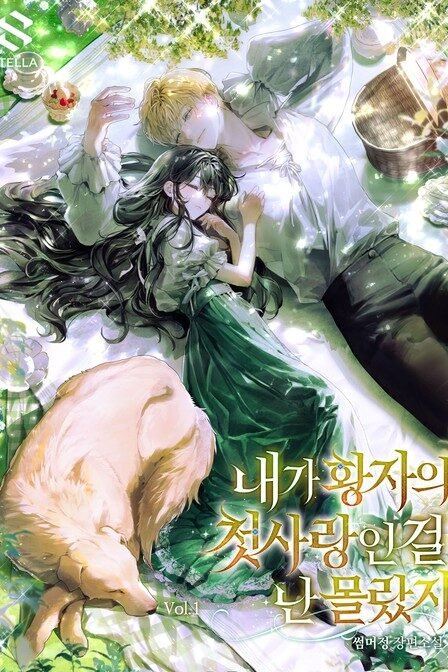
Nothing But a Vulgar Game
+Add to Custom List
Genres:
Novel Info
  • Author:
  • Status:Ongoing

Summary

... Read More

Lisa Verachi is a young woman of servant birth, marked by silver hair and violet eyes that set her apart from the other maids in the Maldini household. Orphaned after her mother’s death, she lives with her younger brother Raoul, who suffers from polio. Their existence in the manor is precarious, dependent on the whims of Countess Karolina, who projects an image of charitable grace. When Lisa is nearly expelled to an orphanage, she is spared only after Renato di Trieste, the heir to a powerful banking dynasty and the fiancé of the Countess’s daughter Smila, arrives to negotiate a rekindled engagement between their families. Renato observes Lisa’s humiliating departure but says nothing, his interest piqued by the cold, defiant girl who bears no resemblance to the sycophantic nobility around him.

Renato’s stay at the Maldini estate is a calculated exercise in diplomacy and reconnaissance. He finds Smila dull and uninteresting, yet he plays the part of the dutiful prospective groom. His attention, however, is constantly diverted by Lisa, whom he encounters in moments of vulnerability and disgrace. After a chance collision where Lisa spills food and is forced to retrieve it, Renato mocks her poverty. Later, he deliberately leaves his pocket watch in the study to test her, accusing her of theft when she panics. Despite his cruelty, he allows her to remain in the household, shifting her duties to Smila’s personal attendant. Lisa is unaware that Renato’s fascination is not born of malice alone but of a deep-seated curiosity about the resilience of a spirit that refuses to be entirely broken.

The turning point occurs when Lisa is sent on an errand to deliver a secret letter to the Servillo estate. Caught in a severe blizzard, she encounters Renato, whose prized horse, Titan, has been injured in an accident caused by Renato jumping to avoid hitting her. They take shelter in a remote mountain lodge. During the night, Renato euthanizes the suffering horse while Lisa sleeps, a act that shocks her and reveals the cold pragmatism that defines his worldview. The next morning, Renato covers for Lisa, claiming responsibility for the accident to the Count, sparing her from punishment. This act of silent protection confuses Lisa, as does Renato’s continued, intrusive presence in her life.

Renato’s interest in Lisa deepens as he uncovers layers of her secret life. He discovers her talent for drawing, a quiet escape she shares with her brother, and becomes obsessed with the duality of her existence: the subservient maid by day and the hidden artist by night. He confronts her about her collection of discarded paper, mocking her attempts to hide her aspirations. The tension between them escalates into a complex game of power and submission, with Renato probing her boundaries and Lisa struggling to maintain her dignity against a man who seems determined to expose every vulnerability. Meanwhile, political unrest threatens the aristocracy, casting a shadow over the Maldini family’s prosperity and forcing Renato to balance his family’s financial interests with his growing obsession.

As the winter deepens, the relationship between Renato and Lisa evolves from one of tormentor and victim to a tense alliance. Renato recognizes in Lisa a kindred spirit, someone hardened by life’s cruelties and devoid of the warmth that characterizes his social circle. He begins to intervene in her life, not out of kindness, but out of a possessive desire to shape her fate. Lisa, in turn, finds herself dependent on his unpredictable protection, even as she despises his methods. The narrative culminates in a series of confrontations that strip away the social pretenses of both characters, revealing the raw, unguarded individuals beneath. With the engagement to Smila failing and the political landscape shifting, Renato and Lisa are drawn together by circumstances they cannot control, setting the stage for a future where their classes and pasts will be challenged by the forces converging around them.

Latest Release
DateGroupRelease
2026-10-03dusk blossoms c13
2026-10-03dusk blossoms c12
2026-10-03dusk blossoms c11
2026-10-03dusk blossoms c10
2026-10-03dusk blossoms c9
2026-10-03dusk blossoms c8
2026-10-03dusk blossoms c7
2026-10-03dusk blossoms c6
2026-10-03dusk blossoms c5
2026-10-03dusk blossoms c4
2026-10-03dusk blossoms c3
2026-10-03dusk blossoms c2

Community Reviews

Rating(0 / 5.0, 29votes)
5 stars
0(0%)
4 stars
0(0%)
3 stars
0(0%)
2 stars
0(0%)
1 stars
0(0%)

Popular reviews

... Read More
Okay, can we just talk about the absolute voltage between Lisa and Renato? It's not romance, not even close. It's something far more volatile and addictive. Every scene with them crackles. When he corners her at the servant's door, his voice dripping with that 'cold amusement,' my heart was pounding. She's terrified of him, rightfully so, yet she doesn't flee. She stands her ground with those 'upturned eyes' full of timid anger. That push-and-pull is exquisitely painful to watch. He prods her, exposes her vulnerabilities (the drawing, her poverty), and she recoils but also reveals. It's a brutal form of intimacy. And then there's her soft spot for Raoul. 'My brother likes it when I draw for him.' Such a quiet, genuine line amid all the hostility. It shows what he's stripping away from her—not just her possessions, but her small, private joys. The emotional core here isn't about love; it's about power, shame, and the fragile dignity of someone trying to hold onto tiny pieces of themselves. That moment in the guest room where her hands sweat on the rough paper? I felt that visceral anxiety. It's not about sketching; it's about him noticing the last evidence of her inner life and twisting it into an insult. I'm emotionally wrecked and utterly captivated.
... Read More
Okay so I need to talk about the pocket watch scene because oh my god this man Renato is absolutely ruthless in the most subtle way possible. Let me lay it out: he deliberately leaves his pocket watch on the table. Not an accident. Not clumsiness. He does it on purpose, knowing full well Lisa will come in to clean and will inevitably come across it. Then he walks back in right when she's holding it, watches her absolutely lose her mind with panic, and plays along with the implication that she might have been trying to steal it. Classic gaslight move, honestly. And then he catches it falling with this "unhurried ease" like he's been waiting for this exact moment this whole time. The text literally says: "The intention was simple. He had left the watch behind as a pretext to return later. The thought that a theft might occur had never crossed his mind." That is SO chilling. He never thought she'd steal it because he already knew her. He knew she'd panic. He knew she'd be terrified. He wanted to see her squirm and he got exactly what he wanted. But here's what really got me — after she glares at him, something shifts. She doesn't just accept it. She stares back. And the text says: "The violet eyes that had glared at him, burning with suppressed indignation, refused to leave his mind." That's not a man who's uninterested. That's a man who just found something that actually fascinates him. This entire sequence — from the corridor incident with the meat, to this watch scene — it's building this predatory dynamic between them. But it's not just physical dominance. Renato is intellectually stalking her. He's studying her reactions the way she studies his.
... Read More
I need to talk about how almost nobody in this book actually says what they mean, and how brilliant that is. Take the countess. When she tells Lisa they can stay, she frames it as if she's doing them a favor to herself: 'the right thing to do is to help them out of a sense of duty.' Not 'I apologize for the confusion.' Not 'you shouldn't have had to endure that.' Just: I am choosing to be charitable, and you should feel lucky. The dialogue here is this perfectly calibrated performance. Karolina speaks in the language of grace, but every sentence is a reminder of who holds power. And Lisa's response? 'Thank you.' Three words. That's all she gives. Not because she's grateful, but because she's read the room her entire life and knows that any other response would cost her. She's standing there knowing she was lied to, knowing her fate was decided without a single word from her, and she says thank you because survival has taught her that gratitude is the currency of the powerless. Then there's Renato. His dialogue is almost entirely polite surface. 'I'm sorry to have come alone.' 'Simply having the chance to build a friendship is more than enough.' Every line is correct, measured, designed to give nothing away. But the narration undercuts it constantly — 'socializing was entirely against his nature,' 'the warmth of it sat uneasily on him.' His words are armor. The reader gets the truth through the gaps in his courtesy. Smila is the outlier — genuinely sweet, genuinely simple. 'Mother, what happened?' 'I knew it… I knew Mother would never abandon children in need.' She means every word. And that makes her both the most innocent character and the most tragically positioned. She's being trained to perform kindness while her mother performs charity, and she genuinely believes it's all the same thing. The narrative voice itself is worth mentioning — it's close third person, mostly anchored to Lisa, but it shifts to Renato in Chapter 1 without any announcement. It just happens, like the perspective is a ghost passing between bodies. And the prose has this dry, almost clinical edge that somehow makes the emotional moments hit harder. No purple prose. No forced drama. Just observation, precise and unsparing.
... Read More
Okay so. The Lisa-drawing scene. I had to stop reading for a second because my heart actually skipped. The way Renato corners her — he just... knows all her buttons. Titan's death. Smila's secret letter. He lays them out like he's reading a grocery list and Lisa is just standing there trembling because every escape route is blocked. And her internal monologue when she's walking to his room? "At least two. Or perhaps three or four." She's counting the shackles like a prisoner. That line alone tells you everything about where she stands with him. But here's what really caught me — the Marsimo meeting. Renato's basically conducting surveillance on his own fiancée's boyfriend and he knows it. "It felt uncomfortably like using cunning to gather evidence of an affair." And yet he does it anyway. Because he's Renato. The Count is playing both sides without knowing it, and Renato is playing the Count while pretending to be the compliant suitor. Three layers of performance happening simultaneously in that tea room and I was leaning forward the entire time. The chapter ends with Lisa climbing those stairs in her slippers, the grandfather clock counting every second, and the moonlight exposing her. Chills. Actual chills. Whatever Renato has planned for when she reaches his door, I am not okay with any of us.
... Read More
I am genuinely shook by Renato's reaction when he saw Lisa smiling at him. Like—read the room, bestie. The woman is literally kneeling on the floor after being terrified half to death, trying to defuse tension with a fumble of a smile because SHE'S TRAUMATIZED, not because she's trying to flatter you. And his response? He physically grabs her face and calls her a brazen little thing? My blood was BOILING. What makes this even worse is the sheer impossibility of Lisa's position. She keeps catching Renato at her most vulnerable moments—first the study incident where she looked up at him with terror in her eyes, and now this. She's trapped between not knowing how to behave around him and whatever he perceives her actions as. The forced smile was her trying to survive social interaction, and he completely misread it as something manipulative. That's not romance, that's emotional violence wrapped in handsome packaging. But honestly? What I found more heartbreaking was how Lisa just takes it. She apologizes. She explains herself. She even thanks him for saving her from the beast earlier, like she's still trying to be reasonable with someone who clearly finds her existence irritating. Her internal monologue where she calls herself a clown performing—I felt that in my chest. Anyone who's ever had to shrink themselves to survive in a space where they don't belong would understand that moment viscerally. And yet... there's something there between them that refuses to stay buried. The way the narration describes their eye contact, how the air shifts, how her breathing becomes difficult—that's not nothing. It's toxic, sure, but it's electric too. Is this love? Is this obsession? I don't know and I'm here for it.
... Read More
What a tightly wound coil of a plot this is! The moment with Titan isn't just a dramatic incident; it's the first thread pulled in a sweater that's about to unravel completely. Renato killing the horse feels less like an act of cruelty and more like a ruthless assertion of control—a statement that his judgment supersedes even compassion. But then he covers for Lisa to her father? That's a classic narrative misdirection. It throws you off balance. Is he a gentleman, or is he playing a much longer game? The secret letter from Smila to the Servillo boy is the other mainspring here. It transforms the setting from a simple estate into a pressure cooker of hidden alliances and impending scandal. The plot isn't just moving forward; it's spiraling. Every interaction, from the blizzard to the dusty guest room, feels like a move in a chess match where the pieces are people's reputations and lives. I'm left wondering how many of these seemingly minor conflicts will converge. That final line—'if she could take this paper home safely, it would be the first time she had ever drawn on actual paper'—is a tiny plot point, but it's devastating. It hints at a backstory of deprivation and secret passions that is begging to be uncovered. This story knows exactly how to tease out the dark seams of its characters' lives.
See all reviews

Custom lists

See all custom Lists