Not a Lady - Reviews

Not a Lady
+Add to Custom List
Sort
Add review
... Read More
I laughed out loud at the tarot café scene. Actually laughed. Ariesha bribes a fortune teller, puts on a show, and watches Zilcheck slowly digest his own doom card by card. The humor is so dark it loops back around to being absolutely brilliant. "Have you ever heard the saying, 'when the hen crows, the household falls'?" That line. That is the fortune teller speaking and Ariesha is standing right there listening. Zilcheck is getting read for his entire future — financial ruin, a wife who consumes wealth, Death as the final card — and the woman running the reading is a COCONSPIRATOR. She even slips out quickly and exchanges a quiet glance with Ariesha while Zilcheck is too busy spiraling to notice. This is a heist. A heist against a man's confidence. But beneath the comedy there's something genuinely heartbreaking. Ariesha has rewritten herself from a trembling fiancée into a woman who can look Zilcheck in the eye and ask for a ruby necklace like it's nothing. Watch her performance when she says: "Oh, it's gorgeous! I'm absolutely in love with it. What do you think?" She loops her arm through his. She's playing the gold-digger. But she's also testing him — can he still be fooled? And he almost is. Almost. He stares blankly for a moment, confused, because the old Ariesha never asked for anything. The system has glitched. Later at the restaurant she clears every plate. The narrator tells us directly: "On any other day she would have eaten barely half, keeping up the modest pretense. Today was different." Something shifted inside her. She stopped performing modesty and started performing greed — but the eating, the eating feels real. That's the detail that gets me. A body that spent years shrinking itself finally remembers what hunger feels like.
... Read More
I need to sit with this for a moment. The image of Ariesha standing before the mirror, examining her own face like she's appraising merchandise — 'a classic beauty, the pure and fragile type' — and then deciding that this beauty is the very thing that will destroy her? That hits different. She spent her whole life being told she was precious, and now she realizes she was precious the way a vase is precious: beautiful, breakable, and meant to be placed somewhere someone else chooses. The confrontation with her parents is where everything fractures. Not because they're evil — because they're normal. They loved her. They really did. But their love came with an instruction manual and she violated every page by having opinions. 'Those tears were… crocodile tears.' This line stopped me cold. She's crying in her mother's arms, and the narrator tells us it's not real. But what IS real? The fear? The grief? The understanding that no matter what she does, she was never going to be their daughter first — she was always going to be their investment? And then the transformation. Oh god, the transformation. Watching her deliberately make herself uglier, louder, more unbearable — this isn't just strategy, this is mourning. She's killing the girl her parents loved and the man desired, because that girl was never going to be allowed to survive. The moment she says 'From this moment on, you're reborn as the off-putting disaster woman!' — that's not comedy. That's a girl signing her old self's death certificate. The ending leaves me breathless. She smiles at her reflection in the carriage mirror. 'Exactly as expected.' The maid is miserable. Ariesha is satisfied. What kind of satisfaction is that? How do you comfort yourself with the knowledge that you have to become someone horrifying just to be free? I keep thinking about that smile and I can't shake it.
... Read More
This batch moves like a freight train and I cannot complain. We open mid-crisis — less than a month to the wedding, Ariesha needs to confront her parents, already establishing the ticking clock. Then BAM: the overheard conversation. The stakes go from 'I don't want to marry him' to 'my entire family has calculated my worth and I am inventory.' That escalation is seamless. The confrontation with her father is short but perfectly paced. No drawn-out speeches, no dramatic declarations — just the cold, bureaucratic violence of a man who says 'You will accept his apology graciously' like he's discussing weather arrangements. Then Ariesha's internal pivot: 'Zilcheck, you coward. You knew you couldn't change my mind, so you went to Father first.' This is where the story shifts from reactive to proactive, and the transition feels earned because we've seen her think through the problem. 'Fifteen days remained until the wedding.' That sentence is a full paragraph on its own and it does more work than most chapters. It resets the clock, redefines the stakes, and gives us a deadline that makes everything feel urgent. What I love about the pacing here is how the author lets moments breathe. The mirror scene where Ariesha practices swearing takes time — we watch her fail repeatedly, and it's funny but also painfully human. She's trying to learn a language she was specifically raised not to speak. Then the parlor scene moves at a completely different speed: rapid-fire actions, smashed cake, trembling Dinah, Zilcheck's confusion, Ariesha's gag — it's a whirlwind that leaves you breathless. And the chapter structure itself is brilliant. Each section ends on a note that propels us forward: 'A bad feeling crept in,' 'fifteen days,' 'a smooth start,' 'keep this up until the wedding.' The father's closing line is especially devastating because he thinks he's won. He has no idea the enemy is already inside his house, destroying everything from within.
... Read More
This book is full of symbols that operate beneath the surface, and two of them keep coming back to me: the golden carriage and the rose quartz necklace. Let me unpack both because they are doing heavy lifting here. The opening line—“Out with the dung cart, in with the golden carriage”—is not just a joke about romance tropes. It is the thesis statement of the entire passage. Ariesha believes that trading one bad situation for a better one will solve her problems. She thinks the carriage itself is the solution, not the driver. But Raymon is not a golden carriage. He is a man trapped inside his own head, unable to drive straight, swerving between warmth and recoil. The symbol breaks down the moment she steps into the vehicle. Then there is the necklace. Ariesha tells Raymon about her rose quartz necklace and how her sister Ailee always asks to borrow it. “Once something has passed through someone else's hands,” she says, “it doesn't feel like mine anymore.” This is not just about jewelry. This is about intimacy, about touch, about the boundary between self and other. Raymon is the one who cannot let anything pass through his hands without recoiling, and yet he is the one who wants to hold on the tightest. The necklace becomes a metaphor for the relationship itself: Ariesha wants to give Raymon access to her life, to her proximity, to her touch, but every time she does, he flinches as though the very act of receiving it contaminates him. There is also the recurring motif of doors. The passage opens with Ariesha walking toward the Rivers residence, stepping across a threshold. It ends with her being pushed through a doorway that slams shut between them. The door is the physical manifestation of Raymon's emotional boundary: close enough to touch, far enough to remain safe. And the tea service itself—the caramel-topped milk tea, the crepe cake, the hibiscus drink—these are all artifacts of a relationship built on observation and memory rather than mutual understanding. He remembers what she likes. She does not yet know what he needs. The deepest symbol, though, is the hand. Hands reach out, hands are pulled away, hands grip tightly, hands slam against wood. Every physical contact in this passage is charged with meaning. The hand that touches a cheek and then recoils. The hand that is seized and held. The hand that kicks a door. These are not just gestures. They are the language of two people who cannot find words but cannot stop reaching.
... Read More
Okay so I need to talk about Zilcheck because THIS MAN. The scene where he drags Ariesha into that alley and pins her against the wall?? My blood boiled. Like, yes he is stressed about the engagement and whatever backstory is going on, but grabbing a woman by the wrist, forcing her into a corner, threatening to make love to her RIGHT THERE on the street—this is not romance, this is a crime in progress. And the worst part? Ariesha actually calculated this. She wanted him to explode. She wanted him to cancel the engagement so badly that she played the spoiled brat, stained her own dress with sauce of all things, and let herself get talked into buying three dresses just to push him over the edge. That is some next-level desperate energy right there. But here is what really got me—it is Zilcheck himself who accidentally exposed the whole thing. He says "Don't tell me you were doing this on purpose. Trying to make me break the engagement." BAM. Direct hit. And Ariesha's face completely drains. For a second there I thought she was done for, but she recovers fast with the stiff cheek scratch and that pathetic "Th, that's right." The acting is IMMACULATE. This woman could win an Oscar. And then Zilcheck says "Then sleep at my estate tonight. If you mean what you say, I need to have you tonight." Which is honestly so manipulative on his part too—he is using intimacy as a test, like if she refuses then she's clearly plotting against him. It is a lose-lose situation for Ariesha no matter what she does. I was genuinely sweating reading that. Meanwhile, across town, Raymon is sitting at a restaurant pretending to eat while internally screaming about a girl he met drunk. The fact that he remembers THE DETAILS—her emerald eyes trembling, her hair brushing his neck, the scent—is so telling. He literally cannot stop thinking about her and he is furious about it. "A connection remembered by only one side. It was nothing." NO IT IS NOT NOTHING, RAYMON YOU ARE BLIND. The moment Edwin tells him she has a fiancé and it is THAT man—Zilcheck—the realization hits Raymon like a truck. He basically ran to help a woman who was already betrothed without knowing it, and now he has to sit with the fact that his heroic moment was technically interference in someone else's relationship. And yet—had he known, would he still have done it? His silence says everything.
... Read More
The dialogue in this section is absolutely vicious and I mean that as the highest compliment. Every character sounds exactly like who they are, and the gap between what they say and what they mean is where the real writing lives. Count Verdía's voice is the masterpiece here. 'As it happens, His Grace came by early this morning. He said he would like to move the wedding forward by about two weeks, if we had no objection. Ha ha, His Grace must be quite taken with you.' This sounds warm. It sounds like a proud father. But the subtext is a gun pressed to his daughter's temple. He's announcing that he already agreed to accelerate the wedding while she's still in the room, and he does it with a laugh. His escalation is perfectly calibrated: 'You are my daughter. It is your duty to marry the man your father and head of this household has chosen for you. How dare you speak back to me.' No raised voice. No physical threat. Just the quiet, surgical removal of her agency through words alone. Zilcheck's dialogue is equally revealing. 'You look fine, Ariesha. I was worried you'd still be suffering from the hangover today after drinking so much yesterday.' He comes in playing nice, but there's this predatory undertone — he knows something happened, he's testing her, he wants to see how far he can push. And then: 'Don't tell me she has... a mean drunk streak?' That question is so casually cruel. He's framing her survival strategy as a character flaw. But the dialogue gem of the entire batch is Ariesha's performance. 'Oh, my, why is there soufflé cake on the floor? ... I truly don't know what Your Grace is referring to.' The deliberate innocence, the feigned amnesia, the way she uses the language of nobility as a weapon — this woman is an actress and she just auditioned for her role. The most chilling line though? 'just two more weeks and I'll be a duchess. I've been waiting so long for this day... urgh.' The giggle, the hand over the mouth, the physical gag. She's literally vomiting on the concept of her own future and calling it laughter.
... Read More
Okay, let's talk about Ariesha's voice because it is genuinely one of the most satisfying things I've read in this genre. The moment she steps out of the carriage and sees Zilcheck hiding behind that wall, she doesn't hesitate. She doesn't whimper. She doesn't call for help. She walks TOWARD him and opens her mouth with: "Hey, sucker! Did you come to throw more money at me? How did you even find out I went and blew it all gambling and ended up in debt? My father can't find out or I'm done for, so I've been looking for someone to borrow from. Don't be stingy. For old times' sake, lend me fifteen thousand gold." FIFTEEN THOUSAND GOLD. And then when he stammers about the amount, she casually adds: "Oh, I didn't rack up all fifteen thousand. The debt is 8,926 gold. The rest is what I'd need to win back what I lost." She is making THIS UP. She is improvising a financial crisis in real time while standing in front of a man who once threatened to kill everyone. And she delivers it with the casual enthusiasm of someone ordering dessert. The specificity of 8,926 is what sells it — nobody makes up a number that precise unless they're lying on the spot. But she doesn't even seem to notice that she's lying. The words just come out, sharp and fast and perfectly calibrated to exploit exactly what she knows about him. And then her closer: "What the f-uck! What else would I have to say to you? I have nothing else to talk to you about. If you're not going to lend me the money, stop hovering and leave. Before I start passing your name off to my creditors." She threatens HIM. The victim threatens the predator. And it works. He flees. He literally runs away from a woman who is inventing gambling debts to get rid of him. This is the most satisfying combat scene I have ever read and it involved zero physical violence. Raymon's dialogue, by contrast, is all hesitation and questions. "Which bouquet is best, do you think?" "Do I look all right?" "Shouldn't we roll out a red carpet in the garden?" He speaks in uncertainties. Ariesha speaks in declarations. The contrast between their voices tells us everything we need to know about who these people are before they've even properly met. The Marchioness is the only adult in either conversation and her dialogue is perfectly clipped — "Honestly, this boy." "You look fine, so please stop." "Too much, Raymon." She doesn't waste words. Every sentence moves the scene forward. She's the fulcrum between her son's nervousness and the social reality they're navigating. And Zilcheck! His dialogue is all predatory circles — "Same as when I first saw you." "You should have kept showing me that side of yourself." He never says anything new. He loops back to the same twisted narrative every time. His speech patterns are a cage he's trying to put her back in, and her dialogue is the key that unlocks it.
... Read More
Let me just say—the author absolutely understood the assignment when writing the boutique scene. The contrast between the bright, sparkling atmosphere and the absolute psychological warfare happening underneath is chef's kiss. Ariesha walks in looking like a proper noble fiancée, selecting cute dresses, trying them on with that cheerful energy, and Zilcheck is just absolutely melting. "Yes, if only you'd always dress like this." The shop manager is egging him on, staff is swooning, it looks like a rom-com come to life. And then—BAM—she comes out in the original lace dress with the sauce stain still visible, looking mildly annoyed, saying she can't decide between three gorgeous dresses. The audience is SCREAMING. Zilcheck, bless his naive ducal heart, says "I'll buy all of them." And then she keeps going. One by one, the pile grows. The manager slides over the bill with a practiced smile and Zilcheck's expression visibly HARDENS. This is cinematography on paper. I could literally see the lighting shift, the music change, the slow zoom on his face. What makes this scene so brilliant is how the setting does the heavy lifting. The expensive boutique, the staff fawning over the wealthy duke, the delusion that today is going well—it all creates this warm, golden glow that makes the alley confrontation later hit even harder. Two hours ago this man was saying he could buy the whole boutique for her. Now he has her pinned against a stone wall behind a café strip, his voice dropping to that low dangerous register. The transition from the bright, music-filled restaurant where Raymon watches the world go by to that cramped, tense alley is so sharp it almost physically hurt. And then—cut back to the restaurant again, soft classical music, Raymon barely touching his food, the scraping sound cutting across the room. The world feels so lived-in, so layered, that every location carries emotional weight. This is not just a backdrop, it is a character itself.
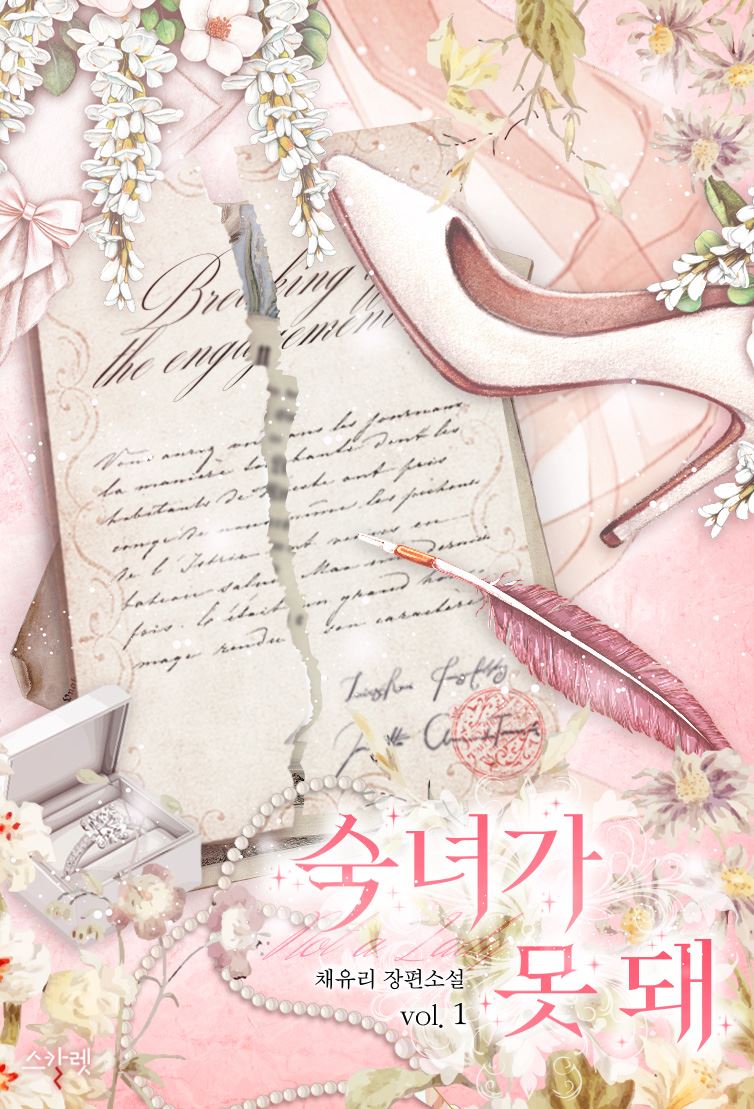
... Read More
There are SO many visual set pieces in this batch and they're doing heavy lifting for the story. Let me start with the most devastating image: Ariesha looking in the mirror and seeing 'a classic beauty, the pure and fragile type.' Brown wavy hair, emerald eyes like gemstones, soft rose cheeks. The author takes time to describe her like we're looking at a portrait — and then immediately undercuts it by saying this face is a prison. Everything she has been praised for is exactly what made her a target. Then the wardrobe scene. This is such a simple moment but it does so much work. The soft pink and pale yellow dresses, the modest embroidery, the ribbons and lace — all gifts from Zilcheck, chosen entirely to his taste. She's wearing his preferences like a costume. When she decides to change everything 'from head to toe,' the image of her emerging with 'upswept eyeliner, bruised purple eyeshadow, and blood-red lips' is almost comedic but underneath it's deeply tragic. A woman literally painting over her face to save herself. The parlor scene with the soufflé cake is cinematic gold. The 'Smash!' — the sound alone carries the weight of her entire rebellion. And then the performance: composed noble lady one second, unhinged drunk the next. Zilcheck's reaction — 'his pupils shook like the ground was splitting beneath him' — tells us more about his crumbling control than any internal monologue could. But the scene that haunts me is the ending. Ariesha in the carriage, transforming again. This time it's permanent. 'Her softly waved hair was slicked with a generous amount of gel and hardened upright.' She's not just acting anymore. She's burning the old version of herself alive. 'Unlike the maid's miserable expression, Ariesha looked at herself in the mirror and smiled with satisfaction.' That smile should scare us. It should feel like the moment a character crosses a line from victim to something else entirely.
... Read More
"A connection remembered by only one side." I just—I need a moment. Raymon Reflect Rivers, the so-called unicorn of noble society, the guy who cannot be bothered with anyone, memorizes every single detail about a girl he spent maybe twenty minutes with. The warmth of her face from drink. How she fit in his arms. The way her emerald eyes couldn't hold his gaze. The faint scent that made his head swim. And then—he guided her head to rest against his chest. HE LET HER REST AGAINST HIM. This man who claims he is not interested in socializing went out of his way to make a drowning woman comfortable. And she never reached out after. She asked for his name while drunk, and then nothing. Did she forget? Did she not remember him the way he remembers her? Is this the kind of thing that happens in real life where one person carries the entire weight of a moment and the other person just… moves on? Because that honestly hurt more than any dramatic betrayal scene ever could. Compare that to Ariesha and Zilcheck, whose entire relationship feels like a war disguised as courtship. She is staging elaborate performances to make him hate her. He is reading through them like a detective, getting angrier each time. When he shoved her against that wall, his first instinct wasn't violence—it was desperation. He genuinely believed she had lost something that night, something irretrievable, and he is lashing out because he doesn't know how to process it. Both of them are terrified. Both of them are stuck. Neither of them knows how to communicate without destroying something. And Raymon, standing on the sidewalk hearing the maid scream "a madman dragged my mistress away," his fist clenches. He calculates the consequences—family standing, political fallout, whether intervening would actually help or hurt—and for one heartbreaking second, I thought he might just walk away. Not because he doesn't care, but because caring has consequences he can't afford. That restraint? That is its own kind of agony.
... Read More
The transition in this chapter is absolutely ruthless and I respect it. We go from the immediate aftermath of the Goldfork engagement dissolving — Ariesha at home, her father reading the Rivers proposal, the tension thick enough to cut — and then the narrator just... skips three months. Three. Months. Gone. In one sentence. "Three months later, Ariesha became engaged to the heir of another distinguished family." Not a single scene of her processing the broken engagement. Not a moment of her coping with the public humiliation of being flashing-attempted by her former fiancé. Not even a paragraph about whether she's okay. Just: engaged to someone new. Moving on. The machinery of this society doesn't stop for trauma. That structural choice is devastating in its efficiency. The author isn't interested in making us comfortable with Ariesha's grief. The story moves at the speed of political necessity, and we're forced to keep up with her whether we're ready or not. It's almost claustrophobic, in the best way. You feel the pressure of the timeline pressing down on her. Then we cut to the first meeting at Lafelt Manor, and the pacing shifts dramatically. Everything slows down. Raymon's flower deliberation takes up real narrative time. We watch him look at each bouquet. We watch the Marchioness enter and observe him. We follow him to the mirror, watch him assess his hair, hear his mother's gentle impatience. This is a whole scene built around nothing happening — a young man choosing flowers and worrying about his appearance. And it works because it contrasts so sharply with the urgency of everything else. The chapter then pivots again when the gatekeeper bursts in with the news about Zilcheck, and suddenly we're in motion. Raymon runs. Ariesha faces her stalker. The confrontation plays out almost in real time. And then — and this is the masterstroke — the chapter ENDS mid-sentence. "A poised, graceful bearing. A voice s" Cut to black. She was about to introduce herself and the narration just stops. We don't get the rest of that sentence. We don't get to see Raymon's reaction to her face-to-face. We're left hanging on the most basic human moment — two people meeting for the first time as betrothed — and the fact that we won't get it until the next chapter is a hook so sharp it could draw blood. The structure here is a rollercoaster: high tension → time skip → quiet domestic scene → sudden action → abrupt cutoff. Four movements in one chapter, each with a different emotional temperature, and the last one leaves you desperate for more. I opened the next chapter before I even finished this one.
... Read More
I need to talk about this single moment because it hit me like a freight train and I haven't stopped thinking about it. Raymon witnessing Ariesha's confrontation with Zilcheck — he sees her fire, her sharpness, the way she turns a predator's own logic against him. And the narration just says: "Something restless stirred in his chest." Not "his heart raced." Not "he was moved." RESTLESS. That word does SO much work. It's unsettled energy. It's attraction mixed with surprise mixed with something he can't name yet. He came running because he was worried she was in danger, and he finds her completely handling it, and that's when the shift happens. But let me also talk about Ariesha's loneliness, because it's everywhere and nobody seems to notice except the reader. She's sitting at home eating sweet cakes and ice cream she's been avoiding for her figure, reading romance novels, sprawled across her bed without a corset — and the text frames this as "blissful." Blissful. After everything. After the flasher incident, after the public shame, after being used as a political pawn by her own father. The only peace she's found is in deliberate ignorance. "She was deliberately tuning out news from beyond the residence gates." That phrase broke something in me. She's not choosing leisure, she's choosing survival. And then her maid Dinah — oh my god, Dinah is the real MVP. The woman basically coaches Ariesha on how to manipulate Zilcheck. "Tell him you need to borrow money, Miss! Say you gambled and ended up in debt!" This is a servant who has been watching her mistress suffer and has decided to fight back with the only weapons available. The fact that Ariesha doesn't hesitate, doesn't question the morality of the lie — she just says "All right" and steps out of the carriage ready to execute the plan — that trust between them is so beautiful and underexplored. Then there's the mother-son moment between Raymon and the Marchioness. She's laughing at him, gently chiding him about the flowers, telling him not to look so severe — and for a moment, this entire political marriage arrangement feels human. Raymon asking "Which bouquet is best?" like it's a matter of life and death — that's vulnerability. That's a boy who's being told to marry a girl he's never met and actually caring about doing it right. The romance here isn't in grand declarations. It's in a woman choosing her outfit for a first meeting, a mother choosing flowers for her son's fiancée, a man running across a garden half out of breath because he's scared for the woman he's barely met. It's in small things. And that's what makes it real.

Leave a comment

You must be logged in to leave comments. or
