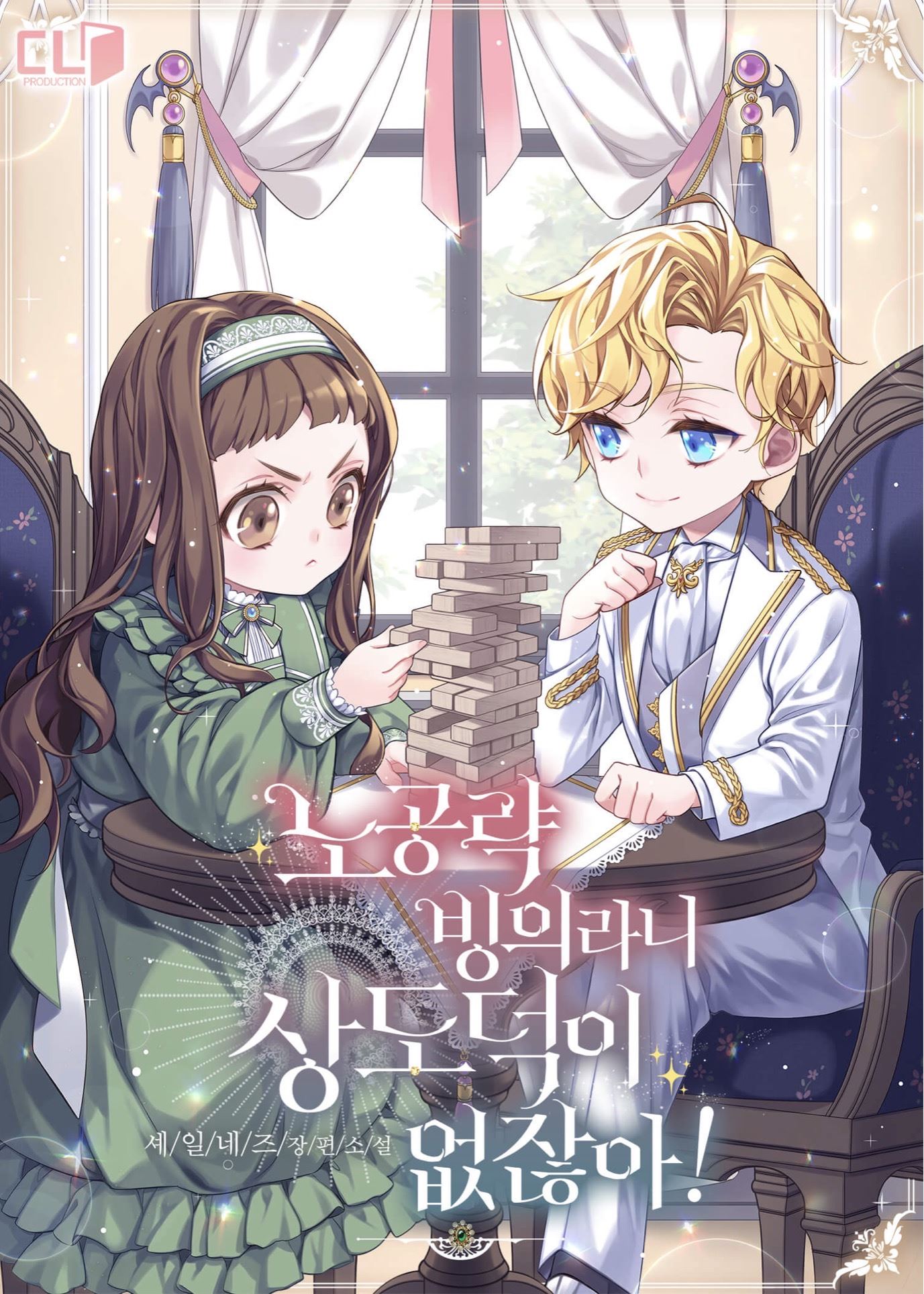
No Strategy Guide for My Possession? That’s a Scam! - Reviews

No Strategy Guide for My Possession? That’s a Scam!
+Add to Custom List
Sort
Add review
... Read More
I came in expecting lighthearted transmigration comedy and somehow ended up genuinely unsettled by the family dynamics here, which is impressive. On one hand, the parents are absurdly doting in a way that should be wholesome. Father painting the entire corridor ceiling to celebrate his daughter's birth? Bringing breakfast together when they normally eat separately? It's the kind of over-the-top love that exists in fairy tales, not in real families. And yet the narrator keeps reacting with this quiet horror, like she can't quite trust it. Maybe because she knows she's occupying someone else's body, someone else's life. The fact that the original Rose apparently behaved COMPLETELY differently is both funny and kind of eerie. But the most emotionally complex moment for me is when she quietly requests to stop the flower vases. Not for virtue signaling — she genuinely imagines herself as a servant and realizes the labor waste is terrible. Then she steps in to save Father from Mother's sharpening gaze, and we get this tiny domestic triangle that feels real. Mother's relief, Father's resigned expression, Rose positioning herself as the peacemaker — it's all there in a handful of lines. There's also this undercurrent of loneliness that keeps surfacing. She's alone in a foreign world, alone in a body that isn't hers, surrounded by people who love someone else. The brothers are off at war. The Empress is sick. And she's eating soup in silence while everyone around her is interpreting her every word. That image of her just wanting to eat her soup in peace hit harder than it should have.
... Read More
I genuinely did not expect to be this hooked in seven chapters. The pacing here is—how do I put this—relentlessly smart. Chapter one drops us into the middle of a conversation with a bear-god. No preamble, no 'Rose woke up in a strange world' monologue. We learn about the reincarnation retroactively through a maid's fifteen-minute rant of complaints, and honestly? That was the right call. Dumping the exposition through someone else's chatter meant we weren't stuck in an info-dump valley while Rose adjusted to her new body. She was already three steps ahead, mentally cataloging information while getting her hair brushed. Then the scene with Klaus—what a pivot. One moment it's existential dread about being trapped in a child's body in a fantasy world, the next it's watching a demigod crown prince casually drop from a fourth-floor balcony because he heard his friend's voice. The tonal whiplash is intentional and it works because Rose's internal narration anchors everything. She's the straight woman to an absurd world, and her dry commentary keeps us grounded. The structure also plays with time beautifully. We get the 'ten years ago' framing device right at the top, then immediately jump to the present crisis, then flashback to how Rose actually arrived in this world. It's not linear, but it's not confusing either—because each section serves a clear purpose. The opening hooks us with intrigue, the backstory explains stakes, and the Klaus scene introduces the emotional core. I want to mention one thing though: the prose sometimes lingers on sensory details (the leather shoes, the carpet, the hair) in a way that slows the pace intentionally. At first I thought it was padding, but now I see it as Rose experiencing the world through her new child-senses. The slowness IS the point. She's small. Everything is too big. The ceilings are dizzying. Her feet don't understand shoes. It's pacing as perspective.
... Read More
I need to talk about Father for a second because I am WRECKED. The man who lives for the joy of seeing his daughter's face, who gets banned from within 50 meters of her room, who sends letters every single hour through Albert like a lovesick teenager—and Albert, poor soul, is basically the chief secretary of a noble household reduced to carrying love letters like a messenger pigeon. I laughed and cried at the same time. "Father, are you well today? Rosetta misses you very much." That's the whole letter. THAT'S THE WHOLE LETTER. And he sends it hourly. Every. Single. Hour. After twelve years of having only sons, he finally gets a daughter and apparently his brain short-circuited entirely. He treats her like she's made of glass. "I am frightened even to hold our Rose's hand for fear she might break." Caroline literally thinks: I have bones and muscles, you absolute walnut. But here's what actually broke me—Mother's response. She doesn't yell. She doesn't even raise her voice. She just dismantles him with logic and history: "Do you know who the person most capable of actively ruining Rose in this world is? It is you and I." And then she reveals she was a knight, that she once went rank-stripped to argue with the Emperor herself. This woman is NOT someone to cross. And yet—the fact that SHE proposed the marriage terms that guarantee her independence? That's a woman who learned to fight her battles differently. The Caroline-Emperor dynamic is also wild to me. She tells him straight-up he's not a bad parent, just inexperienced. And he LAUGHS. Not a polite laugh—a real one. He lets her call him out because for the first time, someone isn't treating him like 'Your Majesty.' They're just two people who've been failed by their families, finding common ground over snacks andbad parenting.
... Read More
Alright I need to talk about the sheer SCALE of this place because the author is NOT playing around. We start with just corridors with ceiling paintings and flower vases every five meters, and by chapter 14 we've apparently uncovered that the entire estate includes a forest, a mountain, and enough land to host hunting AND harvest festivals every single season. This isn't a mansion. This is a self-contained kingdom. And the fact that there's no wall around it because apparently a DRAGON'S MAGIC is the security system? That's the kind of worldbuilding detail that makes you stop and just sit with it for a second. But what I keep coming back to is the visual specificity. The narrator sees the estate from behind, turns around, and completely forgets what she was saying because the white marble castle gleaming in sunlight just rewires her brain. That's a great moment of showing rather than telling — you can feel the protagonist literally losing her vocabulary in the face of this architecture. And the corridor ceiling paintings that the father had done just because it's on the daily breakfast route? That's the kind of obsessive, almost childish wealth that tells you everything about this family without a single exposition dump. The river sparkling in morning sunlight is such a small detail but it immediately grounds this in a sensory world. And that line about the north forest being something she has 'no desire to learn more about'? That's the author sneaking in worldbuilding dread through a throwaway line. I love that.
... Read More
Okay so I need to talk about the pacing in this section because it really surprised me. You start with something almost mundane — a conversation about finding an etiquette teacher — and within the span of a few scenes you've gone from light domestic dialogue to a full-on lecture on the philosophy of nobility. How does the author do that without it feeling rushed? I think it's the way Albert serves as this natural bridge. His explanation about why finding a teacher is difficult opens the door to everything else: the magic, the politics, the history of the family. Then when Madam Greenfields appears, the pacing snaps into something more intense. The repeated "Again" as a chapter marker is genius, honestly. It creates this drumbeat of exhaustion that mirrors exactly what the protagonist is experiencing. The tea-time scene is where I almost laughed out loud — twenty-minute training session with silver bowls balanced, hourglass ticking, and then conversation while maintaining perfect posture. The author uses the physical discomfort as a pacing device; you can feel the seconds stretching. And then the reveal about her being from the Norbert family? That changes everything about how you read the scenes that came before. Suddenly the strictness makes terrifying sense, and the reader is left imagining what the grandson must be going through. One question though — did anyone else feel like the transition from the Albert conversation to Madam Greenfields arriving happened just a bit too cleanly? Like we went from worrying about finding a teacher to her appearing the next day in two sentences. Was that intentional compression or just a little convenient?
... Read More
I know this reads as mostly comedic transmigration fish-out-of-water material, but I keep noticing the conflict threading through every scene and it's not going away. The external stakes are piling up faster than the protagonist seems to realize. Her brothers are deployed to the north during an 'intensified monster subjugation period.' The Empress — their godmother AND the mother's best friend — is gravely ill. Letters can't pass between them. Spring has arrived as the first opportunity for a visit, which means this trip to the imperial palace isn't just a social call, it's possibly a diplomatic mission happening inside a fragile political moment. Internally, the stakes are just as real even if they're quieter. She has no knowledge of this world's rules, no cheat codes, no guide. She's an adult consciousness trapped in an eight-year-old's body in a house where one wrong word could unravel everything. The fact that she's already surviving on instinct — reading the room, playing the role, stopping the flower vases before someone gets hurt — is impressive but also kind of terrifying. How long can meta-awareness carry her? And then there's the dragon. The magic protecting this estate. The north forest she refuses to investigate. The monster subjugation wars. These aren't background details, folks. The author is stacking foreshadowing like it's going out of style, and I'm here for it. Whatever's coming, it's not going to care that our protagonist just wanted to eat her soup in peace.
... Read More
The dialogue in this chapter is absolutely phenomenal, and I need to devote serious attention to how each character's voice is distinct and purposeful. Rose's dialogue operates on two levels simultaneously - the external child voice and the internal adult commentary. When she says 'I cannot agree to conditions you changed without reason, Mother. So please give it to me now,' this is perfect eight-year-old performance. But the narration beside it - 'This is the super principled attack that only an eight-year-old can pull off' - reveals the adult strategist behind the childish words. This dual-voice technique creates constant dramatic irony where the reader understands more than any other character in the scene. Caroline's dialogue is notably sparse but loaded. She speaks in commands and promises ('No. Carrot juice, please, Valter.') and reactions ('You really, where do you think you are, behaving so rudely!'). Her voice is that of a tired mother trying to maintain authority in an impossible situation. The line 'She isn't quite this unruly at home either... I'm mortified' perfectly captures a parent's羞耻 mixed with affectionate despair. The Empress's dialogue is the most distinctive voice in the chapter. She speaks with warmth and directness, unburdened by formal court language when she's with Rose. 'For my clever and adorable goddaughter, I shall deliver my verdict personally' - this line accomplishes so much: it establishes her authority, her affection, and her willingness to bend protocol for someone she cares about. Her laughter ('Hahaha!' and 'Hahahahaha!') appears repeatedly and functions almost as dialogue itself, conveying emotion that words cannot. Grandfather Valter's dialogue is understated but crucial. His line 'I think my goddaughter is right on this one, Caroline' is delivered with 'a very warm smile' and completely shifts the power dynamic. He's the diplomatic anchor in this scene, and his recounting of the drinking knights story ('She made them run a hundred laps around the Empress's palace, singing military songs and calling out cadence') is delivered with such vivid detail that you can hear the cadence himself. Mary's dialogue is perhaps the most emotionally revealing. Her whispered secrets, her distant wistful tone, the way she corrects herself ('Oh my, I'm sorry. That was a bit early to be saying to you, Miss') - all of this creates a voice that feels genuinely lived-in. The professional precision of her greeting to Rose ('Even though she was breathless, the motion of greeting me was frighteningly precise') contrasts beautifully with the personal vulnerability she shows when discussing Caroline. The humor in this chapter comes almost entirely from dialogue misalignment - Rose saying things that are simultaneously childlike and devastatingly adult, Caroline reacting with exasperation, the Empress finding everything adorable. The line 'Whatever the food, he won't take more than one bite' followed by Rose's earnest running solution is comedy gold, and the way each character reacts to it creates a perfect comic rhythm.
... Read More
Okay so this chapter is genuinely brilliant plot construction disguised as a slice-of-life scene. On the surface it's about an eight-year-old girl securing chocolate milk instead of carrot juice, but the actual plot machinery underneath is running at full speed. The opening negotiation between Rose and her mother Caroline immediately establishes the core conflict - there's a broken promise, a moral dilemma about deception, and Rose weaponizes childish principled behavior as a tactical strike. The line 'I learned about this from my teacher. It is a clear act of deception' had me wheezing because it perfectly captures how children practice what they preach better than adults ever do. But the real plot twist isn't the carrot juice situation - it's the Empress's sudden entrance. This is where the narrative pivots from domestic comedy into court intrigue. The text explicitly tells us that the Empress appearing in the drawing room herself is 'by imperial etiquette, completely improper,' and then proceeds to describe the entire elaborate protocol Rose and her mother were supposed to follow. The author is doing something clever here: by having Rose mentally recoil from the described etiquette ('Is that not absolutely insane?'), we immediately understand that this world operates on rules that are intentionally absurd and oppressive. The plot is building a gilded cage. Then comes the snack scene where Rose unknowingly consumes half the tea table while the adults talk, and suddenly the Empress reveals she has a son, Crown Prince Klaus, who won't eat more than one bite of anything. This is a masterful setup - the Empress is comparing Rose's healthy appetite to her own son's eating disorder, and the parallel is obvious. Two children, one thriving, one suffering, both used as political pawns. The plot thread about the Crown Prince's eating problems is dangling there like a live wire. The chapter ends with Rose being sent to see the fountain with Mary, while the adults continue their secret conversation. Mary then reveals that Caroline was everyone's first love during her Imperial Guard days, and people cried when she married Count Winstone. This backstory drop serves dual purpose: it deepens Caroline's character while also hinting that Rose's family connections run deeper than a simple noble marriage. The fountain itself becomes a symbolic threshold - Rose is being physically moved away from the adult conversation, but the reader understands that the real story is happening in that drawing room. The plot is layering mystery upon mystery while keeping the surface-level narrative charming and accessible.
... Read More
What got me about this section isn't any big dramatic event — it's the quiet, mounting pressure of expectation. The protagonist just spent two weeks being doted on by the Emperor and Empress, and now she's being told that all of that glory belongs to her predecessors, not to her. That her reputation is something she has to earn from scratch. The stakes here are fascinating because they're not about life or death in the traditional sense. They're about identity. About whether she can carry the weight of being "the first girl born in four hundred years" of the Winstone line. Madam Greenfields lays it out brutally: "You may have acted freely under the glory and achievements built by your predecessors, but from here on, that is no longer the case." Oof. That hit different. And the Norbert family reveal adds another layer of stakes entirely. The succession system — survival of the fittest, children tearing into each other until one emerges — is genuinely horrifying when you realize the protagonist's peer, this grandson she's never met, is probably going through something far worse than her silver bowl exercises. The contrast between Winstone's magical protection and Norbert's brutal meritocracy creates this constant low hum of tension. What happens if those two worlds collide? I keep thinking about that line: "A master who lazily indulges only in what pleases them is precisely the one destined to be the first killed by them." The protagonist may think she's learning manners, but really she's learning that every posture check and every balanced bowl is practice for surviving people who are waiting for her to slip. That's not etiquette training. That's armor plating.
... Read More
This chapter is packed with symbolic layers that reward careful reading. Let me start with the most obvious symbol: carrots versus chocolate milk. On the surface this is a child's preference, but the text elevates it to something deeper. Rose's hatred of carrots is described with almost spiritual intensity - 'Not as a figure of speech, it was a taste my very soul rejected.' This isn't just picky eating; it's about authenticity and identity. Rose maintains her carrot hatred because the original Rosetta also hated them, allowing her to 'be spared any suspicion of having suddenly changed her tastes overnight.' The carrots represent the danger of standing out, of being different in a world where conformity is safety. Chocolate milk, by contrast, represents reward, indulgence, and the freedom to be a child. The fountain itself is the chapter's central symbol. Mary describes it as 'a rather fun fountain' while the narrative immediately corrects us: it's 'the size of a small lake,' three times the Trevi Fountain, with a five-tiered spray sculpture and marble statue. The imperial household's 'skewed sense of scale' reflects their distorted relationship with reality and power. But the most important detail is that 'the surface of the fountain was somehow still' - nothing is moving, no fish leaping, no music playing. It's a symbol of dormant power, of beauty waiting for its moment, of the political situation in the palace that appears calm but contains immense force. The breaking of promises and restoration of trust forms another thematic thread. Rose quotes 'they say trust once broken cannot be restored' and then immediately demonstrates that children actually uphold moral principles more strictly than adults. The Empress's quick verdict to bring chocolate milk represents restorative justice - the promise was broken, but it can be fixed through genuine intention and immediate correction. This contrasts with Caroline's initial rigidity and theEmpress's flexibility. Food as power and care is a recurring motif. The Empress personally selecting snacks, feeding Rose, wiping her mouth - these are maternal gestures that transcend social hierarchy. The fact that she's comparing Rose's eating to her son Klaus's refusal to eat reveals how food becomes a metric of health, happiness, and by extension, good governance. A well-fed heir suggests a healthy realm; a starving prince suggests deeper malfunctions. The garden fountain scene also operates as a threshold symbol. Rose is literally being led away from the drawing room where adult conversations happen, toward a space where secrets are shared. Mary's revelations about Caroline's past occur in this liminal garden space, suggesting that truth emerges in transitions, in movements between rooms and states of being. The fountain's music that plays 'on the hour' suggests that truth and beauty have their own timing, and will emerge when the moment is right.
... Read More
Okay so let me just say this outright: I did not expect to be this invested in a story that starts with a middle-aged woman complaining about her new job description being catching a dragon while trapped in an eight-year-old body. But here we are. The premise is beautifully absurd. Rose—Rosetta, whatever she's going by now—just wanted to laze around in her second life as a noble girl. Simple goals, right? But no. The world's standing-in god (yes, a bear, don't ask) drops a quest on her like a ton of bricks: catch the dragon causing errors in this world. And when she points out she can barely lift a parasol, Teddy the bear-god goes, 'just get the Emperor's son and the Grand Duke of the North to do it for you.' Which, okay, fair. She does have those two as childhood friends. But the way she immediately flips it back—'you want me to throw both of my only two childhood friends straight into mortal danger?'—that's the kind of instant boundary-setting I respect. She's not going to just roll over for a god. Then Klaus just *appears*. And reveals he's also interested in catching a dragon, but for a completely different reason. He wants to present one as a trophy to win some girl's family approval. The fact that these two parallel quests converge on the same impossible task is delicious dramatic irony. Is the dragon Teddy mentions the same dragon Klaus wants? The text doesn't say yet, but my brain is already connecting dots. Also—Klaus jumping from the fourth floor. Without a sound. Nobody got hurt because he's 'practically a demigod' according to Teddy. And he did it because he heard Rose's voice from that height. Just... because. That's either the cutest or most terrifying thing I've read this week and I can't decide which.
... Read More
This chapter is a masterclass in controlled pacing. It begins at what I can only describe as maximum comedic speed - the carrot juice negotiation happens in rapid-fire dialogue, Rose's internal calculations are delivered in quick successive thoughts, and the whole scene moves like a well-rehearsed farce. The author doesn't slow down for exposition; we learn about Rose's transmigration status through her casual internal observation 'I am a fully sane adult in here' embedded naturally in the scene. This is efficient storytelling that trusts the reader to keep up. Then the Empress enters and the pacing shifts almost imperceptibly. The door opens, the description of her appearance slows down with deliberate sensory details - the white dress, the pale skin, the black hair, the exposed nape - and suddenly we're in a different tonal space. The comedic rhythm gives way to something warmer, more observant. The snack-feeding sequence operates at a slower, almost reverent pace, with each action given weight: the lemon-scented madeleine, the cookie, the chocolate milk, the napkin wipe. These details accumulate like emotional currency. The structural pivot happens when Rose mentions running as a solution for the Crown Prince's eating problem. This is the chapter's compression point - in a single sentence, the author collapses the entire adult political conversation into something a child could understand, and then immediately shows the consequences through Caroline's horrified reaction and Grandfather Valter's diplomatic recovery. The pacing here accelerates again, but with underlying tension rather than comedy. The fountain scene at the end is where the author truly displays structural control. The physical journey from the drawing room to the garden creates natural breathing room, and the conversation with Mary operates at a completely different tempo - reflective, nostalgic, whispering secrets. The revelation about Caroline being everyone's first love comes gradually, piece by piece, like peeling an onion. And the final image of the fountain itself - enormous, beautiful, still until the hour strikes - mirrors the chapter's structure perfectly: surface calm concealing immense power, waiting for the right moment to activate. What strikes me most is how the chapter balances multiple timelines simultaneously. There's Rose's present experience, Caroline's past in the Imperial Guard, the Empress's current illness and loneliness, and the implied future political consequences of today's conversation. All of these threads are paced differently but woven together seamlessly.

Leave a comment

You must be logged in to leave comments. or