My Shit Shovel Officer is Cute - Reviews

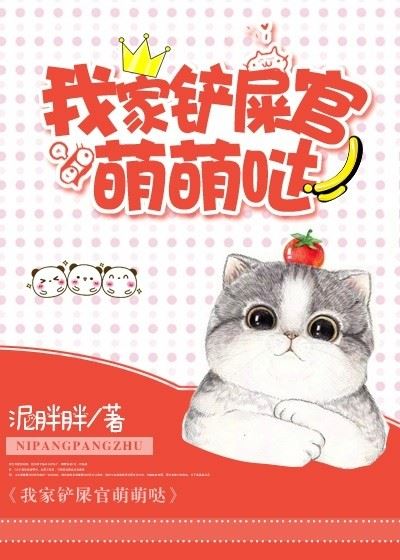
My Shit Shovel Officer is Cute
+Add to Custom List
Sort
Add review
... Read More
The central irony of this entire arc is absolutely delicious: Xiao Luo transforms into a human to get closer to Ling Su, applies to Ling Su's own company as an intern, and now his directional transformation card and system are mysteriously gone. The story keeps layering complications on top of each other like it's building a house of cards and we all know it's about to topple. The plot threads converging here are rich. First, there's the dual-identity tension—Xiao Luo has to pretend to be a normal human intern while secretly being a cat-person, and Ling Su is already half-suspecting something. Then there's the dream element: Ling Su dreamed about Xiao Luo before he even knew him as a human. That's not random foreshadowing, that's the author telling us something deeper is connecting these two. And the system disappearing? That changes everything. It means Xiao Luo might not be able to transform back, or the rules of his world are shifting. Either way, he's now permanently in human form at a company run by the one person he's emotionally entangled with. The plot is tightening around him like a vise, and I cannot wait to see how this resolves.
... Read More
Okay can we talk about how naturally the dialogue flows in this chapter, especially the contrast between Xiao Luo's internal monologue and the actual spoken words? The internet forum post section reads like a genuine social media thread — the casual commentary, the numbered list format, the random tangents about parrots singing Huangmei Opera. It's so well-observed that I kept expecting to see reply buttons. But the real vocal gold is in how Xiao Luo's internal voice differs from his external performance. When he's thinking to himself, it's sharp and analytical: "If, as they say, the way to obtain the love point is very difficult, he needs to cherish this +1111 points even more." But the moment Ling Su speaks, that voice shifts completely. "Meow~" isn't just a sound — it's a full behavioral recalibration. And Ling Su's line about him becoming an "internet addicted cat" has this wonderful casual warmth, the kind of thing a person says to a pet without any deeper meaning, which makes it infinitely more painful for readers who know exactly how much Xiao Luo is processing. The narrative voice itself is also worth noting — it's deeply embedded in Xiao Luo's POV, almost uncomfortably so. We don't just observe his thoughts; we inhabit them. The author never pulls back to give us an omniscient safety net.
... Read More
I need to talk about the food in this chapter because it's literally doing heavy lifting. First we have the completely unsalted, barely-oiled meal that Xiao Luo risks his dignity to taste and nearly dies over. Then Ling Xuan descends like a hurricane and demolishes everything. And the narrator explicitly tells us: "Another big demon with bad cooking skills." Two major characters. Zero culinary ability. One household full of takeout containers waiting to happen. But here's the thing—this isn't just comedic Set-up. The cooking failures feel like a metaphor for something deeper. These are people who can do everything else in life but nourish someone simply by being present. Ling Su makes money, he's virtuous, he takes care of his pets... but he can't even salt a soup. Is there a pattern here? Is the author suggesting that emotional nourishment and domestic competence are separate skills, and our protagonist is missing both? Then there's Xiao Luo, a cat who can transform into a human, who eats food that isn't even palatable, who gets stuck in an uncomfortable form because of someone else's greed—and still chooses to stay. Still worships his owner. The food becomes this symbol of care that gets mismanaged but is ultimately received with gratitude anyway. "For Xiao Luo who can only drink milk powder all the time, this is already a rare gourmet meal!" Even bad food from someone who tries is better than nothing. That hit harder than it should have.
... Read More
Okay so this whole scene is built like a classic bait-and-switch, and honestly it works so well. You've got Xiao Baihua coming in all dramatic—bursting into tears, stumbling around like he's about to collapse, the whole disabled-but-strong-spirit routine. And the narrative even narrates it: "affectionate low voice fully interpreted the essence of a disabled body and a strong mind" which is literally the author winking at us. Ling Su notices immediately. He knows something's off but plays along, which is already showing his intelligence. But then the real plot twist hits—King shows up, the baby-faced youth who turns out to be some kind of supernatural figure connected to the mysterious LOLO Pet Shop, and suddenly everything flips. Xiao Baihua's fake injury vanishes instantly when faced with actual power, going from dramatic starer to kneeling and begging in a single beat. That transition from comedy to genuine menace is what makes this passage work. The pacing also shifts nicely—from the almost-sitcom energy of the apartment scene with the bickering cat and bird—to something far darker when they step outside and you can see "the mass of black air getting thicker and thicker on the ground." The tension doesn't just build, it inverts. And that final line where King asks "Who ordered you to come?" while the cat is overhearing everything? Cliffhanger done right.
... Read More
I don't even know how to feel about Wei Yuan anymore. The text makes it clear Su Chen saw something in him—literally saw his younger self, that indomitable spirit—and decided to help. He gave this guy nearly a year of opportunities, started him on second male lead roles to hone his craft, treated him decently. And what did Wei Yuan do? He called it weakness. He saw Su Chen's kindness as something to exploit rather than appreciate. 'Brother Chen has always been very good to me'—said the man currently orchestrating his downfall. The fact that he could look Su Chen in the eye and lie with such conviction while his face was already flushed with anxiety told me everything I needed to know about where his loyalties actually lay.
... Read More
'Grandpa said that a manly man cannot be hugged like a little girl.' Wait. WAIT. So the adult Ling Su, this stoic, calm, reliable guy who talks to cats, had this childhood rule imposed on him about not being allowed to be affectionate? And then the kid version caveles almost immediately — 'Forget it, for the sake of your good looks, I'll let you hug me, but you can't let Grandpa see it' — and I just. I can't. This is the most devastating softness I have ever encountered in a novel. The fact that even as a child, Ling Su was conditioned to suppress his emotional needs, and the fact that Xiao Luo's entire world rearranges itself the moment he gets to hold this vulnerable version of the person he likes... I'm not okay. And don't even get me started on how Xiao Luo's internal monologue goes from 'I want to pinch those cheeks' to suddenly feeling like a creep because the kid looks at him with those innocent eyes. The guilt, the tenderness, the desperate desire to protect — it's all there in like three paragraphs. This author understands that the best romantic tension isn't about grand gestures, it's about small moments where a character realizes how much they care. Also: the dynamic between Xiao Luo and young Ling Su is SO different from whatever their adult dynamic is, and that contrast is doing a lot of emotional heavy lifting for the story. I need to sit down.
... Read More
There's something quietly beautiful about this story that I didn't expect to connect with, and I think it has to do with the theme of forbidden communication. On the surface, it's about pets learning to play a video game. But really? It's about beings who normally couldn't cross certain boundaries finding a way to connect anyway. Xiao Luo's pets—animals who should be confined to their roles as companions—have carved out an entire secret world where they have agency, competition, and shared purpose. The game controller is almost a MacGuffin here, but it's also a literal bridge between species. And the humans? They're almost secondary in this ecosystem, walking into rooms and discovering mysteries they can barely parse. Ling Su noticing his pet lost but not understanding HOW is a perfect metaphor for how much we miss about the people and creatures closest to us. There's also the motif of the screen—as both barrier and window. The pets communicate through interfaces; Xiao Luo reads the screen like a sacred text; the owners see the screen as just another object in the house. The system messages that guide the pets feel almost like divine intervention—technological orphans finding purpose through digital rituals. And the fact that the chapter literally ends mid-word suggests that this secret world is still growing, still being written. It's hopeful in a way that caught me off guard.
... Read More
I need to talk about the imagery in this chapter because it is SO vivid. A macaw pinching a mouse with one claw, shaking like the wind, pecking at a mechanical keyboard with a hook-like beak. The image of Coco rearranging the mouse to the left side of the keyboard because the distance is too far, and then CRACKING the keyboard with his beak — I literally laughed out loud at this. The author doesn't need elaborate descriptions; a single detail does the work. Then there's Husky, who apparently just sat on the mouse. Like a dog sitting on a computer mouse. The visual alone is cinematic. And the guinea pig and hamster whose paws are too small and exquisite to control anything — that's such a specific, affectionate detail that makes the world feel lived-in. The game descriptions themselves are woven in naturally as if Xiao Luo is Googling information mid-stress, which is both funny and practical worldbuilding. We learn about each role and hero through his desperate research, and suddenly this game world feels real enough to anchor their adventures. The final scene with King — the Feng Shui imagery of blue smoke blowing north, the casual mention of Su Chen with what feels like a halo of mystery around him — sets up this richer world beyond just pets playing video games. There's magic, fate, and apparently movie emperors involved.
... Read More
The stakes in these opening chapters are fascinating because they operate on two levels simultaneously. On the surface, Xiao Luo's problem is mundane: he's a cat who needs to survive, possibly get adopted, and figure out whether he's ever going to get his human body back. But underneath that is this enormous question—the skills he had, the connections he built, the identity he carved out as a top-tier hacker. All of it is gone. Or is it? The tension comes from watching this incredibly capable person navigate a world where he is physically powerless. He can't even open the bathtub door to escape his current predicament. He's observing humans through glass, hearing their voices, wanting to reach out—and unable to. But here's what keeps me hooked: the mysterious man who walks into the shop. "I need a well-behaved cat." The voice description alone—deep, magnetic, bold and recognizable—suggests this is someone important. Someone whose presence makes Xiao Luo's ears tremble despite his best efforts to stay aloof. There's an immediate gravitational pull between them, and I'm convinced this isn't just random casting. This guy is going to be central to whatever conflict comes next. There's also the unresolved question of AX—the person from the National Security Bureau who offered him the job. Will AX come looking for him? What happens when they discover Master Xiao is now a cat in a pet shop? The dramatic irony of that scenario is already writing itself. The suspense is well-maintained because the author doesn't give us easy answers. Every revelation opens a new question. And Xiao Luo, despite having zero physical agency, is clearly still the smartest person in every room—which means the conflict ahead is going to be intellectual, strategic, and probably hilarious.
... Read More
Okay, we need to talk about Ling Su because this chapter completely flips our understanding of him. Earlier chapters established him as high-cold, aloof, untouchable. But here he is, sending emojis in a work chat group, complaining about his cat ignoring him, and practically vibrating with excitement about dinner plans. The contrast between his public persona and private self is delicious. And his relationship with Xiao Luo — it is genuinely sweet. He searches the whole apartment for the cat, finds him hiding in the closet, and just smiles. He calls him Pang and rubs his head. This is not a guy who pretends to not care. He cares, he just does not make a fuss about it in public. Then there is the dynamic with Husky. The way Xiao Luo waves goodbye to Husky like they are old friends, and Husky yells after them about keeping in touch on QQ — these two animals clearly have a history that predates this chapter. And Ling Su, sitting there watching his cat and the dog communicate without understanding a word, must be so confused. The triangle of relationships here is fascinating: Ling Su and Xiao Luo built something tender, Xiao Luo and Husky have their own secret bond, and Ling Su is completely unaware of both the supernatural elements and the dog friendship. It makes every interaction layered with dramatic irony.
... Read More
Let me just say this upfront: the dialogue in this book works on two levels, and both are doing incredible things. First, there's the actual spoken dialogue, which is sparse and purposeful. Ling Su says almost nothing of substance out loud—he calls the cat 'Pang,' tells it to 'sit firmly,' mutters about needing help, and then gives three five-word responses on the phone. That's it. But the narrative voice—Xiao Luo's internal monologue—is where the real conversation happens. And it's ferocious. 'What kind of idol drama male No. 2 persona, this is obviously a chunibyo disease who is good at brain supplement.' 'My shoveling officer is stupid, can I be smarter?' 'This is definitely an under-tuned. At this time, shouldn't normal people say: Xiaopang is cute!' This is not the voice of a resigned cat. This is the voice of a sarcastic, Observant, slightly panicked human being who refuses to let go of his sharp tongue even while literally trapped in an animal body. The author has given Xiao Luo a distinct narrative register—part internet-savvy吐槽, part literary observation, part genuine fear that he's slowly losing his humanity. Meanwhile, Ling Su's dialogue (both spoken and internal) has a completely different texture. When he speaks aloud, it's warm, slightly performative, almost theatrical ('Xiaopang is really a scheming cat'). When we hear his thoughts, they're simpler, more earnest, less layered. That contrast between the two voices—Xiao Luo's razor-sharp irony versus Ling Su's sunny delusion—creates a comedy of errors that never feels repetitive because each perspective is fundamentally different in rhythm, vocabulary, and emotional temperature. And then there are the narrator asides: 'The so-called love at first sight? Ling Su: Scheming Cat. Xiao Luo: Stupid rich man.' That's not dialogue. That's the author winking at us, condensing the entire chapter's theme into two labels. Brilliant.
... Read More
The internal monologue here is absolutely lethal. Let me just quote this: 'Meow! A bold evildoer, dare to seduce me!' — this is a CAT'S INTERNAL THOUGHT. And it's delivered with the cadence of someone who has definitely read too many cultivation novels. The voice distinction between Xiao Luo's internal roasting and Ling Su's outward dialogue is razor-sharp. Ling Su's lines are deceptively simple. 'Come here, let me see.' 'Don't worry, you're a male.' 'Xiao pang, my first kiss is for you. You have to be responsible.' Each one lands differently. The first two are casual, almost clinical. The third is the punchline that completely derails the scene. His dialogue has this warm, teasing quality that makes him feel like a real person—not a romance novel archetype, just a guy who finds his adopted cat amusing. But Xiao Luo's inner voice is where the comedy lives. 'You can't just forgive the shit shovel officer, or he will repeat the trick in the future and won't take him as the master!' The fact that he's philosophizing about dominance dynamics with his human while simultaneously fake-fainting on a table is peak comedy writing. The QQ group dialogue is also brilliantly written. Each character has a distinguishable voice through their online names and reaction styles. 'Boss, what did your cat grow up with? This result is simply against the sky!' versus 'Although orange cats are usually fat, and this one overwhelms this old man, it look like a beauty!'—these aren't interchangeable internet comments, they're characters. The narrative voice itself walks a fine line between third-person limited and something more playful. It dips into Xiao Luo's head but occasionally steps back with wry observations like 'A teenager who is often praised as a genius, to put it bluntly, is just a minor.' That kind of authorial Commentary adds layers without breaking immersion.

Leave a comment

You must be logged in to leave comments. or
