My Restaurant is Famous All Over the World - Reviews

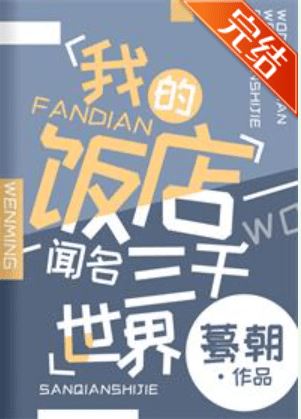
My Restaurant is Famous All Over the World
+Add to Custom List
Sort
Add review
... Read More
The Three Thousand Food House expansion is one of those scenes where the author just quietly builds an entire world into the space and you don't realize how much you've absorbed until you look up. Let me walk through it because it's gorgeous. You've got the original shop side — classical style, grandeur, stability — with buttons on every tabletop for ordering and paying. That button detail came from Tu Linlin, who noticed that timid people from certain races feel nervous speaking to waiters. Soft voice, nobody hears. Loud voice, everybody stares. So the solution is a button. This is the kind of worldbuilding that makes you go "of course this exists" instead of "wow, what a clever invention." It's just... there, like a doorknob you've used a thousand times. Then the other side of that wall door — same size, same layout, same decoration style — is the Huaguo side. Separate kitchens. One for Three Thousand World cuisine, one for Chinese. The shared ingredient storage room with its exposure risk... I love that they didn't solve every problem. The book acknowledges the loophole and moves on. That's confidence. But the real visual moment — and I want to quote it because it stuck in my head — is Bai Xianzhi looking at the old rolling shutter door. The worker offers him a new automatic one, and Bai Xianzhi refuses. "No need, thank you." Why? Because that door separates two spaces that were once one. Because it's been there through the renovation, through the spatial overlapping device tripling the floor area, through everything. It's the only thing that hasn't changed. I kept thinking about how doors in novels are almost always symbols, and this one is doing double duty — it's literally a threshold between Two Worlds' worth of cuisine, two cultures sharing a kitchen, two sides of a building that were once one. Classic. "The expansion and renovation of the Three Thousand Food House lasted for half a month." Half a month. That's the whole opening line. The author could've spent three pages describing the scaffolding and the noise, but instead we get five words and a cut to the scandal dropping. The shop stays in the background, humming, while the world explodes around it. That's how you build atmosphere without trying.
... Read More
Let's be real—the stakes in these chapters might seem low on the surface, but they're devastatingly high for the characters involved. Li Qiuqiu's conflict is internal: will this stranger like me? Am I trustworthy? Is my dress okay? It sounds silly until you realize how vulnerable it makes you feel. She's putting herself out there, emotionally, and that's terrifying in its own quiet way. But Tu Linlin's conflict? Now that's where things get intense. This guy has social anxiety on another level—he stutters, he panics, he's afraid of crowds—and he still showed up. Why? Because his reputation as a member of the Rabbit Clan is on the line. The internet is watching. People are mocking him. 'The bunny definitely ran away!' someone comments. And he can't let that stand. So he walks into the most crowded, overwhelming place imaginable, faces the person he's indebted to, and tries to speak. The stakes here aren't life-or-death in a traditional sense, but they feel just as real. If he fails, he fails as a representative of his entire clan. Bai Xianzhi's demand for repayment adds another layer—this isn't just about pride, it's about honor and accountability. What happens next? Will Tu Linlin explain himself? Will Bai Xianzhi forgive him? The tension is excruciating because we care about these characters, even though they're barely introduced. That's good writing. That's suspense done right—not with explosions, but with a stuttering rabbit and a man who owes forty yuan.
... Read More
Can we just talk about An ke for a second because MY GOD. This girl is EVERYWHERE. She's got blonde hair, she leads a pack of ten-plus people who harass Zhuo Long, she reads his online roasts OUT LOUD to his face and then LAUGHS with her crew. Classic bully energy, right? Wrong. She's way more calculated than that. Watch what happens during the theft investigation. Everyone's panicking, stammering out alibis, and An ke just... stands there calm. She verifies someone else's alibi in two words: 'Yes, Director, she was with me the whole time.' She's not just participating in the bullying—she's BUILDING a network of mutual alibis. These kids are covering for each other like a well-oiled machine. The girl who gets suspiciously verified even gives An ke a 'grateful look.' Grateful. She's not a victim, she's a participant who got pulled into the alliance. And Zhuo Long? He doesn't even flinch when they mock him. 'His face showed no expression. He had long anticipated this result.' That's not weakness—that's someone who has been betrayed by systems before and learned not to waste energy on hope. His silence around An ke's group feels different from the silence of someone who's scared. It's the silence of someone who's already calculating his next move. Also can we discuss that he's a Jiao Tribe—DRAGINKIN—in an institution full of other beast-tribe kids and he's still the outcast? The racial hierarchy in this world is WILD and I need to process it.
... Read More
The pacing in this batch is wild. We go from high-stakes confrontation—dragons getting immobilized by an unknown Divine Realm power, a clan's future hanging in the balance—to Tu Linlin happily eating dumplings with zero sense of urgency, and somehow it all works. Here's what I think the author is doing: they're using the food scene as a pressure release valve. After the Ao Yi moment where she screams 'I will avenge you!' and gets physically grabbed and shut down, the narrative needed to exhale. Instead of another tension scene, we get... dumplings. Internet posts. A rabbit-eared guy making sizzling noises while eating. The chapter transitions are also doing a lot of heavy lifting. The `------` break cleanly separates the Dragon family fallout from the restaurant aftermath, and then there's another cut to Tu Linlin's lunch scene that feels like a completely different story until you realize it's all connected through Bai Xianzhi. One minor gripe: the author's note at the end ('Finally... signed a contract!') felt jarring. I understand it's tradition in web novels but it pulled me right out of the world. Still, the actual story pacing is solid—nothing drags, nothing rushes, and that ending with the viral dumpling post is a perfect comedic button.
... Read More
Long Bo Bo (aka She Bo Bo, aka the guy whose real name nobody knew) is genuinely one of the most human characters in this entire arc. Here's a dragon — literally a member of the Dragon Clan — who has this biennial 'Sensitive Period' where he can't do anything and has to hole up. Sounds like a curse, right? But the way it's used here is kind of beautiful: it's not some plot device to make him powerful, it's literally just him being a vulnerable creature who gets sick and has to go home. And during his time at Three Thousand Food House, he wasn't there to steal — he was there because he genuinely loved the food and wanted to learn. The detail about him writing down the steps with a pen, intending to study them later, and then accidentally handing over the menu along with his notes... that's the kind of mundane mistake that could only happen to someone who's brilliant but distracted. He's not evil. He's not scheming. He's just a chef who got caught in a chain of accidents. And when he shows up at the climax, bowing and apologizing to Bai Xianzhi — 'Mr. Bai, I'm sorry. That's how things turned out. It's all my fault' — that line hits different because there's no performance, no attempt to save face. The manager, on the other hand, is fascinating in his own way. He started as the antagonist — the guy ready to play dirty, who had already pushed the four dishes forward unilaterally. But the second Long Bo Bo appears, he immediately bows and says sorry. Not half-sorry. Full 'I will transfer the money to your account' sorry. There's something almost charming about his stubbornness when it comes to compensation though. Bai tries to refuse and the manager is like 'No, compensation is necessary. I will transfer the money.' Bro, who is this guy, my mom? And then the bargaining over the exact percentage of sales revenue — two-fifths vs three-fifths — reads like two uncles negotiating at a wedding. But underneath that humor, there's a real acknowledgment: this person made a mistake and he's willing to pay for it. Meanwhile, Feng Ye is just sitting there, watching all this unfold, dropping the VIP card moment like it's nothing. The dynamic between these three — the guilty chef, the stubborn manager, and the calm mediator — creates this really natural tension-release pattern. And Bai Xianzhi, through it all, stays remarkably grounded. He's not gloating. He's not seeking revenge. He's genuinely more concerned with fairness than winning.
... Read More
Honestly, this plot development is so relatable it hurts. Bai Xianzhi handles a literal armed thug in his restaurant and somehow the aftermath is more stressful than the attack itself. That's just... modern life, right? The whole chain of events is fascinating. Some random customer films him, uploads it, it goes viral, netizens turn him into an instant internet boyfriend material legend, and then naturally a bunch of trolls decide he must be faking it all. The irony is delicious—he genuinely saved people and got accused of staging it? The police clearing his name and giving him a flag is the perfect payback moment. I love how the story uses this viral moment to actually boost his restaurant's business instead of being purely negative. It's a clever subversion. The fact that he ended up overwhelmed with customers and had to get his neighbor Aunt Wang involved shows how one incident can spiral your whole life in unexpected directions. Did the author plan for this to be a turning point for the restaurant? Because it definitely raised the stakes—now there are more customers, more exposure, more potential for drama.
... Read More
The nocturnal high tide detail is NOT random. Bai Xianzhi notices it, searches for the pattern, and decides to wait until the next lunar cycle to test his theory. This is someone treating the supernatural with the methodology of a scientist, and that's the central theme of the entire book crystallized in one paragraph. The tides are real. The lunar calendar is real. Whatever is happening at the Three Thousand Food House might be real too—but you don't get to claim it by screaming into a camera, you get to understand it by showing up consistently and observing. Then you have the live stream as a symbol itself. Two broadcasts happening simultaneously—the City S TV one that turned into a food show (genuine, warm, imperfect) and Hu Dan San San's one that stayed in the realm of manufactured horror (slick, performative, eventually exposed). The book is asking: what's the difference between someone performing truth and someone performing fiction? The TV anchors sweated from the spiciness, not from fear. Their bodies told the real story even when their words weren't planned. Hu Dan San San sweated from fear—real fear, maybe—but it was dressed up as a supernatural act. The irony is delicious. And the restaurant itself—Three Thousand World/Food House—is this liminal space where humans and spirits eat together, where the boundary between mundane and magical dissolves over shared meals. That's the symbol the whole story orbits around. You can't understand A Piao without understanding what the restaurant means. It's not a haunted house. It's a dinner table.
... Read More
The stakes in this chapter operate on multiple levels and I think that's what makes it so tense. On the surface, it's simple: a five-year-old dragon cub is hiding from his abusive older brother who has unlimited access to the clan. Ye Lin is terrified. We see it in how he "hastily hides" the Tongtong Machine, how he "shouts frantically" at the stone, how he "underestimates" Ye Lan's authority. The physical danger is real — Ye Lan once made him lose a scale. What's next? A broken bone? Something worse? But underneath that, there's a MUCH bigger conflict simmering. The dragon clans claim they are the ONLY dragons in existence. They enforce this belief through social pressure, through education, through Sha Li literally telling a child that anything contradicting this must be fake. And then Ye Lin sees proof that they're WRONG — a dragon cub outside the Dragon Realm, in human form, younger than anyone in the clan's history has ever transformed. If Ye Lin brings this cub back, it doesn't just make him a hero. It INVALIDATES the entire ideology of his clan. The text hints at this when it says the cub "may have horns, but any dragon capable of normal thinking wouldn't believe he is one of their own." Normal thinking, apparently, means blind faith in clan mythology. Ye Lin's "simple logic" is actually the only honest thing in the room. So the stakes are: personal safety vs. truth. Survival in the clan vs. something larger. And Ye Lin doesn't even fully understand what he's stumbled into. He just knows he wants to prove his brother wrong. How did we get from "my brother is mean" to "I might break the foundation of an entire species"? That's excellent storytelling. The personal became cosmic without the character even noticing.
... Read More
There's something deeply symbolic about what's happening here and I can't shake it. Old Bai died. His restaurant passed to his nephew Bai Xianzhi. The neighbors say Old Bai's cooking was terrible but they still want to support the nephew out of loyalty. That's not just plot — that's about what we owe to people who came before us, whether they deserved it or not. And then Bai Xianzhi makes braised pork, a dish described as soaking up 'rich gravy,' something that 'doesn't have a spicy taste, making it a dish loved throughout the country.' He's trying to make something that will bring people in, something universal. Meanwhile Zhang Xiaoli devours pickled vegetables and pork rice and decides food is more precious than discipline. Liu Qingshan returns BOWLS — two bowls from yesterday, treated like sacred objects. Everything in this passage is about consumption and legacy. What do we eat, what do we inherit, and what do we pass on? The restaurant's name — 'Three Thousand Food House' — feels almost fateful. Three thousand something... I have a feeling that number means more than it appears to. And that final line where Bai Xianzhi is about to start slicing the pork while holding his phone for a livestream? He's literally performing his grief for an audience, cooking through loss, trying to turn survival into connection. The food IS the theme. It always has been.
... Read More
The worldbuilding in these chapters is absolutelychefskiss. Let me start with the Three Thousand Food House itself because the atmosphere around it has shifted so dramatically. Remember when it was just this quiet little restaurant where Bai Xianzhi could barely handle the normal customer flow? Now it's become THIS place—so famous that live streamers are camping outside, trying to bait content, speculating about whether the boss is some hidden high-level race. The detail about Zhuo Long effortlessly tossing an intruder out and the video going viral? That's brilliant worldbuilding because it shows how the mortal world interacts with the supernatural without the characters even knowing about it. The comment section reactions are gold. "Is this the work of the Divine Clan?" "No, it's a paralysis spell, any high-level race can use it, like the Dragon Clan, Soul Clan, and Divine Clan." These aren't just filler—they're the mortal world's attempt to make sense of something beyond their comprehension, and it simultaneously builds lore AND creates mystery. And Bai Xianzhi having NO IDEA any of this is happening while he's just happily cooking? That's such a funny and endearing detail. But then the scene shifts to the Spirit Clan tree hole and I was immediately transported. Two kids—a green-haired girl and a black-haired boy with tiny horns—holding a cracked communication device. The imagery is so vivid. You can picture them huddled together, reading fragmented comments, making deductions that are simultaneously adorable and painfully logical. "He's from the Black Dragon Clan. You're a little black dragon, which means you're from the Black Dragon Clan too. He's old, meaning he's older. You're five, so your dad should be quite old, which means he could be your dad!" And the French phoenix tree scene under warm spring sunshine? The author takes time to paint that setting—the gentle warmth filtering through branches, the two characters sitting together after a long busy week. It grounds the whole supernatural chaos in something warm and human. The transition from the high-stakes world of inter-realm speculation to two guys talking about blind dates and life struggles is jarring in the best way possible.
... Read More
The sensory details in this passage are absolutely phenomenal. The moment Liu Qingshan catches that spicy and fragrant aroma wafting from the kitchen, the entire scene comes alive. I'm talking about the description of large pieces of meat, tender green peppers, red chili peppers scattered among white noodles that have become enticing in the embrace of meat sauce. The plastic wrap covered bowls with mist trapped underneath. His mouth watering uncontrollably. Even the mother's cold noodles are described – though frankly, nobody cares about those. What struck me most was how the author uses smell as a narrative device. The aroma is almost magical in its power to make Liu Qingshan forget his game, abandon his priorities, and become completely transfixed. That kitchen scene at the end with the mother trying to hide her enjoyment while the father announces his interest creates this wonderful domestic comedy tableau. You can see the whole scene like a movie.
... Read More
I need to talk about how this author builds atmosphere without going full prose-poet on us. Because sometimes they just drop a detail and it does SO much work. Take the closing scene of this batch. Eleven o'clock at night. Wutong Lane. Hardly any people outside. The Three Thousand Food House has been closed, the pots are washed, and Bai Xianzhi is offering to drive Li Yi home through darkness that basically swallows the street whole. You can FEEL that quiet. It's not spooky quiet—it's the kind of quiet that comes after a long day when everything has settled down and there's nowhere urgent to be. Compare that to the Ji family entrance scene. Ji Changfeng's hair flowing elegantly despite being middle-aged, looking more like a sibling to his daughter than a father. The divine realm aesthetics are kept deliberately sleek and almost sterile—no dirt, no warmth, just cold beauty and generational tension radiating off every line of dialogue. It's a world where looks matter and power is inherited, and the setting itself reinforces that. Then there's the Time-Space Battlefield mentioned in passing. Brainless stone creatures. Wars. Bai Xianzhi's shop exists in this mundane mortal layer while Ji Lan operates in these cosmic-strategic layers. The author never gives us a full tour of the battlefield, but the fact that Ji Lan senses "something is changing" there adds this underlying dread to an otherwise domestic chapter. The world feels LAYERED, you know? Like we're only seeing the surface of something much bigger and slightly dangerous underneath. What I love is how the mundane and the divine coexist without competing. The dishwasher detergent scene is genuinely funny and grounded, then we cut to a girl who's the most powerful warrior of her bloodline in centuries talking to her father about succession. Both scenes feel equally real in their own register. That's skillful worldbuilding—when the small details make the big world feel more believable rather than less.

Leave a comment

You must be logged in to leave comments. or
