Summary

... Read More
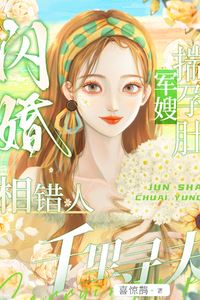
Li Sui is a young woman who recently took over her deceased grandfather’s small sugar painting stall at Starlight Market. Despite her skill, the business struggles financially as traditional art forms lose appeal to modern trends. Her personal life is equally complicated; she is married to Zhou Jinghuai, the CEO of Sudden Rain Tech, in a union that began six years prior under unusual circumstances. Li Sui had impulsively forced the marriage two months earlier as a desperate act to secure care for her ailing grandfather, leveraging a promise made by Zhou’s mother years ago. Zhou Jinghuai, initially cold and detached, agreed to the arrangement but maintained emotional distance, disappearing for two months into business trips abroad. Their relationship is characterized by sharp banter, mutual annoyance, and an underlying current of unacknowledged tension.The narrative shifts when Zhou Jinghuai returns unexpectedly due to a threat of thunderstorms, a weather pattern that triggers Li Sui’s deep-seated trauma associated with rain and past emotional breakdowns. His sudden presence disrupts the fragile equilibrium of their separation. While the public faces a media frenzy involving rumors of Zhou’s romance with actress Su Yinxin, Li Sui remains outwardly indifferent, though internally she grapples with guilt and the desire for a divorce once the scandal settles. The rumors are officially debunked by both parties, yet the incident serves as a catalyst for reevaluation of their marital status.Key interactions reveal a gradual thawing in their dynamic. Zhou Jinghuai displays unexpected domestic competence, cooking meals and tending to minor injuries, while Li Sui attempts to maintain boundaries through pragmatic gestures, such as buying him slippers and pajamas. Their exchanges are laced with sarcasm and subtle care, hinting at histories deeper than their current strained facade. Li Sui’s secret identity as a popular web novelist provides her with financial independence and an emotional outlet, further complicating her dependence on the Zhou family.A significant turning point occurs when Li Sui encounters a harassing customer at her stall, leading to a confrontation where she uses her wits to defend her dignity. Zhou Jinghuai’s reaction, ranging from amusement to protective concern, signals a shift from indifference to engagement. Meanwhile, Li Sui takes up a temporary security job to fill her time, crossing paths with residents whose personal dramas mirror her own complexities regarding divorce and societal expectations.The story explores the evolution of their marriage from a transactional arrangement born of obligation to a complicated partnership where feelings are suppressed but not absent. Li Sui’s memories of their first meeting six years ago, marked by Zhou’s aloofness and hidden acts of kindness, contrast with his current behavior. As Zhou Jinghuai settles into their shared home, the barriers between them begin to erode, forcing both to confront the reality that their contract marriage may be evolving into something more profound, despite their professed intentions to divorce.
Latest Release
DateGroupRelease
2026-09-26akknovel c13
2026-09-26akknovel c12
2026-09-26akknovel c11
2026-09-26akknovel c10
2026-09-26akknovel c9
2026-09-26akknovel c8
2026-09-26akknovel c7
2026-09-26akknovel c6
2026-09-26akknovel c5
2026-09-26akknovel c4
2026-09-26akknovel c3
2026-09-26akknovel c2

Community Reviews

Rating(0 / 5.0, 47votes)
5 stars
0(0%)
4 stars
0(0%)
3 stars
0(0%)
2 stars
0(0%)
1 stars
0(0%)

Popular reviews

... Read More
I started thinking about the slippers and I couldn't stop. They're not just slippers. They're the threshold object. His shoes go in the cabinet. His shoes join hers. That's the domestic claim. 'I live here. My feet are in your house.' And then the stiffness. Three days in Antarctica. The gap. The time they weren't here. The time the slippers weren't needed. And now he's back, and the soles are frozen, and he puts them on anyway. 'But no matter.' Three words. The whole arc of 'I was gone and now I'm back and it's fine' compressed into a physical act. And the 'Prisoner' shirt. I know it's a joke. I KNOW it's a joke. But the text keeps piling on the wrong-adjacent symbolism. She buys it as a practical solution to a wet-pajama problem. She's not buying him silk. She's not buying him the 999-yuan livestream set. She's buying him a label. A brand of containment. 'Prisoner.' And he puts it on. And he lounges in it. Shamelessly. And the assistant walks in and calls it 'matching outfits' and suddenly the containment is mutual. She's in Judy Hopps, which is also a prison uniform if you squint (bunny in a police station, orange, etc.). The text doesn't say this. The text says 'Her brain short-circuited.' And that's enough. The reader does the squinting. The deeper thread I keep landing on is debt. 'I can't just owe him.' The 999 roses are debt. The crowd's 'forgive him' is debt. The whole 'happy ending they envisioned in their hearts' is debt. And Li Sui's response to debt is to buy a Prisoner shirt, which is the visual language of 'I am trapped, I acknowledge this, I am wearing it on my chest for everyone to see.' She's converting the obligation into a badge. Making it visible. Making it a joke. Making it survivable. And Zhou Jinghuai's 'Creative' is the only word that doesn't ask her to feel grateful for the shirt. It says: I see what you did. I don't owe you an emotional response to it. I approve of the craft. And that's... that's the most 'no debt' response possible. He's not accepting a gift. He's acknowledging a production. Which means she's not paying down a debt. She's a maker. He's a customer. The transaction is clean. Or it should be. Or I'm reading too much into a white t-shirt with a black character on it and I should probably stop. But I can't. The slippers keep pulling me back. Stiff soles. Three days. 'But no matter.' You can never put the slippers back in the cabinet once you've put them on the floor.
... Read More
The apartment itself feels like a character. It's hers but also not hers—bought by his mom as a marital home, which adds this weird layer of history to every creaky floorboard. And the sugar painting tools collecting dust in the corner? Such a small detail but it does so much. It shows Li Sui's grandfather tried to give her a skill, maybe a piece of his world, and she's still holding onto it even if she's rusty. Then the thunderstorm hits and the whole scene transforms. The rain against the windows, the earplugs failing, the way the thunder isn't just noise but a trigger that pulls her back to those hospital steps. I love how the author writes the physical reaction—neck damp with sweat, sticky, uncomfortable—because it's not just emotional, it's bodily. The story lives in that intersection. Even the quiet moment later when Zhou comes to the door in black pajamas with damp hair and asks for the TV remote feels charged with domestic tension. It's not dramatic, it's just two people sharing a space, but the atmosphere is thick. You can feel the unsaid things sitting in the room like furniture they both ignore.
... Read More
Okay so the 'Hate Turns to Love—CP Became Real' sugar painting is still stuck on the trending topics even though the gossip about Zhou Jinghuai and Su Yinxin has basically evaporated into the background noise of celebrity scandals. That's actually a really smart little structural device the author is pulling here. The whole thing sits there, refusing to die, and it becomes this weird plot-justification for Li Sui to start doing calligraphy at her stall. Like, she doesn't go 'oh I'll open a new business line.' No. The internet's stubbornness directly funds her next move. Fifty yuan in half a hour. Grandpa would've called her a slacker. And honestly? She's the slacker. She's closing early. She's working by her own rhythm, noon-to-evening one day, evening-to-night the next. The market's running on its own clock and she's on a different frequency. Then there's the assistant visit. Song Jie shows up at the door with a suitcase, boss in a 'Prisoner' tee, Li Sui in Judy Hopjs, and the man just... absorbs it all. Doesn't confirm. Doesn't deny. That non-answer IS the plot point. It tells you everything about how Zhou Jinghuai operates. He never gives you the clean version of things. You have to triangulate. And Song Jie, bless him, goes full 'matching outfits! Boss, you've got style!' at a volume that definitely carries into the living room. The chips lose their flavor. That's your hook for the next scene. The 'matching outfits' misunderstanding is planted right at the chapter break, and I could NOT stop reading. Because now Li Sui's internal logic is short-circuiting. Since when did East-meets-West chaos count as matching? The whole household aesthetic is a collision of grids, and the reader gets trapped in the same confusion as her. What I appreciate is that none of this 'advances' the main plot in a traditional sense. There's no enemy confrontation, no secret revealed, no cliffhanger about life or death. The plot is just... domestic infrastructure. Shopping. Cooking. A doorbell. And yet the structure holds because every tiny action has a ripple. The slippers appear. The slippers get explained (they don't). The 999-yuan livestream triggers a purchase. The purchase leads to the T-shirt shop. The T-shirt shop creates the Prisoner outfit. The Prisoner outfit creates the matching-outfits incident. It's a chain, each link absurdly small, and that's what makes it feel lived-in rather than plotted.
... Read More
I went back and re-read where she says 'I feel like as long as the shop's still open, Grandpa's still here' and I just sat with that for like ten minutes. Because the whole chapter has been this fun, light, street-level comedy and then she drops that line and the floor opens up. The sugar painting stall isn't a source of income, isn't a writing-material generator, isn't a social space. It's a *tomb.* A little roadside shrine where Grandpa still wanders the streets with her and watches the crowd and she's keeping the stall running because shutting it down means he's really, fully, irrevocably gone. And the sugar itself is the perfect material for this. It's hot, it's sweet, it's made to be consumed, it shatters into glass if you hit it wrong. The insurance man throws it back and it breaks into shards and she has to make him eat the broken pieces. It's so... *right* symbolically. The sweet thing is also the weapon. The thing that's supposed to be gentle and decorative is the thing that cuts. And she doesn't flinch. She catches the shards, bags them, and says 'I need you to eat it.' No mercy. The sweetness has lost its power and all that's left is the sharp edge. What keeps circling in my head is the blister. She dismisses it. Rinses it. Goes home. It's still there. Gauze over it. And she's in a relationship that's basically 'you handle the logistics of my grief and I will leave when the contract's up.' The burn heals, thegauze comes off, the hand is fine. But the *arrangement* is still a closed loop. She's grateful. She says so. But gratitude and obligation are doing a lot of heavy lifting where trust should be. 'I don't want to owe him anything' is the whole thesis of their dynamic in one sentence and I don't know how to resolve that without one of them losing something. And He Xiaoyu asking 'do you hate him?' and the answer being 'undeniably no' but followed by a list of *debt*—Grandpa's peaceful death, the arrangements, the not-holding-past-things-against-her. Not love. Not even liking. Just... the absence of a worse alternative. And she's building her next novel with the insurance man as a cannon fodder. The dead grandpa's stall feeds the living writer's story. I don't know. I'm gonna be thinking about this for weeks.
... Read More
The thing that keeps pulling me back to this section is how the weather isn't just set-dressing. It's structural. The flashback is July, "sweltering heat," the sugar painting stall can't open because it's too hot, the air is thick enough that it has physical weight in the sentences. And then the present is rain. "That night, rain began to fall again, a soft, steady patter." And she's watching the raindrops hit the cobblestones, "sending up tiny splashes like fireworks blooming against the gloomy sky." I thought that simile was going to be too much, too purple, but it works because she's a kid who ate discount wontons on a swing and her inner life runs on small, specific, slightly absurd imagery. Fireworks in rain. Mosquitoes as a full-course banquet. Slippers that look "dug out of a field." The author is letting the scenery carry the emotional register instead of spelling it out and I appreciate that a lot. The backyard swing is my favorite micro-location in the whole book. It's not the kitchen, not the living room, not the bedroom. It's the outside-space-that-isn't-quite-outside. She circled to the back specifically to not be caught, to not wake anyone, and ended up on a swing in the dark eating from a plastic bowl. The physicality of it—the dim moonlight where she "could barely make out the wontons in her bowl," the legs shaking to fend off mosquitoes, the cold clay pot vs. the summer heat that "clung stubbornly"—it grounds the scene in a body. You can feel the grease on your spoon, the itch on your ankles, the specific claustrophobia of a dark yard where you can't find the light switch. And then his beam of light cuts through. The contrast between that total sensory darkness and his flashlight-from-above is almost cinematic. Like a searchlight. Like he's scanning the yard and finds her crouched on the swing looking pathetic and he doesn't turn it off. Also the supermarket scene where she's staring at the slippers display and thinking they look "dug out of a field" while the saleswoman launches into the two-for-29.9 pitch. It's so mundane. So aggressively, boringly specific. And somehow that mundanity is the point. This is where the story lives. Not in the grand gestures. In the fluorescent lights of a discount aisle and a woman going "These won't expire!" and Li Sui doing the math on whether her own worn-out pair are due for retirement. The worldbuilding here is domestic and small-scale and I'm weirdly more engaged by it than I am by the big family-dinner-with-chicken-legs scenes.

... Read More
The shoes are EVERYTHING and I'm not even being dramatic. Let me break this down because the symbolism here is chef's kiss. She takes off her canvas shoes—the shoes of her actual life, her market stall, her independence, her grandfather's granddaughter—and puts on the high heels Zhou Zhiyu gave her. Heels that cost four figures and probably hurt like hell. Heels that represent performing the role of Zhou family daughter-in-law. Then Zhou Jinghuai literally forces her to change back. He sees through the performance. 'It's her fault for not figuring out your preferences before giving a gift'—he's calling out the mom's well-meaning but tone-deaf privilege. That gift wasn't thoughtful, it was performative. And Li Sui knew it but wore it anyway to keep the peace. The sugar painting memory connects to this too. Her grandfather made things with his hands—sugar art, cloth shoes, handmade dresses. Everything was personal, crafted with love. The Zhou family gives her expensive things they don't understand her needing. There's a whole theme about authenticity versus performance running through this chapter. And the vasectomy? Symbolically interesting—permanently closing off the possibility of producing an heir, which is basically the Zhou family's entire reason for this marriage arrangement. He's rejecting the system while making it sound like a shopping deal.
See all reviews

Custom lists

See all custom Lists