Summary

... Read More

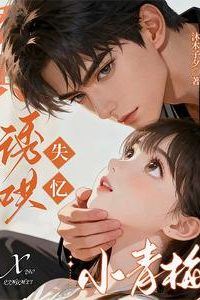
Shi Li, a woman who has experienced multiple transmigration loops, finds herself reborn in a romance novel as the vicious female rival. In her previous life within the story, she had distanced herself from the male lead, causing the novel’s world to collapse. To escape an endless time loop, she must ensure the original main couple ends up together. However, her immediate concern is a different crisis: her classmate Wei Yi’s father, Wei Yongsheng, a seemingly perfect family man, is destined to die in a car accident in three days. Through her inner monologue, which her classmates can suddenly hear, Shi Li reveals that Wei Yongsheng is a deceitful man with mistresses and illegitimate children, and that his public image is a carefully constructed facade.

The unique ability of the entire Class 1 to hear Shi Li’s thoughts changes the dynamics of their high school life. While they are initially shocked and amused by her candid and often vulgar internal commentary, they become deeply invested in the Wei family drama. Wei Yi, initially angry and in disbelief, uses Shi Li’s information to investigate her father. She confirms the existence of a mistress and illegitimate children through DNA tests arranged by her uncle. The class, fueled by gossip and a desire for spectacle, skips school to wait at the hospital where Wei Yongsheng is in critical condition after the accident. They witness the immediate aftermath, including the arrival of Wei Yi’s maternal family, the powerful Xun clan, who step in to manage the crisis.

Wei Yongsheng dies despite emergency efforts. Before his body is cremated, Wei Yi and her uncle take preemptive action to secure the estate and prevent the mistresses from claiming their share. The classmates, having skipped classes and disrupted school routines, are forced to deal with the academic and parental consequences, with some parents covering for their children by fabricating mass illness. Meanwhile, the mistresses, unaware of the foreclosed negotiations, prepare to descend upon the funeral to demand recognition for their children and a portion of the inheritance.

Shi Li, while focused on her primary objective of maintaining a presence near the male lead, Feng Yunhe, continues to provide unwitting commentary that both entertains and assists her classmates. Her internal monologue highlights the absurdity of the situations, from the slow passage of time at the hospital to the impending conflict at the memorial service. The story establishes a dual narrative where Shi Li navigates her role in the novel’s plot while inadvertently guiding her peers through real-life familial and legal turmoil involving the wealthy Wei family.

As the funeral approaches, the tension builds between the legitimate heirs, represented by Wei Yi and the Xun family, and the external claimants brought by the deceased’s secret family. The classmates, now fully integrated into the unfolding events, view themselves as spectators to a high-stakes drama that contrasts sharply with their usual academic pressures. The narrative sets the stage for a confrontation at the memorial hall, where the truth of Wei Yongsheng’s double life will be exposed publicly, and the distribution of his fortune will be contested. Shi Li remains a central, albeit passive, observer whose every thought influences the actions and emotional states of those around her, blurring the lines between her fictional role and the reality of the world she inhabits.

Latest Release
DateGroupRelease
2026-09-26akknovel c92
2026-09-26akknovel c91
2026-09-26akknovel c90
2026-09-26akknovel c89
2026-09-26akknovel c88
2026-09-26akknovel c87
2026-09-26akknovel c86
2026-09-26akknovel c85
2026-09-26akknovel c84
2026-09-26akknovel c83
2026-09-26akknovel c82
2026-09-26akknovel c81

Community Reviews

Rating(4 / 5.0, 38votes)
5 stars
14(37%)
4 stars
12(32%)
3 stars
11(29%)
2 stars
1(3%)
1 stars
0(0%)

Popular reviews

... Read More
Let me just say this author has a genuinely funny internal voice and it elevates everything. Wei Yi pinching her palm to suppress laughter? Shi Li's deadpan "That's nice, that's nice" when she clearly wants to say absolutely nothing of the sort? And Wei Yi's mom delivering lines that sound like they were copy-pasted from a romance novel—
... Read More
This text is layering themes like an onion and I am here for every tear-inducing layer. On the surface, it's a mystery about whether a dead man cheated on his wife. But underneath? It's about inheritance—not just financial inheritance, but emotional inheritance. What do children carry from parents they thought they knew? Wei Yi grew up in luxury surrounded by families who pretended everything was fine, and yet she 'never stopped worrying about her own family.' That line hit me hard because it speaks to this universal anxiety children of privilege carry—the fear that the foundation isn't as solid as everyone claims. The crematorium suggestion is darkly comic but also symbolically rich. 'Test DNA on his ashes' is the ultimate act of posthumous judgment, of forcing a dead man's secrets into the light even after death. It reflects a cultural frustration with how the legal system treats mistresses and illegitimate children, which the text explicitly addresses through the classmates' collective resentment. Shi Li's mention of a 'previous life' introduces another thematic thread about fate and predestination. Is she here to change things, or merely witness them? Her awareness of future events—and her desire to see the memorial hall drama 'live' this time—suggests someone who has learned from past failures but is still trapped in some kind of narrative loop. There's something deeply tragic about that. And Wei Yongsheng's deadpan internal response—'So if I have a mistress outside, there's no need to save me?'—turns the entire moral framework upside down. Is he a victim here? A villain? Both? The text refuses to give us easy answers, and that refusal IS the point.
... Read More
The pacing in this chapter is exactly what I want from a family drama - it doesn't rush the revelations, but it also doesn't drag. We start with Wei Yongsheng's arrival, and there's this immediate sense that something is off even though everything appears normal. The author gives us just enough information through Shi Li's memories and observations to make us uneasy without explaining everything. Then the bathroom scene where Shi Li overhears the backstory - that's where the real information drops, and it comes naturally through Wei Yi's muttering rather than exposition. The structure here is almost like a mystery novel where the detective is a teenager and the crime is emotional betrayal. What I appreciate most is how the chapter ends - not with a confrontation or a big revelation, but with Wei Yi going to sleep and then receiving a text from her mother that opens up this completely new line of questioning about Shi Li's personal life. The pacing mirrors real life - investigations don't have satisfying conclusions, they just lead to more questions. Wei Yi calling her uncle at midnight to arrange DNA testing feels both dramatic and painfully realistic for someone in her position. The chapter flows from public performance to private knowledge to secret investigation to new complications. By the time I finished reading, I had more questions than when I started, which is exactly the right feeling.
... Read More
Okay, I need to process what I just read. These kids — actual minors, probably sixteen or seventeen — skipped class, organized transportation, invented a dramatic story about their teacher having a 'deathbed epiphany,' ran multiple red lights, and paid the driver two thousand yuan. Two thousand yuan. Do you know how much that is? That's real money for high schoolers. And why? Because their classmate Wei Yi got into an accident and their other teacher might have died. There's something beautifully chaotic about this. It's not naive enthusiasm — they knew exactly what they were doing. They'd been planning this, probably since they found out about the accident. The writer doesn't sentimentalize this. There's no voiceover about 'youthful loyalty' or 'the bonds of friendship.' It's just shown through action: the bus booking, the cash transfer, the strategic circling of the hospital to avoid Teacher Zheng. And yet, when they finally arrive and see Teacher Zheng's face, they immediately shut up and behave. That moment where the boys offer their seats to the girls and sit on the floor themselves — that's the kind of unconscious chivalry that only exists in youth. No performance, no audience, just instinct. The emotional truth here is that friendship at this age isn't about grand declarations. It's about showing up, even when you shouldn't, even when it's risky, even when you have to lie to your teacher about why you're going somewhere.
... Read More
So I need to talk about how this chapter just sits there and quietly destroys everything Wei Yi thought she knew about her family. The whole setup is brilliant - we get this facade of the perfect father coming home early because his daughter asked him to, pouring milk for his wife, being the picture of domestic bliss. And then Shi Li is just standing there internally losing her mind because she KNOWS what's really going on. The reveal about the mistress being his old flame who got married to someone else because his family was too poor? That's such a classic betrayal pattern. But what really gets me is Wei Yi's reaction - she doesn't confront him at all. She just takes it all in, goes to the bathroom, and then calls her uncle to start an investigation. The plot doesn't rely on big explosions or dramatic confrontations. It's this slow, quiet horror of watching someone piece together their father's double life while he's still sitting at the breakfast table being perfect. The structure here is almost clinical in how it builds - we get the public image, the private knowledge, the investigation set in motion. By the end, the family is still whole on the surface, but everything has shifted. That final text from Wei Yi's mother about Shi Li apparently having romantic feelings for a boy? The plot just keeps adding these layers. Every time I think I understand what's happening, another thread gets pulled.
... Read More
Let me just say this upfront: the recurring motif of 'cannon fodder' in this text is doing so much more work than anyone should legally allow. Shi Li calls herself a 'vicious female supporting character' and her friends 'cannon fodder.' But here's the thing — in her past life, she used her knowledge to protect them. She distanced everyone from the male lead and ensured they had 'brilliant and wonderful lives.' These aren't cannon fodder anymore. They're survivors. The label they carry in their own minds doesn't match the reality of what they've become. And Wei Yi hears all of this. She's standing in the middle of this metaphorical battlefield, surrounded by characters who think they're extras in someone else's story, and she has the unique power to hear the thoughts of the one person who knows how the story actually goes. The theme here is about narrative agency — who gets to write their own ending? The hair with follicles attached is another symbol that keeps haunting me. It's such an intimate, biological thing — a piece of someone's body used to prove truth, to establish identity, to sever a family bond. Wei Yi hands it over quietly, without fanfare, and it becomes the key that unlocks everything. A single strand of hair carrying the weight of familial destruction and rebirth. Even the group chat name evolution is thematic — from speculation to anticipation to something almost ritualistic. "Did Wei Yongsheng Get in Trouble Today" isn't just a joke. It's a community processing trauma through humor, and the fact that the author includes the sympathetic voices ("After all, he is Wei Yi's biological father. Is it right for us to hope for his downfall?") shows that the story isn't reducing this to simple villain/victim dynamics. The teachers going to the temple together? Materialist and superstition, both shaken by the same event. Even the adults can't maintain their certainties in this world.
See all reviews

Custom lists

See all custom Lists