I've been thinking about Helio all morning. A ghost who can't phase through obstacles—a boy who has to fumble with a latch, who leaves handprints and stains, who smells like old iron. He's supposed to be supernatural but he's profoundly physical. That contradiction is doing heavy lifting.
'Souls make mistakes too,' the boy says. Or maybe it was 'Ghosts make mistakes too.' Either way, it reframes everything. This isn't a story about perfect spirits or moral clarity—it's about beings who err, who linger, who leave traces they can't erase.
And then there's the blood on the window frame. Dark red, crumbling to powder. Sabina thinks: *He really must be a ghost, leaving a bloodstain behind when he vanished.* But is it blood? Or is it something else that only looks like it? The smell of old iron—is that literal or metaphorical? Iron wards off supernatural beings in folklore. Could the stain be a connection between worlds, a boundary marker?
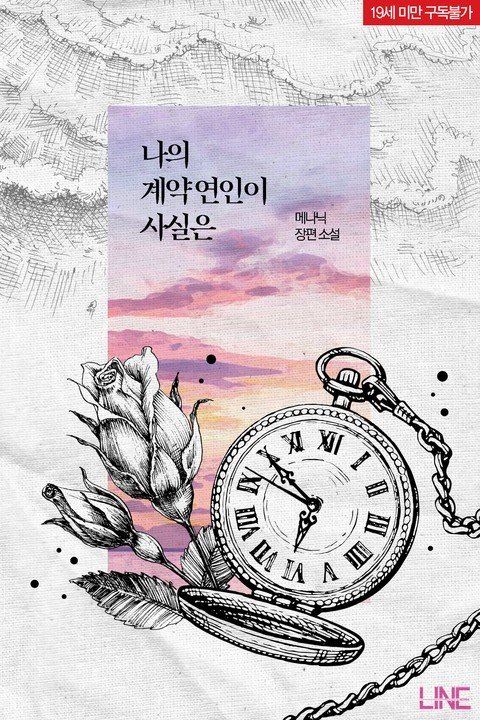
The pocket watch is another symbol that won't leave me alone. It shows the date, not the time. Sabina checks it obsessively—not to know when it is, but to know what's coming. Time isn't measured in hours here, it's measured in dread. June 12. Tomorrow is 'that day.' The boy whispered something she couldn't hear. Was it 'bye'? Or was it 'Sabina, my name is Helio'—an introduction that came as a disappearance?
And Reyes, trapped by law in Sabina's house, bound by Article 79 Section 2. He's a ghost too in his own way—haunting her past, unable to leave, repeating patterns she's already died to once. The parallel writes itself.