My Contract Lover Is Actually… - Reviews

My Contract Lover Is Actually…
+Add to Custom List
Sort
Add review
... Read More
There's a recurring image that keeps coming back to me: solvent sand traded 'for the same weight as gold,' pure ore worth 'much more than gold.' This isn't just worldbuilding flavor text — it's the novel's central metaphor made concrete. Everything in this world has a price, even magic. Sabina's entire situation is transactional: she's advertising for a lover at a fixed monthly rate, evaluating Ashton like a business proposition, protecting herself through contracts and conditions. But the deeper question the book seems to be asking is: what happens when human connection gets commodified? Ashton claims he's in it for the money (or pretends to), Sabina claims she's in it for convenience (or tells herself she is), but both of them are clearly hungrier for something they won't name. The grandfather motif is another layer — Walter built the D'Vialis name from nothing through genius, and Sabina carries his memory while pretending it's her own. 'A small devilish secret of Sabina's.' She's literally building her identity on borrowed warmth, just like the solvent economy builds magical civilization on processed resources. And Ashton, who seems to sense this, asks her directly: 'You must have liked your grandfather.' He's not just making conversation — he's trying to find the real person underneath all the contracts and negotiations. The house itself becomes a symbol: new, built by an inventor, not respected by old nobility, but loved by those who understand its worth. That's Sabina. That's Ashton. That's whatever they're becoming together.
... Read More
I need to talk about the moment that wrecked me. Ashton just murdered Don Slafdi in cold blood—face went cold, eyes wide, grin like a monster devouring a man—and then he walks out, sees the boy can't walk properly from the Gelopina and the broken leg, and just... picks him up. Carries him on his back like it's nothing. Like he didn't just kill someone three minutes ago. That is such an Ashton thing to do. Completely unhinged, completely casual, and somehow deeply tender all at the same time. And Sabina? She notices. She knows something happened because of the boy's state, but she doesn't ask. She just says 'Let's go' and follows him. There's this unspoken understanding between them that I find incredibly beautiful. She doesn't pry, and he doesn't explain. Later when he asks WHY she wanted the boy and she says 'because he's a magician,' his voice cracks. Not because he's surprised—it's because he cares. Deeply. The dynamic with Reyes is also fascinating. He brought Sabina to Carnival in the first life and enjoyed that she bought something. Now in this life, he's actively tormenting her, bidding just to make her suffer. She sees right through it. 'Disgusting,' she thinks. And Ashton sees it too—he even jokes about being a 'male partner to block other men's approaches.' He understands the social dance perfectly while simultaneously refusing to play by anyone's rules except his own.
... Read More
I need to talk about how efficiently this author builds the world. In a few paragraphs, we learn that: solvent is a magical resource traded by weight of gold, only magicians born in Brinita can process it, children of Brinita blood born abroad have zero magical talent (which is a really interesting limitation), and Walter D'Vialis invented the scroll which transformed worthless wasteland into fortune. This is worldbuilding through conversation, not exposition dumps, and it works beautifully. Sabina explaining why Ashton's Brinita is 'flawless' despite him only being there a week tells us about the region, the accent, the social expectations — all while advancing the interview. The D'Vialis mansion description is also great: 'old houses are seen as elegant and stylish in Brinita's capital. Compared to countless old mansions, the D'Vialis mansion was embarrassingly young.' This single detail tells us about the aristocracy's values, the D'Vialis family's status as newcomers, and why Ashton's genuine compliment ('nice house') means something to Sabina. She feels a 'strange pride' — not the pride of old money, but the pride of someone whose family built something from nothing. The walking scene down the hall where staff prepare food without being asked because 'it's a rule in D'Vialis not to send guests away hungry' — that's worldbuilding through institutional culture. These people have been together so long that courtesy is automated. It makes the world feel lived-in and breathing.
... Read More
Here's the thing that keeps me up at night: Reyes Brinita is already dead. Sabina died by his hand in both previous lifetimes. And yet he controls every interaction in this text like a ghost pulling strings. When Ashton kneels and asks her to follow her feelings, Sabina's immediate response isn't hope—it's the memory of Reyes saying “I promise I'm not doing this to hurt you.” That single sentence from a dead man shut down her capacity to trust before Ashton even finishes his thought. The stakes here aren't about whether she'll go to the party or hire Ashton. The stakes are whether a woman who has been murdered twice by the man she trusted can ever stop calculating betrayal as the default setting for every kind gesture. And Ashton knows this. He knows that every romantic gesture he makes will be filtered through the lens of Reyes's cruelty, so he keeps his requests small. “At least for now.” Eight months. A contract. A partner. Nothing that looks like love until she's ready. But then he can't help himself—he asks for the title of her lover, admits to petty jealousy, says “sometimes I act irrationally” with this vulnerable, boyish laugh that makes you wonder if he even knows what he's doing or if every irrational impulse is also calculated. Meanwhile Helio is sitting across from her with those innocent eyes asking why she's being kind to him, and Sabina is carrying the weight of two deaths where he was the only one who tried to save her. The conflict isn't rising because of external threats—it's rising because every character in this novel is someone's ghost. Ashton is Reyes's replacement and his nemesis simultaneously. Helio is Sabina's savior from both past lives and still can't trust her present self. And Sabina herself is trapped between the woman she was forced to become and the person she might become if someone gave her permission to stop being rational. Who survives this?
... Read More
I need to talk about Helio because oh my god the emotional complexity here is insane. This kid who was just bought for 540 million coins is now having this conversation with Sabina where he's worried he's been a waste of money. He says straight out "All this is... an expense" and my heart literally ached. After everything he went through as a slave, after presumably using some kind of magic to kill the Marquis who tortured him, and his first thought isn't "I'm safe now" but "I hope I'm not costing too much." And Sabina's reaction is perfect. She doesn't give some sappy speech. She just cuts him off with "Enough" and tells him straight that she doesn't expect to recover the auction cost from him. But the real emotional beat is when Helio admits he doesn't think he's an attribute magician. Like—he has the power, he used it, but he's so beaten down by his circumstances that he genuinely doubts his own abilities. That's trauma speaking there, not logic. The moment where he keeps stopping himself from telling Sabina about seeing Don Slafdi convulse at Carnival—that's such a painful scene. He wants to warn her but also doesn't want to seem presumptuous. And then Ashton shows up at the worst possible moment, and Helio flees because he's confused and annoyed and overwhelmed. He even thinks "If Ashton hadn't kept him quiet, Helio might not have been so timid now" which is this wild moment of complicated gratitude. Also Sabina letting Helio practice his calligraphy? That detail about his handwriting getting prettier and him turning bright red? Those small moments of kindness are so much more powerful than any grand gesture. That's the kind of relationship building that makes you care.
... Read More
I need a moment. I need to sit down. Reyes Brinita has not even appeared properly in these chapters and yet he is the ghost sitting at every conversation table. Sabina catches herself thinking about Ashton and her immediate reaction is: 'He's attractive. I don't understand. Should I be wary?' And then Reyes' name drops like a stone. 'Reyes Brinita had also put in this kind of effort for Sabina.' The parallel isn't lost on her, and that's what makes my chest ache. She's so wounded by her past that even genuine kindness feels like a threat. Every time Ashton does something thoughtful—picking the perfect outfit, matching his tie to her dress, standing between her and Reyes at the auction—her first instinct isn't warmth, it's suspicion. But here's what got me: when Ashton lifts his mask and winks at Reyes, and Reyes pours his drink on the floor in displeasure? That's not just protecting Sabina physically—that's claiming territory. And Ashton does it casually, like he's shooing away a fly, while Sabina sits behind him completely shielded. The physical blocking of the scene is romantic in a way the text never explicitly states. And Sabina's realization about her own insincerity—'Maybe as Mitchel had said, her insincerity in relationships was why she kept meeting such men'—that's the emotional core of everything. She's trapped in a loop of her own making. She doesn't trust because she was hurt. She tests people. People either prove themselves or reveal their true colors, and either way she ends up alone. Ashton walking into this knowing her secret, knowing her regression, knowing exactly what kind of woman she is now—and choosing to stay anyway? That's the kind of devotion that makes you want to scream.
... Read More
Can we just TAKE A MOMENT for the sheer STAKES in this story? Because the author has pulled something genuinely clever here. Most time-loop stories give you one reset or maybe two. This one gave Sabina TWO FULL LIVES of suffering before she got to try again with full knowledge. And each life had exponentially higher emotional stakes. Life one: She falls for Reyes at the academy, gives him everything — her money, her trust, her heart. He uses her funds to raise an army, frames her as an accomplice to treason, and has her guillotined in front of a cheering crowd. Death stakes: literal execution. Life two: She remembers. She runs from him. She tries to be smart about it. But then this anonymous pen pal appears — the one who listens to her, supports her, never asks for anything. It takes her years to discover it's Reyes, and by the time she confronts him, she's already vulnerable. She lets her guard down. And he stabs her. Same day, different weapon, same outcome. Death stakes: intimate betrayal at point-blank range. Life three: She wakes up at the beginning with full knowledge. And the conflict isn't just about surviving — it's about whether she can maintain this cold, calculating exterior without completely losing herself. Because the whole first chapter shows us the tension. She's building this persona of the heartless woman who cycles through men, but we SEE through it. When she confronts the violin player, she's not just venting anger — she's performing. Performing the version of herself that won't be hurt again. And the tragedy is that every time she says something sharp, you can feel the cost of it. The internal conflict is what makes the external stakes matter. It's not just about whether she'll die a third time — it's about whether she can trust anyone without becoming someone she hates. And the author is setting this up brilliantly by having her publicly act like she doesn't care about love while secretly having given it everything she had twice already.
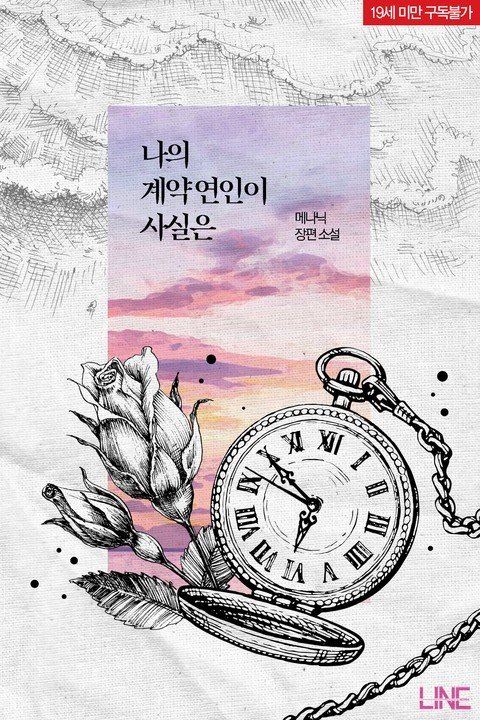
... Read More
'I'm here to buy a person.' — Sabina opening this whole scene. Dry, direct, and absolutely chilling. That one line sets the tone for everything. And then Ashton's voice is so distinct from everyone else. When he says 'Let's go. The kid's asleep,' after literally just murdering the auction owner, the casualness is hilarious and terrifying. He's not even phased. It's just... done. Like he checked off a task. The banter between Sabina and Ashton is my favorite part though. She offers to pay him back and he basically shuts her down with 'Are you trying to make me look like a jerk?' He reads her so well—'It's because of His Highness the Prince, isn't it?' And she just says 'Think whatever you want.' She's tired of explaining herself to people who don't deserve the truth. But the moment that got me was when Ashton asks 'Why did you want to buy that boy?' and his voice cracks. Just a little. One crack in an otherwise controlled man. That's not something you plan in dialogue—that's something that happens when a character's walls slip. The author writes dialogue that sounds like real people talking while also revealing everything about who they are. I wish more authors understood this level of subtlety.
... Read More
I literally laughed out loud when Ashton sat backward on that chair with his chin on the backrest like some golden retriever who just learned how to negotiate. The man is a walking paradox. One second he's genuinely vulnerable—kneeling, asking her to “follow your own feelings” instead of her suspicions—and the next he's bouncing around talking about contracts and employment terms like he's closing a business deal. And I KNOW that laugh. You know the laugh? The one where he starts with that cool nobleman chuckle and it devolves into actual giggles until he's clinging to the window sill? That's not a mask. That's someone who is genuinely, almost painfully happy about something and doesn't quite know how to contain it. But here's what gets me: Mitchel. This woman has been standing in the corner like a shadow the entire scene, watching Ashton with that small, almost invisible smile, thinking he'd be a “not-bad choice.” And then Ashton flashes that exact same dimpled smile and Mitchel thinks she's seen it before. Where? When? Because I swear she's right—that smile feels like a ghost from Sabina's previous lives. Reyes had this face, didn't he? The text literally says Sabina felt a strange sense of déjà vu. Ashton is either reincarnation bait or the most manipulative person alive, and honestly I can't tell which makes it more thrilling. As for Helio… oh my god. The way Sabina thinks about him between her two deaths—him crying behind bars, him shouting “No!” before her breath stopped—that is a wound that never healed. She's protecting him not because she's sentimental but because he was the only constant who tried to save her when Reyes was trying to kill her. And then she just drops a casual “Yes, I'm meeting Mr. Bryant” and Helio's entire face collapses. The author didn't even need dialogue. Just: “No one saw Helio's anxious expression.” That's it. That's the entire chapter's emotional devastation.
... Read More
I'm still thinking about the southern Retona deep-sea mermaids mentioned by the maid. This woman who was just trying to make small talk while hiding a gold coin under her apron drops this entire worldbuilding detail like it's nothing. She's describing how these mermaids are tiny—only forearm-sized—but absolutely vicious, jumping out of their tanks to bite people when fed. And then she moves on like it's normal to keep dangerous sea creatures in your mansion. That's the kind of writing that makes the world feel lived-in. The description of Carnival also paints such a vivid picture. It was this members-only event where each noble could bring just one guest, with dancing and drinking and an auction all happening together. The formal social gatherings during the day where everyone had to maintain their dignity and status rankings versus the nighttime Carnival where things got loose and exciting. That contrast between daytime propriety and nighttime freedom is such a rich detail about noble society. And then there's Ashton's house itself—the fact that he banned the maids from cleaning his study unless given permission. Sabina notes "People like that always claim there's order in their own mess" which is such a perfect observation. It tells us something about Ashton's character without directly stating it. The Marquisate mansion disappearing into history is handled so subtly too. No dramatic funeral, no grand closure. Just "the tragedy of the family was a brief issue" and then life goes on. The capital moves on. That realism in how spaces and scandals fade is what makes this world feel actual.
... Read More
The dialogue in this section is *delicious*. Every line feels like it has weight and subtext. Take this exchange: 'So you really do need a hundred thousand rium a month?' / 'Well, it's always good to scrape up every bit of money you can.' This man is lying through his teeth and Sabina is SO smart that she catches him immediately. 'That's different from what you said earlier.' She literally tracks his contradictions in real time and lays them out like a prosecutor. And yet he just keeps smiling. The banter between them has this razor-sharp quality — neither of them is fooling the other, but they're both enjoying the game. What I love most is how distinct their voices are. Sabina speaks in short, direct statements with zero fluff: 'Not at all.' 'I don't know. You don't seem that obedient...' 'A man who's too aware of his own good looks is annoying.' She doesn't waste words. Ashton, on the other hand, is all flourishes and rhetorical questions — 'Because I'm handsome? Rich? Obedient?' His energy is performative and warm and slightly unhinged, which makes perfect contrast to her cool restraint. And then there's the narrator's voice, which occasionally drops these wonderfully dry observations like 'For several minutes, Sabina carefully inspected how handsome he was from head to toe' — the narrator is basically our wingman making fun of Ashton's confidence while simultaneously validating it. The humor lands because nobody takes themselves too seriously in this scene, even when they're being strategically ruthless.
... Read More
Okay so first off—Helio's entrance. The author described that window latch system with such specific detail it actually felt tangible. Push left twice, lift up, turn clockwise. And then the moonlight hitting his forehead. Pale and straight. I literally stopped and imagined the scene like a film still—this translucent boy perched on a windowsill, night wind blowing his bangs back, whispering something too quiet to hear before vanishing. And that handprint. Dark red, crumbling like powder when she rubbed it. Smelled like old iron. That detail gave me actual chills. Ghost stories usually rely on atmosphere but this one grounds itself in physical residue. The blood-stain-as-evidence is such a clever touch. Then there's the D'Vialis mansion. Not heavily described but we get the parlor, the sunlit window where Reyes stands, the display cabinet Sabina uses for her escape trick, Vicky's voice announcing guests. It feels lived-in—Mitchel's exasperation about Hazel ordering a hundred pairs of shoes adds domestic texture. The magic research presentation in two months, the pocket watch showing dates rather than time. These small details make Sabina's world feel real, not some generic fantasy backdrop. And the contrast between the supernatural Helio sequence and the very grounded, bureaucratic royal law about refusing visits—Article 79, Section 2. That's worldbuilding through legal documents, which is honestly brilliant. The Kingdom of Brinita feels like a place with actual laws and systems. The Retona mention was interesting too—Ashton's home country is a republic. One line but it immediately makes me wonder about the political landscape. I want to know more about this.

Leave a comment

You must be logged in to leave comments. or
