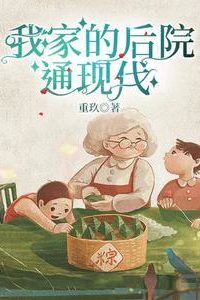
My Backyard Leads to the Modern World
Novel Info
  • Author:
  • 重玖
  • Status:Ongoing

Summary

... Read More

Wang Xiaomei is a nine-year-old girl living in Tianjing Village, a rural community in Suzhou during the spring of 1976. The village operates under the collective farming system, where children earn work points through labor such as collecting chicken droppings for fertilizer. Xiaomei is the daughter of Wang Peigen, a village barefoot doctor, and Gu Hua’e. She lives with her grandmother, Wang, who is a shrewd and pragmatic matriarch with a history in Shanghai. Xiaomei is close to her maternal grandmother, Gu Dabao, a former rich peasant who raised four daughters and is now suffering from terminal pancreatic cancer. The family is financially strained, relying on communal work points and meager private plot yields. Xiaomei’s neighbor and playmate is Zhu Jinhua, a girl who dropped out of school due to academic difficulties and is often tasked with watching her grandmother while her mother works.

The story begins with Xiaomei and Jinhua collecting chicken manure. They visit Great-Grandpa Gu, a retired Shanghai worker who lives in the village and is one of the few wealthy families. He gives them rose cuttings to plant. Xiaomei and her grandmother plant the roses in their backyard, but they are stolen by Jinhua’s family, who are jealous of the beautiful flowers. Xiaomei retrieves and replants the roses in a fit of anger. While counting the thorns on her finger, she is suddenly transported through time. She finds herself in a modern Suzhou park in the year 2021. The environment is vastly different, with tall buildings, cars, and commercial shops. Confused and hungry, she is discovered by Zhou Huifang, a kind middle-aged woman who runs a boxed meal shop. Zhou feeds Xiaomei and gives her money and food to take to her family.

Xiaomei discovers that she can return to 1976 by counting to three near the rose bush in the park. She realizes the rose bush serves as a portal between the two eras. She returns home and reveals her secret to her grandmother, Wang. Initially shocked, Wang quickly recognizes the potential of this ability. She instructs Xiaomei to investigate the modern era, specifically to determine the year and locate Zhou Huifang. Xiaomei returns to 2021 and confirms it is forty-five years later. She learns that her grandmother in the past, Gu Dabao, is dying and in severe pain. The family cannot afford Dolantin, a powerful painkiller that is strictly controlled and scarce in 1976. Xiaomei decides to use her trips to the future to help her family.

With her grandmother’s guidance, Xiaomei begins a routine of traveling between 1976 and 2021. She brings farm products like eggs and chickens to Zhou Huifang in the future, selling them for cash. In return, Zhou helps her purchase essential items that are unavailable or unaffordable in 1976, such as water chestnuts, eels, and painkillers. Xiaomei also buys clothes and food for her family, significantly improving their quality of life. The grandmother, Wang, manages the logistics, ensuring that Xiaomei’s disappearances are explained away and that the family maintains a facade of normalcy. The core conflict revolves around the struggle to alleviate the suffering of the dying maternal grandmother and the economic hardships of the Wang family, using the anachronistic advantage of the time portal.

As the story progresses, Xiaomei becomes more confident in navigating the modern world. She learns about the prices, technology, and social norms of 2021. She forms a bond with Zhou Huifang, who treats her like a granddaughter. Meanwhile, in 1976, the family continues to care for Gu Dabao, but her condition deteriorates. The pain becomes unbearable, and the shortage of Dolantin becomes a critical issue. Xiaomei and her grandmother work together to secure a steady supply of medicine through Zhou’s connections in the modern era. The narrative highlights the stark contrast between the scarcity of the past and the abundance of the future, while focusing on the familial bonds that drive Xiaomei’s actions. The story ends with Xiaomei continuing her dual life, balancing her childhood in 1976 with her secret missions in 2021, all in an effort to save her grandmother and support her family.

Latest Release
DateGroupRelease
2026-08-11shanghai fantasy c59
2026-08-11shanghai fantasy c58
2026-08-11shanghai fantasy c57
2026-08-11shanghai fantasy c56
2026-08-11shanghai fantasy c55
2026-08-11shanghai fantasy c54
2026-08-11shanghai fantasy c53
2026-08-11shanghai fantasy c52
2026-08-11shanghai fantasy c51
2026-08-11shanghai fantasy c50
2026-08-11shanghai fantasy c49
2026-08-11shanghai fantasy c48

Community Reviews

Rating(4.4 / 5.0, 5votes)
5 stars
3(60%)
4 stars
1(20%)
3 stars
1(20%)
2 stars
0(0%)
1 stars
0(0%)

Popular reviews

... Read More
Okay so this whole sequence where Xiaomei comes home exhausted and her dad immediately lashes out at her? I actually had to put the book down for a second. It's such a sharp pivot from all the warmth we've been getting, right? One moment everything's cozy and the next you're watching a kid cry because the person who should protect her takes out their frustration on her. But then—plot twist!—Grandma Wang storms out and lays into everyone. "These are the things your ungrateful daughter brought back early this morning!" I literally gasped. The way she unloads everything Xiaomei has been doing, all while her own hands are shaking? Chef's kiss. And then Wang Peigen's internal monologue about how he "wouldn't have taken his frustrations out on her" if she'd come home earlier or later—that hit different. He's not a bad dad, he's just a stressed man in a hard time who took it out on the wrong person. That's realistic family drama, not cartoon villainy. Then there's the subplot thread about the locks. Six of them! Main gate, two bedrooms, Grandma's trunk, the backyard door, plus a hidden one. This isn't just practical detail—it's the author showing us that the family's secret is getting precarious. People are watching. Kids are coming by. Grandma's aging. The tension is building even though nothing explosive has happened yet. I love when authors do this kind of quiet escalation. And the Dolantin quest! 24 ampoules secured through Aunt Zhou's connection. This is the third or fourth time the family has needed this drug for the grandmother, and each time it's a mini-odyssey. It's becoming a structural motif—every time things look up, the illness creates a new obstacle. I'm wondering if there's a bigger plot reveal coming about where Xiaomei actually gets all this stuff. Grandma keeps saying "there's some risk but I'll manage it" and I am DYING to know.
... Read More
Can we talk about how each character has a completely distinct voice? Because this is rare and I'm not letting it go unappreciated. Grandma Wang's dialogue is SHORT. Punchy. Imperative. "Go!" "Don't touch the four rose bushes." "Got it." She doesn't explain herself. She doesn't soften her words. When she's angry at her daughter-in-law, she doesn't say "I'm worried about you"—she says "your ungrateful daughter" and then immediately reveals the truth. Her voice is gravel and iron. Xiaomei, on the other hand, is all warmth and deflection. "Mhm." "Okay, Grandma." "Mission accepted!" She dodges her dad's question about where the goods came from with "Ask Grandma"—and that's it. No panic, no elaborate lie. Just a kid who knows exactly which adult to throw under the bus. Her voice is bright, slightly cheeky, and utterly trustworthy. Wang Peigen's internal monologue is where the author shows us his voice. Long, worried, self-reproaching sentences that contrast sharply with his actual spoken words, which are mostly sighs and frustrated questions. The gap between what he thinks and what he says IS his character. And Aunt Zhou Huifang! "Kids your age must go to school no matter what you plan to do in the future. Without education, life will be hard." This is the voice of someone who has seen enough of life to know what matters. She doesn't preach—she just states truths the way someone states the weather. The humor is also doing a lot of work here. Xiaomei's internal narration—"Oh no. Mom's going to the backyard again. Wang Peigen felt even more anxious"—this is such a modern, almost meta voice layered onto a period setting. It creates this delightful tonal tension that makes the whole thing feel fresh.
... Read More
I need to talk about Grandma Wang because THIS WOMAN is everything. Let me just say it: she is the emotional anchor of this entire family and I am here for it. The scene where she catches her daughter-in-law about to leave without taking the cookies? She just... stuffs them into Gu Hua'e's hands and then immediately pivots to giving her the seeds. No big emotional speech, no tears, just action. "Take these. Plant them. We'll eat better." That's her love language. And Gu Hua'e forgets the cookies entirely and runs off to the garden. I laughed out loud. That's such a real mother-daughter-in-law dynamic. But then there's the Xiaomei moments. When Xiaomei wakes up and Grandma helps her get dressed while quietly giving her a list of errands—sausage for the grandma, bananas, check what else they need—this is a woman who shows love through logistics. Through making sure everyone is fed and cared for. And when she says "Like a little mouse, whatever you bring home, we'll eat"? I'm not okay. The family bond between Xiaomei and her grandparents is the most beautiful thing in this book. Her parents are good people—Wang Peigen's guilt, Gu Hua'e's hard work—but they're strained, distracted, human. It's the grandparents who see Xiaomei. Who protect her. Who plan her future (the rose bushes, the locks, the seeds). When Grandma says "Heaven had smiled on our family—giving them such a sensible child was truly a blessing," I literally felt my chest tighten. And Xiaomei's gratitude toward Aunt Zhou Huifang! "You're truly a lifesaver for our family." She doesn't just accept help—she immediately starts thinking about how to repay it. That's the emotional throughline: this family doesn't take anything for granted. Every kindness is received like a gift, and every gift is returned threefold.
... Read More
I've been thinking about this a lot since I finished reading, and I keep coming back to one idea: this story is about protection. Not just physical protection—though the locks and the fence and the hidden door are all very literal—but emotional protection. The protection of dreams in a world that wants to crush them. The six locks. Think about that number. Main gate, two bedrooms, Grandma's trunk (where the money is), the backyard door, and a hidden lock plus a door for surveillance. This is a family building a vault around their future. Every lock is a statement: what we have here is precious and we will not lose it. The four rose bushes are the counter-symbol. They can't be locked away—they need sunlight, water, attention. They're beautiful precisely because they're vulnerable. Grandma's instruction to never touch them is both practical and poetic: some things must be protected by distance, others by care. And the Dolantin—that relentless, recurring need for pain relief—represents the body's betrayal. No matter how smart you are, how hard you work, how many locks you buy, someone in your family will hurt. The grandmother's illness is the shadow that makes every small victory feel earned rather than given. But here's what I think the story is really saying: the girl is the lock AND the rose. Xiaomei is both the protector (going out at dawn, buying supplies, managing the family's survival) and the thing being protected (a child who should be in school, not navigating black markets for painkillers). Every adult in this story is trying to build a world where she doesn't have to grow up too fast. Whether they succeed is the question the whole book is asking.
... Read More
Let me just say this: the backyard is the most important location in this entire novel and nobody's talking about it enough. Four rose bushes. That's it. Four precious plants that Grandma has hidden behind a fence, that Jinhua tried to steal, that Xiaomei guards like treasure. And yet the author never gives us a full description of what they look like. We only know they bloom, they're valuable, and everyone wants them. This is brilliant worldbuilding through absence—the reader's imagination fills in the gaps, and suddenly those roses are the most beautiful flowers in the world because WE want them to be. The market scenes are equally vivid. Sister Xiang Lingling's stall, the lunchbox shop with Grandpa Zhou helping Xiaomei weigh vegetables, the small goods stall where she buys six locks and the owner is genuinely confused. These aren't just settings—they're social ecosystems. Everyone knows everyone. Gossip about the Su City museum flies around while Xiaomei is trying to do her job. The world feels lived-in because the author lets us overhear fragments of other people's lives. The Wang family house itself is becoming a character. The eastern bedroom where Xiaohua sleeps, the kitchen where Wang Peigen slices sausage, the backyard that's both sanctuary and secret vault. When Grandma says she might need to build a door in the back wall of the living room so they can "see from the inside if anyone enters the backyard," you can feel the paranoia. This house is becoming a fortress. And the grandmother's house across the river—four sons, the eldest working night shifts, the grandaunt now caring for the bedridden matriarch. Two households, both held together by women who won't quit. The geography of this story is all about connection and distance. Rivers to cross. Markets to navigate. Backyards to protect.
See all reviews

Characters

See all characters

Custom lists

See all custom Lists