My Amazing WeChat is Connected to the Three Realms - Reviews

My Amazing WeChat is Connected to the Three Realms
+Add to Custom List
Sort
Add review
... Read More
I need to talk about Wang Ting because this woman absolutely wrecked me in this chapter. When Zhao Lei pushed her toward Lin Hai saying "if you want this bitch, you can have her," and Lin Hai just... looked at her with eyes that were completely emptied of emotion — that hit different. Remember their past? The chapter explicitly says it brought back "reminiscing pain" for Lin Hai. This isn't just some random girl; she was part of his history, someone he apparently cared about deeply enough that her betrayal cut deep. But the way the author wrote it wasn't melodramatic or tearful. It was cold. Blank. Like Lin Hai had already grieved the relationship internally and this moment was just the final confirmation that she wasn't worth his energy anymore. That restraint was so much more powerful than any shouting match could've been. And then the bark scene with Baldie Qiang — it's funny, yes, but underneath all that comedy there's something genuinely touching. This guy who was probably nobody important in Lin Hai's life suddenly becomes obsessed with following him after witnessing his power. The devotion is ridiculous but also kind of sweet in its own absurd way. Lin Hai's internal monologue where he's torn between vanity and common sense — [You know you want to] vs [But this guy is an idiot!] — felt so human. He's not a cold protagonist here; he's a guy who wants someone to look up to him even while his rational brain is screaming no. The emotional complexity beneath the comedy is what makes this book special.
... Read More
Let's talk about the Passat for a second. Because that license plate is the actual turning point of these chapters. Not Elder Xiao's arrival, not the arrest, not even Lin Hai's cold rejection of Sun Guizhi—it's Sun Guiqiang's eyes sweeping across that license plate and his entire world collapsing. A car as the instrument of justice. That's not subtle, it's deliberately blunt, and I respect it. But the deeper symbolism here is about who gets to ride in what. Xiao Qing Shan refusing Huang Bo's car while accepting Lin Hai's Land Rover isn't just a power move, it's a statement about whose side history is on. The old revolutionary, the one who fought for the country, chooses the son of a farmer over the elected official. The Land Rover—the practical, working-class vehicle—becomes the throne. Meanwhile, the police car, the symbol of institutional corruption, ends up carrying away the very people who thought the institution was theirs to control. And then there's the ladder factory. Sun Guizhi's business, mentioned almost in passing when Lin Hai casually tells the mayor about it. A ladder factory in a town where people have been climbing over each other for power. I don't think that's accidental. The Suns built their power on a ladder, and when it tips, they don't just fall—they disappear into the ground floor. What happens next when the whole economic web of Lancheng starts unraveling? Because Huang Bo clearly isn't done weaving.
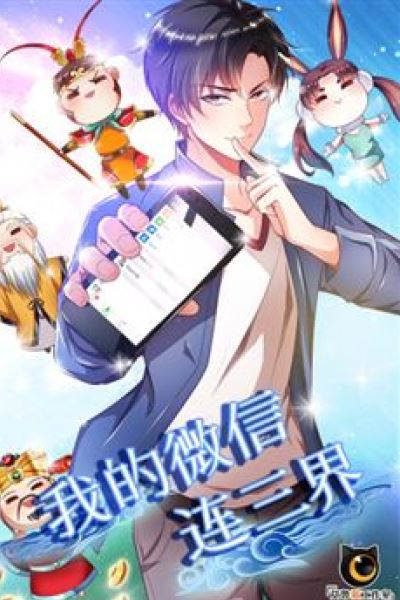
... Read More
Okay so let me just say this upfront—the plot mechanics here are genuinely slick. We've got a protagonist who lands a game-changing ability in one scene, and by the next chapter he's already leveraging it in the real world. That's tight cause-and-effect writing, I'll give it that. The Wang Ting betrayal subplot threads back beautifully into the Liu Xin Yue romance thread. Remember how Wang Ting dumped him and immediately jumped to Zhao Lei? Classic move, and then she shows up at the practice room flexing for Hu Wei? The author is planting seeds everywhere. But here's what I actually want to talk about—the scene where Liu Xin Yue walks into his classroom wearing the exact same shirt as Wang Ting. That detail? That's not accidental. That's the author waving at us like, 'Hey, pay attention, these two girls are connected in a way you haven't figured out yet.' And then Hu Wei shows up with his connections and threats, and suddenly Lin Hai isn't just a guy who can sing now—he's a guy who has to fight for the girl while navigating this whole underworld of student elites. The singing competition arc is clearly the next major plot milestone. Liu Jun getting involved as a rival feels like the author stacking the deck. Every good story needs a gauntlet, and right now they're building one. My only question is whether the Moon Palace Fairy's Song has limits we haven't seen yet, because if it's an unlimited resource, the tension evaporates. Does it have cooldowns? Costs? The story hasn't told us, and that's either smart withholding or lazy foreshadowing. Either way, I'm hooked.
... Read More
That painting keeps haunting me. An ancient courtyard, exotic flowers, a graceful young woman whose face carries 'an indescribable sadness.' Lin Hai sees her blink at Wangu Antiques but she doesn't move when he uses Heavenly Eye later. What is this symbol doing in the story? I think the painting represents everything Lin Hai can't yet control or understand. He's accumulating power, money, connections—but the painting operates on different rules. It responds to presence, to attention, maybe to emotion, not to divine sight. The girl's sadness mirrors Lin Hai's own: both are trapped in frames, both looking outward at worlds they can't fully enter. The courtyard setting suggests a enclosed space, a gilded cage of sorts. And those exotic flowers—beautiful but foreign—remind me of the cultivation world Lin Hai is now navigating. He's surrounded by wonders he didn't earn the right to understand yet. There's also the broader theme of perception versus reality running through this chapter. The sales assistant sees cheap clothes and judges accordingly. Lin Hai has ten million but looks like a student. Bald Qiang recognizes power instantly but the sales assistant doesn't. The painting looks like art but might be alive. These are all variations on the same question: how much can you trust your surface readings of the world? The author keeps placing Lin Hai in situations where appearances deceive, and the painting is the purest expression of that motif.
... Read More
Okay so the robbery accusation out of nowhere—really? I get that it's a dramatic beat, but Sun Guizhi just casually mobilizes her cop brother to frame her own nephew? That felt like the plot was reaching hard there. On one hand, I respect that it raises the stakes right when everything seemed too cozy with the neighborhood dinner and Elder Xiao showing up. On the other hand, the pacing was brutal. One second we're having heartwarming family moments, the next it's police sirens and accusations. It's like the author couldn't decide whether this was a slice-of-life drama or a thriller. That said, the setup was solid. The entire chapter is basically a pressure cooker—money appears, greed surfaces, old wounds reopen, and then the aunt goes nuclear. I was invested. The tension escalated in a way that kept me turning pages even when the logic got wonky. And ending on Elder Xiao's arrival with that line 'Why can't you host' hanging in the air? Classic cliffhanger. I need to know what happens next immediately.
... Read More
I need to talk about Sun Guizhi because this woman absolutely lost her mind in the most satisfying way possible. Let me paint the picture for you: she's strutting around, yelling at the police, telling them they can lock people up with a single word, full-on pretending she owns the place. And then—plot twist—her own brother tugs her sleeve like a kid being scolded. The horror dawns on her face when she realizes the guy she was berating is the town mayor, and she's basically just been screaming at the one person who could destroy her family's little criminal empire in seconds. What struck me most was Lin Yun. Finally. After everything Sun Guizhi did to their parents, Lin Yun actually stepped forward and physically pulled that woman off Lin Hai. I could practically see the years of resentment in that moment. And Lin Wen—oh man, Lin Wen just standing there with his head held high, refusing to even look at his own sister. That's not just pride, that's a family drawing a line in the sand. The Sun siblings went from sitting at the head of the table to being dragged away in handcuffs, and honestly? I want to frame that image. Then there's Huang Bo, going from arrogant mayor to sweating bullets in two seconds flat. The way he switched from scolding Zhang Fan to charming Lin Hai's father is almost impressive in its speed. This guy's a politician through and through—completely unreadable until you realize he's calculating how to survive every conversation. What do you think his real loyalty is to? The people of Lancheng or just his own career?
... Read More
"Guizhi, please talk to Guiqiang..." — and she just brushes past her like she's air. This woman is genuinely one of the most detestable characters I've encountered and I love hating her. Let's talk about what makes her so perfectly vile though. She didn't just become entitled because Lin Hai got rich—she was always like this. Remember the furniture scene earlier in the story? She took everything and never gave anything back. And now, when her own nephew is being arrested on fabricated charges, her first instinct isn't to help. It's to gloat. 'I won't bother.' The casual cruelty of that line hit me harder than any dramatic confrontation could have. But here's what's interesting—her relationship with Lin Hai isn't just hate. It's the hate of someone who feels replaced. Lin Hai was the family's golden child before she had her moment with her son's full moon celebration, and now he's come back with a Land Rover and millions in his pocket. She can't compete, so she destroys. That's not just villainy; that's insecurity weaponized. And then there's Lin Wen and Song Qin—these two are the real MVPs. The bickering, the worry, the way they genuinely panic when the police show up. Their love is messy and loud and beautiful. I especially loved how Song Qin tried to maintain family ties even when Sun Guizhi deserved zero mercy. That's the kind of complicated mom energy that makes fiction feel real.
... Read More
The fight scene in this chapter is incredible but not for the reasons you'd expect. Lin Hai has literally just consumed a pill that made him "as strong as an Ox" and filled him with "bottomless power." He describes the blond fighter as "nothing else but a snail" and his punch as "slow-motion." So what's the tension? Where's the stakes? Here's the genius: the stakes aren't whether Lin Hai wins. They're about what happens AFTER he wins. Because the moment he reveals his power, Baldie Qiang — a random thug with zero connection to Lin Hai's larger conflicts — becomes invested in following him. This introduces a whole new layer of complication. Zhao Lei was a known enemy. Wang Ting was a personal betrayal. But Baldie Qiang? He's an unpredictable variable who sees Lin Hai's power and wants in. The conflict shifts from survival to consequence. AndZhao Lei's line when he's being held by the throat — "I was wrong. Please give me another chance to make amends" — followed immediately by him running away and then hiding behind Baldie Qiang? That's not just comedy. That's the author reminding us thatLin Hai's world is full of people who will say anything to survive, and winning a fight doesn't actually solve the underlying problems. Hu Wei is still out there. Wang Ting still hates him. And now he has a fan who won't leave him alone. The real suspense isn't "will Lin Hai win this fight?" It's "what has winning this fight gotten him into?" And that's a much more interesting question to leave hanging.
... Read More
Reading through chapters 7 to 14, what struck me immediately is the velocity. The author doesn't waste time. Lin Hai gets the vanishing pill, decides he doesn't need it, gives it away, and five minutes later Liu Xin Yue walks into his classroom. There's no padding, no filler episodes, no 'meanwhile back at the ranch' detours. Every scene pushes the story forward or deepens a relationship or both. But speed isn't the same as pacing, and this is where it gets interesting. The transition from the comedic WeChat group scenes to the tense classroom confrontation is almost jarring. One moment you're laughing at Erlang Shen and Monkey King throwing digital shade at each other, and the next you're in a practice room where a rich kid is threatening a girl's career. The tonal whiplash could have been messy, but the author handles it by keeping Lin Hai as the anchor. He's the constant throughline—blessed by the deities upstairs, hunted by elites downstairs. The structure works because we always return to him. That said, the ending here—Lin Hai being challenged to a singing duel he clearly isn't prepared for—creates a cliffhanger that's both satisfying and slightly frustrating. Satisfying because it raises the stakes exactly when they need raising. Frustrating because we're left hanging on 'Let me see if you're actually capable' without any resolution in this batch. Is that a deliberate choice to force engagement with the next chapters? Absolutely. Does it work? Yeah, it works. The author knows how to leave you stranded on the edge of a cliff and make you grateful for it.
... Read More
The stakes in these chapters keep climbing and I love the rhythm of it. It starts small — Lin Hai wanting a better car, missing a red packet (comedy stakes). Then the highway encounter introduces cosmic-level stakes: who is this old man? What do his auras mean? What's the connection to Lin Maocheng? But then the book SLAMS into personal stakes when he gets home and finds his aunt there. Suddenly we're not talking about cultivation mysteries; we're talking about a sister who might have to drop out of school and a family that's been exploited. The aunt confrontation is peak conflict writing. Every line she says raises the temperature. She's not just greedy — she's weaponizing tradition ('she's just a girl') and family obligation ('I'm doing it for his own good') to justify extracting money. And Lin Hai's response is almost terrifyingly calm. He doesn't yell. He doesn't negotiate. He goes to get the money. That's the stake: he's about to prove that his rise isn't just about having a magic system or a fancy car — it's about protecting his family from people who've been preying on them. What makes this work is that the author never lets the conflicts feel separate. The mysterious old man on the highway and the nasty aunt in the living room are part of the same story — both are about power, about who has it, and about what Lin Hai will do with the power he's finally gained.
... Read More
OK so let's talk about the betting scene because this is where the chapter truly earns its tension. Lin Hai vs. Hu Wei, Zhao Lei, and Wang Ting — three vs. one, and the crowd is absolutely against him. Everyone is calling him a scammer, including the supposed expert Boss Du who is basically a plant for the villains. And yet Lin Hai is standing there completely unshaken. Why? Because we know he has the Foundation Establishment Pill. But the reader doesn't know that at this exact moment, and that creates this delicious dramatic irony where we're leaning forward thinking 'come on, just show the painting already' while everyone else is laughing. But the real stakes twist is the moment Elder Wang authenticates it. This is the kind of reversal that makes you slap your thigh — one second these bastards are gloating, next second Elder Wang says 'I'll take it' and Hu Wei's face goes from smug to ashen. And the crowd? Instantly shifts. You could literally feel the atmosphere change in the room. The bet terms themselves are also brilliant. 'Bark like a dog three times.' That's not just punishment — that's public humiliation, which is exactly what Hu Wei deserves based on everything we've seen from him. And then when Lin Hai picks the 100,000 yuan painting deliberately to rub it in... chef's kiss. But here's what really gets me — Lin Hai's internal reaction after getting paid. 'Holy crap, I'm rich!' followed immediately by the realization that he priced it way too low. The stakes shifted from 'will I be humiliated' to 'did I just leave millions on the table?' That pivot from external conflict to internal regret is such a smart move by the author.
... Read More
I'm not even going to pretend the family reunion didn't wreck me. There's something about watching Lin Hai pull into his village and see that BYD S6 in the yard before he even gets out of the car — he already knows what's coming. The parents come out and it's not a triumphant homecoming, it's a painful one. His dad's back is bent, his mom's gray. Half a year apart and they aged visibly. The book doesn't dramatic-zone this moment with internal monologues or anything; it just presents the facts and lets you feel it. But the real knife-twist is Lin Yun. She doesn't hesitate — she runs out in tears and offers to drop out. That's the kind of sisterly love that's so unconditional it hurts. And then Aunt Sun Guizhi actually says 'Yunyun's schooling is a waste anyway, she's just a girl' — I actually had to put the book down for a second. The author is playing with something bigger here. This isn't just about money; it's about who deserves to be educated, who's valued, who gets to rise. Lin Hai buying that Land Rover wasn't just a flex scene — it was him proving that all that suffering wasn't going to define his family forever. The Liu Xinyue moments are sweeter but subtler. That text exchange where she says 'Don't flatter yourself. Be safe on the road' but then sits alone feeling empty? That's the author being really smart about showing emotion without stating it. The romance isn't declared; it's implied through absence and silence.

Leave a comment

You must be logged in to leave comments. or
