Mr. Zhou Doesn’t Want to Work Hard Anymore! - Reviews

Mr. Zhou Doesn’t Want to Work Hard Anymore!
+Add to Custom List
Sort
Add review
... Read More
Okay so I need to talk about Zhou Mingxuan because this guy is EVERYTHING. Like, read the scene where he comes back from work and immediately notices Zhou Chenxi's wound? He doesn't even ask about the fighting or drama - his first instinct is 'who bullied you?' That's not just brotherly concern, that's protective mode activated. And then when Zhou Chenxi says he fell off stage by himself, Zhou Mingxuan's face goes 'oh thank god you're okay' but he's still like 'did you finish spending all your money outside?' Classic tough love, man. The whole 'sharp tongue soft heart' thing with their parents is alsochef's kiss. They said let him reflect at home and just... kept traveling the world. But I bet they're checking his Weibo or asking around about him constantly. And Zhi Qi! That manager who won't take no for an answer - 'you want to sleep on the road?' That's not even business advice, that's someone who actually gives a damn. The dynamics here are so layered. Zhou Chenxi in his previous life cut off contact with his family over acting ambitions, and now he's realizing how much they actually cared. Meanwhile there's this Luo Xinghe situation brewing - Zhou Mingxuan already knows about the rivalry but Zhou Chenxi is just now catching on. I'm wondering if Gege has been quietly protecting him this whole time.
... Read More
Okay, can we just talk about Zhou Mingxuan for a second? The man doesn't say a word for chapters and then drops a legal statement so cold it could freeze the internet. That's not just a plot device; that's character. It tells us everything about him—he's not flashy, but when he acts, he acts with absolute finality. And Zhou Chenxi's reaction? He didn't want the spotlight. He hid his identity for a reason. He felt like an imposter in his own life, so afraid that people would only love him if he was 'Zhou Mingxuan's brother.' That's a beautifully tragic flaw. It makes his quiet moments on set, just trying to work, so much more poignant. Then there's Lu Ji. The way he calls right after the storm breaks, voice unsteady in the background, saying 'I saw the news'—that's not just support, that's a partnership. He's not sweeping it under the rug; he's acknowledging the dirt that got splashed on both of them. And Zhou Chenxi's guilt? 'I've caused trouble for many people.' That's the core of him. He carries everyone else's burdens. I just wonder if he'll ever let someone else carry his for a change, or if he'll keep shrinking himself to fit in their shadows.
... Read More
Okay can we just talk about Lu Ji for a second because THIS MAN is dangerous and I don't know how to handle it. Zhou Chenxi goes in there trying to TEACH Lu Ji how to be charming, completely confident, absolutely unaware that he's holding the lit fuse—and then Lu Ji just... takes it and detonates it right back in his face. The way he lowered his voice, stepped into Zhou Chenxi's personal space, and delivered "If you are willing, then I am honored" like it was nothing? I am still not over it. He didn't just reverse the situation, he completely rewrote the power dynamic in three seconds flat. What makes this even better is Lu Ji's face. The text says his smile 'did not look like a smile' when he asked 'How do I release my charm?' That is the face of someone who already knew exactly what was coming and was enjoying every second of Zhou Chenxi's impending doom. This isn't a guy who's awkward around romance. This is a guy who has been letting Zhou Chenxi think he's the one in control this whole time. And then Shao Yunyi walks in. Zhuang Jingle's internal panic about the 'Asura Field' had me wheezing. But the real character reveal here is Zhou Chenxi—his 'ostrich attribute' kicks in immediately after, pretending the whole thing never happened, burying himself in food like he can eat away the embarrassment. Classic Zhou Chenxi. Meanwhile Lu Ji just sits there laughing to himself, completely aware that he's the one who turned the tables. Their dynamic is SO much more interesting than 'one teaches the other.' Lu Ji has been playing along this entire time and I love him for it.
... Read More
This author absolutely loves their Chinese idioms and honestly it makes the dialogue so much richer. You've got '肝胆相照' — treating each other with absolute sincerity — basically what Zhou Chenxi is thinking he should have said but didn't, and then it just sits there as this unspoken promise between them. Then later '喝凉水都塞牙' (even drinking cool water gets stuck between your teeth) to describe Zhou Chenxi's ridiculous string of bad luck, which is both funny and kind of tragic because it's not just funny-luck, it's manipulated-luck. And '打草惊蛇' (beat the grass to scare the snake) for Lu Ji's strategy against Luo Xingzhou. These aren't just decorative phrases, they carry emotional weight. But what I really love is how natural the banter feels. Zhou Chenxi's inner monologue about his phone being full of embarrassing romance novels and worrying Lu Ji will find out? That's such a specific, funny, human detail. The way he stumbles over his own words, the 'E...' moments, the self-corrections — it all reads like actual conversation, not scripted dialogue. Lu Ji is more reserved but never robotic, and their different communication styles create this wonderful friction.
... Read More
Zhou Chenxi being used as a human shield AGAIN is simultaneously the saddest and funniest thing in this book and I am emotionally compromised. Think about it: the director needs answers about Lu Ji's past with Shao Yunyi. Lu Ji's mom is apparently calling the production team directly. And who do they send in? The guy who just wanted to lie on his bed and rot. Zhou Chenxi literally thinks "it doesn't hurt and doesn't tickle" about being their test subject — which is exactly how you know it actually hurts more than he's letting on. But the deeper conflict here isn't really about the matchmaking gossip. It's about Zhou Chenxi's realization that Lu Ji is "just an ordinary person inside and outside the book anyway." That moment of empathy — recognizing that underneath all the director prestige and business success, Lu Ji is also just someone trying to navigate a story he didn't fully choose — that's the real stakes. Both of them are trapped in roles. One knows he's in a book. The other seems to know something about Zhou Chenxi that he's not sharing. The dinner table with its roses and candles becomes this pressure cooker where everything unsaid between them gets louder with every course. Who's really being played here? The director? Lu Ji's mom? Or are they both playing roles they can't step out of regardless of what they do?
... Read More
Let's talk about structure, because this chapter is a pacing triumph. It opens with exposition—the charity event, the rules, the points system. But instead of droning on, the author immediately pivots to character reaction. Luo Xinghe's eyes lighting up. Zhou Chenxi already lying down. Lu Ji already observing. In three paragraphs, we know everyone's stake and their personality. Then, the quiet middle. The beach scene. Nothing explodes. No one falls in love out loud. But the tension simmers. It's in the glances, the withheld help, the philosophical tangents about salted fish. The author trusts us to feel the weight of what isn't said. And then—just as we're settling into this relaxed rhythm—the children arrive. The pacing sharpens. The scene shifts from leisure to responsibility. The timid children create a new kind of suspense: will they adapt? Will the guests rise to the occasion? The chapter doesn't end on a cliffhanger of action, but on a cliffhanger of emotion. We're left wondering about the children's fear, the guests' next move, and Lu Ji's unwavering attention to Zhou Chenxi amid the chaos. It's a brilliant structure: exposition → character interplay → quiet tension → emotional pivot → open-ended pause. The author doesn't need fireworks. The drama is in the restraint. Every transition feels natural, yet purposeful. The shift from Zhuang Jingle's rules to Lu Ji's silent favor is seamless. The move from broad comedy (salted fish debates) to collective responsibility (the children's arrival) is handled with a light touch. This is how you pace a chapter that's more about atmosphere and relationship than plot mechanics. It breathes. It lets moments land. And it makes you want to turn the page to see what happens when the game actually starts.
... Read More
Let me just say this chapter hits like a sprint followed by a nap. The pacing is actually masterful here and I want to dissect why. It opens at FULL SPEED. The restaurant scene is a cascade of escalating disasters: heart-shaped steaks arrive, the rose appears, Zhou Chenxi picks it up, Lu Ji turns it around, the band materializes, strangers start applauding, the wedding march plays, a foreign couple yells at them, Shao Yunyi watches—all of this happens in what feels like approximately forty-five seconds of narrative time. The author doesn't slow down to catch their breath and I was right there wheezing with Zhou Chenxi. Then—immediate whiplash. The crowd disperses, Lu Ji makes one calm joke, Zhou Chenxi eats his meal in oscarish denial mode, and collapses into his chair saying he wants to go lie down. The comedic peak deflates into a soft, warm afterglow. It's the narrative equivalent of 'okay we're all dead now, let's just rest.' The second half shifts gears completely into beach/charity territory, which feels like the author deliberately pulling the camera back from the intense romantic comedy setup to show us this is bigger than just two guys at a restaurant. But honestly? I wanted more Lu Ji and Zhou Chenxi suffering together. Give me the Asura Field content, I beg of you.
... Read More
Beneath the beach-party veneer, this chapter is wrestling with some heavy themes. Let's start with the most obvious symbol: the salted fish. Zhou Chenxi uses it as a metaphor for his chosen laziness, but it's far more complex. A salted fish is preserved, yes, but it's also stripped of its vitality, turned into something durable but distant from its natural state. Is ZCX hiding? Is he protecting himself? Or is he simply choosing a different kind of preservation—emotional, not physical? Then there's the ocean castle. It's a collective project, built by teams, aimed at winning points, but also a symbol of fragile, temporary beauty. Castles in the sand are meant to be washed away. Yet the characters build them anyway. Why? Because the act of building matters more than the permanence. The charity angle adds another layer: the children's wishes, their timid arrival, the volunteers' efforts. There's an underlying theme of unseen labor—the teachers, the staff, the quiet caretaking that makes the spectacle possible. Lu Ji's non-participation in the points race could symbolize a rejection of conventional competition, a choice to value presence over victory. And Luo Xinghe's ambition? It's a different kind of labor—the relentless, forward-moving work of self-invention. The chapter asks: What do we strive for? What do we preserve? Who gets to be seen, and who chooses to stay in the shade? The seaside setting amplifies these questions. The ocean is eternal, indifferent, yet full of life. The castle is temporary, human, fragile. The salted fish is transformed, preserved, yet distant from the sea. We're all just trying to find our footing in the shallows, aren't we? And maybe the real reward isn't the endorsement, or the win, but the moment you notice someone reaching for your drink—and reach back.
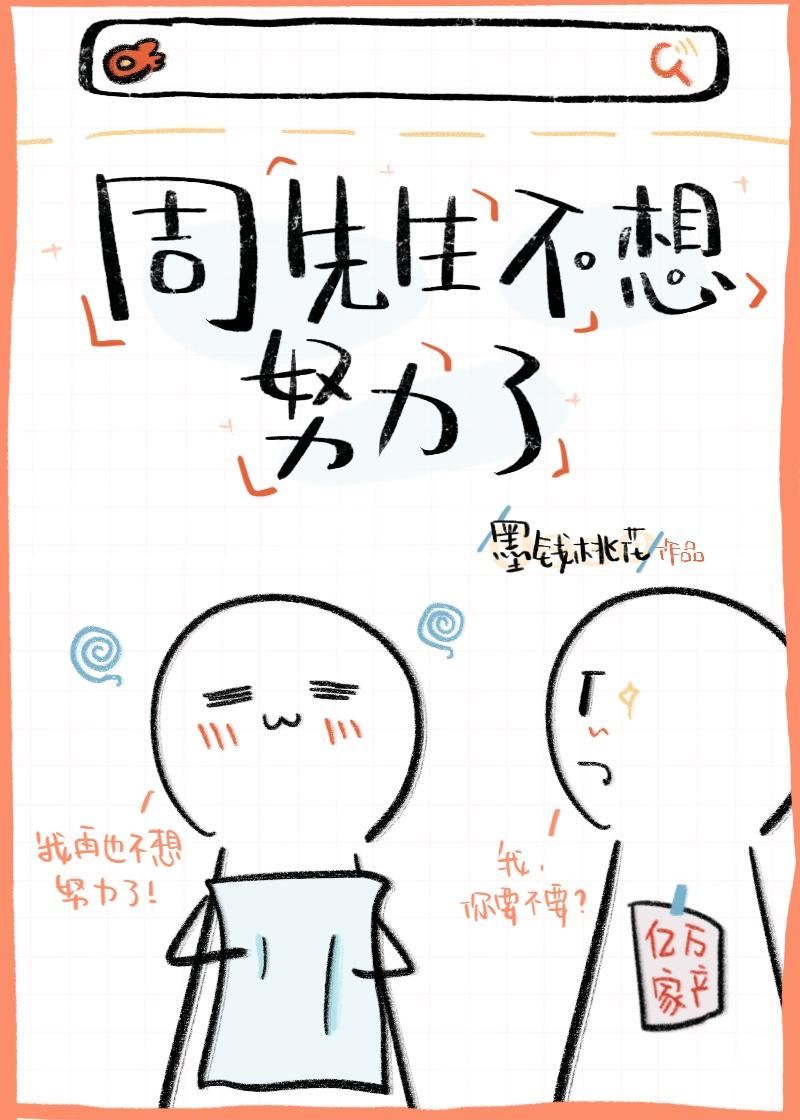
... Read More
I need to talk about this phone call scene because it's peak Lu Ji energy and I am HERE for it. Zhou Chenxi goes full emotional honesty mode: 'I miss you! I really want to come back and see you soon.' And Lu Ji—Lu Ji, who is apparently composed and collected and joking about mask-wearing and big star status—just... stops. Two seconds of silence. The narrator describes his 'slow, slightly hoarse breathing' and then he says 'I miss you too' in a 'low, husky voice.' That's it. That's the entire response. And it hits harder than any Shakespearean declaration ever could. The author's choice to have Lu Ji NOT match Zhou Chenxi's emotional volume is actually brilliant writing. It makes Lu Ji feel like a real person whose emotions come out in cracks and pauses rather than speeches. And then immediately after, someone calls out to Zhou Chenxi and he has to hang up abruptly, leaving that charged moment suspended in air. The narrative voice here is so good at capturing the gap between what's said and what's felt. Lu Ji's line 'Being careful is never a bad thing' later in the parking lot is also perfectly in character—he's deflecting, being practical, not digging into why Zhou Chenxi is stressed about the CP fans. He just... accommodates. That's their dynamic in a nutshell. Zhou Chenxi overshares and Lu Ji absorbs it without making it a Big Thing. The humor in their dialogue is also immaculate—the 'Zhou Black Charcoal' bit, the skin-whitening injection panic, the rollercoaster emotional shifts. Every exchange feels like real people who know each other extremely well.
... Read More
I have to talk about how the author uses silence as a dialogue tool in this chapter because it's absolutely filthy in the best way. Let's start with the brothers' conversation, which is basically three exchanges: "So, how did the audition go?" "It went well..." "That's good." That's it. That's the entire dramatic core of the first half. Three lines. And yet it carries the weight of fifteen years of complicated history. The ellipsis after "well"—that's where Zhou Chenxi's anxiety lives. He's not just saying it went well; he's hesitating, wondering if his brother will find something to criticize, if this is another setup for a lecture. And the brother's response? Not a follow-up question. Not a probing interest. Just "That's good." He's already checked. He already knows. He called his secretary before Zhou Chenxi even sat down. Compare that to the forum dialogue, which is relentless noise. "I have a friend who works in a PR agency"—the classic unreliable narrator句式, repeated twice. "Someone was manipulated to cause a car accident"—gossip presented as fact. "Are the LS fans promoting Luo Xinghe?"—paranoia masquerading as analysis. The forum voices all sound the same: speculative, confident, careless. They're not trying to understand anything. They're performing opinion. And the narration itself? Deadpan. Observational. Almost journalistic. The author never tells us how to feel about any of this. No authorial commentary, no moral framing. We're just handed the raw material—the brother's phone call, the Weibo posts, the forum threads—and expected to assemble the truth ourselves. That's what makes the writing feel so mature. The author trusts the reader to do the work. But here's my actual favorite use of dialogue technique: the absence of dialogue. When Zhou Chenxi smiles at his brother and serves him dinner, there are no words. The action speaks. And when the chapter ends mid-forum-discussion about whether Lu Ji has evidence, we're left hanging—not because the author is being cliffhanger-chunky, but because the story has already said everything it needs to. The real drama isn't in what anyone says. It's in what they can't say out loud.
... Read More
The pacing in these chapters is so deliberate and I love how it moves. It starts completely internal—Lu Ji alone in front of a mirror, reflecting on his fractured sense of self. Very slow, very quiet. Then Zhou Chenxi appears with the painting and the whole energy shifts. The gift exchange scene has this delicate rhythm where both of them are nervous in different ways: Zhou Chenxi apologizing for the quality of his work, Lu Ji being sincerely moved. It's an intimate bubble. Then the arm-linking moment introduces this slight playfulness, and Lu Ji's compliment about Zhou Chenxi looking handsome compared to the sunset—this is the peak of warmth before the chapter deliberately deflates it. Downstairs, the bubble pops. The transition from upstairs to downstairs isn't just physical; it's tonal. You go from two people to a room full of watchers in about three paragraphs. Zhi Qi's scene is almost comedic relief—food-focused, casual—but her warning lands like a stone dropped in water. The tamago-yaki revelation is funny, but it's also the author's way of showing that Lu Ji has been paying attention to Zhou Chenxi's preferences even while all this machinery is running around them. And then it ends with Mrs. Lu arriving fashionably late, dressed in a dark evening gown, which feels like the opening of the next wave of conflict. The chapter doesn't resolve anything; it sets the stage and walks away. Perfect cliffhanger energy.
... Read More
The visual contrast in this batch is genuinely cinematic. You've got these two worlds colliding and the imagery keeps hitting different. Let me start with the flashback that haunts me — Zhou Chenxi eating pancakes by the roadside. The fans made videos of this. A naive kid, hungry, broke, choosing not to grind because he's tired, and the internet laughed at him. Now all these same people are defending him because apparently the narrative has flipped. The pancake image is such a powerful symbol of where he started, and it keeps coming back like a ghost throughout the whole story. Then you jump to the present — Zhou Chenxi standing in front of his closet. And the detail about his wardrobe is everything. Most of it is 'loose casual wear and cheap market finds' from his miserable early days in the industry. But he also bought some formal suits because 'when they wore out, he simply threw them away without the need for careful maintenance.' That line about Zhi Qi having to meticulously iron each piece of his brother's clothing versus Zhou Chenxi just tossing his cheap suits? That's not just worldbuilding, that's character architecture. You can SEE their different upbringings in their closets. And then the drive to the Lu family villa. Zhi Qi narrating the entire time, giving fatherly advice, while Zhou Chenxi is just... absorbing it all. The fact that this is happening after he was trending again for 'War Flag' — a Republican era drama where he played a newspaper-selling student who gets KILLED — is some twisted irony. He dies on screen playing someone poor and desperate, and now he's driving to a mansion in a suit that cost more than his old monthly salary. The sensory details in these scenes are layered in a way that makes the whole world feel lived-in.

Leave a comment

You must be logged in to leave comments. or
