Summary

... Read More
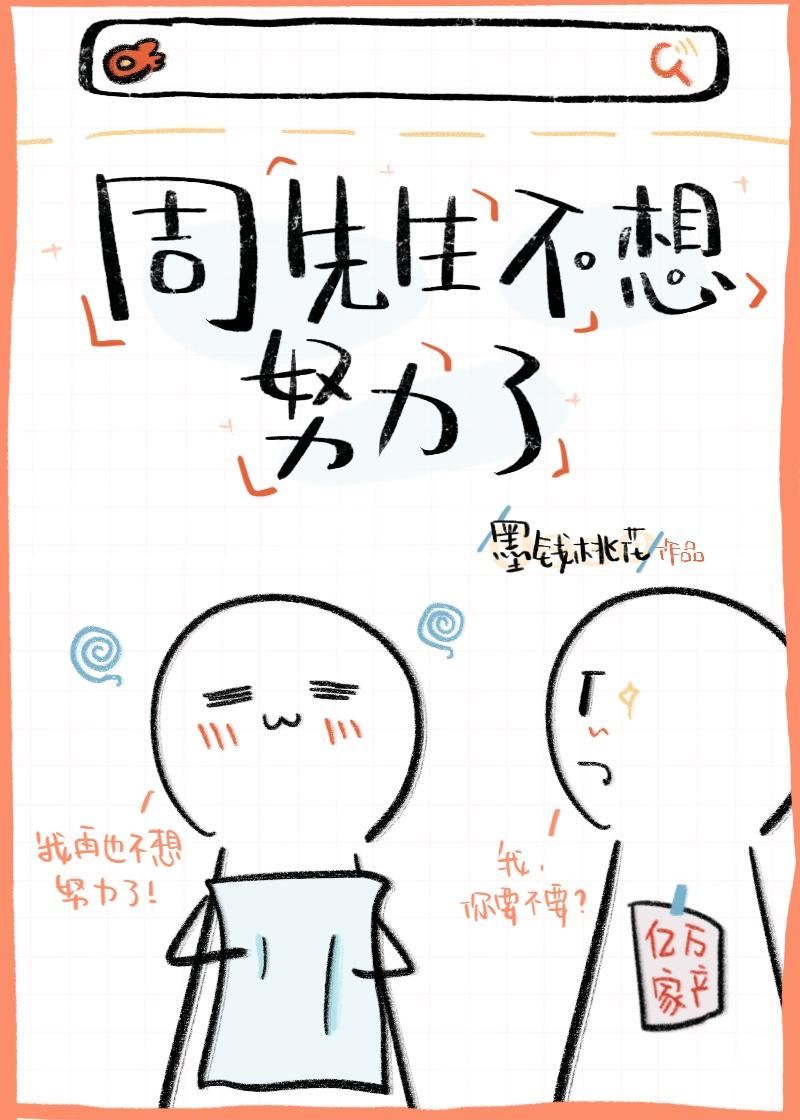
Zhou Chenxi is a background character in the novel "The Koi Conquers the Entertainment Circle," defined solely by his extreme misfortune, which serves to highlight the protagonist Luo Xinghe's luck. After dying in a mundane accident, Zhou Chenxi awakens backstage during the filming of an acting variety show, retaining memories of his original life and the novel's plot. In that previous existence, his rivalry with Luo Xinghe triggered a chain of events where his elder brother, Zhou Mingxuan, clashed with the Lu family and Luo Xinghe's harem, leading to the destruction of the Zhou family business. Realizing he is merely a stepping stone for the protagonist, Zhou Chenxi resolves to abandon his acting career and return to his wealthy family to live as a passive heir, declaring he no longer wishes to work hard.Zhou Chenxi leaves the variety show and returns to the Zhou family villa, reuniting with his brother and parents who had been secretly concerned about him. Although his manager, Zhi Qi, urges him to stay in the entertainment industry, Zhou Chenxi initially resists. However, when offered an audition for a fantasy drama titled "Journey of the Immortals," an investment project by the powerful Lu Group, he decides to participate strategically. His goal is not fame but to secure a safe role while strictly avoiding Luo Xinghe, whose trajectory he knows will overshadow any direct competition. During the audition, Zhou Chenxi delivers a compelling performance as a minor character, catching the attention of both the director and Lu Ji, the cold and capable CEO of the Lu Group.Following the audition, Zhou Chenxi experiences another tragicomic accident when trapped in a falling elevator. Lu Ji personally intervenes, rescuing him and displaying unexpected concern. Lu Ji subsequently arranges for comprehensive life insurance coverage for Zhou Chenxi, recognizing the young actor's perpetual streak of bad luck. Zhou Chenxi accepts the role in the drama but faces a new crisis when he discovers that the variety show "Red Carp and Green Carp," bundled with his drama contract, also features Luo Xinghe among its guests. Despite his efforts to withdraw, contractual obligations prevent him from backing out.At the start of the variety show, Zhou Chenxi attempts to maintain distance from Luo Xinghe and Ren Qian, both of whom are romantically linked to the protagonist in the original novel. Lu Ji accompanies Zhou Chenxi throughout the trip, protecting him from further mishaps and asserting dominance over the production team. The narrative establishes a complex dynamic where Zhou Chenxi navigates his unwanted proximity to the protagonist's circle while Lu Ji’s interest in him deepens. The story concludes with Zhou Chenxi settled in the group accommodation, unaware that his presence has disrupted the original plot, setting the stage for a new trajectory where his refusal to be a victim may alter the fate of both his family and the novel's protagonist.
Latest Release
DateGroupRelease
2026-09-26knoxt c82
2026-09-26knoxt c81
2026-09-26knoxt c80
2026-09-26knoxt c79
2026-09-26knoxt c78
2026-09-26knoxt c77
2026-09-26knoxt c76
2026-09-26knoxt c75
2026-09-26knoxt c74
2026-09-26knoxt c73
2026-09-26knoxt c72
2026-09-26knoxt c71

Community Reviews

Rating(4.1 / 5.0, 400votes)
5 stars
144(36%)
4 stars
132(33%)
3 stars
124(31%)
2 stars
0(0%)
1 stars
0(0%)

Popular reviews

... Read More
The sensory details here are doing so much work. That car ride scene—the way sunlight keeps shining on Zhou Chenxi's eyes but he's too sleepy to open them, how the curtains get drawn up without anyone saying anything. Then later when they arrive at the ancient village: heavy sense of historical precipitation, fresh air far from the city, inn built by locals as poverty alleviation project. The innkeeper couple leaves after giving the key, entire place rented out. These small details make it feel real, lived-in. But it's the contrast that kills me—the warm, golden, safe childhood memories (cream cake, brother's arms, servants comforting him) against the cold nightmare where Lu Ji points a gun and says I'm going to make you disappear from this world. The physical setting mirrors the emotional one: bright daylight outside but darkness inside his head. When he wakes up with a swollen neck from sleeping uncomfortably, it's almost funny how mundane the pain is compared to what his mind was showing him.
... Read More
Okay, let's talk about how the space works here. This isn't a haunted house or a battlefield—it's a hotel room. Neutral, temporary, but made intimate through tiny details. The flickering lights, the shower steam, the milk glass left on the table, the hairdryer buzzing. The author doesn't describe the hotel's exterior or the city outside; she keeps it claustrophobically small, and that's what makes it feel alive. When Zhou Chenxi peers through his wet hair and sees Lu Ji in just a towel, the camera lingers on his waist, his buttocks, the robe later—but it's not leering. It's observed, shy, real. Then the morning: birds chirping, perfect temperature, drowsy sunlight. The world outside is soft, safe, domestic. Even the fear of darkness is contrasted with the eventual steady glow of the bedside lamp. The settings aren't just backdrop; they're emotional barometers. Dark means nightmares. Light means Lu Ji reading quietly. Water means cleansing, routine, trust. I love that the bathroom door stays closed but the conversation continues through it. The room itself becomes a cocoon. It's subtle, but every object—the coffee maker, the towel, the milk glass—grounds us in a reality that feels lived-in. No grand descriptions, just enough to make you want to sit in that chair.

... Read More
There's this one detail I keep coming back to—the upstairs and downstairs of the Lu residence being literally described as two different worlds. Upstairs: quiet, undisturbed, private. Downstairs: bustling with guests, polite but watchful, full of people who have opinions about everything. It's such a sharp contrast that it basically functions as a metaphor for the whole relationship. Upstairs, Lu Ji and Zhou Chenxi are just... themselves. They're giving gifts and linking arms and joking around. Downstairs, they're a spectacle. Every gesture gets catalogued and discussed. And the dessert table detail killed me. The Lu family specifically brought in a chef from the film and television city JUST to make tamago-yaki. Not steak, not anything fancy Western—just this one specific dish that Zhou Chenxi clearly loves. This is a man who has everything, and his love language is paying attention to what the other person actually eats. Meanwhile, Zhou Chenxi just wanders around with a plate, searching for food the whole time, completely unaware that someone rearranged a banquet around his taste preferences. The atmosphere down there is suffocating in the best way. Everyone is being polite, not speaking loudly, not discussing the host's affairs in public—but you can feel the eyes. The text says they exchanged glances silently and continued with their activities. That's not indifference. That's people filing away information about Lu Ji's private life for future use. The Lu family home isn't just a setting; it's a pressure chamber.
... Read More
The author dropped two pieces of advice at the end of these chapters and honestly I think they contain the whole thesis of the story. First: 咸吃萝卜淡操心—if you pickle radishes, you put more salt in them so they last longer. But if you're not even involved in the pickling, why are you worried about whether they'll go bad? This is about people whomeddle in affairs that don't concern them, which is EXACTLY what Zhou Chenxi does all day watching everyone else's romantic lives. Second: 头上要有绿—if you want to live a good life, you have to put some green on your head. This internet slang means learning to tolerate and compromise, not caring too much. Which is basically Zhou Chenxi's entire worldview despite the fact that he CARES TOO MUCH about everything. The irony is delicious. Meanwhile Luo Xinghe is playing the long game of performing kindness in the kitchen to win approval, Zhou Chenxi is philosophizing about pension money under the stars, and Lu Ji is somehow both the most passive and the most observant person in the room. This show is about people who can't stop performing even when they think no one is watching.
... Read More
The pacing in this chapter is a masterclass in tonal whiplash, and I mean that as a compliment. It opens with something almost trivial — Yuan Yike asking Zhou Chenxi about fan benefits, which leads to a comedy bit about selfie apps and Vlogs. The reader is relaxed, maybe even laughing at Yuan Yike's elaborate fan-management rituals. Then, within three paragraphs, the tone pivots sharply. Director Cabot arrives. The producer announces role confirmations. The dual-lead structure has been dismantled. Jiaozi's backstory gets recounted in full. Zhou Chenxi is offered a role that could redefine his career. And then, in the final exchange, Director Cabot delivers something almost gentle: your fan votes didn't count, sorry for wasting your time. The chapter compresses roughly four hours of real-world events into what reads as fifteen minutes of page time. That's aggressive pacing, but it works because each section earns its place. The humor establishes character. The casting announcement raises stakes. The backstory provides emotional weight. The private conversation with the director lands the thematic punch. The only moment I'd flag as slightly rushed is the transition from the group meeting to the side room — it happens almost too smoothly, with Yuan Yike's "I'll go first?" serving as a neat curtain drop. But honestly, that economy of transition keeps the chapter from bloating. The author trusts the reader to fill in the whitespace. And when Zhou Chenxi ends up alone with the director in the room where he first auditioned, the structural symmetry hits hard without needing any explicit commentary.
... Read More
Okay can we just talk about Zhi Qi for a second because this man is doing THIRTY jobs and nobody gives him enough credit. He's literally running Zhou Chenxi's fan operations, mediating between toxic fans and wholesome CP ships, creating new super topics to contain the chaos, AND he's also apparently got access to legal intelligence about Luo Xinghe. The guy's got a CEO energy that honestly outshines Lu Ji's. But here's what actually hits me—the scene where Zhou Chenxi is trying to figure out how to thank his brother. Gifts don't work. Money doesn't work. Zhi Qi just... exists in this space of silent devotion and Zhou Chenxi has no framework for it. That's actually really tender. Meanwhile, the Zhou Chenxi/Lu Ji dynamic is so devastatingly normal. No drama, no misunderstanding tropes—just "let me make space for you at the sink" energy. Zhou Chenxi catching himself thinking Lu Ji looks handsome while he shaves and then internally panicking about what that means? That's the stuff. The relationship isn't declared, it's just... there, undeniable, and Zhou Chenxi is still figuring out how to say it out loud.
See all reviews

Custom lists

See all custom Lists