Mr. Zhou Doesn’t Want to Work Hard Anymore! - Reviews

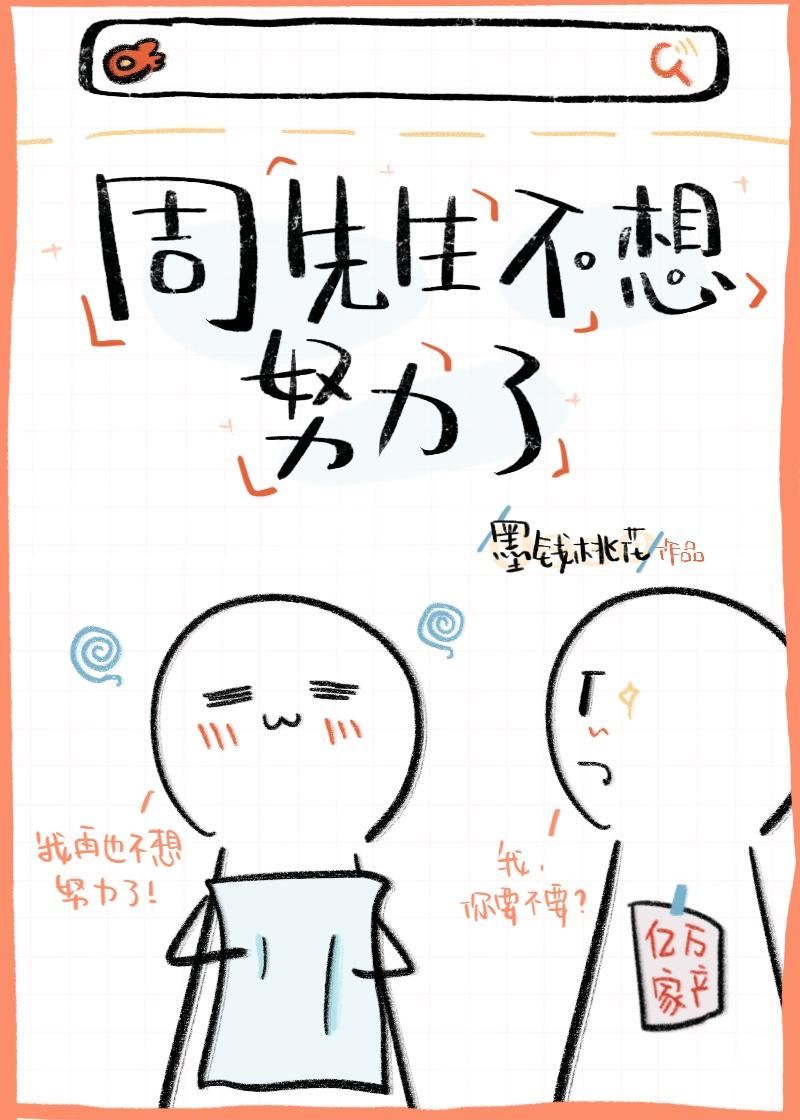
Mr. Zhou Doesn’t Want to Work Hard Anymore!
+Add to Custom List
Sort
Add review
... Read More
Okay so here's the thing about Zhou Chenxi that keeps hitting me — he's literally not the same person. After being reborn and hitting rock bottom before, now that he finally has a shot at success, he's paralyzed by the fear of losing it. That's not how he used to be. The author doesn't hammer this home with a monologue, just drops it in this one brief exchange with Zhi Qi who's genuinely baffled: "What are you thinking about?" Like, yeah bro, what ARE you thinking about. You're scared. And it's kind of devastating because the old Zhou Chenxi would've shrugged and said yes immediately. This version hesitates, spirals, counts salted fish in his head — which is such a specific, funny image for someone having an existential crisis over a commercial gig. The irony is layered: the people who know him best (Zhi Qi) don't get why he's hesitating, but the CEO of Lu Group? Lu Ji somehow figures it out faster than anyone. He sends that message and suddenly Zhou Chenxi caves. A few texts from a guy he barely knows on WeChat and BOOM, the decision is made. Meanwhile Zhi Qi is out here having a whole phone call and gets shut down on the other end. The power dynamic shift is subtle but massive — and the chapter ends on this little cliffhanger with Luo Xinghe being awkwardly left behind at the airport while Lu Ji and Zhou Chenxi drive off together, ignoring him completely. I need to know what Luo Xinghe's face looked like.
... Read More
There's this one image that I can't stop thinking about. The hospital room with red paint spelling out HELP!!! with three exclamation marks and streaks running down the walls like blood. The author doesn't just describe it once — they make us linger on it. Three exclamation marks. Streaks of paint. Then the lights dim and this laugh echoes from outside. Hehehe. You can practically feel the dry ice fogging around your ankles and the oppressive humidity of that fake horror set pressing in on you. What strikes me most though is how the author contrasts the artificial horror inside with the real physical reaction outside. Zhou Chenxi steps out into actual cold wind, shivering, already sweaty and now freezing. His thin clothes offering zero protection. The transition from dark theatrical space back to real evening air creates this jarring sensory shift that mirrors his emotional state — he spent all that energy performing courage while actually terrified, and now the adrenaline dump leaves him physically exposed. Even the hotel detail matters. Same hotel, different floors. The architecture of their relationship mirrored in the building layout. And then that breakfast negotiation at the end — small, domestic, hopeful. The author moves from theatrical darkness to fluorescent hotel corridors to the promise of shared morning sunlight in barely three pages. That's worldbuilding through environment as emotional metaphor.
... Read More
The Ren Qian interaction had me wheezing. This woman is clearly the established veteran type who's somehow stuck on set with the rising star energy, and her reaction to seeing all those Yao Bei fans is pure comedic gold. She literally says "the old guys like me are truly unwanted. The mortal world isn't worth it!" and Zhou Chenxi has to rush to comfort her. But here's what's funny — she doesn't actually believe him. She just accepts the compliment and rolls her eyes before getting called away. That's the energy of someone who's been in this industry long enough to know how it works. But then Lu Ji walks in and EVERYTHING shifts. Watch how Zhou Chenxi's entire physicality changes. With Ren Qian, he's casual, scratching his cheek, laughing nervously. With Xie Xueyu, he's polite and respectful, thanking her for caring about his rest schedule. But with Lu Ji? The script goes UP SIDE DOWN on purpose. He pretends to read it, realizes it's backwards, adjusts it back, checks his surroundings to make sure no one's watching. This man is NERVOUS in the most adorable way possible. He's been waiting half an hour at the airport for someone and is trying so hard to act like it's no big deal. "Why did you come?" "I have to see if the small actors in my investment are slacking off." And then the immediate pivot: "I saw a lazy little kitten, or rather, it's one that ran out from my home. I wonder if this little kitten is willing to come back with me now and accept my feeding?" Zhou Chenxi's response: "Where to?" "For supper?" "Sounds great!" He almost forgets his script. FORGETS HIS SCRIPT. This man was so ready to abandon all dignity he didn't even notice.
... Read More
I've been thinking about this sibling relationship all morning and I genuinely cannot get over how well-written it is. Let me paint the full picture because the childhood flashback is doing SO MUCH heavy lifting here. We meet fourteen-year-old Zhou Chenxi terrified of his older brother, who once threatened to pull down his pants and spank him over a chalk-slingshot incident. Dad watched like it was entertainment. Mom couldn't even be bothered—they were basically strangers in their own home. And yet here we are, chapters later, and Zhou Mingxuan is the one person in this entire story who's consistently shown up for his brother without being asked. The evolution is subtle but devastating. Remember how Zhou Chenxi used to follow his brother around like a tail, apologizing until the grumpy older sibling finally relented? Now the roles have completely flipped—but not in the way you'd expect. It's not that Zhou Chenxi became dominant. It's that Zhou Mingxuan chose to become protective instead of punitive. He could've stayed the strict disciplinarian. He could've made his brother earn things. Instead, he's sitting there at dinner, already on the phone arranging investments, coordinating fan support departments, shielding his brother from financial risk. "They were not the powerful Lu family. Venturing into the film industry required caution." He's doing the math in his head while his brother is just happy to serve him dinner. But here's what kills me—the most honest moment in this entire scene isn't the investment talk. It's when Zhou Chenxi "cheerfully served his older brother some dishes, offering praise which he rarely did, finally smoothing away the wrinkles on Zhou Mingxuan's brow." This man has spent his whole life carrying his brother's burdens silently, and the most intimate thing their relationship does is exchange looks over a dinner table. No grand declarations. No "I love you, bro." Just... smoothing wrinkles. That's their love language and the author knows it. I also can't ignore how Zhou Chenxi's internal monologue reveals his deep-seated anxiety about being a burden. He immediately assumes his brother's serious face means trouble. It takes him a full paragraph to realize he was wrong. That tells you everything about how this relationship has shaped him—years of walking on eggshells don't just vanish because someone says "that's good" once.
... Read More
This chapter does something I rarely see done well — it launches into pure comedic chaos and then, before you've caught your breath, pivots so hard into emotional gravity that you forget to laugh. The Lin Yujiao scene is eight full minutes of "I cannot believe this is happening" energy. She reads Zhou Chenxi like a menagerie, inspects his physique, comments on his rear end, asks if he's looking for a sugar daddy situation with her son, and then struts out like she's already won something. It's broad, it's ridiculous, and it's absolutely necessary. Because if the chapter had stayed only in that register, it would've been fluff. The pivot happens the moment Lu Ji says "Do not mind her!" and then immediately follows with his explanation about the "little celeb" suspicion. That's the breath you take before the plunge. And then: "I've come to this world twice and this is the third time." The dream sequence that frames the whole chapter is also doing structural heavy lifting. Zhou Chenxi experienced Lu Ji's perspective in the dream, felt the tragedy unfold, and that memory is what drives him to the hospital in the first place. So the chapter is basically bookended by two versions of the same event — the dream and the reality — and the space between them is where all the actual character development lives. The pacing never drags because every scene either advances the plot, deepens the relationship, or opens a new mystery. Even the flower-wrapping subplot about money ties back to the larger theme of how these two men show care for each other when words fail them.
... Read More
The way this chapter transitions from one emotional universe to another is honestly reckless. You spend an entire scene laughing at Zhou Chenxi's paper money flowers, getting warm and fuzzy over the chin-touch moment, memorizing Lu Ji's scent the way you memorize things you're afraid to lose — and then you're back home, half-asleep, and BOOM. Your brother is showing you a news headline that changes everything. The pacing here is masterful because it doesn't warn you. It lets you settle into this tender, almost domestic rhythm: bath, pajamas, sleepy walk downstairs, brother with a grave face. Zhou Mingxuan calling someone from the entertainment industry a "colleague" is such a perfectly casual detail that makes the subsequent shock hit even harder. You're lulled into safety. And then: "Luo Xinghe is suspected of criminal offences and is now under police control." The chapter doesn't even give us the full explanation. Zhou Chenxi calls people, gets evasive answers, calls Zhi Qi, and we cut off right as information starts flowing. That's the cliffhanger — not a dramatic confrontation or a physical threat, but the dread of not knowing. What really works is how the hospital scene's ending (Zhou Chenxi fleeing because he can't face Lu Ji's mother) mirrors the home scene's beginning (Zhou Chenxi unable to face the truth about Luo Xinghe). He runs from difficult conversations in both settings.
... Read More
I have to appreciate how distinct everyone sounds here because honestly some novels just have every character sound the same and it drives me crazy Zhou Chenxi's voice is very clear — he's got that lazy, self-deprecating energy even when things are falling apart. 'Go straight!' he yells during the race like he's suddenly found a second wind, and then a second later he's on the ground. His internal monologue is golden: 'Could it be Lu Ji is the Lucky deity sent by God specialized in rescuing him?' That is SO him. Deflecting everything with humor. Even in a hospital bed he's making jokes in his head Lu Ji is the complete opposite — short, practical, doesn't waste words. 'I didn't win.' That's it. That's his entire emotional output after getting injured and going to the hospital. And then later: 'Make way, the doctor is here.' Pure action, zero drama. But the subtext is screaming. He picks Zhou Chenxi up in a princess carry and doesn't say another word about it The comedic timing between them is chef's kiss though. Zhou Chenxi's 'Aaahhhhh why don't you close the door?!' followed by Lu Ji's silent laugh and internal 'both of us are men, so why close the door?' is the kind of exchange that makes you snort-laugh out loud. And then the narrator immediately undercuts it with 'he obviously looked like he wanted to talk to him and also take a look yet he blamed him for not closing the door' — we SEE you, narrator, we see you Zhuang Jingle's voice is also distinct — competitive, fast-talking, the kind of person who turns everyone's spirits around just by shouting 'You're going to lose!' And Luo Xinghe doesn't even need dialogue to be terrifying. One 'Tsk' and he's already tripping people. The man is a menace
... Read More
This chapter is giving main character energy through sheer exhaustion and care packages. Zhou Chenxi hadn't eaten since noon. NOON. And he's still pushing through a variety show mission, wearing a mask, doing whatever task they threw at him, and when he finally gets that cake his eyes LIGHT UP. Not metaphorically—the text literally says his eyes lit up. Then he stuffs his face like a hamster who found the good snacks. 'So delicious!' he tells Lu Ji, and I swear if this isn't the most wholesome thing I've ever read I don't know what is. And Lu Ji—cold, composed, CEO Lu Ji—watches him eat and his fatigue just... vanishes. That's the line. That's the whole damn book right there in one sentence. He was tired, he was annoyed, he was doing whatever corporate-type person does on variety shows, and then he saw this kid with cream on his mouth and suddenly none of it mattered. The water moment too. Lu Ji gestures for staff to bring two bottles of water—not one, TWO. Opens his own while handing one to Zhou Chenxi. It's such a small gesture but it's the kind of thing that says 'I notice you need things before you do.' That's not accidental. That's someone who has been paying attention for a very long time. Then the money reveal. 500 vs Luo Xinghe's 200. Zhou Chenxi losing his MIND, jumping around, grabbing Lu Ji's hand—this boy doesn't do anything at half capacity. Every emotion is FULL THROTTLE. And then the realization hits him that he's been holding Lu Ji's hand like a normal person for way too long and he just... releases it and stands at attention like he's been caught doing something wrong. The embarrassment is palpable through the screen.
... Read More
I need to talk about the kitchen scene because the sensory details here are actually really well done. You've got the 'dong dong dong' of the knife on the cutting board, the program team handing out these absurdly colorful aprons — blue for Lu Ji, pink for Zhou Chenxi, which immediately tells you something about their personalities without a single word of exposition. Lu Ji just grabs the blue one without checking. Zhou Chenxi puts on the pink one and then just... keeps wearing it. Obviously. Then the scene shifts to evening, and the lotus root pickers are coming back drenched and sunburned, smelling of sweat. The contrast between the clean kitchen and the muddy outdoor workers is striking. And that dinner scene — the villagers showing up with their own dishes because they assumed the celebrities couldn't cook enough food for everyone. There's this beautiful moment where Shao Yunyi stands up with a wine glass and honestly thanks them, and the villagers stand up in return saying 'the chef has worked hard.' It's this genuinely warm, messy, noisy family-style meal that feels incredibly real. But then the camera pulls back to Luo Xinghe sitting in the corner, frowning, separated from this warmth. The description of the villagers — dark from sun exposure, clothes that seem permanently dirty, self-sufficient farmers living a life far removed from the celebrity bubble — it paints this whole world in such vivid strokes. You can almost smell the earth and the cooking oil.
... Read More
I keep coming back to that steamed bun. Let me trace what it represents across this entire chapter because it's clearly doing a lot of heavy lifting. First, the steamed bun in the rain. It's dirty, flattened, soaked—essentially ruined food that a starving person would fight to the death for. It's Zhou Chenxi's character's reality in the film, but it's also a mirror to Zhou Chenxi's own reality: he's essentially consuming nothing (his diet is minimal vegetables and boiled eggs) so that he can convincingly portray someone who has consumed nothing. The bun becomes this grotesque symbol of performance art—the actor starving himself to play a starving character, fighting over real food to pretend to fight over fake food. It's meta in a way that feels accidental but is clearly intentional. Then there's the strawberry cream. Completely different symbolic register. Sweet, delicate, refined. Lu Ji feeding it to Zhou Chenxi with a fork—this is nourishment offered freely, without struggle, without violence. The cream represents everything that the steamed bun is not: comfort instead of survival, intimacy instead of desperation, choice instead of necessity. And here's the thing that connects them: BOTH are acts of feeding. The thug forcing Zhou Chenxi to call him "dad" for food is a violation. Lu Ji offering cream on a fork is an act of care. The author is showing us that food is never just food—it's power, it's love, it's control, it's survival. The steamed bun and the strawberry cream are bookends of the same chapter, and they tell you everything about what this story values. Also, the rain. Artificial rain on set, genuine tears perhaps not yet shed. Water as cleansing, water as drowning, water as the boundary between fiction and reality. Zhou Chenxi spitting out the wet bun at the end—that spit is him rejecting the character, reclaiming himself. But I wonder if he'll ever fully spit it all out.
... Read More
The salted fish metaphor is EVERYWHERE in this text and I need to talk about it. Zhou Chenxi opens with this Weibo post: "If I don't get popular this time, I can only go back and live with hundreds of millions of properties for a lifetime." He's a salted fish who refuses to flip over, trapped between being dead broke and being suffocated by wealth. Both states are equally unbearable. Then his dream has Luo Xinghe explicitly calling him "you unlucky guy still want to turn over the salted fish? Dream on!" The text itself is mocking his desire for change. And yet—he keeps trying. He posts on Taobao-analog sites, he considers the variety show despite being terrified, he takes the subway to gather luck like some kind of supernatural gambler. This man is a salted fish who refuses to accept his salting. The insurance policy is another symbol I can't unsee. Lu Group buying Zhou Chenxi life insurance for a variety show—it's like the universe itself is hedging its bets on whether he survives. Every contract he signs is a pact with fate, and fate keeps testing him. What is this story really saying about people who refuse to stay in their assigned role? About the violence of upward mobility when you've been told you're nothing?
... Read More
I'm not gonna lie, the fruit pancake scene made me emotional. Not because it's dramatic, but because it's simple - Zhou Chenxi buying himself a snack with two extra eggs, feeling 'very extravagant,' then eating it and squinting his eyes happily. That's the kind of small moment that hits different when you've been reading about someone who was poor and struggling. And then there's the whole family thing. He finds out his parents and brother secretly watched his TV program, that his father and mother are actually concerned about him despite the distance, and he's just sitting there thinking 'what was I thinking in my previous life?' There's this grief for the time lost, but also this warmth that they never actually stopped caring. The sour feeling on his nose when the butler tends to his wound - that's him realizing he's home, that people miss him. Even his decision to stay a 'salted fish' isn't just giving up, it's like... he's choosing a different path now, maybe one that doesn't cost him his family again. And Zhi Qi pushing him back isn't just about contract money, it's about not letting him waste this chance. The emotional undercurrents here are so subtle but powerful. Zhou Chenxi isn't crying or making grand speeches, he's just quietly absorbing all this love he took for granted before.

Leave a comment

You must be logged in to leave comments. or
