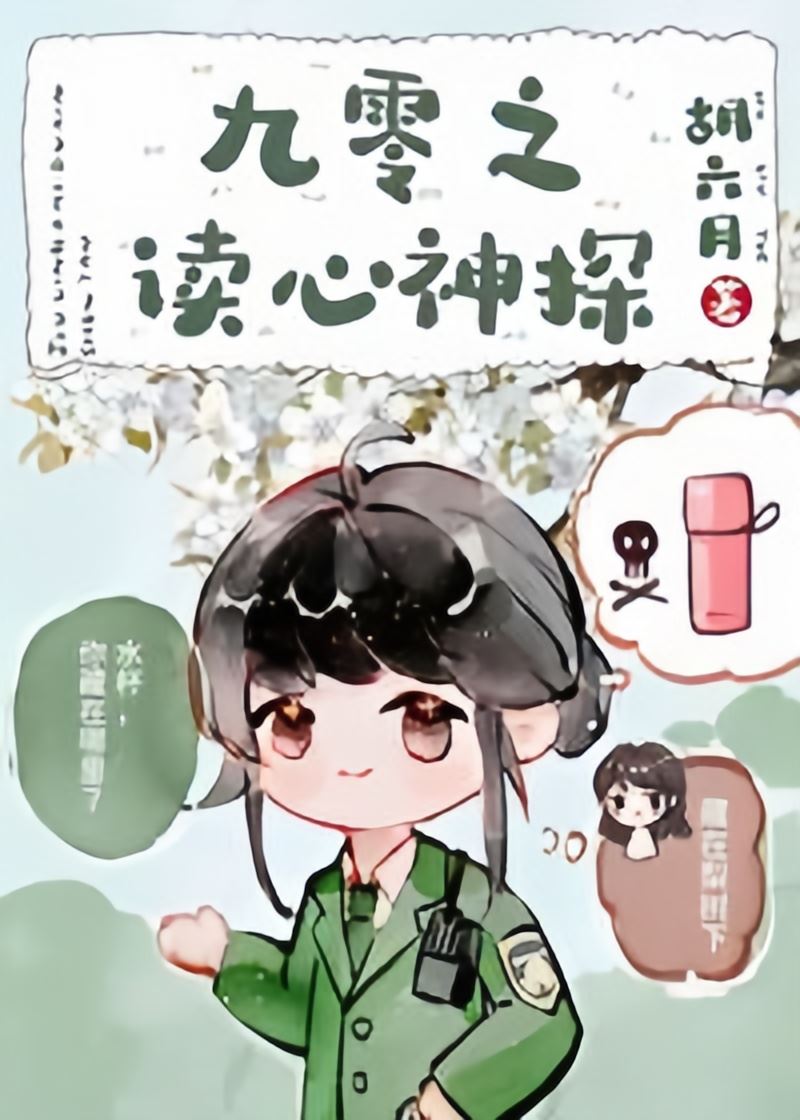
Mind Reader of the 90s
Novel Info

Summary

... Read More
Zhao Xiangwan is an eighteen-year-old freshman at Hunan Provincial Public Security University, studying criminal investigation psychology. She possesses the ability to read minds, a power she acquired after being struck by lightning at age ten. Raised by adoptive parents in a rural village, she endured years of mistreatment and neglect while her adopted sister, Zhao Chenyang, received all the affection and resources. The truth of her origins was hidden from her; she later discovered she was the illegitimate daughter of a wealthy city official, Zhao Qingyun, and that Zhao Chenyang had stolen her identity by switching places with her while Zhao Xiangwan was unconscious. The story begins on a dark October night when Zhou Qiaoxiu, Zhao Xiangwan’s head teacher, urgently knocks on her dormitory door. Zhou is distraught because her three-year-old biological daughter, Xu Zhenbao, has gone missing at Benlong Park. Although the police, led by Zhou’s husband Xu Songling, are searching, Zhou suspects their eleven-year-old adopted daughter, Meimei, is responsible. Zhao Xiangwan accompanies Zhou to investigate. Through observing Meimei’s micro-expressions and hearing her inner thoughts, Zhao Xiangwan confirms that Meimei deliberately abandoned the baby at a snack shop run by a childless couple who wanted a daughter. The couple had drugged the infant with alcohol-laced milk to stop her crying, causing severe alcohol poisoning. Zhao Xiangwan and Zhou Qiaoxiu locate the baby at the snack shop and rush her to the hospital. Xu Songling initially defends Meimei, refusing to believe his adopted daughter could commit such a cruel act. However, Zhao Xiangwan demonstrates her observational skills by deducing the details of a confidential homicide case involving two headless female corpses, which forces Xu Songling to accept her expertise. Confronted with the evidence, the family realizes Meimei’s true nature. Zhou Qiaoxiu decides to send Meimei to a boarding school, severing their emotional bond. On her eighteenth birthday, Zhao Xiangwan celebrates with Zhou and Xu Songling, who have become surrogate family figures. She requests their help to locate Zhao Chenyang, the woman living as the daughter of a provincial party official. Xu Songling uses police resources to find Zhao Chenyang’s address. Shortly after, Zhao Xiangwan encounters Zhao Chenyang at a shopping mall. Zhao Chenyang, who had stolen Zhao Xiangwan’s life and attended university in her place, is shocked to see her rival alive and thriving. The encounter sets the stage for Zhao Xiangwan to reclaim her identity and expose the truth. Meanwhile, Xu Songling recruits Zhao Xiangwan to assist with the headless corpse case. Two suspects, Wang Qiankun, a karaoke hall owner, and Wu Shengli, a singer, are linked to the victims, Wei Lili and Gu Xiaoling, through romantic entanglements and financial disputes. The investigation reveals complex motives involving jealousy, abortion fees, and illicit affairs. Zhao Xiangwan’s unique ability to detect lies and read minds proves crucial as the police prepare to interrogate the suspects, marking her transition from a student to an active participant in criminal investigations.

Latest Release
DateGroupRelease
2026-08-11shanghai fantasy c54
2026-08-11shanghai fantasy c53
2026-08-11shanghai fantasy c52
2026-08-11shanghai fantasy c51
2026-08-11shanghai fantasy c50
2026-08-11shanghai fantasy c49
2026-08-11shanghai fantasy c48
2026-08-11shanghai fantasy c47
2026-08-11shanghai fantasy c46
2026-08-11shanghai fantasy c45
2026-08-11shanghai fantasy c44
2026-08-11shanghai fantasy c43

Community Reviews

Rating(3.6 / 5.0, 31votes)
5 stars
7(23%)
4 stars
9(29%)
3 stars
10(32%)
2 stars
5(16%)
1 stars
0(0%)

Popular reviews

... Read More
The stakes in this story are layered in the best possible way. On the surface, there's a murder mystery with two headless bodies and a deadline—the report is due tomorrow and the police are desperate. But underneath that, there's this enormous personal stakes battle between two sisters where one girl's entire identity is a lie. Zhao Chenyang isn't just afraid of being caught; she's afraid of being exposed as fundamentally unworthy of the life she built. That's a much deeper, more personal terror than any murder suspect could feel. What really raises the tension is how the author keeps raising the temperature. First, Zhao Chenyang sees Zhao Xiangwan in the city and panics. Then she calls her mother and learns Zhao Xiangwan got into university through her own merit. Then Xu Songling hands Zhao Xiangwan her own household registration information—meaning Zhao Xiangwan now knows the truth about their shared identity. Each revelation is a hammer blow, and the reader is left gasping for air. The interrogation setup is pure suspense gold. Two suspects, no direct evidence, a deadline, and a teenage girl with a supernatural ability to read lies. Zhu Feipeng's internal monologue—"What's wrong with Captain Xu? I don't believe she can get anything out of them"—makes you want to scream at the page. You know she's going to prove him wrong, but the question is how, and at what cost to everyone involved.
... Read More
Okay so let me just say this - the reveal about Meimei was absolutely brutal. Like, I thought she was just a bratty kid who was a little spoiled, and then BOOM she deliberately abandoned her baby sister, gave her alcohol to make her sleepy, and planned for a stranger couple to take her in. This isn't just misbehavior, this is calculated evil from an eleven-year-old. And the worst part? She played the victim perfectly in front of everyone. When she was crying and hugging her dad's leg saying "I'm scared" and "I'm cold" - I literally wanted to throw the book across the room. But here's what made the plot work so well: the author didn't just drop this revelation on us. There were these tiny breadcrumbs throughout. Like when Meimei's inner monologue was screaming [You damn woman, you stinky bitch! Get away from here.] while her actual voice came out soft and sweet. That contrast was chilling. And then when she rushed to Zhao Xiangwan crying and asking "why did you want to hurt me?" - theaudacity. The girl has zero shame. The structure of the reveal was also really clever. Zhou Qiaoxiu laid out the whole chain of events - the park back door, the fried melon seeds, the three food stalls, Lao Wu's stall near the corner. It was like watching a puzzle come together in real time. Every detail connected. And then Meimei's response was just... pathetic excuses. "My sister told me about those places." Yeah right. Nobody buys that. I also loved how the author used Zhao Xiangwan's mind-reading ability not as a magic plot device but as something earned through observation. When she deduced the headless corpse case just from Xu Songling's eyebrow twitch and facial micro-expressions - that was peak detective work. The way she explained it scientifically ("facial expressions are the first natural response to emotional stimuli") made it feel grounded even though the premise is supernatural. Brilliant narrative design. The subplot about Zhou Qiaoxiu considering divorce also added real weight. This wasn't just about one bad apple - it was about a marriage cracking under pressure. Xu Songling's refusal to see Meimei's true nature despite all evidence was frustrating but also realistic. Parents can be so blind to their adopted children's flaws, especially when guilt is involved. The author didn't make him a villain though - he was just... human. Flawed. That's what made it hurt more.
... Read More
I need to talk about the emotional whiplash in these chapters because wow. One minute you're reading about Zhao Chenyang sitting alone in her spacious apartment, surrounded by nothing but wealth and privilege, and the next she's on the phone with her birth mother, completely unraveling. The scene where she calls Qian Shufen and demands to know about Zhao Xiangwan's whereabouts—her voice rising in disbelief when she learns her half-sister got into university—this is peak emotional devastation. She spent six years building this perfect life on stolen ground, and the foundation is cracking. Then you switch to Zhao Xiangwan, who has absolutely no idea about the depth of her half-sister's betrayal, and she's out here being a genius police student. The contrast between Zhao Chenyang's anxiety and Zhao Xiangwan's quiet confidence is agonizing. I kept wanting to shake Zhao Chenyang and say "you did this to yourself" while also wanting to hug her and say "it's not too late to make it right." And don't even get me started on the romantic subtext between the suspects. Wu Shengli marrying both girls, Wang Qiankun pursuing them both, the whole deformed love triangle that led to murder—it's so dark and tragic. These women weren't just plot devices for a murder mystery; they were real people with ambitions and desires who got consumed by a system that offered them nothing but attention and flowers. The author made me feel genuinely sad for them even though they're already dead.
... Read More
The Yanyang Karaoke Hall scenes are absolutely cinematic. I can picture it perfectly—the flashing lights, the plastic flowers being thrown on stage, the young women singing into microphones while wealthy men watch. The author didn't just describe a setting; they built an entire social ecosystem. Karaoke halls in 1980s China weren't just entertainment venues; they were where social mobility happened, where young women could earn money and attention in a society that offered them few other options. That's worldbuilding at its finest. The provincial party committee compound is another standout. Zhao Chenyang's home—neat rows of apartment buildings, flower beds brimming with roses, lush trees—this isn't just background decoration. It's a visual representation of everything she stole from Zhao Xiangwan. The contrast between this peaceful, orderly compound and the grimy, desperate rural village where Zhao Xiangwan grew up is so sharp it hurts. And the police car scene! Xu Songling picking up Zhao Xiangwan in uniform, the young driver Zhu Feipeng's skeptical thoughts, the crisp autumn morning—every detail is so vivid. I could smell the exhaust fumes and feel the cold air. The author has this incredible ability to make you feel like you're actually sitting in the backseat of that police car, watching a teenage girl about to change her life.
... Read More
Let me just say this opening is a masterclass in slow-reveal horror. On the surface, it's a missing-child thriller, right? Teacher Zhou gets a knock at midnight, her baby is gone from a theme park, everyone is distraught. Standard procedural setup. But then Zhao Xiangwan shows up, and the entire genre pivots under your feet. The real plot twist isn't that the baby is missing — it's that the missing itself was engineered. Meimei didn't lose her sister by accident. She walked her three-year-old out through the back door, past the residential area, to a couple who sell roasted melon seeds and desperately want a daughter. She literally abandoned her sibling to be adopted by strangers so she could reclaim her parents exclusively. That is not what an eleven-year-old does by accident. That is a calculated, cold-blooded act of familial sabotage. What makes this plot work so well is the layered reveal. First, we get Zhou Qiaoxiu's panicked narration — a mother falling apart, trusting her husband's judgment, trusting the police process. Then Meimei appears, playing the grieving sister, and the reader (along with Xu Songling) wants to comfort her. But Zhao Xiangwan's inner monologue and her reading of Meimei's thoughts strip away the performance in real time. The narrative structure is essentially a detective story where the detective is a freshman with a supernatural gift, and the suspect is a child who looks like an angel. The plot also does something clever with information asymmetry. We know Meimei is guilty before anyone else does. We hear her thoughts — the jealousy, the relief, the dark satisfaction of watching her sister cry. But the other characters, including her father, are still operating under the assumption that this is a tragedy. That gap between what the reader knows and what the characters know creates sustained dramatic tension. Every time Xu Songling tells his wife to stop questioning Meimei, it's infuriating because we know exactly what Meimei is thinking. The plot doesn't resolve the mystery quickly — it drags out the moral discomfort of watching adults fail to see the truth right in front of them.
... Read More
Can we just talk about how well-written Meimei's dialogue was because I am shook. The girl could switch from sweet innocent child to venomous manipulator so fast it made me dizzy. Let me give you examples because some of her lines were absolutely chilling. First, the contrast between her spoken words and her inner thoughts. She said to Zhao Xiangwan: "Sister, why did you want to hurt me? I don't understand your questions." But inside she was screaming [You terrible person! If you hadn't interfered, the baby would've been gone, and Mom and Dad would love only me forever!]. The gap between what she said and what she thought was SO wide it was almost comical if it weren't so horrifying. Then there's her performance for Xu Songling. "Dad, where have you been? Meimei is scared..." She knew exactly what to say, exactly when to say it, exactly how to make herself look small and vulnerable. And the worst part? It worked. He picked her up. He held her. For a moment, he forgot everything. But the dialogue that really showcased the author's skill was the confrontation scene between Zhou Qiaoxiu and Meimei. Zhou's speech was methodical, almost clinical in its delivery - laying out each detail of the crime like evidence in court. "The back door and snack shop are things my sister told me about" - no, Meimei. It was things YOU told me about because YOU planned it. The way Zhou delivered this was so controlled, so restrained, which made the underlying fury even more powerful. And Zhao Xiangwan's explanation of her ability to read micro-expressions - that was such a smart piece of dialogue because it served two purposes. It explained the plot device scientifically, making it feel believable, but it also revealed character. This girl had developed a survival mechanism as a child - reading people to stay safe in a hostile home environment. Her calm, analytical delivery of "facial expressions are the first natural response to emotional stimuli" was so Zhao Xiangwan. Precise. Measured. Professional. Even when she was talking about something supernatural, she framed it in terms that sounded like police work. The author also nailed the different voices of the adults. Xu Songling's frustration came through in his short, clipped sentences. Zhou Qiaoxiu's grief was in her trembling, fragmented speech. The doctor's irritation was all business. Each character sounded distinct, and I never once got confused about who was speaking.
See all reviews

Characters

See all characters

Custom lists

See all custom Lists