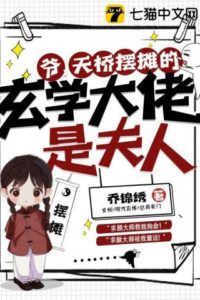
Master, the metaphysics expert running a stall on the pedestrian bridge is the madam! - Reviews

Master, the metaphysics expert running a stall on the pedestrian bridge is the madam!
+Add to Custom List
Sort
Add review
... Read More
Okay so let me just say—this opening is slick. The protagonist comes down the mountain, her master dies, she handles the funeral like it's a minor inconvenience, and then IMMEDIATELY starts hawking talismans to her own family. That's not just business instinct, that's survival mode. The plot moves fast but never feels rushed because every scene has a purpose. The structure here is interesting: master's death → reunion with family → first sale (Liang Song) → encounter with the main love interest (Li Xiao). Three major plot beats in three chapters, and each one escalates the stakes. The first business transaction with Liang Song sets up Yan Qiao's character perfectly—she's not some naive girl coming home to warm hugs. She's calculating, observant, and already running a side hustle on day one. Then Li Xiao shows up with that purple aura and the words 'Great Merit' on his forehead. The master essentially sent her to complete her tribulation by saving this guy, which means the whole story is built around this transactional relationship between merit and fate. I love that the master's last words sound like a mission brief, and Yan Qiao just accepts it without question. The plot is setting up a very clear goal: help him overcome his tribulation, earn her merits, lift her own karmic burden. But here's what's got me hooked—the master told her to find someone with a 'special fate,' and she finds him literally on her first day, moving into the neighbor's villa. That's not coincidence, that's destiny being telegraphed loudly. The plot is promising a very specific kind of story: cultivation meets modern urban fantasy with family drama layered on top. And so far, it's delivering.
... Read More
The pacing in these chapters is honestly wild. You go from a midnight possession crisis to a supernatural marketplace confrontation to a new client arriving at your door within the span of six chapters, and it never feels rushed. How is that even possible? Usually when stories move this fast you'd expect some filler or dragged-out exposition, but nope. Every scene earns its place. The structure is interesting too. The Shen Zhiyin arc resolves relatively quickly—possessed, exorcised, recovers by noon—but the author immediately pivots to the Li Xun thread and then the Mu Yunzhe introduction without letting you catch your breath. It's like the story knows if you stop reading for too long you'll lose momentum. The chapter titles themselves help: "Did You Bring Anything Back?" creates this immediate hook after the exorcism scene, making you wonder what went wrong. Then "Who Dares to Settle the Score?" during the shop confrontation raises the stakes before the Five Angry Men show up. If I had one critique, it's that Mu Yunzhe's introduction in Chapter 15 feels slightly rushed—he arrives, gets diagnosed, and the rogue Taoist reveal is just starting. But honestly, the cliffhanger energy keeps me coming back. The story is building toward something bigger and it knows it.
... Read More
Okay so this whole sequence is basically the calm before the storm and I love it. Yan Qiao drops them in this inn, gives them protective talismans, warns everyone not to come out at night—and of COURSE someone hears footsteps overhead. Classic horror setup, but what I found really clever was how the plot keeps layering stakes. First there's the inn being haunted, then they discover ALL the talismans faded overnight, which tells you immediately: this place is worse than anything they've faced so far. And then on top of that, Shen Zhiyin's soul fragment is being actively dragged back to where it was lost. The plot is basically saying 'you thought the inn was bad? Wait until you see the village.' The decision to only let three people enter—Yan Qiao, Yan Hao, and Li Xiao—is a smart narrative move because it raises the tension. Who stays behind? Who goes? And Yan Hao literally asks 'Am I different from the others?' which is such a good character beat that also advances the plot by revealing he has spiritual roots. The fog, the bone-chilling cold, the stone tablet stained with black blood—every detail pulls you deeper into this nightmare. I'm genuinely curious what's waiting in that village.
... Read More
I need to talk about how this story builds its world because it's doing something really clever. It starts in a rundown Taoist temple thirty kilometers outside the city—ancient, quiet, isolated. Yan Qiao is sitting cross-legged beside her dying master, chanting. The atmosphere is set immediately: this is a world where the spiritual and the mundane coexist, but the spiritual side is hidden, almost forgotten. Then the scene shifts to the luxury car pulling up at the foot of the mountain. The contrast is sharp. One moment you're in a centuries-old temple with an ancient master, the next you're looking at a wealthy family in designer clothes coming to reclaim their daughter. The worldbuilding here is doing double duty—it's establishing both the mystical tradition Yan Qiao comes from AND the modern, wealthy world she's entering. But the scene that really sold me is the neighbor's villa. Yan Qiao senses 'purple energy' and walks toward it. The description of Li Xiao stepping out of his car, deathly pale, surrounded by bodyguards and doctors, exuding authority—this is cinematic. The author doesn't just describe him physically; they describe him THROUGH Yan Qiao's eyes, and what she sees is a visual metaphor: 'Bathed in purple aura, a full forehead, clearly the face of an emperor. But his crown is shrouded in death and dark energy—two forces locked in a stalemate.' That description is poetry. It paints the entire conflict in one image. The purple aura of imperial fate versus the dark energy of a curse. Two forces locked in stalemate. And Yan Qiao is the only one who can see it. This is how you build a world—through sensory detail and symbolic imagery, not exposition dumps.
... Read More
'Your luck hasn't been good the past two days. Be careful.' This line from Yan Qiao to her brother Yan Hao is everything. She just got off the mountain after eighteen years, hasn't seen her family in person, and her first instinct is to sell her brother a talisman because he's got bad luck. The humor here is unintentional but perfect. The family dynamics are already interesting. Madam Yan is emotional, desperate for connection, ready to cry the moment she sees her daughter. Yan Zhengtian is the responsible father trying to keep things stable. Yan Hao is the cheerful but clumsy younger brother who immediately gets schooled by his sister's fortune-telling. And then there's Yan Qiao—completely unreadable, rational to the point of being almost alien. What's fascinating is how Yan Qiao interacts with each family member differently. With her mother, she's polite but distant. With her brother, she's blunt and transactional. With her father, she's obedient but indifferent. She calls her mom 'Pretty Mom' later, which is the first crack in her emotional armor, and it hits harder than any dramatic confession would. But the real character dynamic is between Yan Qiao and Li Xiao. She just told a stranger he won't live past the month, called him out in front of his entourage, and then SOLD him a life extension pill like it's a regular transaction. And Li Xiao—this terrifying, powerful man—just goes along with it. He asks for her contact info. He pays without hesitation. He's intrigued. That's the kind of character chemistry that doesn't need romantic tension to be compelling. It's intellectual curiosity meeting radical honesty. She sees something no one else can see, and he recognizes that immediately. 'You can save me?'—that line is loaded with everything.
... Read More
There's a lot going on beneath the surface of these chapters that I think deserves attention. The central theme seems to be about fate being something that can be altered, stolen, or restored—and the cost of doing so. Li Xun's "altered fate" is the key here. Yan Qiao tells him directly: "Until your original fate is restored, none of these circumstances can change." This isn't just a plot device, it's a philosophical statement about whether our lives are predetermined or if they can be hijacked by external forces. Then there's the painting itself as a symbol. A woman from the Republican era, wearing the same makeup as Shen Zhiyin, sitting in a modern home waiting to possess someone. It represents how the past refuses to stay buried, how trauma and vengeance can outlive their original hosts and find new vessels. The fact that it was acquired casually, as a souvenir, speaks to how danger often hides in plain sight in everyday objects. The transactional nature of Yan Qiao's work is also thematically rich. She's not a hero in the traditional sense—she's a professional. Payment settles everything. But the story keeps showing moments where she goes beyond the transaction: protecting Li Xun without being asked, calling herself by her real name, the warmth she feels when her ancestral master's incense glows brighter. The tension between commerce and compassion runs through everything.
... Read More
The stakes in these chapters escalate in a way that genuinely surprised me. You start with a personal, contained threat—a single vengeful spirit possessing one girl. By Chapter 15, you're looking at an organized network of corrupt Taoist practitioners who are actively targeting people, stealing their blood and hair to cast curses, and one of them has already gotten away with nearly killing Mu Yunzhe. The Mu Yunzhe scene is where the conflict really crystallizes. When Yan Qiao tells him "The invasive evil energy is about to take control of you" and he asks who's targeting him, the answer—"Someone close to you. This is a Peach Blossom Calamity"—is devastating. It's not some random spirit or a stranger. It's betrayal from within his circle, weaponized through occult means. And the fact that a Taoist priest took his blood, clothing, and hair means this person had both access and knowledge. That's intimate violence dressed up as spiritual practice. What makes the tension work is that Yan Qiao herself seems slightly unsettled by the scope of this. When she memorizes the temple name from Liang Song's video and her expression darkens, you can tell she's realizing this is bigger than any single exorcism. The story is moving from isolated incidents to a systemic threat, and that shift makes every subsequent scene feel more dangerous because the rules have changed.
... Read More
The atmosphere in these chapters is absolutely immaculate. Let me just say—the inn scene gave me actual chills. That musty smell when they walk in, Li Xiao's distaste for the place, Yan Qiao calmly placing talismans on every corner of his bed like it's no big deal while he's over there thinking 'are there dirty things here too?' The contrast between her complete normalcy and his discomfort is perfect. But the real showstopper is the arrival at Mengjiang Village. 'Fog had rolled in today, and visibility was less than five meters.' The car moving slowly. Overgrown weeds 'towered as tall as a person.' An old stone tablet 'inscribed with the words Mengxi Village' that was 'stained with black blood.' A flattened area where nothing grows. And then from beside an old locust tree—'Hel... help...' A weak voice. I literally had to pause and process that. The author doesn't over-describe; they hit you with precise, chilling details and let your imagination do the rest. The cold that sweeps over them is described as 'colder than anywhere they'd been before.' Even the GPS gets a talisman attached to it. This world feels lived-in and genuinely dangerous, not like a theme park haunted house. Every element reinforces the sense that this village is ALIVE with malevolent energy.
... Read More
Can we talk about the absolute ENERGY between Yan Hao and Li Xiao right now? Yan Hao's internal monologue when Li Xiao says he wants to share a room with Yan Qiao is priceless—'this Li Xiao fellow had designs on his sister? Absolutely not!' Meanwhile he's shaking like a leaf because Master Xiao's aura is so intimidating. The author writes this scene with so much humor but also genuine warmth. Yan Qiao choosing to share with Li Xiao but then immediately explaining WHY (yin energy, he's the most important client) to soothe her brother's feelings—that's such a specific, human detail. She doesn't usually explain herself, but she does it here. And Li Xiao's reaction? He feels bitter being called just a client, but then he thinks 'even if I'm just a client for now, I'm going to be the most special one.' CHILLS. That line hit me so hard. It's not aggressive or possessive, it's determined. And Yan Hao's excitement when Yan Qiao tells him he has spiritual roots? 'If you ever need anything, Ah Qiao, just let me know!' He literally loses his mind with joy. The sibling dynamic between Yan Hao and Yan Qiao is honestly one of my favorite things in this book—he's protective but also completely in awe of her, and she's independent but clearly cares about him deeply even if she shows it in her own way.
... Read More
Let me just say this first: Yan Qiao's dialogue is absolutely chef's kiss. The woman does not waste a single word. When Mrs. Shen screams about the pills Yan Qiao gave Shen Zhiyin and Yan Hao accuses her of poison, Yan Qiao's response is literally just: "Payment settles everything." That's it. Three words that perfectly capture her entire worldview. She's not evil, she's not cold—she's just transactional in a world where transactions keep people alive. And the Li Xun interactions! The way he slowly starts smiling around her—"Li Xiao's lips curled into a faint smile, one he himself hadn't noticed"—that's such a subtle character beat delivered through dialogue-adjacent narration. Their conversation about payment, about his dark aura, about calling her by her real name instead of "Fourth Miss"—it's sparse but loaded. Every exchange reveals something about their dynamic without either of them saying what they actually mean. Yan Hao's voice is also distinct. He's the hype man, the emotional barometer, the one who says things like "A-Qiao's amazing! She predicted this would happen—it's like she sees the future!" with genuine wonder. He grounds the story in the perspective of someone who is completely normal and just trying to keep up. Su Min's maternal worry versus her pride in her daughter also comes through clearly in her dialogue. Each character has a recognizable voice, which is harder than it sounds in genre fiction.
... Read More
Okay so the Shen Zhiyin possession plotline is honestly one of the tightest things I've read in a while. The setup is classic—weak birth chart girl gets targeted by a vengeful spirit through a cursed painting—but the execution has some genuinely clever beats. The reveal that the painting was picked up during a folk ritual at a festival, that Zhiyin herself brought it home without knowing, is the kind of mundane detail that makes supernatural horror feel so much more real. It's not like she found it in a cursed tomb or whatever. She just... bought a souvenir. That's terrifying in its own way. What I really appreciated was how Yan Qiao's investigation unfolded. She didn't just blast the spirit away and call it a night. She traced it back to the painting, identified the medium, burned it properly. The whole process felt methodical, like watching someone actually solve a case. And then the payoff with the Five Angry Men storming the shop because Yan Qiao casually predicted karma would collect—that was such a satisfying little moment. She said it almost offhandedly: "Karma will collect his debt soon." And then five guys literally show up and wreck the place. The narrative reward for paying attention.
... Read More
I need to talk about the atmosphere in these chapters because the author really knows how to set a scene. The opening of Chapter 10 where Mrs. Shen is woken by the howling wind and crying—that's genuinely unsettling. The way the text describes Shen Zhiyin's appearance: "her face caked with thick white powder, cheeks smeared with bright red blush, and eyes heavily shadowed in dark, smoky hues, as if she were dressed for a theatrical performance." That image is stuck in my head. It's not just scary, it's wrong in a way that feels deeply uncanny. The qipao detail adds this layer of temporal dislocation—she's performing something from another era, another life. And the hallway scene where Yan Qiao fights off the spirits? The wind howling outside, mimicking the earlier cries, the black smoke writhing in the air before lunging toward Li Xun—that's cinematic. You can literally see it. The protective talisman glow, the copper coin flash, the way Yan Qiao shoves Li Xun behind her like it's nothing. The sensory details throughout these chapters are consistently strong. Even the ritual supply street, which is only open by day due to its eerie atmosphere at night, feels like a world that operates by its own rules. This isn't just a modern city with ghosts tacked on—the supernatural has its own economy, its own geography.

Leave a comment

You must be logged in to leave comments. or
