Master Swindler - Reviews

Master Swindler
+Add to Custom List
Sort
Add review
... Read More
I laughed out loud at Ji Yu's speech. Like, actually laughed. This guy is delivering the most unhinged compliment in the history of compliments and somehow makes it sound professional. "Your facial features, facial contours, skin condition, and body proportions are all perfect in my eyes. If any adjustments were to be made, it wouldn't be helping someone become beautiful; it would be ignorant destruction, reducing unique beauty to something cheap and common, which goes against my professional ethics." Bro. You're running a medical spa. You just turned a rejection into the most elaborate praise speech I've ever heard. And the way he says it - calm, unhurried, magnetic voice - it's like he's reading from a script that only he wrote. He completely owns the room. But the dialogue exchange between him and Lu Qingjia is what made me spit out my drink. Lu Qingjia doesn't miss a beat either: "To receive praise from someone as outstanding as you truly surprises me. Your noble character and adherence to your own aesthetics are admirable." These two are trading compliments like they're trading blows in a boxing match. Every line is calculated, every pause is strategic. And the surrounding characters? Manager Sun going from threatened to confused to dumbfounded? Perfect crowd reactions. The author's voice in this scene is just *chef's kiss*. There's this underlying humor that doesn't undercut the tension - we still know these are players in a horror game, but the author lets us have fun with the absurdity of two attractive men competing through flattery. It's rare to find dialogue this sharp in horror fiction.
... Read More
The structure of this chapter sequence is something I want to study. Let me map it out because it's genuinely clever. Scene 1: The VVIP room investigation. Cold, clinical, diagnostic. Lu Qingjia examining residue, asking questions, establishing the horror element. The pacing here is deliberate—methodical, like the process itself. We get the revelation about the insects slowly, piece by piece. The doctor's horror vs. Lu Qingjia's clinical detachment creates a nice rhythm. Scene 2: The transition. Leaving the room, learning about Yang Qian and Xiao Ting, deciding to split up. This is brief—maybe three paragraphs—but it serves a crucial function. It raises the stakes (sirens, police called) and isolates our protagonist with his target. The pacing accelerates here without us noticing. Scene 3: The office confrontation. This is where the chapter STRUCTURE shifts dramatically. We go from procedural investigation to intimate confrontation in about five pages. The room shrinks. The camera zooms in. The stakes become personal rather than operational. What's brilliant is how the author uses physical space to control pacing. The VVIP room is large, public, chaotic. Ji Yu's office is contained, private, controlled. When Lu Qingjia enters it, the narrative breathes differently. Longer sentences. More sensory detail. More interiority. The confrontation itself follows a pattern that repeats across the book: approach → provocation → escalation → deflection → new equilibrium. Each cycle compresses the time further. By the time the white coat exchange happens, we're in fast-forward territory. The author's note at the end breaks the fourth wall entirely, shattering the tension with humor. This is a structural choice, not a mistake—the relief valve opens so the reader can process what just happened before moving to the next chapter. If I'm being critical: the transition from the investigation to the confrontation feels slightly abrupt. We don't get a moment of Lu Qingjia processing what he's walked into. But maybe that's intentional—he's too focused, too driven, to pause.
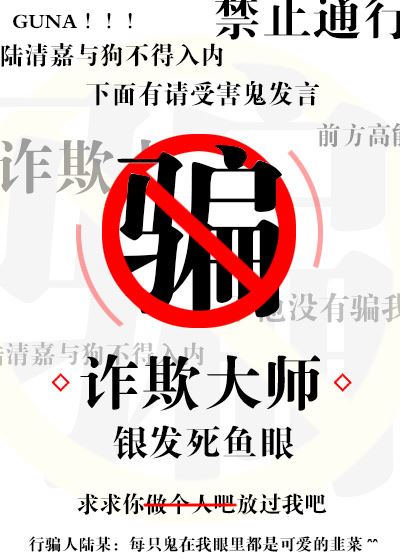
... Read More
Let me walk through how this chapter unfolds because the author is a monster with their pacing. Beat one: We open with Director An having a panic attack over a wall shadow that looks like a ghost face. This is basically comedic horror — he's jumping at his own imagination, muttering about whether ghosts are jealous of his paycheck. It's light. It's almost farcical. You're thinking, okay, haunter gets hunted by his own guilt, cute. Beat two: Li Qiang arrives with Lili, the whole 'tiger mother' banter, the lewd cousin dynamics. Still comedy-adjacent. You're getting character moments, family tension, a hint that Lili is more than she appears. But here's the thing — Lili enters the building and comes back out almost immediately with a bulging bag, and that's when the floor drops. She says 'Someone wants to see you. They spent a lot of money.' And suddenly you realize the comedy was the calm before something much worse. Beat three: The mirror buildings. The windows lighting up. The five figures in white pajamas. The shift from 'oh no we're scared' to 'we are literally surrounded by the consequences of our actions and there is no exit' happens so fast your stomach drops. And then — and THEN — they start PROVOKING the ghosts. 'If you have the ability, come and catch my grandpa!' The desperation-to-arrogance pipeline is real, and watching these two men refuse to accept their mortality even while standing inside a living nightmare? That's not poor pacing. That's devastating character work disguised as a horror set piece.
... Read More
Okay, I need to talk about this weird dynamic between Lu Qingjia and the fat guy because it's honestly more uncomfortable than any romance subplot I've read in a ghost novel. The fat guy is literally being scammed for money tied to his LIFE. We're talking soul currency here, which apparently gets you a garden villa that lasts only a year in the underworld. That's desperate. And yet—he follows Lu Qingjia around like a lost puppy, even hiding behind him when the paper figure salesgirl smiles at them. This isn't friendship. This is trauma bonding with a guy who just admitted he's played this game before. > "Don't worry, this game is indeed simple." / "That family only knows some petty tricks and scams, with no technical content at all. Just play to their greed, and we can turn the tables on them without needing to set a trap." Read that again. He's boasting about manipulating people while the fat guy watches with "despair." The fat guy literally says he'd rather be a teacher because at least no one's trying to scam his life. And yet here he is, still clinging to Lu Qingjia for protection from exactly that kind of person. There's also this weird moment where Lu Qingjia pats the fat guy's shoulder and smiles, making him shiver. That's not comforting. That's predator energy disguised as friendliness. And the fat guy just... accepts it? Meanwhile, when they find that stack of money on the ground, the middle-aged guy tries to split it with them, but something feels off. The fat guy immediately recognizes it—"he wasn't someone who had been greedy for small gains since childhood. If he were to take advantage of someone, it would only be because he enjoyed seeing the expressions of those who were taken advantage of, like being cut with a knife." Oof. That line hit me hard. It means the fat guy KNOWS manipulation when he sees it, which makes his entire relationship with Lu Qingjia even more tragic. He's trapped between two predators, and he can't tell which one will actually save him. I want to know what happens when this guy finally realizes he's been walking with a monster this whole time.
... Read More
There's something deeply symbolic about the entire infiltration sequence. Lu Qingjia uses the currency of the underworld—money—to manipulate a worker who has principles, then punches him when principles aren't useful. It's a commentary on how value systems collide in this liminal space between life and death. The massage parlor itself is a fascinating setting: a place of relaxation and pleasure that's also a surveillance state, a workplace where ghosts serve the living's desires and then some. The fire Lu Qingjia starts is both practical (create chaos for escape) and symbolic—burning down the structures that confine and exploit. Cleaning fluid spilled on the floor, curtains designed to create 'ambiguous atmosphere' that are now weapons of mass confusion. Everything the parlor built for entertainment becomes the tool of its destruction. And the soul-binding baton Lu Qingjia pulls out at the end—this modern version of an ancient tool, equipped for every ghost messenger—represents the institutional power that controls spirits. Meanwhile the fat man's sealed bedroom and rotting ghost lady speak to a different kind of entrapment: not institutional but personal, karmic, inescapable. Two different prisoners, two different kinds of chains. The house with the countdown timer is perhaps the most haunting symbol of all—temporary luxury in a permanent underworld, everything marked with an expiration date.
... Read More
Okay so can we talk about the Doctor for a sec because honestly he might be my favorite person in this whole cast? Like, he wakes up from being tempted by power and his immediate reaction is basically 'nope, I'm a decent person, what decent person lets a bug live in their body?!' And he points at a corpse while saying it. The man has priorities. But here's the thing that actually made me laugh out loud — when they go to collect the doctors, and they barge into this villa where Lu Qingjia has tied up this woman in a silk nightgown, and her husband is bound nearby watching in horror, and she's begging 'please spare me, take the gold bars' — and the narration goes 'the three were speechless… damn, this scene felt like the beginning of some stimulating genre of adult film.' NO. The fact that Lu Qingjia is actually handsome enough to throw off the whole robbery vibe is both hilarious and kind of tragic for everyone involved. What I love is how each person's role in the team is so clearly defined. Lu Qingjia is the planner, Yang Qian is the muscle, the Doctor is… well, the guy who buys useful props with his points because he's the only one thinking ahead. Nurse Xiao Ting can't fight yet so she pairs with the Doctor. Everyone knows their place and nobody's putting on airs about it. It's a found-family-of-monsters situation and I'm here for it.
... Read More
This is such a well-structured chapter and I want to break down why it works so well. It opens with the aftermath of a encounter — the corpse in the well, the decision about karmic rewards. Very contained, very quiet. Then it pivots to the team splitting up, the logistical planning, the van rental, the break-ins. This section moves quickly but never feels rushed because each beat is clear: find the doctors, extract them, bring them to the villa. There's a satisfying procedural rhythm to it. Then comes the villa scene — and this is where the pacing does something clever. It slows down almost comedically. The bound wife, the horrified husband, the plea for gold bars, the recognition that Lu Qingjia is unfairly handsome. It's a breather, but a funny one. The author lets us exhale before launching into the main event. The broadcast itself is the climax, and it's paced like a real livestream — warnings, setup, the reveal, the data, the twist. The acceleration of the grotesque footage 'so although it was grotesque, it was still somewhat acceptable' shows the author understanding that too much horror paralyses the reader. It's brutal but digestible. And then — cut to black mid-sentence. Classic. Absolutely classic.
... Read More
'What's the use of stretching your claws from the window? I'm talking about you! Didn't you get your wife and kids taken by that pretty boy? Yo—' The chapter ends MID-SENTENCE. I need that to matter. But before we get there, let me just appreciate the voice work in this passage because the dialogue is WILDLY distinct across every character. Li Qiang has this braying, reckless energy — he talks like a guy who uses humor as armor and doesn't realize the armor stopped working three scenes ago. His lines are performative even when he's terrified. 'Hahaha, if you have the ability, come and catch my grandpa!' — that's not courage, that's panic wearing a clown nose. Director An, meanwhile, shifts from superstitious muttering to cold calculation to blustering bravado so fast you'd think he had three different people writing his lines. And that's kind of the point. He's not a coherent character here — he's a collection of survival instincts firing in random order. Lili is the real masterclass. She enters, delivers her business, drops exactly three lines of dialogue, and leaves. But every line has a different temperature. The flirtatious glance at Lu Qingjia. The cold 'I said, I'm leaving' to Li Qiang. The dismissive 'Who do you think you are, interrogating me?' to An. Three women in one entrance. The man who hired her — Lu Qingjia — says maybe two sentences total and each one is perfectly calibrated. He doesn't need to say much because the black bag does the talking.
... Read More
Can we talk about the gambler ghost for a second? Because I did NOT expect to fall for a corpse. When his wife pulls their son away and says 'once we leave the apartment, we won't have to see you again,' and then lists all the vices the underworld allows while calling him a burden—I was wrecked. This tiny family, trapped together in death, still performing this exhausting domestic routine of resentment and reluctant love. And the kid calling Lu Qingjia 'dad'? That hit so hard. But then the gambler immediately tries to bond by promising toy cars, and the wife shuts him down so efficiently it's almost funny. The way they interact reveals everything—generations of failed loyalty, addiction as a coping mechanism, love expressed through annoyance. Lu Qingjia leaving them soul currency and abilities is his version of kindness, but even he can't quite match the raw, dysfunctional authenticity of that ghostly family. Meanwhile, Director An's relationship with his uncle's talisman becomes this pathetic last stand—clinging to a ghost of a ghost for comfort while Lu Qingjia watches his psychological defenses crumble in real time. The power dynamics shift so beautifully. Who's the real monster? Who's the real victim? Everyone's just trying to survive their own narratives.
... Read More
Okay so this whole setup is actually genius when you think about it. Lu Qingjia drops this bombshell that the director assigned everyone to rooms tied to specific deaths, and then hands them the script and every single character role is basically designed to trigger the vengeful spirits. The gambler character in the gambler-suicide room, the drug addict in the overdose room—it's not coincidence, it's a trap. The director is intentionally setting people up to die, or worse, to create enough chaos that the dungeon resets. And Lu Qingjia figured this out by literally just asking the restaurant owner over dinner. That man is terrifyingly competent. He walks into a haunted girl dorm at midnight, charms five murder victims, learns the unsolved case details, cross-references them with the script, and puts the pieces together in one conversation. The plot twist here isn't just the reveal—it's that the entire crew is walking into a meat grinder and the only person who seems to have noticed is the producer. What happens next if the director finds out Lu Qingjia knows? That's the question keeping me up at night.
... Read More
Let's talk about what these guys are actually risking here. We've got black threads that can strangle players despite their enhanced physiques. We've got a hospital full of secrets - extraction points, VVIP patients, locked-down research labs at night. And now this Ji Yu character who seems to hold real power but might have his own agenda. The stakes feel genuinely high because the author keeps raising the difficulty ceiling. Remember when Yang Qian worried this might be a low-level area? Yeah, that's exactly the wrong assumption to make. In horror games, that confidence usually comes right before everything goes wrong. What I love is how the conflict operates on multiple levels simultaneously. There's the immediate physical threat - those threads could kill them if they'd been slower. Then there's the mystery layer - what IS this hospital actually doing? What's in that well? Why are rich clients getting procedures that seem to have horrifying side effects? And then there's the social/political conflict with Ji Yu entering the scene. Lu Qingjia's internal calculation here is fascinating. He knows this hospital has only "revealed the tip of the iceberg." He knows they're outmatched technically - no one on their team has the skills to breach those anti-intrusion systems. So they're forced into patience, waiting for daytime openings, working with limited information. That helplessness is what makes the stakes real - these players can't just power through everything. And Ji Yu? He's this wild card who seems to be both protector and obstacle. Banning Lu Qingjia from services might actually be keeping him safe, or it might be marking him for something worse. Either way, the tension is delicious.
... Read More
Okay I need to talk about this plot mechanism because honestly it's genius. So Lu Qingjia enters these lucid dreams by carrying counterfeit money, and the underworld isn't some mystical ethereal plane—it's basically a mirror of our modern world with skyscrapers and neon lights and taxi drivers. The rule about what you can bring in versus what you can take out? That's not just flavor text, that's a CORE PLOT CONSTRAINT. Items from reality can't go in, but offerings to the underworld can come back. This means the economy of this story literally runs on paper money and cigarettes, and every transaction between the two worlds has physical rules. What blew my mind though is the ex reveal—three years hiding, the fat man references "when he came to my house to catch you," and Lu Qingjia just shudders and says don't ask. Three years is a long time to be running, which means whoever this ex is, the threat is REAL and PERSISTENT. And then at the end, bam—hit and run on a ghost, a brick to the head, and now they're discussing burying a body in the underworld. The plot went from exploring a dream world to straight-up murder-adjacent territory in like two paragraphs. The pacing here is insane.

Leave a comment

You must be logged in to leave comments. or
