Master Swindler - Reviews

Master Swindler
+Add to Custom List
Sort
Add review
... Read More
This chapter is obsessed with the word "forgive" and every time it appears it means something different. Zhong Liyu says he forgave Jiajia — but was it forgiveness or surrender dressed up as magnanimity? Ms. An talks about her husband kneeling and begging for forgiveness — but is that reconciliation or submission? And then she tells her son to go fight instead of seek peace — but is that wisdom or just passing down the same cycle of violence? The photos are the central symbol and I can't stop thinking about them. They represent everything Jiajia is to these people — the object of obsession, the subject of discussion, the thing worth throwing off a balcony. Ms. An discards them physically while simultaneously elevating Jiajia verbally. That contradiction IS the theme. You can dismiss someone's image while respecting their power. And Father Zhong kneeling after having his leg broken — that's the oldest symbol in the book. The powerful man who becomes powerless through love. The strong man who proves his strength BY submitting. It's almost religious in its imagery and the author keeps circling back to it without ever naming it. The balcony itself is a liminal space — between inside and outside, between the family home and the world where Jiajia actually lives. Ms. An stands above it all, commanding, while Zhong Liyu is caught between her words and his own heart. He has to choose which world to walk into. And honestly? I think he already knows, he just hasn't admitted it yet.
... Read More
'A few drops of blood splattered on Lu Qingjia's face, making him look eerily dangerous, like a blood-red flower under the moonlight.' I NEED to talk about this imagery because it stays with me. The way the narrator frames Lu Qingjia after the kill—isn't horror, isn't repulsion, but something almost aesthetic. Like the story itself is seduced by him even as it fears him. And Doctor's reaction! 'He already had a weapon ready for retaliation but dared not act rashly'—this is the first time we see genuine fear directed AT Lu Qingjia from an ally. Before this, the group dynamic was almost cozy. Now it's fractured. Yang Qian called him impressive earlier, the nurse thought he was 'sweet' about the restaurant thing. All of that performative camaraderie just evaporated. What's fascinating is Lu Qingjia stepping on the cleaner's face and telling her to 'maintain some dignity.' He's enforcing a code even while breaking it. He wants her to die gracefully. There's a twisted form of respect in that, or maybe he just can't tolerate ugliness in death the same way he can't tolerate it in life. Either way, the group will never look at him the same way again.
... Read More
Let me just say this: Zhong Liyu pressing that handkerchief to his nose and inhaling deeply is one of the most commitment-I-care moments I've ever witnessed in fiction. And Game's reaction? Chef's kiss. What struck me most is the contrast between Zhong Liyu's extreme devotion and the rest of the world's horrified confusion. Two or three years he's held onto this feeling, folding the handkerchief carefully, putting it in his pocket like it's some kind of sacred relic. Game calls him pathetic—a person with no pride—and honestly? Maybe Game's right, but also... isn't there something genuinely moving about this level of emotional fixation? Even if it's delivered through the most unhinged method possible. But the relationship I can't stop thinking about is Lu Qingjia and Doctor in that basement. The power dynamic shift when Lu Qingjia says 'a lion in a cage is as pitiful as a rabbit, but that doesn't mean the gap between us doesn't exist'—that is COLD. That is the kind of line that makes you sit up straight. Doctor is sweating, trying to maintain dignity against someone who could literally intimidate him into submission, and the fact that Yang Qian immediately sides with Lu Qingjia just adds another layer of complication. Doctor's suspicion that Lu Qingjia might collude with the hospital because 'that man clearly coveted his beauty'—it's interesting because it shows how much Doctor projects his own fears onto the situation. Meanwhile Lu Qingjia remains calculating, detached, already three steps ahead even while imprisoned.
... Read More
I absolutely lost it at the Zhong Liyu and the game dynamic. The game is out here literally spitting blood trying to get through to him and it's just... not working. Every reasonable attempt the game makes gets met with Zhong Liyu's cheerful delusion. The line where the game asks 'Are you okay? What made you go from being angry about being betrayed to feeling proud?' is peak exasperation. And then Zhong Liyu's response — 'I didn't get scammed out of my pants; I took them off myself' — I actually laughed out loud. This guy is unhinged in the best way possible. Meanwhile Lu Qingjia is just sitting there happily planning wedding flowers with zero awareness that the entire game is losing its mind over him. The contrast between these two is everything. Lu Qingjia is all quiet competence, strategic thinking, taking out workers and infiltrating restricted zones while the game watches in awe. Zhong Liyu is over here dreaming about twin pets and wedding venues. And yet somehow both of them are 'the one the game is most optimistic about.' I need the game to survive this batch.
... Read More
That wall mural. I've been turning it over in my head since I finished. It starts with An's uncle—a psychological defense line, a talisman made flesh, the last anchor to worldly comfort. Then after Lu Qingjia's victory, it transforms into a group of grotesque figures. 'The grotesque struggle before death, mixed with fear and a hint of absurdity, was enough to make one chuckle.' This is the thesis statement of the entire arc. Art doesn't sanitize suffering; it reframes it. The wall records what was done, then what was remembered, then what was laughed at. Each stage is true. Each stage is incomplete. The comedy isn't in spite of the tragedy—it's forged from it. And those souls departing for the underworld with new clothes and abilities, leaving behind a building full of laughter? There's this quiet theology here about what counts as redemption. Not absolution, but acknowledgment. Not justice, but transformation. The film itself becomes a tombstone and a carnival ride simultaneously. I need to sit with that for a while.
... Read More
Let me just say this: the conflict escalation in these chapters is absolutely ruthless. We've got three major conflicts happening simultaneously and they're all feeding into each other. First, the director vs. the thief player. This isn't just about money—it's about power and面子 (face). The thief threatens to expose the director's movie crew as perverted scammers by bringing brothers with whips and gags to disrupt filming. The director's response is to tremble and point而无法 speak. Power has completely shifted. Then there's Director An vs. Lu Qingjia, which is this weird passive-aggressive battle disguised as cooperation. Lu Qingjia pretends to help by covering the props cost, but he's clearly consolidating control. The behind-the-scenes filming excuse is genius manipulation—he frames it as giving the director screen time while actually documenting his failures for future leverage. And then the crew vs. Director An after the fire incident. This is the most devastating one. The stakes here aren't about money or fame—they're about survival and dignity. The crew's willingness to abandon him at the hospital shows that their loyalty was always conditional. And when they mock his manhood afterward, they're crossing from professional conflict into personal territory. What's brilliant is how the author raises the stakes without any single character seeming to notice. Everyone is focused on surface-level interactions while underneath, everything is collapsing. The tension doesn't come from dramatic confrontations—it comes from the quiet moments where people exchange glances and make excuses and smile too widely. That's when you know something is seriously wrong.
... Read More
The scene transitions in this chapter are masterful. We go from an atmospheric alleyway setup—trench coats, whispered deals, camera crews—to an entire interrogation room scene that reads like a standalone comedy sketch. The worldbuilding here is subtle but effective; we get a sense of this underground film production scene, the BDSM community supply chain, and the criminal underworld all existing in the same reality without the author ever stopping to explain any of it. It all just feels lived-in. The police station scene specifically is packed with visual humor. You have grown thugs hurling accusations at each other, police officers "pretending to drink water" to hide their laughter, and Director An going from confident filmmaker to pale and panicked in about thirty seconds. The detail about the thief player "awkwardly scratching his head" when casually destroying his director's reputation is chef's kiss. And the image of the police asking increasingly uncomfortable questions about whether the crew has female members, whether they're adults, whether they participated voluntarily—while all the suspects are just sitting there in various states of denial—is genuinely hilarious. What I love most is how the author builds this world through dialogue and action rather than exposition. We understand the hierarchy of this production crew, the supply chains for adult props, and the social dynamics of small-time criminals all through what people say to each other. The setting shifts from gritty alley to sterile police station without losing any energy, and somehow the interrogation room becomes even funnier than the original sting operation.
... Read More
Let me just say this: the author knows EXACTLY how to control tension, and it's almost painful to watch them do it. Chapter starts with chaos—Director An已经被 beaten up, the crew is arguing, the lewd player is defending his choices with this unhinged logic of 'I followed your orders!' And then what does the author do? They DON'T resolve it. They let it build. The actress with the 'snake-like waist' telling everyone to just let it go. The other players getting defensive. Director An swallowing heart-saving pills like they're candy. The pacing here is basically: more conflict, more absurdity, nobody wins, everyone gets more screwed. Then—BAM—the scene shifts to Lu Qingjia approving the player. The energy changes completely. We go from chaotic noise to quiet calculation. Lu Qingjia's voice is calm, measured, and suddenly EVERYTHING changes. He's not part of the chaos; he's the architect of it. That transition is masterful. And then the assistant handing him money? The reveal that the 'failed' footage is actually valuable? The next morning where Lu Qingjia takes control of the schedule? This is the pacing of a thriller that keeps pulling the rug out from under you. Just when you think you understand who's in charge, the author reveals another layer. The chapter structure itself mirrors the story—a downward spiral where each scene reveals something worse than the last. Director An thinks he's the director, but he's broke and dependent. The lewd player thinks he's clever, but he's been corrupted. Lu Qingjia seems like a participant, but he's actually running the whole operation. And then there's the ADDICT player subplot dropped in at the end like a bomb: 'this involved illegal goods, which was completely different from petty theft or flirting with women outside; getting caught would mean the end.' The cliffhanger isn't just 'what happens next'—it's 'oh god, what have they already gotten themselves into?'
... Read More
The stakes in this scene escalated from 'haunted apartment spooky' to 'everyone is going to die on purpose' faster than I could blink. Let me break down what we now know: the director assigned each crew member to a room where someone died violently, gave them character roles designed to trigger the vengeful spirits attached to those deaths, and expects either everyone to get hunted to death or enough chaos to reset the dungeon. Meanwhile, the five ghost roommates—despite being kind-hearted—can't stop their resentment from affecting anyone who lives there. Suicides, overdoses, bad luck. The building itself is a weapon, the script is a trap, and the director is the one holding both. But here's what makes the conflict genuinely tense: Lu Qingjia is the only one who sees the whole board. Everyone else is walking around thinking they're making a movie, and he's the only person who understands they're actually playing a game where the house always wins unless you expose the cheat. The question isn't whether the director is evil—that's clear. The question is whether Lu Qingjia can outmaneuver him before the script forces his actors into roles that provoke supernatural murder. That's a ticking clock, and it's making this way more exciting than a typical dungeon crawl.
... Read More
"As I suspected, you are all kind-hearted girls. Even as vengeful spirits, you haven't harmed the innocent." This line from Lu Qingjia hit me harder than I expected. These five women—murder victims, vengeful spirits, literally the stuff of horror movie nightmares—and they still drew the line at killing random people who moved in. They could have fed. They chose not to. The short-haired girl who started as the most aggressive, the first to sneer at Lu Qingjia, ends up being the one who tries to protect the crew by warning them to leave. That's some serious loyalty and protectiveness coming from people who were failed by the justice system. And Lu Qingjia? He sees them. Not as monsters, not as obstacles, but as people who made a choice. He compliments their wounds with genuine artistry—"like rose juice spilled near your collarbone"—and somehow it doesn't feel creepy because there's zero ulterior motive behind it. He's not trying to use them; he's genuinely recognizing their beauty and their goodness. The dynamic between them is this weird tender thing that shouldn't work but does. He respects them, they respect him back, and suddenly you have an alliance forming between the living producer and the dead roommates that feels completely earned.
... Read More
Okay, the stakes in this passage just went through the roof and I need to process what I just read. Let's start with what's literally on the table: Lu Qingjia has stolen a soul-binding rope from a ghostly police officer. The fat man (Zhou Hang) is absolutely losing his mind about this. "You dare to provoke that thing?" he says. And you know what? He's right to be terrified. In virtually any mythological framework, assaulting a law enforcement figure—ghost or otherwise—is a massive escalation. It's not just dangerous; it's principled opposition. But here's what makes the conflict so much more interesting than a simple "dangerous thing happened": Lu Qingjia anticipated this. He explains, with the calm of someone who has thoroughly studied the terrain, that he confirmed there are no hidden dangers before acting. The underworld they know—the one with ghost gates and reincarnation queues and soul coins—doesn't apply to them. Their souls will meet with closest relatives or guardians, not file reports. Lu Qingjia literally designed his risk around the structural differences between worlds. That's the kind of protagonist you root for. Not the one who charges in blindly, but the one who charges in after studying the map more carefully than anyone else. Now let's talk about what's at stake for Zhou Hang, because it's deeply personal. He's being asked to transfer his spot in a game that can kill people. His friend is asking him to walk away from safety and become the target. The stakes aren't abstract—they're about friendship, trust, and who gets to bear the burden. "This time I'm stepping up, and it's not just to help you," Lu Qingjia says. Then: "Unlike you, I'm very interested in this game." What does that mean? What has Lu Qingjia been searching for for years? The text doesn't say explicitly, but the emotional weight is clear—this isn't random curiosity. Something personal drove him to this. And now he's taking the plunge into the very thing that has haunted his life's search. The conflict between these two characters is also fascinating. Zhou Hang is the grounding force—the one who feels fear and says so, who sees danger where Lu Qingjia sees opportunity. In many stories, this character would be written as merely cautious or overly worried. But here, Zhou Hang is RIGHT. The game CAN kill people. His fear is rational. The drama comes from Lu Qingjia being rational TOO, which makes their dynamic more nuanced than a simple "brave hero, scared sidekick" setup. And then there's the meta-conflict: Lu Qingjia vs. the Horror Game itself. The entity that rules over all players, that demands reverence and fear, gets talked back to by a rookie player who responds to its congratulations with a sarcastic insult about NTR. The stakes here aren't just survival—they're about dignity, autonomy, and refusing to be cowed by absolute power. The author's note from the Game's perspective—"I want to get him, I want to get this bastard!!!!"—is genuinely funny, but it also signals something important: the antagonist is now emotionally invested in destroying the protagonist. This isn't a faceless system anymore. It's a character with personality, and it's angry. I'm genuinely invested in seeing what happens next. The tension is sharp, the stakes are personal, and the conflict operates on at least three levels simultaneously. That's really good craft.
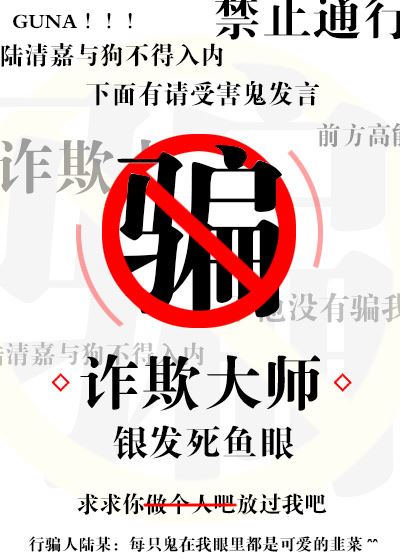
... Read More
The author doesn't just build a world; they furnish it. That shop scene is a tour de force of atmospheric storytelling. Start with the basics: daily necessities, groceries, stationery. Then sneak in the incense, paper money, candles, and paper figures. The detail of the paper car in the corner requires a stool to reach—why? Because it's meant for burning, not using. That single object tells you everything about the economy of this dream world. Then there's the old woman, ‘acting as if she hadn't eaten in eight hundred years,' greedily consuming goods. It's grotesque and funny, and it grounds the supernatural in human base desires. The shop owner dozing behind the glass counter feels like a mundane anchor, but his quick reaction when Jiajia disappears shows he's no fool. He knows the rules. And the cigarettes! The counterfeit box with ‘Mingfu Tobacco Group Limited Liability Company' and the slogan ‘Smoking is harmless, better than being a god'—this isn't just worldbuilding; it's satire. It reflects a reality where the supernatural has corporate branding, where survival instructions are disguised as health warnings. Every detail serves the atmosphere: the open door, the glass counter, the paper figure blinking at Jiajia. It's cinematic without being flashy. You can smell the incense, hear the rustle of paper money, feel the unease of a place where scammers and dreamers coexist. The world feels alive because it's observed through Jiajia's keen eye—he notices what matters, and the author trusts us to notice too. This isn't a backdrop; it's a character.

Leave a comment

You must be logged in to leave comments. or
