Marrying the Coal Boss in 90s - Reviews

Marrying the Coal Boss in 90s
+Add to Custom List
Sort
Add review
... Read More
'It was as if the heavens had welded shut the window of education for her.' This line hit me harder than I expected. Cong Qi saying this with such dramatic resignation—is this really just about one girl not making it to university, or is it something bigger? The entire novel seems to be quietly building around this theme of education as destiny, as the great divider between lives. Look at her parents. Xu Huiying and Cong Zhiyuan were sent to the countryside for reasons unspecified, both families unable or unwilling to help them. What lifted them out? Education. They studied together during their youth, supported each other through exam prep, and got into the same university nearby. Their entire trajectory was changed by a piece of paper. Meanwhile, Cong Qi tried SO hard—cut her beautiful hair short to study more, woke up before the rooster, slept after the dog—and still couldn't cross that bridge. The system that saved her parents is the same system that rejected their daughter. But here's what fascinates me: the novel never condemns Cong Qi for this. Her parents don't treat her like a failure. They laugh about it. They lower their expectations and their quality of life actually IMPROVES. The story seems to be saying something radical for this genre—that worth isn't measured by educational achievement, even in a society where it literally determines everything. And Wu Yang? The 'triad member' type who might not even care about books at all—here he is, concerned about Qu Miaomiao, swallowing his pride, showing emotional intelligence that Cong Qi's academic brilliance supposedly should've given her. The novel is quietly dismantling the idea that education equals wisdom.
... Read More
I need to process what just happened because my heart rate did not stay the same throughout this chapter. So Yuan He, poor desperate simper, works himself up for what he thinks is going to be his big romantic moment. He's sweating, he's clutching this bracelet like it's a lifeline, he's drinking without even realizing it, and all the while the other classmates are living their lives—Guo Hu kneels, Jiang Ping says yes, and suddenly the entire narrative pivots away from Yuan He's fantasy. He's stranded in his own embarrassment and what does he do? He doubles down on being wrong in the worst way possible, reducing Cong Qi's boundaries to a question about his wallet and his jawline. And Cong Qi—holy—she doesn't just gently decline. She goes full monologue mode and absolutely dismantles his entire framework for understanding relationships. That was both hilarious and incredibly satisfying to read. But here's the thing that wrecked me: the voice. Some tall broad-shouldered stranger is leaning against a utility pole, holding a cigarette, and he chuckles at the whole exchange. Cong Qi hears that voice and immediately her brain short-circuits. I swear to god, the author wrote 'her ears were pregnant with it' and I literally lost it. She's standing there flustered while Yuan He is still apologizing like a broken record, and she's somewhere else entirely in her head, replaying that voice, blushing, toes digging into the ground like she's trying to disappear. Then later, alone in her apartment, she's staring at the wall going 'that voice sounds really, really nice' while completely missing the fact that this guy was probably right outside her door watching the whole thing. That's not just romantic tension—that's cinematic. The author knows exactly what they're doing and I am here for it.
... Read More
I need to talk about the single dog concept because it's doing way more work than a simple joke. In Chinese internet culture, being a "single dog" isn't just about relationship status—it's an identity. It's a label that people wear like armor, half-self-deprecating, half-rebellious. Cong Qi invoking it here is fascinating because she's using it as a ready-made explanation for something that doesn't fit her worldview. Romance is happening? Must be my single dog aura. It's almost superstition-level thinking, like she's externalizing the chaos around her into something she can name and therefore control. The word "halo" is also interesting. Halos are usually associated with saints or divine beings. For Cong Qi to imagine her loneliness as a blinding, almost supernatural force—that's a weirdly poetic image disguised as a joke. There's a deeper theme brewing here about how isolating it feels to be perpetually the third wheel, to the point where your aloneness becomes its own cosmic energy that affects everyone around you. The author might just be being funny, but I can't unsee the metaphor now. Once you start thinking about Cong Qi's "single dog aura" as a literal force in this world, the whole genre shifts. Is this a romance? A comedy? Or something weirder?
... Read More
The pacing here is frantic in the best way possible. We go from domestic calm to emergency to hospital to back to domestic analysis in what feels like ten minutes of reading time but covers an enormous emotional distance. The author doesn't waste a single beat — every line is either advancing the plot, revealing character, or building atmosphere, usually all three at once. The transition from the hospital back to the apartment is especially smooth; Cong Qi coming home soaked and changing clothes while her mom is preparing for work creates this wonderful mundane-meets-catastrophe rhythm. But what really impresses me is how the chapter refuses to give us resolution. We learn Miaomiao isn't in immediate danger, yes, but then we learn she has a head wound that predates the drowning, we learn Yu Lekang disappeared, we learn there's another rescuer whose identity is completely unknown, and we learn that Aunt Geng is holding onto information about what actually happened. The chapter ends not with a cliffhanger but with a cluster of unresolved questions that make you immediately want to turn the page. It's the structural equivalent of opening a door and seeing another door behind it.
... Read More
The dialogue in this chapter is genuinely one of the most fun things I've read in a long time. Cong Qi's voice is sharp, direct, and unapologetic, and when she delivers that tirade to Yuan He, it reads like a stand-up routine written by someone who has personally dealt with exactly this type of person their entire life. The back-and-forth between them—"I'm not like that—" "Whoa, so you mean—" "—If one person can't support me, I'll just date several more so all of you together can perfectly solve the problem." This is comedy gold. The author is using Cong Qi's deadpan delivery to puncture Yuan He's fragile ego, and every line lands with surgical precision. Yuan He's voice, by contrast, is painfully earnest and deeply flawed, which makes him funny in an uncomfortable way. His confession attempt dies before it even begins because the moment is stolen, but his follow-up question about whether he's not handsome or rich enough reveals the real problem: he's so used to measuring worth in material terms that he can't imagine anyone rejecting him for any other reason. The other characters also have distinct voices—Jiang Ping goes along with everything, Guo Hu is the confident one who acts before thinking, and the mysterious stranger is barely spoken but his single chuckle carries the entire weight of the chapter's emotional pivot. And can we appreciate the narrative voice itself? It's warm but never over-explains. It lets scenes breathe. It uses physical details—the bracelet, the sweat, the cigarette, the utility pole—to convey emotion without heavy internal monologue. The author clearly understands that dialogue isn't just about what characters say but about the space between their words.
... Read More
Here's the thing that keeps me up at night: Qu Miaomiao is the protagonist, the POV character, the person whose life we're following — and she is actively planning to take her best friend's boyfriend. But it's not straightforward villainy. She frames it as love. She frames it as destiny. She genuinely believes she's fixing a mistake from a previous life. That's what makes the stakes so high — because if you're rooting for Miaomiao (and somehow you are, despite everything), then every step she takes toward Lu Cheng is both a victory and a moral compromise. She's winning, but she's also becoming someone she might not recognize. The external conflict is obvious — will she succeed with Lu Cheng? Will Cong Qi find out? Will Yu Lekang reappear? But the internal conflict is where the real electricity is. Miaomiao knows she shouldn't hate Cong Qi. She knows Cong Qi did nothing wrong. She knows she owes her for the stable life she took. And yet. The emotions don't follow logic. That gap between what she knows and what she feels is where the story lives. And the stakes aren't just romantic. They're about identity. If Miaomiao succeeds, who does she become? If she fails, what happens to the woman who already survived drowning once?
... Read More
Okay so let me just say this right off the bat — the opening chapter dropped me into a situation that already feels like a powder keg and I am HERE for it. Miaomiao falls into the water, has a bleeding forehead wound she shouldn't have if it was just a drowning incident, and the one person she was with? Gone. Just vanished. And Cong Qi — sweet, slightly chaotic Cong Qi — pulls her out but then... doesn't tell her own mom the full truth? Like, the mom literally warns her about Aunt Geng and the whole dynamic and Cong Qi is just going along with it? The plot is already twisting in ways that make me want to throw the book across the room. There's this moment where Cong Qi says 'I didn't bring any money with me today' and you just know that's not an accident of writing — that's foreshadowing. Like, of course she didn't have money. Of course she showed up empty-handed. The story is setting up some kind of debt or guilt dynamic that's gonna come back to bite someone. And then there's the other boy who jumped in too? Who is that? Why did the author mention him in exactly three sentences and then never bring him up again? That's a Chekhov's gun going off and I need to know who fired it.
... Read More
Okay so let's talk about this twist because it completely recontextualizes everything that came before it. Up until now I thought we were just following some generic slow-burn romance between Miaomiao and Wu Yang, right? And yeah, there was the weird family tension with Aunt Geng, the hospital scene, the whole 'is he actually a player or is he soft for her' thing. But then BAM — we get dropped into Miaomiao's POV and learn she's not just some ordinary girl who got hit by a car. She's lived a whole life. A future life. Where she outsmarted everyone, climbed the social ladder, thought she had it all figured out. And yet? In that future, Cong Qi ended up better off. Her best friend, the one she looked down on, the one whose choices she constantly judged, ended up with a prosperous marriage while Miaomiao was left with fading love, a rebellious son, empty savings, and a husband who drifted away. Do you know how much emotional weight is packed into that paragraph? It's not just 'plot twist.' It's a complete inversion of the power dynamic between these two friends. Miaomiao thought she was smarter, better positioned, destined for more — and history proved her wrong. And now here she is, back at twenty, with all those memories, watching Cong Qi oblivious to everything, still just a factory worker who doesn't even know who Lu Cheng is yet. The irony is brutal. She has this secret knowledge but no way to use it for her own gain because the whole setup is different now. The pharmaceutical factory betrayal hasn't happened yet — everyone thinks the foreign investment is legitimate, but we as readers know it's a trap. That dramatic irony is *chef's kiss*. I also need to mention the Wu Yang setup with Aunt Geng. On the surface it looks like a simple romantic subplot, but the author is clearly building something more. Aunt Geng going from cold to warm toward Wu Yang overnight feels too convenient, too orchestrated. Is she actually manipulating this? Or is something else going on that I haven't figured out yet? I genuinely cannot tell if I'm reading a romance or a scheme, and honestly that uncertainty is keeping me up at night.
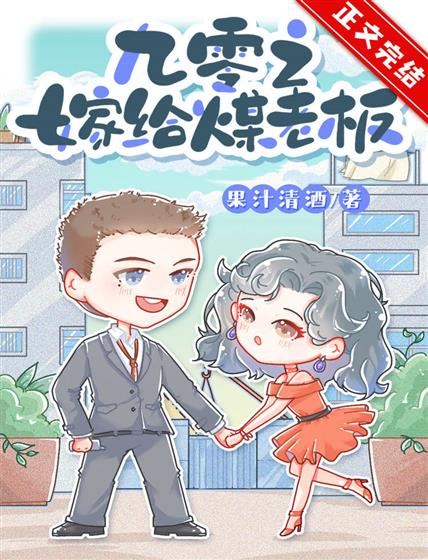
... Read More
On paper this chapter has zero dramatic stakes. A woman gets asked to go on a blind date. She's mildly interested but mostly excited about the restaurant. Her mom finds a photo. Her friend shows up with a potential romantic opportunity from New Year's. That's it. And yet—I was genuinely tense reading this. Why? Because the author has mastered the art of making everyday anxiety feel enormous. The conflict isn't life-or-death. It's the kind that keeps people awake at 2 AM anyway. What if she goes on this blind date and feels nothing? What if the voice belongs to someone completely out of her league? What if she says yes to Monday and then regrets it? These aren't trivial worries when you're the kind of person who writes three hundred words about a stranger's voice in a diary. But the real tension is layered. There's the surface conflict of Aunt Zhang's matchmaking versus Cong Qi's genuine nonchalance. There's the deeper conflict of Cong Qi's mouth saying "let's meet him and find out" while her heart is still somewhere else, thinking about a voice she can't place. And then there's the Qu Miaomiao thread—was that invitation always going to complicate things? Of course it was. The stakes are emotional, not physical, but the author makes you care because every character in this world seems to be running on genuine feelings. Nobody's pretending. Even the mom is just being a mom—annoyed, loving, practical, hopeful. That authenticity is what raises the stakes. When nothing is fake, everything matters more.
... Read More
I have to go back to Xu Huiying and Cong Zhiyuan for a second, because this couple deserves their own section. The novel drops this information almost casually: both of them were invisible in their own families, sent to the countryside with no one to turn to, and they somehow built a life together through sheer practicality and mutual support. They weren't the romantic type at the start. They didn't fancy each other or anything—they just needed someone who wouldn't abandon them, and they needed someone who would work as hard as they did. The fact that they chose to attend the same university even though it meant taking their child along, that they never considered divorce or separation, that they became exemplars for other educated youth couples—that's not dramatic, it's revolutionary in its quietness. What strikes me most is how perceptive they are. They sent letters only to their own families when they got accepted into university, knowing full well that theirs wasn't a family that would celebrate with them. They read the room. They understood human nature early because they had to survive it. And now they're raising a daughter who is the complete opposite of them in temperament—carefree, daredevil, somehow immune to the cynicism that shaped her parents. The moment where they exchange a knowing look when Cong Qi comes home sulky is worth analyzing. They don't need to discuss it. Twenty years of partnership has created this shorthand where a single glance communicates everything. That's the kind of relationship depth that most novels never achieve, and it's delivered in two sentences. These are people who chose each other when nobody else would choose them, and they've been choosing each other ever since.
... Read More
There's this one passage about the housing complex that I keep circling back to, and I think it's doing more work than any of the dialogue. "Everyone knows what dishes each household cooks, when someone scolds their child, or when a couple has an argument." That's it. That's the whole world right there. No grand descriptions, no elaborate setting passages — just the gossip infrastructure of a Chinese residential compound in the 1990s. It makes everything feel so lived-in. The fact that the entire Third Building of No. 4 Middle School's Housing Complex knew Miaomiao was dating Yu Lekang, that Aunt Wu and Aunt Huang are literal weapons of mass reputation destruction… this isn't background. This is pressure. Every move Miaomiao makes is watched, judged, reported. No wonder she's trying to hide Lu Cheng. No wonder she's desperate. And then there's the geography — Guangzhou mentioned as somewhere shady business happens, the contrast between Wenmiao West Street and Wangjiaguai Street like they're different worlds even though they're adjacent. The 1990s setting with its free love trend but also its rigid expectations around young women's romantic choices. You can feel the era pressing down on Miaomiao's shoulders. She wants to move on quickly, but the whole community is anchoring her to her past relationship with Yu Lekang as if she belongs there.
... Read More
I need to talk about something that really struck me in this batch. The chapter opens with this incredibly domestic scene—Cong Qi coming home, being sent on errands, bickering with her mom about doing chores—and then BAM, just a few paragraphs later she gets shoved from behind by Wu Yang. The tonal whiplash was actually perfect. It felt like the story was breathing, taking you in with warmth before sneaking up on you. But here's what got me thinking about the plot structure: Qu Miaomiao is mentioned like ten times but hasn't physically appeared yet. She's this ghost haunting every conversation. Wu Yang is asking about her. Cong Qi described her as being terrified of Wu Yang. Aunt Geng's strict supervision is brought up like it's some looming threat. The author is definitely planting seeds here. Whatever happened to Qu Miaomiao isn't just background drama—it's the kind of thing that's going to explode later, and I'm here for it. Also, the way the parents reacted to Cong Qi's bad mood—just exchanged a knowing look and didn't ask—this is such a smart storytelling move. It tells us everything about their parenting style without a single exposition dump. These are people who've been through hardship, who understand when not to pry. That single glance between them says more than paragraphs of dialogue could. The plot feels very grounded in everyday life while simultaneously building toward something bigger. That push from behind wasn't just random violence—it was Wu Yang acting on information he received about Qu Miaomiao. Two separate threads colliding. I'm genuinely curious where this is heading.

Leave a comment

You must be logged in to leave comments. or
