Summary

... Read More

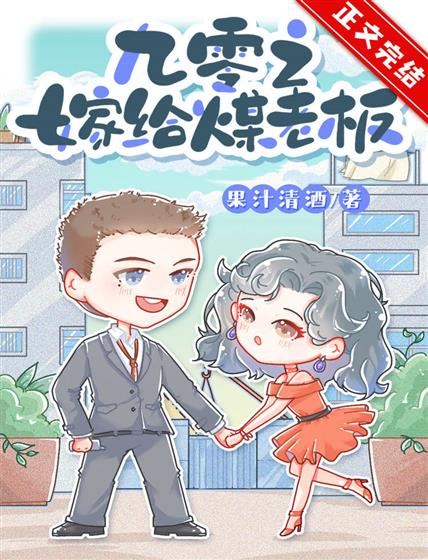
Qu Miaomiao and Cong Qi are lifelong friends living in the same teacher’s housing complex. Miaomiao, a college student, falls into a lake during a romantic encounter with her boyfriend Yu Lekang. Cong Qi, a factory worker, rescues her but is left confused when Miaomiao wakes up in the hospital with an unnaturally cold, possessive gaze, asking if she is dead and referring to Cong Qi by her formal name rather than her nickname. The incident strains their bond, as Miaomiao begins to live in university dorms and distances herself from Cong Qi.

Miaomiao’s behavior shifts dramatically. She introduces a new boyfriend, Lu Cheng, to Cong Qi with an anxious intensity that seems disproportionate. Cong Qi notices Miaomiao’s jealousy and protectiveness, suspecting her friend is afraid Cong Qi might steal Lu Cheng. However, the narrative perspective reveals that Miaomiao has mentally reincarnated, retaining memories of a future where Cong Qi marries Lu Cheng and lives a life of comfort, while Miaomiao struggles with a failing marriage and resentment. In her past life, Miaomiao felt inferior to Cong Qi’s natural beauty and carefree spirit, leading to a slow-burning envy that poisoned her later years.

The central conflict emerges from Miaomiao’s desire to rewrite this fate. Believing she can secure a better future with Lu Cheng by preventing Cong Qi from meeting him, Miaomiao actively intervenes in Cong Qi’s life. She creates artificial distance, monitors Cong Qi’s interactions, and manipulates social situations to keep Lu Cheng away from her best friend. Despite her efforts to appear supportive, Miaomiao’s internal narrative is filled with calculation and a sense of entitlement to a life she believes Cong Qi unjustly received.

Cong Qi remains largely oblivious to the depth of Miaomiao’s psychological turmoil. She interprets her friend’s changes as a natural result of growing up and gaining independence. Her own life continues with casual ease; she focuses on her work at the pharmaceutical factory, her fashion hobbies, and her social circle. When Yuan He, a classmate with unrequited feelings for her, attempts to confess, Cong Qi rejects him with blunt humor, unaware that Lu Cheng observes this interaction from a distance. This chance encounter marks the beginning of Lu Cheng’s attention toward Cong Qi, which Miaomiao witnesses with growing alarm.

As the story progresses, Miaomiao tries to position herself as Lu Cheng’s ideal partner, leveraging her education and knowledge of future events to assist his career. She views Cong Qi as a rival who lacks the intellectual and strategic tools to hold Lu Cheng’s affection long-term. However, Cong Qi’s authenticity and lack of pretense create an unpredictable variable in Miaomiao’s plans. The narrative explores the tension between Miaomiao’s calculated manipulation and Cong Qi’s spontaneous, genuine nature, setting the stage for a rivalry that challenges the boundaries of friendship and destiny.

Meanwhile, the backdrop of early 1990s China provides a shifting socioeconomic landscape. Discussions among Cong Qi’s peers about state-owned factory layoffs and the emerging real estate market highlight the uncertainty of the era. While Miaomiao focuses on securing Lu Cheng’s success, Cong Qi navigates these changes with a pragmatic yet unburdened attitude. The contrast between Miaomiao’s heavy burden of foreknowledge and Cong Qi’s lightness of spirit forms the core dramatic irony of the story.

The turning point arrives when Miaomiao’s interference becomes more overt. She attempts to control Cong Qi’s romantic prospects, including arranging a blind date, while simultaneously trying to accelerate her own relationship with Lu Cheng. Cong Qi’s innocent acceptance of these arrangements frustrates Miaomiao, who expected resistance or guilt. Instead, Cong Qi’s unwavering positivity and lack of cynicism undermine Miaomiao’s assumptions about human nature and friendship.

The story moves toward a collision of these two worlds: one built on envy and control, the other on trust and spontaneity. Miaomiao’s attempt to seize a predetermined future is constantly threatened by Cong Qi’s ability to adapt and thrive in the present. The narrative suggests that Miaomiao’s knowledge of the future may not be as advantageous as she believes, as her psychological state distorts her perception of reality and her relationships.

Ultimately, the plot sets up a complex dynamic where the definitions of friendship, love, and success are questioned. Cong Qi’s beauty and charisma, once a source of Miaomiao’s insecurity, become central to the conflict as Lu Cheng’s interest in Cong Qi grows despite Miaomiao’s efforts. The story explores whether fate can be altered through manipulation or if individual character traits determine outcomes regardless of premeditation.

The resolution of this tension hinges on whether Miaomiao can accept her feelings of inadequacy or if her envy will drive her to increasingly destructive actions. Cong Qi’s journey remains one of self-discovery and social navigation, while Miaomiao’s path is one of redemption or ruin. The interplay between these two characters drives the narrative forward, challenging the reader’s understanding of loyalty, ambition, and the consequences of regret.

Latest Release
DateGroupRelease
2026-09-26knoxt c6
2026-09-26knoxt c5
2026-09-26knoxt c4
2026-09-26knoxt c3
2026-09-26knoxt c2
2026-09-26knoxt c1

Community Reviews

Rating(4 / 5.0, 49votes)
5 stars
17(35%)
4 stars
17(35%)
3 stars
13(27%)
2 stars
2(4%)
1 stars
0(0%)

Popular reviews

... Read More
The dynamic between Cong Qi and Qu Miaomiao absolutely broke my heart in this section. They've been friends for over a decade, living in the same building, bonding over homework assignments, and even though their social circles diverged — one went to university while the other worked in a factory — their friendship remained unshaken. But now? Now Miaomiao is looking at Cong Qi like she's some kind of stranger, maybe even a threat. That moment when Cong Qi reaches for her wrist and Miaomiao pulls back with a sudden pang of pain is just devastating. I think what makes their relationship so compelling is how the author shows us the contrast between who they were and who they're becoming. Cong Qi is described as cheerful and lively, the kind of person who can brighten up with a little sunlight. Qu Miaomiao is introverted and quiet, the classic "someone else's kid" type. These complementary personalities make their bond feel earned and genuine, which makes the current distance between them hurt even more. And then there's Geng Youqin, Miaomiao's mother. Ouch. The way she immediately assumes Cong Qi is at fault, saying things like "I told you not to go out today, but you followed Cong Qi everywhere, causing trouble for yourself" — this reveals so much about her character. She doesn't care about the truth; she cares about blaming someone. And her favoritism toward Qu Siyuan is crystal clear when Miaomiao confronts her about it. This mother-daughter relationship is toxic and it's clearly part of whatever is happening to Miaomiao now. The narrator even notes that Cong Qi found herself inexplicably irritated after leaving the hospital, unable to shake the feeling that something was wrong. That intuition? She's right. Something IS wrong, and I'm dying to know what it is.
... Read More
I need to talk about Qu Miaomiao because she is simultaneously the most fascinating and the most deeply unsettling person in this whole book. On the surface, she's being honest with Cong Qi — actually, she admits she's afraid Cong Qi will steal her boyfriend. That much is true. But the way she calculates every interaction, the way she monitors Cong Qi's reactions, the way she decides to stop inviting Cong Qi on dates so she can't meet Lu Cheng… this isn't just insecurity. This is strategy. And what about Cong Qi? She's so effortlessly radiant here — "anyone who can change their feelings just based on looks isn't a good person to begin with." She says it like it's obvious. She's genuinely happy for her friend, or at least she performs happiness well. But there's something almost naive about her confidence. She doesn't see the war happening beneath Miaomiao's smile. She thinks they're just two friends talking. Meanwhile Miaomiao is running an entire mental campaign. The most chilling moment is when Miaomiao thinks: "As long as they remained good friends, Cong Qi wouldn't pay any extra attention to Lu Cheng." Friendship as a cage. Friendship as a tool. I keep coming back to that. It's not just that Miaomiao is manipulating her friend — it's that she genuinely believes she deserves this. She thinks Cong Qi owes her because she took away a stable life in another timeline.
... Read More
'She didn't even say anything to her, which made her feel like an insignificant friend.' I need to stop and just sit with that sentence for a second. That's it. That's the whole emotional core of this entire passage, and the author managed to make me feel genuinely rejected on behalf of a character I've only known for twelve chapters. Because here's the thing — Cong Qi is *aware* of her own vulnerability in this friendship, and that self-awareness makes it infinitely worse. She's not dramatically confronting Miaomiao or demanding answers. She's just standing there in the yard, watering plants, watching her best friend move away without a word, holding onto this Plan for 'the next time Miaomiao comes home I'll question her thoroughly' that was always going to remain unfulfilled. But then the real gut punch comes when Miaomiao shows up with some random boy and immediately starts fishing for Cong Qi's approval. 'Do you really think he's great?' She's not asking because she cares about Cong Qi's opinion — she's asking because she's testing whether Cong Qi will validate her choices, whether she'll still be the safe harbor. And when Cong Qi hesitates, when she almost says 'better than Yu Lekang' as a comparison, Miaomiao snaps. 'So, is he your type?' The defensiveness is so palpable I could taste it. What killed me was this line: 'In Cong Qi's eyes, their relationship was open and honest... But from Qu Miaomiao's perspective, they were no longer close friends.' Two people occupying the same friendship, seeing completely different realities. And the narrator goes even further — we get Miaomiao's internal monologue about how she viewed Cong Qi at twenty, at thirty, at forty. The gradual erosion of respect into resentment. The way envy calcified into something darker. This isn't just a friendship drama; this is a tragedy about two women who loved each other once and slowly became strangers. And now Miaomiao has a second chance and her first instinct is still to keep Cong Qi at arm's length, to guard herself, to not let her in. The tragedy is that neither girl knows the other is suffering. They're both lonely in the same courtyard.
... Read More
The way this passage handles time is honestly masterful and it took me a minute to fully appreciate what the author did here. We go from the hospital scene — all immediate tension, Wu Yang's nervous greeting, Aunt Geng's unexpected warmth, Cong Qi's dawning realization — and then the narrative just... drops us into the void. 'To be honest, Cong Qi felt a little uncomfortable and a bit sad.' One sentence. One paragraph break. And suddenly it's been two months. Miaomiao hasn't come home once. Not a text, not a call, nothing. The author doesn't stretch this out with filler scenes or artificial drama. They just let the silence do the work. And you know what? It works because we feel every single one of those empty days. The pacing here is essentially saying: this is what abandonment feels like. It doesn't have cliffhangers or twists. It has absence. Then we jump to late June, summer vacation starting, and there's Miaomiao with the new boy. The temporal compression is so sharp it almost hurts. We go from two months of nothing to one vivid, loaded scene, and the contrast is devastating. It's like the narrative is saying: your friendship didn't end with a bang, it ended with the slow erosion of daily contact, and then one day you realize you don't know each other anymore. I also want to talk about how the author weaponizes the ending. We get dropped mid-sentence almost — 'Cong Qi became one of...' — and the text just cuts off. Not a proper cliffhanger, not a chapter-end reveal, just an abrupt truncation that leaves us hanging on the worst possible note. The pharmaceutical factory betrayal, the foreign investors, the bankruptcy — all of this is being set up as the backdrop to Miaomiao's second chance, and we're getting glimpses like fragments of a puzzle. The pacing here is deliberately withholding, and it's making me desperate to read the next batch. Good作者在.
... Read More
'Her body was propelled forward uncontrollably.' Three sentences. Three seconds of action. And the entire chapter shifts on its axis. Let me be clear about what just happened: Cong Qi, who we've established is physically capable (years of exercise paying off when she braced herself against a wall), gets SHOVES from behind by Wu Yang—the school's top bully—in a dimly lit area between housing complexes. She doesn't even get to be angry before he's already shouting at HER. This is not a friendly collision. This is aggression born of panic. And that's what makes the stakes so interesting. Wu Yang isn't attacking Cong Qi out of malice—he's attacking her out of fear for Qu Miaomiao. Whatever happened to Miaomiao is clearly serious enough that Wu Yang lost all spatial awareness. But here's the thing: we still don't know what happened. The author is weaponizing our ignorance. Every paragraph since that push has been layered with dramatic irony—we know Wu Yang knows something we don't, and that gap is creating tension. The physical stakes are low (Cong Qi walked away with scratched palms), but the emotional stakes are climbing fast. Qu Miaomiao's wellbeing is apparently hanging in the balance, Wu Yang is visibly distressed, and Cong Qi—someone who has no reason to care about Miaomiao—is now medically curious enough to check on her. The conflict has gone from ambient background noise to active present danger, and the reader has no idea how bad it actually is. This is how you maintain suspense without a single chapter break. Just one push, one panicked apology, and the promise of answers that haven't come yet…
... Read More
Xu Huiying. I need to just pause and talk about Xu Huiying because this woman is absolutely calculating and I respect it. The scene where she's drying Cong Qi's hair and methodically deconstructing every social risk in that situation? Chef's kiss. She lays out the entire geometry of obligation and blame like she's solving a Rubik's cube made of family drama. 'If Miaomiao doesn't say anything, everyone knows you two are together. Aunt Geng is sharp-minded; don't let her unfairly pin the blame on you.' This woman has been around the block and she is NOT having any of her daughter's naivety today. And Cong Qi though — she's adorable and infuriating in equal measure. She's the kind of character who would literally forget to report a potential assault because she doesn't want to cause trouble. 'Mom, why are you thinking so complicatedly? It can't be that bad, can it?' Oh honey. It is that bad. The fact that she's so casually okay with not reporting Yu Lekang while her mother is literally having a medical episode from stress says everything about their relationship dynamic. Cong Qi trusts the world too much and Xu Huiying has learned to trust nobody. Their bond is beautiful and painful at the same time.
See all reviews

Custom lists

See all custom Lists