Marrying into Two Branches? Why Regret It Now That I've Married the Prince Regent? - Reviews

Marrying into Two Branches? Why Regret It Now That I've Married the Prince Regent?
+Add to Custom List
Sort
Add review
... Read More
Let's talk stakes, because these chapters raise them to a whole new level. At the start, Xiao Fuguang is beaten, humiliated, trapped in a marriage where her husband and sister-in-law are conspiring against her. The stakes feel personal—will she survive this? Will she escape? But then the Xiao family arrives, and suddenly the stakes become dynastic. This isn't just one woman vs. one toxic husband anymore. It's a military family vs. a powerful noble house. The Gu family's greatest fear isn't shame—it's losing face before the court. And that's exactly what Xiao Fuguang and her family weaponize. By bringing the funeral procession to the Gu residence, they force a public confrontation. By having the Regent witness it, they elevate it beyond a family matter. By getting the divorce decree from the Regent himself, they make it impossible for the Gu family to quietly sweep this under the rug. But here's what keeps me on the edge of my seat: Gu Xiu's plea. 'Gu Chuan is my only remaining bloodline.' He's not wrong. The Gu family will do everything in their power to protect their last son, even while publicly condemning him. Twenty lashes is humiliating but not fatal. The Dali Temple investigation is pending. This isn't over—any of it. Xiao Fuguang knows this. That's why her smile at the end isn't triumphant. It's predatory. 'This is only the beginning.' She's not done. None of this is done. The Gu family still has power, connections, and pride. And she's just declared war on all three. The tension here is incredible because both sides know the game isn't finished. Gu Chuan is lying on the ground being beaten, but he's still alive. And alive people plot. I can already feel the next wave of conflict coming.
... Read More
There's so much going on beneath the surface of this chapter, and the central symbol—the letter—is absolutely loaded. On the surface, it's just a piece of yellowed paper that exposes an affair and a murder conspiracy. But think about what it represents: truth breaking through years of carefully constructed lies. The Gu family built their entire reputation on military merit and honor, and this single letter reduces all of that to ash. Another symbol I can't stop thinking about is Xiao Fuguang's appearance at the funeral—mourning attire, no makeup, pale face. In a culture where a married daughter's loyalty is constantly questioned between her natal family and her in-laws, her presence itself is a statement. She's claiming both sides: the Xiao family who lost her father and brothers, and the Gu family she married into. The funeral procession itself is symbolic too—it's supposed to be a moment of honor and closure for Gu Shan, but instead it becomes the stage for his posthumous vindication and the Gu family's destruction. And then there's the crowd, constantly shifting from sympathy to suspicion to accusation. They represent public opinion, which in this world is basically a force of nature. Once the murmurs start, there's no stopping them. The whole chapter feels like it's asking: what happens when the masks come off? Who are you when no one's watching? And what price do you pay for living a lie?
... Read More
This story is about so much more than revenge, and I think the central symbol here is the mourning attire. Xiao Fuguang shows up in mourning clothes. Not to apologize. Not to beg. To bid farewell—to her father, to her brother, and to the woman she was before she was reborn. The Gu family thinks she's there to mourn with them. She's actually there to mourn the death of her old self and announce her rebirth. The memorial tablets are equally powerful. Madam Xiao holding General Xiao's tablet while confronting the Gu family—it's like her dead husband is literally present, watching, judging. 'If not for the old ties between our families, what I hold in these hands today would not be my husband's memorial tablet.' She's saying: my husband's spirit is right here, and he is NOT happy. Then there's the funeral procession itself. In a culture where funeral rites are sacred, bringing a funeral procession to a divorce confrontation is absolutely revolutionary. It transforms a private family matter into a public, almost spiritual event. The Gu family can't dismiss it as 'marital discord' when coffins and memorial tablets are involved. Death sanctifies the accusation. And the divorce decree from the Regent? That's another layer—the state recognizing what the family refused to do: that Xiao Fuguang's marriage was not just broken, it was murderous. The 'mutual divorce' is framed as justice, not just legal separation. The story keeps asking: what do we owe the dead? And the answer seems to be: everything. Their dignity, their truth, their vengeance. Xiao Fuguang isn't just fighting for herself—she's fighting for the brothers who died because of Gu Chuan's betrayal.
... Read More
'The Regent has arrived.' Three words. That's all it takes to shift the entire energy of the scene. And I have to say, the pacing in these chapters is absolutely masterful. Let me walk through why. The author starts with the Gu family cornering Xiao Fuguang—Gu Chuan being smug, Madam Gu being insufferable, everyone clinging to their delusions. It's suffocating on purpose. You feel trapped with her. Then—BOOM—the funeral procession appears. The scene explodes outward. Suddenly we've got Madam Xiao, Lin Qingwan, soldiers in white, funeral banners, memorial tablets. The scope goes from a domestic squabble to a family standing on the brink of declaring war on an entire household. Then the Gu family tries to stall with 'respect the deceased' nonsense. Tension builds. Every excuse they make makes them look worse. Every plea for patience makes them look guilty. And just when you think it can't get more tense—'The Regent has arrived.' The author doesn't rush this. They let each beat land. Madam Xiao kneels. Lord Zhao speaks. Xuanyuan Jing delivers his verdict. Gu Chuan gets beaten publicly. And then—Xiao Fuguang's smile. The chapter ends on her looking back at him, and the narrative immediately pivots to Gu Chuan's perspective, stewing in his humiliation. Perfect. Just perfect. The only thing I'd complain about is that the transition at the very end feels a bit abrupt—cutting to 'On the second floor of a tav'—but honestly, that cliffhanger made me immediately open the next chapter. So maybe it's working exactly as intended.
... Read More
The dialogue in this chapter is absolutely razor-sharp and I have so many favorite lines. Let me start with Xiao Fuguang's opening move—"Mother, Sister-in-law, are you trying to wrong me to death?" Choked with sobs, sure, but that line is calculated. She immediately flips the script from accused to victim, and the crowd eats it up. Then there's Gu Chuan, who's basically losing his mind throughout this whole scene. His dialogue shifts from authoritative ("Guards, seize him immediately") to desperate ("Xiao Fuguang, have you gone mad?") to outright threatening ("I will make sure you die, along with the entire Xiao family"). You can hear the panic cracking through his words. And Zhuang Linan—oh man, her dialogue is pure performance. "A woman's reputation is more important than anything" followed immediately by trying to manipulate Xiao Fuguang into not believing the letter? The hypocrisy is almost impressive. But the real standout is Lin Fan. This guy barely speaks and when he does, it cuts deep. "Who could have imagined they would actually commit such an ethically unforgivable act!" He's not just exposing them—he's painting them as monsters in front of the entire court. The dialogue between characters feels natural too. No one sounds like they're reading from a script. Even the crowd murmurs feel authentic—"This Miss Xiao is truly pitiful" and "Ah, the Gu family is truly unfortunate." The author gives each character a distinct voice, and that's not easy to do in a scene this crowded.
... Read More
I need to talk about Xiao Fuguang's emotional arc in this chapter because WOW. The woman went from being the overlooked, scolded daughter-in-law to the person holding all the cards, and the transformation is incredibly satisfying to watch. Remember how she walked in looking pale and cold? No makeup, just frostiness? That's not grief—that's someone who has already made up her mind. And then when she starts crying over the letter, you wonder for a second if she's really heartbroken or if she's performing. But here's the thing—the author makes it ambiguous on purpose, and that's what makes it so good. When she reads out the letter's contents word by word, her voice is "choked with sobs yet ringing with unmistakable clarity." That contrast tells you everything. She's not just exposing them—she's reclaiming her own narrative. And Zhuang Linan! The woman who deceived everyone in the previous life, now reduced to desperate denials. Her line about "a woman's reputation being more important than anything" while she's literally the one who destroyed someone else's reputation—irony so thick you could cut it with a knife. The moment that hit me the hardest was Xiao Fuguang saying "I once believed that although we spent little time together, our feelings were sincere and pure. I never imagined you harbored such filthy thoughts in your heart." Whether she's talking about Gu Chuan or about herself, it lands like a punch. This chapter is basically a masterclass in emotional reversal.
... Read More
I don't usually talk about dialogue this much, but the voices in this book are so distinct I can't stop noticing it. Madam Xiao's dialogue is all fire and grief. 'If your Gu family insists on bullying us for having no one, I will take this memorial tablet to the palace and seek justice from His Majesty.' That's not just a line—that's a mother's threat wrapped in widow's sorrow. You hear the trembling in her voice but you also hear the steel underneath. She's not bluffing. Gu Xiu, on the other hand, sounds like every cowardly patriarch in every story ever written. 'Let us first lay Elder Brother and Father-in-law to rest. We cannot let our marital quarrels disrupt the funeral rites.' Translation: I want to stall until the heat dies down. And the author makes him sound exactly like that—smooth, reasonable on the surface, but you can see the gears turning behind his eyes. Zhuang Linan's 'Sister-in-law, I know today's misunderstanding is difficult to resolve. But no matter what, the deceased must be respected.' Ugh. The fake sympathy! The handkerchief dabbing! I wanted to throw the book at her. And that's because the dialogue is SO natural—it's exactly how a manipulative person speaks. Polite words, venomous intent. Xuanyuan Jing's lines are shorter, sharper. 'Gu Chuan, as a military officer, you not only failed to uphold martial virtue but also behaved licentiously in your own home.' Each word lands like a hammer. He doesn't waste breath. And Xiao Fuguang? She barely speaks in these chapters. When she does, it's silence that speaks. The fact that she communicates most through looks and that final smile—'Gu Chuan, this is only the beginning'—tells us everything about who she's become.
... Read More
Okay, I need to talk about this scene where the Xiao family shows up with a funeral procession and it hit me like a truck. Think about it—Madam Xiao walking in with General Xiao's memorial tablet, Lin Qingwan with Young General Xiao's tablet, rows of soldiers in white, banners guiding the departed souls. This isn't just a dramatic entrance. This is a mother and sister saying: you thought she was alone? You thought she had no one? She has an entire family willing to walk through fire for her. And Xiao Fuguang herself—reborn, yes, but watching her lean into Liuyue's embrace, pale as paper, breathing faintly, while her eyes meet Gu Chuan's and she smiles with murderous intent... that moment? I literally gasped. It's not revenge for revenge's sake. It's the moment a woman who spent her previous life being crushed finally stands up and says: I am not yours to break anymore. The relationship between Xiao Fuguang and her family is what makes this story work. Madam Xiao's voice trembling but steady, the young Xiao Fushu with red eyes taking his sister's hand and saying 'Don't be afraid, sister. Mother will stand up for you.' These aren't background characters. These are people who love her, and that love is her armor. Meanwhile, the Gu family's 'love' is a joke. Gu Chuan's 'love' for Zhuang Linan got his own brother killed. Their 'filial piety' is just cowardice wrapped in tradition. The contrast is brutal and beautiful. What stays with me is Xiao Fuguang's smile at the end—'Gu Chuan, this is only the beginning.' That's not just satisfaction. That's a woman reclaiming her life, one breath at a time.
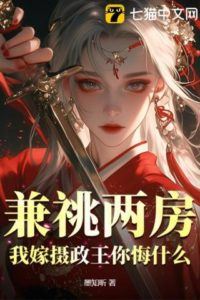
... Read More
Okay so this entire chapter is basically one massive plot explosion and I am HERE for it. Let me just say—the setup is absolutely brilliant. You have Xiao Fuguang walking into the funeral, looking pale and cold, and the Gu family immediately starts piling on. Madam Gu's got that sneer ready, Zhuang Linan's playing the victim with her tears. It all feels like the calm before the storm, right? And then—BAM. Lin Fan shows up at the entrance with a deputy general's armor and a letter, shouting about adultery and conspiracy. The pacing here is chef's kiss. The author doesn't rush it either. First the public accusation, then Gu Chuan's desperate attempt to silence him, then Xiao Fuguang stepping in and playing the supportive wife while secretly handing the letter to the Censor-in-Chief. Each beat builds on the last. The crowd's reaction shifts from sympathy to shock to outright accusation, and you can practically feel the Gu family's empire of lies crumbling in real time. What really sold it for me was the handwriting verification scene—Lord Zhao examining it, passing it around, each official confirming it's Gu Chuan's own writing. That's the kind of detail that makes a plot twist feel earned rather than convenient. The only thing I'd note is that Lin Fan's sudden appearance from the border feels a *touch* convenient, but honestly, the emotional payoff of seeing Xiao Fuguang finally turn the tables makes up for it. This is revenge plot done right.

Leave a comment

You must be logged in to leave comments. or
