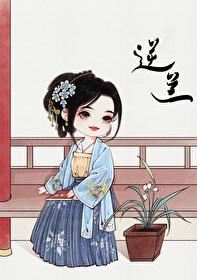
Marrying a Husband Across a Thousand Miles in the 1970s[Book Transmigration]
Novel Info

Summary

... Read More

Tian Mi, a woman from a prosperous future, finds herself transported back in time to the impoverished rural village of Chaoyang in 1971 after a plane crash. She inhabits the body of a twenty-year-old girl with the same name, who belongs to a large family of eight children. The Tian family, led by her father Tian Hongxing, a public security officer, and her mother Luan Hongmei, struggles financially despite being one of the better-off households in the village. Tian Mi quickly adapts to her new reality, utilizing her modern knowledge and a supernatural ability to breathe underwater to catch fish, which she sells on market days to generate secret savings. Her primary motivation is to escape the oppressive social constraints of the era and avoid a disastrous fate, as she realizes she has transmigrated into the world of a novel where the original protagonist suffered under the abuse of her husband, Liu Xiangdong.

The central conflict arises from the pressure to marry Liu Xiangdong, a man from a wealthy and connected family in the nearby town. Liu Xiangdong works at the Supply and Marketing Cooperative and is pursued by Tian Mi’s aunt, Tian Xiaoyan, who hopes the marriage will secure a government job for her own son. Tian Mi, aware of Liu Xiangdong’s true nature as a domestic abuser from the novel’s plot, refuses to accept the match. She confronts her father with rumors about Liu’s father beating his wife, causing Tian Hongxing to hesitate. Meanwhile, Liu Xiangdong becomes increasingly persistent, viewing Tian Mi’s resistance as a challenge and attempting to manipulate the situation through social pressure and gifts. Tian Mi firmly rejects his advances in public, threatening to expose his criminal behavior if he forces the marriage, thereby buying herself time to execute an escape plan.

Key turning points include Tian Mi’s discovery of her underwater breathing ability, which allows her to sustain a secret income stream, and her decision to partner with her younger sister, Tian Pan Di, to sell the fish. This partnership not only generates funds but also strengthens their bond. Another critical development is Tian Mi’s encounter with two soldiers, Lou Luhui and his comrade, while fishing in the river. Lou Luhui is captivated by her beauty and skill, marking the beginning of a potential romantic interest that contrasts sharply with the toxic attention from Liu Xiangdong. Tian Mi also considers marrying into a military family as a viable escape route, given her elder sister’s connection to a Political Commissar, and begins drafting a letter to seek her help.

As the story progresses, Tian Mi navigates complex family dynamics, including the favoritism shown by her grandparents toward her eldest brother, Tian Chang Qing, who is lazy and entitled. She maintains a distant relationship with her extended family while focusing on her goal of financial independence and escape. The narrative follows her efforts to gather evidence against the Liu family while simultaneously building a life that allows her to leave Chaoyang Village. The tension between her desire for freedom and the rigid social structures of 1970s rural China drives the plot forward, with Tian Mi balancing her secret activities against the expectations of her traditional family.

The story direction points toward Tian Mi’s eventual confrontation with the Liu family and her potential union with Lou Luhui. As she continues to accumulate resources and support, she prepares to sever ties with her arranged marriage prospects. The presence of the soldiers in the area adds a layer of political and personal intrigue, suggesting that her past life skills and modern perspective will be crucial in overcoming the challenges of this historical setting. Tian Mi’s journey is one of survival and self-determination, as she seeks to rewrite her fate and protect her family from the abuses depicted in the original novel.

Latest Release
DateGroupRelease
2026-08-11shanghai fantasy c118
2026-08-11shanghai fantasy c117
2026-08-11shanghai fantasy c116
2026-08-11shanghai fantasy c115
2026-08-11shanghai fantasy c114
2026-08-11shanghai fantasy c113
2026-08-11shanghai fantasy c112
2026-08-11shanghai fantasy c111
2026-08-11shanghai fantasy c110
2026-08-11shanghai fantasy c109
2026-08-11shanghai fantasy c108
2026-08-11shanghai fantasy c107

Community Reviews

Rating(3.7 / 5.0, 7votes)
5 stars
2(29%)
4 stars
1(14%)
3 stars
4(57%)
2 stars
0(0%)
1 stars
0(0%)

Popular reviews

... Read More
"You little brat, look at you! You actually know you're almost 30, the age to be a grandfather? What's the matter? Are you proud that you still haven't gotten a wife?" Okay I'm not even going to try to be serious about this one because this scene had me laughing out loud. The dialogue in the military unit sections is genuinely fantastic. Commander Wang sounds like exactly what he is—a gruff, overworked, under-resourced military officer who cares deeply but expresses it through yelling. And Zhou Jianshe! "Back in the old days, I could be a grandpa by now, so I'm not exactly young." The man is twenty-nine and trying to sound old. The sheer audacity. Lou Luhui's reaction—just turning on his heels and trying to walk away—is perfect. And the best part is how each character has a completely distinct voice. Chen Gang is the amused observer, the one who laughs at everyone's expense. Zhou Jianshe is the loud, slightly clueless chatterbox who drags other people into his problems. Lou Luhui is the deadpan one who says the minimum and tries to escape. Even Commander Wang's wife gets a line through Chen Gang: "I'll have your sister-in-law make something good." You don't need her name or description—you know exactly what kind of woman she is from that one line. Meanwhile, the family dialogue at Tian Mi's house is completely different register. Luan Hongmei's nagging, Tian Hongxing's gruff practicality, Tian Mi's careful deflections—they all sound like a real Chinese family having a real conversation. The author switches between these two worlds and never confuses the voices. That's rare.
... Read More
"With a distance of over two thousand kilometers, just taking the train would take seven or eight days. For most people, whose activity range barely extended beyond the county, it was simply unimaginable." I reread this sentence three times. Three times. Because it's not just about distance—it's about how isolated Tian Mi feels in her own family. Her eldest sister Tian Yu has been gone for eight years. Eight years. And Tian Mi only feels brave enough to reach out now, when she has something she needs help with. There's something so achingly real about that. The letter she writes isn't just a request—it's her first real attempt at connecting with someone outside her immediate household. And the fact that she's writing to her sister about potentially going to the county town, potentially escaping the match-making pressure, the Liu Xiangdong situation, the whole suffocating weight of being a twenty-year-old woman in this village... it hits different. Meanwhile, back at the military unit, Lou Luhui is stuck in a freezing office getting scolded by Commander Wang about finding a wife. Two thousand kilometers apart, both of them feeling the pressure of expectations, both of them navigating a world that doesn't seem to have a place for their particular kind of restlessness. I don't know if they'll ever meet, but God, I hope they do.
... Read More
The contrast between these two scenes is something else. First you've got this warm, chaotic family dinner with the fish soup steaming on the table, Luan Hongmei smacking her daughter, Tian Hongxing trying to keep peace—everyday rural Chinese family life in the 1970s, complete with kerosene lamps and fabric tickets. Then you cut to Tian Mi swimming in the Chaoyang River at 4 AM in five-degree weather, goosebumps everywhere, leaping in like she owns the water. The author paints this world with such specific, grounded details. The Supply and Marketing Cooperative. The fact that there's no electricity in the village so everyone sleeps early. The kerosene lamp being so precious that her mom cuts the conversation short rather than waste fuel. These aren't decorative details—they're the actual texture of life. You can feel the cold when Tian Mi strips down to her shorts by the river. You can smell the fish soup. You can hear the dog barks on the dark path. And then there's this brief glimpse of the soldiers—Lou Luhui and his comrade watching from behind a slope, wondering if that girl is trying to commit suicide. The author drops us into their perspective so casually, like 'oh by the way, there are military people in this story too.' But it works. The rural village setting feels lived-in, not like a costume drama backdrop. It's a world where fabric tickets determine whether you can make new clothes, where a wristwatch at the cooperative is a status symbol, where educated youths like Sun Zhiqing are objects of gossip.
... Read More
I need to talk about the Yao girl. I know she doesn't appear directly in these chapters, but her death haunts everything that follows. A seventeen-year-old girl, labeled 'black class' because of her landlord family, driven to jump into a freezing river by rumors about hidden gold. The letter she left behind—admitting her family had gold but taking it with her—was clearly a setup. Tian Hongxing knew it. He read the letter and understood someone was orchestrating this, using greed as a weapon. But here's what really gets me: the whole village participated in her destruction without throwing a single punch. They spread the rumors. They fished in the river for the gold. And when two young men drowned looking for nothing, that was the only thing that stopped them. Human greed is terrifying, as Tian Hongxing says. But what about the cruelty? The way a community can collectively destroy someone and then act shocked when consequences arrive? I keep thinking about Tian Mi's reaction to this. She reads historical materials and feels nothing, but experiencing it firsthand? That suffocation she feels—that's the moment she stops being an observer and becomes a participant in this world's moral landscape. How many more Yao girls will there be before someone like Tian Mi decides to do something about it?
... Read More
Okay, I need to just say it straight up: the grandfather Tian Xixin is absolutely infuriating. The man is a barefoot doctor with acupuncture skills and he still clings to this archaic tradition that the eldest grandson is the rightful heir? What century is he living in? And get this—he named the kid 'Chang Qing' which literally means dispelling wind and stopping pain, basically treating the boy like a medical heir rather than a child. Meanwhile, the little brother Tian Xiang Yang, barely three years old, is watching his cousin throw cookies on the ground and being told to pick them up. I actually fumed reading that. The grandparents' favoritism isn't even dramatic or violent—it's this cold, quiet indifference toward the other kids that makes it so much worse. They don't hate them, they just don't see them. That's the kind of emotional neglect that sticks with you. And Tian Chang Qing himself—delicate-looking, fair-skinned, wearing military uniforms while his siblings are in patched clothes. The guy is 26 and can't even do basic human decency. When he chases after Tian Mi with chopsticks in hand asking about a movie, it's almost comically pathetic. He thinks Liu Xiangdong's promises are his ticket to success. The author really knows how to make you love to hate a character, and Chang Qing is peak hateable. But the sibling dynamics between Tian Mi and Tian Xiang Yang? That's the warm spot in all this. She protects him, she walks with him to deliver soup, she ruffles his hair while secretly rolling her eyes at her grandparents. That little moment where she tells him she 'stepped on a toad' to cover up her bad mood—so tender.
... Read More
So the pacing in these chapters is genuinely masterful and I need to explain why. Chapter 34 starts with something small—Tian Mi almost getting hit, digging a cellar, her sisters being noisy. Then it pivots to her writing a letter. Then dinner happens and her father drops the bomb about the Yao girl's suicide. Boom. The entire emotional temperature of the scene shifts in one paragraph. And then—here's the genius part—it doesn't stay heavy. It pivots AGAIN to the gold rumor, to the drowning men, to Tian Mi's parents pressuring her about marriage, to her asking about gold in the river, to her getting an invitation to a wedding and finally escaping to the county town. All of this in one chapter. And then Chapter 35 switches to the military unit, introduces three new characters in the span of a few paragraphs, and ends on a comedic note about matchmaking. The author is playing with tension like a musician. Heavy, light, heavy, light. The wedding invitation scene is particularly well-timed—Tian Mi has been waiting for an excuse to leave, and when it comes, she doesn't hesitate. She asks her father for one yuan and dashes out like she's being chased by a fierce dog. The pacing here feels almost breathless, which is exactly right because Tian Mi has been cooped up for weeks. Then the military scenes slow everything down with snow and cold and bickering officers. It's a different kind of tension—waiting, anticipation, the sense that something is building. The chapter structure keeps me engaged because I never know which emotional register the story is going to hit next.
See all reviews

Characters

See all characters

Custom lists

See all custom Lists