Married the Scum Gong’s Villain Brother - Reviews

Married the Scum Gong’s Villain Brother
+Add to Custom List
Sort
Add review
... Read More
Okay so let me just say this one line: "My time should have been all given to Xiao Xun. The problem now is that it has been occupied by other things instead." And I am not okay. I am absolutely NOT okay. Because this man CANNOT say sweet words apparently, right? That's the whole joke throughout the book — he's all business, all ice, all 'Mr. this and Mr. that.' But when he DOES let something slip? It lands like a freight train because there's no filter, no performance, no calculated romance. It's just... the truth. Plain and devastating. Jing Xun's reaction killed me. The text literally says he wanted to bury his head again. Not because it was embarrassing — though god knows the public PDA situation made things ten times worse — but because it was TOO REAL. When someone who never does this shows they care this much, it's terrifying in the best way. And then! The whole shoulder scene! Jing Xun fiddling with Shen Yijin's fingers, leaning into him, completely letting his guard down while the car bumps along the mountain road. He's relaxed enough to play with Shen Yijin's hand like it's the most natural thing in the world, and then BAM — the driver slams the brakes and suddenly they're being watched by half the mountain's staff. The fact that they ALL recognized Jing Xun as 'Young Master' instead of 'Boss' is honestly the cutest power move I've ever seen. Those old family people already accept him. They already know. Jing Xun found out the hard way when their eyes widened and whispers flew. His entire spirit left his body at that point. But get this — Shen Yijin didn't let go. Even after the awkwardness, even after being essentially displayed to the entire household like a trophy partner, he walked Jing Xun into Grandpa's house holding his hand and squeezing back when Jing Xun tightened his grip. The text literally says: "Shen Yijin felt it, and returned the grip with a little more strength." That's it. That's the whole love letter. A stronger squeeze.
... Read More
I need to talk about how the author handled the external conflict here because this is actually really smart writing. Shen Bohan—the 'scum gong'—is still hanging over these two like a thunderhead even though he's barely in the scene. His words about Shen Yijin needing to 'carry on the family line' are what triggered all of this, right? And Shen Yijin's reaction tells us EVERYTHING about what's at stake for him. He says 'Even if I didn't inherit the Shen family, it has nothing to do with you' but we both know that's a lie he's telling himself. Of COURSE it has everything to do with Jing Xun. The stakes here are massive—social expectations, family pressure, his relationship with someone who literally crossed dimensions for him. And the genius part? The author never lets us forget that Shen Bohan is watching. That this conversation isn't happening in a vacuum. Every time Jing Xun says 'of course I don't believe what he said,' there's this undercurrent of yeah but what if someone DOES believe him. What if the whole world sees my boyfriend as some heir who should be married to someone 'appropriate' instead of some transmigrator who thinks he can't give birth. The tension between what these two want and what everyone around them expects—it's simmering, not boiling yet, but that's way more scary honestly.
... Read More
This is a masterclass in pacing, and I want to talk about how the author controls the temperature of the scene from the very first line. We open with a timestamp—6:53 PM—and immediately you feel the urgency. It was NOT long ago. Someone just did something, and we're catching up to the aftermath in real time. Then the author deliberately shifts gears. Instead of rushing into action, we get a conversation. The teaching assistant explaining consequences. The first group members venting. Chu Qiao snapping. Peng Yutong gliding in with her manufactured calm. Each beat builds on the last, and the author is playing with our expectations like a cat with a very fragile mouse. We keep waiting for someone to admit something, or for evidence to appear, or for the villain to reveal themselves—and instead we get more questions, more accusations, more people talking over each other in that perfect chaos of a crowded room. The surveillance scene is where the pacing changes again. Jing Xun doesn't just watch—he manipulates the playback. Fast forward. Slow down. Pause. The reader is forced to slow down WITH him. We're all straining at that half-speed footage, looking for the same clue he is. The author controls exactly when we see what, and that control creates a kind of shared paranoia with the protagonist. And then the chapter ends on an incomplete sentence. "There are traces of..." Not a cliffhanger with an explosion or a revelation—a cliffhanger with a THOUGHT cut short. The author trusts us to sit with that silence. Most writers would fill it. This one doesn't. And it's infinitely more powerful for it.
... Read More
There's a motif running through these chapters that I can't shake—the idea of misplaced objects representing misplaced certainty. Jing Xun holds the envelope, forgets it's there, it falls onto his lap. He used to hold his door key and then immediately search for it. These are small details but they're doing heavy thematic work. Jing Xun is a transmigrator, someone who inhabits a body that isn't originally theirs, navigating relationships built on someone else's history. Of course he loses track of things. Of course objects slip from his awareness. The physical forgetfulness mirrors the existential forgetfulness—he's constantly trying to remember what's real, what's performed, what belongs to him and what belongs to the original owner of this body. The blue envelope is particularly loaded. Letters and written communication in this story always carry weight—confessions, secrets, political maneuvers wrapped in paper. But the color matters too: blue is calm, cool, restrained. It's the color of Shen Yijin's presence in every scene. Is Lin Huanwen's message another form of emotional restraint? Or is it the opposite—something honest wrapped in something understated? And then there's the ring Peng Yutong observes—a symbol of exclusivity that she immediately dismisses as insufficient proof. She can't imagine a wealthy young master being faithful, so the ring means nothing to her. But the reader knows better. The ring is real. The relationship is real. Her inability to see it says everything about prejudice and everything about how we project our assumptions onto people we think we understand.
... Read More
I need to talk about the scene where Jing Xun is squatting in front of Shen Yijin. Just... the whole composition of it. Jing Xun grabbed Shen Yijin's knees like some kind of worshipper at a shrine, eyes bright and reverent, and Shen Yijin just looked down at him. And then immediately worried about his back injury. BRO. The man was basically gazing at him like he hung the moon and Shen Yijin's first instinct was 'get up, you're hurt.' That is the most 'I'm in love but I express it through concern for your health' move I have ever seen and I am HERE for it. And the carrying part—Shen Yijin just picked him up. No hesitation. Jing Xun went from squatting to suddenly the world spinning and he's sitting in the big chair while Shen Yijin stands beside him. I don't know who breathed harder but I certainly didn't. The fact that Shi Zhibin and the supervisor walked in RIGHT at that moment though—President Shen standing beside his desk with 'Mrs. Shen' sitting at it—that's the kind of comedic timing that makes me groan and laugh at the same time. They genuinely didn't know he wasn't single?! In this economy? With this much obvious energy? Also Jing Xun thinking 'there are many powerful people but few have the courage to spend hundreds of millions on research'—he's literally falling harder by the chapter and he doesn't even realize it. That's when you know the CP chemistry is doing its job.
... Read More
Okay so let me talk about the scene structure here because this is actually really clever writing. Jing Xun drops this information bomb—he brings up the whole ex-boyfriend-with-his-brother situation—and you just KNOW the reader is waiting for the explosion. The tension builds, right? He's sweating, he's overthinking it, he literally drafts his own exit strategy in his head like 'just break off the engagement already and get it over with.' And then Shen Yijin says... nothing. Like, literally just 'I got it.' The car drives two blocks in silence. Two. Whole. Blocks. This is masterful misdirection. The author lets us marinate in Jing Xun's anxiety while Shen Yijin is having some completely internal moment we're not shown yet. Then the scene pivots so hard into the cake shop it's almost comedic. From existential dread to 'here, buy pastries' in one sentence. It's a brilliant pacing choice because it mirrors exactly what Jing Xun experiences—he's spiraling and then suddenly he's not, and he doesn't even understand why. The emotional whiplash IS the plot point. Also love how the author uses the setting changes to mark plot beats: the dim car interior for the heavy conversation, then the blindingly bright cake shop as a literal and figurative light shifting. The transition from darkness to brightness mirrors the emotional release too.
... Read More
Okay so this whole arc hit me like a truck. You have Jing Xun rushing to the hospital, stressed out of his mind about his brother, and he casually tells Shen Yijin over the phone that it's nothing serious — you know, the classic 'I've got this' lie that everyone tells when they're actually crumbling. And Shen Yijin just... drops everything and comes back. Thirteen hours. Nine thousand kilometers. That's not a subplot, that's the entire emotional spine of these chapters right there. What's brilliant about the structure here is how the author layers the stakes. On the surface it's a medical emergency, but really it's a relationship emergency. Every time Jing Xun tries to put up walls — the 'sir,' the refusal of help, the polite distancing — Shen Yijin just tears through them without even seeming to try. The hospital scene isn't just setting, it's a pressure chamber where all their unresolved tension gets squeezed out in real time. And that ending with the fingerprint lock and the elevator music dying down — it's such a quiet, domestic moment after all that urgency. The plot doesn't need fireworks here. It needs Jing Xun following someone into a house and calling it home.
... Read More
There's this one moment—well, actually a whole sequence of moments—that I keep coming back to. Jing Xun admitting he was scared of Shen Yijin when he first learned his identity, then quickly patching it with 'but I'm not afraid now.' That little stumble. Those flickering eyelashes. The way he can't quite hold eye contact even though Shen Yijin is just sitting there watching him like a hawk. 'I'm not afraid now.' Said so fast it sounds like he's trying to convince himself as much as Shen Yijin. And Shen Yijin—cold, terrifying, twenty-six-year-old phenom Shen Yijin—he just looks at Jing Xun unblinking until the truth comes out. He doesn't push, he doesn't gloat. He just waits. That patience is somehow more intimate than any grand romantic gesture. Then Jing Xun looks into those eyes and describes them: 'Indifferent but not ruthless, just a little lonely.' A LITTLE lonely. After everything. This man runs an empire and he's sitting across from someone describing his eyes as lonely, and Jing Xun realizes—oh, oh no, I'm not afraid anymore because I see him. I actually see him. The whole dynamic between these two is built on this incredible tension where every interaction is a power struggle that keeps dissolving into something dangerously close to tenderness. Shen Yijin offers to drive him home. 'It's on the way.' Even though it clearly isn't. Even though he has business meetings waiting. He just wants to be near him a little longer. And Jing Xun, who initially protests politely, eventually just says 'okay' because he's starting to let himself want this too.
... Read More
The stakes in this chapter are surprisingly layered. On the surface, it's a rom-com situation — one-night-stand-meets-responsibility, classic setup. But dig a little deeper and there's real tension. Jing Xun is a university student (mathematics department, apparently talented — Professor Huo noticed him) with no experience, no plan, and suddenly a CEO is knocking on his door demanding accountability. What does HE stand to lose? His independence, his routine, his ability to just... exist without someone watching him through an assistant named Jin Zheheng. And Shen Yijin? He's the one with everything to lose too, really. A man whose income is calculated in seconds, surrounded by people who only see his title, suddenly confronted with someone who sees HIM — not President Shen, just the guy who got caught in a moment. The conflict isn't just external (will they marry? should they?) but internal: Jing Xun wants to run but also thinks marrying a handsome guy wouldn't be a loss, and Shen Yijin wants to reach out but keeps checking his watch instead. Both are trapped by their own positions. That's what makes this chapter grip you — it's not just 'will they or won't they,' it's 'can they even be themselves around each other?'
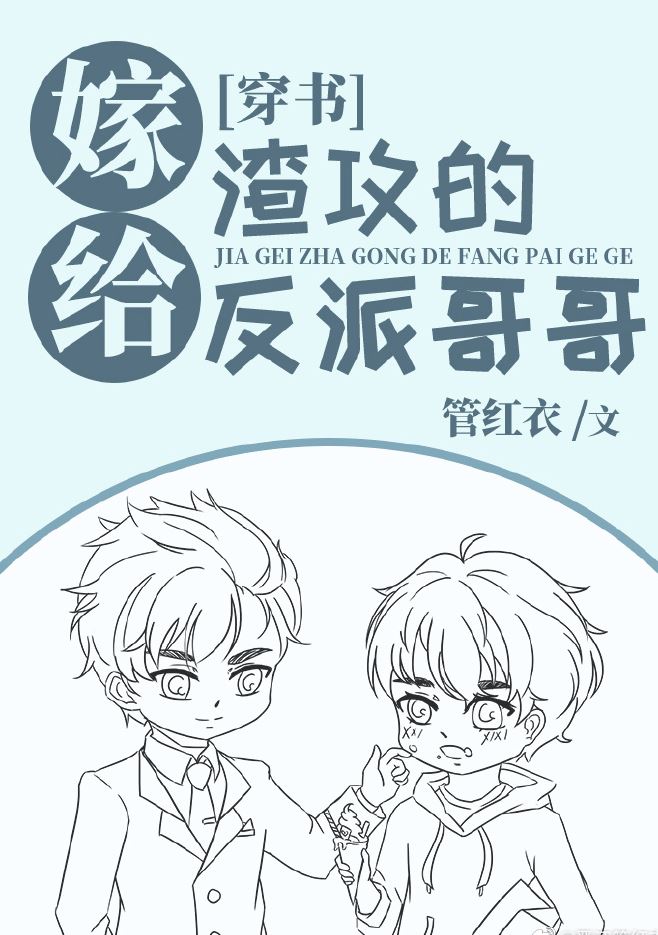
... Read More
Let's talk about Shen Yijin for a second because this chapter revealed so much about him without him saying a single emotional word. He's the type of person who would rather control his environment than express vulnerability. When he sees Jing Xun's reflection in the glass door, what does he do? He doesn't say anything. He doesn't compliment the outfit (he clearly doesn't like it). He just… closes the curtains. Manually. Even though it's an automated system. Why? Because he can't stand the image of Jing Xun being seen by someone else while he's on a work call. Then the letter arrives. And watch his hands. 'His movements were slow and careful throughout, and were extremely elegant.' He's not just sealing an envelope – he's preserving something. That photo of Junior Lin flexing gets treated like evidence, not trash. He's cataloging whoever else is interested in his fiancé. But here's what killed me: Jing Xun notices all of this and still tries to make himself smaller. 'I really didn't know he was going to confess to me. If I knew, I would not let Mr. see…' He's apologizing for something that isn't his fault. He's performing self-erasure to keep the peace. Their dynamic is fascinating because neither of them is being cruel, but neither is being kind either. They're both orbiting each other carefully, testing boundaries, watching reactions. Shen Yijin calls him from the bathroom – why? Does he need company? Or does he want to see if Jing Xun will come running? I need chapter 161 now.
... Read More
This author has no concept of urgency and I am absolutely obsessed. We start with DRYER RHYTHM. Clothes in the dryer. Pajamas not dry. Jing Xun wearing old school vest and shorts because nothing else fits. It's domestic, it's mundane, it's the narrative equivalent of breathing. And then – almost casually – we get to the letter. No warning. One paragraph it's about laundry, the next there's a love confession on the table. The pacing around that moment is surgical. 'He pulled it out, not noticing that along with it was a small photo stuck in the paper.' The photo FLUTTERS to the ground. Jing Xun doesn't even notice until he's halfway done reading. Meanwhile, Shen Yijin is watching. The entire chapter is built on this layering of attention – who's looking at whom, what's being ignored, what's deliberately missed. Then the bathroom scene. Why does it end mid-sentence? 'This bathroom wa-' We get cut off. Not a full stop, not a scene break, just… trailing off. The author is forcing us to sit in the uncertainty. It's infuriating. It's perfect. The structure here rejects climax in favor of accumulation. Nothing huge happens. A letter gets read. A photo gets picked up. A shower gets planned. But the weight of it all builds like pressure. By the time Shen Yijin calls Jing Xun's name from the hallway bathroom, my heart was already hammering. Not because of what's happening, but because of everything that's NOT happening yet.
... Read More
So here's the thing that actually made me stop mid-scroll—Shen Yijin decides to change cars just to ride a bicycle with Jing Xun. Like, think about what that means for the plot. The whole arc of this section isn't about some big dramatic event; it's about one seemingly small choice rippling outward in ways that reshape their entire dynamic. We start with the setup: daily car rides in a low-profile Maybach, Jing Xun getting noticed by classmates, the social awkwardness creeping in. That's the conflict—tiny but real. Then Shen Yijin says 'It will be resolved tomorrow' and my first thought was, okay, he'll just get another car. Nope. He gets a TANDEM BICYCLE. A two-seater bicycle. This is the kind of plot twist that doesn't need explosions or betrayals—it just needs someone to realize that driving side-by-side on a bike is more intimate than sitting in a luxury car. And the brilliance is in the execution: Xiao Tang's internal monologue at the end practically spells it out for us. 'Driving a boyfriend to school had a sense of distance. How could it be as good as two people riding a bike together!' That's not just comic relief—that's the author laying bare the thematic core of the entire chapter. The plot isn't moving forward through action; it's moving forward through deliberate, almost surgical choices about proximity and visibility. Every decision Shen Yijin makes—the low-profile car, the switch, the bicycle—serves the relationship arc. And honestly? It works. I found myself genuinely moved by a scene about transportation logistics.

Leave a comment

You must be logged in to leave comments. or
