Married Off in Another’s Place to the Tyrant King of Hell, I Just Sit Back and Enjoy the Drama - Reviews

Married Off in Another’s Place to the Tyrant King of Hell, I Just Sit Back and Enjoy the Drama
+Add to Custom List
Sort
Add review
... Read More
Okay so let me just say this opening is absolutely ruthless. Our girl Shen Yu wakes up tied up in a bridal sedan chair being dragged to marry what the gossiping bearers call a 'living King of Hell.' Classic transmigration setup but immediately dialed up to eleven. She's not just any transmigrator—she's the unloved second daughter being forced to substitute for her sister in a marriage that's basically a death sentence. The original character got knocked out and shoved into this dress, and now here's our modern girl who just wanted to eat instant noodles in her dorm. But then—BAM—the Holographic Gossip System binds to her. And this is where the plot gets genuinely clever. Instead of giving her combat skills or a straightforward cheat, the system broadcasts her INNER THOUGHTS directly into Chu Xiao's mind. Every single thing she thinks about his abs, his legs, the fact that he's faking his disability—it all leaks out. This creates this incredible dramatic irony where both characters are operating on completely different information. Chu Xiao thinks she's some kind of terrifying spy who saw through his three-year deception, while she's just a foodie who got stuck in a bad novel. The plot twist of him faking his disability is well-handled too. The system reveals it organically through her thoughts rather than an info-dump, and Chu Xiao's reaction—going from wanting to kill her to seeing her as an uncontrollable variable—is a solid character moment that also advances the plot. I'm genuinely curious where this goes. The substitution marriage trope is familiar, but the system mechanic adds a fresh layer of tension and comedy that keeps things from feeling generic.
... Read More
Let me just say this: the author does NOT play. From the moment Shen Yu opens her eyes in that gorgeous Ninth Prince mansion bed to the final line where she walks back into the room, the tension never, EVER drops. Not for a second. It's like the author looked at my attention span and said "hold my tea." Here's what's brilliant about the structure: the chapter opens with COMEDY. Shen Yu yawning, stretching, rubbing her belly, completely unbothered while servants around her are having existential crises. Then—BAM—Li Quan appears and the tone pivots hard into threat. The soup reveal. The Croton powder detection. The fake trembling. The spill. And just when you think it's over, Chu Xiao arrives and the stakes escalate from "humiliated bride" to "possibly dead bride" in one wheel-rolling step. The cliffhanger at the end? *Genius.* She walks back inside. Everyone expects a weapon, or silk, or for her to hide under the bed. Instead she comes back out with... something behind her back. The author doesn't tell us what. The servants are paralyzed. Li Quan is sneering. And we're left absolutely hanging. I immediately opened the next chapter. Don't judge me. The pacing between comedy and danger is also what makes this so addictive. One moment I'm laughing at Shen Yu's inner monologue about not wanting to spend three days in the latrine, the next I'm holding my breath because Li Quan is literally ordering the discipline rod. That whiplash is intentional and it WORKS.
... Read More
Beneath the transmigration comedy and system mechanics, there are some genuinely interesting thematic threads being woven here, and I want to talk about three of them. First: food as survival instinct. Shen Yu's obsession with food isn't just comic relief—it's her anchor to humanity in an inhumane situation. While everyone around her is discussing death ("thrown to the dogs," "won't survive the night"), she's thinking about braised pork knuckles and red bean cake. The food represents her refusal to accept the narrative the novel has written for her. She's not going to die as a tragic second daughter; she's going to die having admired a handsome man's abs and complained about a dessert. It's absurd, but it's also deeply subversive. Second: the body as text. Chu Xiao's body is the central mystery of the story. His legs—he claims they don't work, but the system reveals they're perfectly healthy. His face—devastatingly handsome but expressionless, a mask like his wheelchair. The novel keeps returning to physical description as a way of exploring deception. Everyone in this story is performing: Shen Yu performs fear, Chu Xiao performs disability, the Marquis's family performs loyalty. The question is who can see through the performances. Third: the wedding chamber as liminal space. This isn't a bridal chamber—it's described as colder than a dungeon, with no music, no guests, entered through a side gate. It's a space outside the normal social order, where the usual rules don't apply. In this space, the second daughter becomes the wife, the cripple becomes the God of War, the spy becomes... whatever Shen Yu is becoming. The setting itself is a metaphor for transformation. These themes don't overwhelm the story—they simmer beneath it, which is exactly how good genre fiction should work.
... Read More
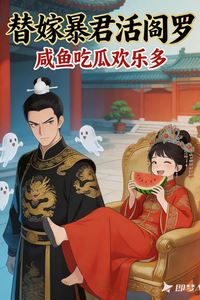
I'm still thinking about this image: Shen Yu, sitting on a wobbly little stool on the steps, eating caramel-coated melon seeds while a man's life is being decided in front of her. Most protagonists would be trembling. Most protagonists would be trying to look invisible. But not our girl — she's snacking. She's evaluating punishment options like she's reading a menu. And that's what makes her so endearing. There's this moment after Steward Li is dragged away, after the crisis has passed and the courtyard has returned to normal, where she just... stretches. Brushes off her crumbs. Feels the air is sweeter. The system chimes in her head with these joyous electronic fireworks — "Ding! Congratulations!" — and she's genuinely, unapologetically happy. One hundred gossip points. Level up. Fifty-meter radius. The emotional beat that got me though was Chu Xiao's perspective shift. This man who hasn't smiled in three years — who has been living in constant paranoia, surrounded by people who want him dead — watches this girl celebrate a system level-up like it's the best thing that's ever happened to her, and something in him softens. The text says it explicitly: the killing intent in his eyes faded, replaced by "a faint, almost imperceptible sense of indulgence and curiosity that even he hadn't realized was there." INDULGENCE. That's such a specific word. It's not admiration, it's not respect, it's not even affection. It's indulgence — the kind of feeling you get when someone reminds you that joy is still possible. She's a fool, a sacrificial pawn, a substitute bride. And she's also the first person in three years who's made his life feel less like a tomb. The romance here isn't in grand gestures or declarations. It's in a prince watching a girl eat melon seeds and deciding she's worth keeping. It's in him insisting on a proper carriage for her return visit. It's in the way the narrative lets you hear both their thoughts and see them align without either of them saying it out loud.
... Read More
The pacing in these first three chapters is absolutely relentless. Chapter 1 starts with physical pain, confusion, binding, a sedan chair ride through the night, and ends with a locked door and a wheelchair approaching. That's like four major beats in one chapter and none of them drag. The author doesn't waste a single sentence on filler. Chapter 2 is where the real magic happens structurally. The system activates right at the moment of maximum tension—the dagger at her throat—and immediately pivots the entire scene from pure survival horror into something that's equal parts comedy and danger. The rhythm of Shen Yu's thoughts escalating (from 'I'm gonna die' to 'OH MY GOD HIS ABS' to 'HE'S FAKING IT') creates this wave pattern that pulls you through the chapter. Each thought builds on the last, and Chu Xiao's reactions to each one create mini cliffhangers within the scene. What I love most is how the author uses the system broadcast as a pacing device. Every time Shen Yu thinks something, it interrupts Chu Xiao's murderous momentum. The dagger hesitates. His hand trembles. The scene breathes. It's like the author is using comedy beats to control the tension valve—squeeze, release, squeeze, release—and by the end of Chapter 3, we're left with Shen Yu literally staring at a red bean cake while a death blade is at her throat. The absurdity of that image is the perfect structural button to end on. If there's any critique, it's that the transition from 'terrified victim' to 'system-powered chaos agent' happens very fast. But honestly, that speed is kind of the point. She's a transmigrator with a modern mindset in a life-or-death situation—the whiplash feels intentional.
... Read More
Let's talk about the voice here because this is genuinely exceptional. The narrative alternates between Shen Yu's external situation (terrified, bound, about to die) and her internal monologue (absolutely unhinged, obsessed with food and men's bodies), and the contrast is comedy gold. The system's broadcasting mechanic is brilliant because it creates a dialogue without dialogue. Chu Xiao is hearing Shen Yu's thoughts as if she's speaking them aloud, but she hasn't opened her mouth. The tension between what he hears and what he sees is where all the humor lives. Watch this exchange: "I—I wasn't looking at your legs..." Externally, she's stammering in terror. Internally, she's screaming about how delicious the red bean cake looks. Two completely different Shen Yus occupying the same body, and Chu Xiao has no idea which one he's dealing with. Chu Xiao's voice is consistently cold and sharp—"Speak." "Where are you looking?"—but what makes him work is his internal reaction. The narration gives us access to his confusion and growing suspicion, which creates this dual-voice dynamic. He's the straight man to her chaos, and it's working perfectly. The system itself has a distinct voice too—that crisp electronic "Ding!" and the cheerful, almost mocking tone of the broadcast. It's not just a plot device; it has personality. One thing I want to highlight: the author never lets the humor undercut the genuine danger. The dagger is still at Shen Yu's throat. Chu Xiao is still considering killing her. The comedy comes FROM the tension, not in spite of it. That's skilled writing.
... Read More
Okay, let me just say this: the way this whole Steward Li situation played out was absolutely *chef's kiss*. You've got this guy who's been pulling strings behind the scenes for YEARS, acting all high and mighty, bullying everyone in the manor, and then BOOM — exposed in one courtyard scene. That's not just good plotting, that's masterful setup and payoff. The reveal sequence was built like a proper thriller. First the money — three hundred taels from the treasury, found buried under a doghouse of all places. Then the letter with the Crown Prince's seal. Each piece of evidence hit like a hammer blow, and you could literally feel Steward Li's world collapsing in real time. The author didn't rush it either — they let each revelation breathe, let the servants react, let the tension build until the whole courtyard was holding its breath. But the real plot twist? Shen Yu's inner monologue about punishment. While everyone expected Chu Xiao to just execute the traitor (which would've been the standard move), she casually suggests something far more creative — sending him to shovel manure for life. And Chu Xiao, this notoriously violent prince, actually *listens*. That moment where his killing intent shifts into something else? That's not just a plot beat, that's a character-defining decision that ripples forward. The pacing here is also worth noting. The scene moves from interrogation to evidence reveal to confession to punishment in one continuous flow, but it never feels rushed. Each beat lands. The only slight quibble I have is that Steward Li's breakdown into unconsciousness felt a *tiny* bit convenient — like the author needed him out of the scene quickly so they could pivot to the next plot point. But honestly, who am I to complain when the payoff was this satisfying?
... Read More
Let me just stop and appreciate the sensory details in this chapter because the author is NOT playing around. The opening image of Shen Yu sitting on uneven-legged steps, slowly spitting out sunflower seed shells while someone's life falls apart in front of her — that's a scene you can film. You can see the autumn breeze, the rhythmic tapping of Chu Xiao's fingers on the armrest, the servants frozen with washbasins and brooms, too terrified to breathe. It's a tableau of power and fear, and the contrast between Shen Yu's casual snacking and everyone else's terror is darkly comedic gold. Then there's the reveal itself. The cloth package stained with black mud, emitting "the unmistakable, pungent smell of the big yellow dog's urine." I know that sounds ridiculous, but it's also BRILLIANT. It grounds the whole scene in physical reality — this wasn't some elegant discovery, this was dug up from under a DOGHOUSE. The banknotes are stained but the red official seals are still visible. The wax seal has a four-clawed golden dragon. These details make the world feel tangible. And the punishment scene — stripping Steward Li of his Shu-silk robe, dragging him out like a sack of trash, leaving a trail of water and blood on the bluestone, then servants coming with buckets to wash it clean — it's brutal but also strangely poetic. The manor reasserts its order. The sunlight returns. Life goes on. The courtyard itself becomes a character in this scene, absorbing the violence and then washing it away like nothing happened. The stables description through Shen Yu's system dialogue is also a nice touch — "horse manure piles up like small mountains every day" — it gives us a sense of the manor's geography and hierarchy in one line. The stables are the dirtiest, most humiliating place. That's worldbuilding through spatial hierarchy, and it's effective.
... Read More
The stakes in this chapter are deceptively simple on the surface — a steward stole money and betrayed his master, case closed, right? But the author layers the conflict so carefully that by the time Chu Xiao is about to give the execution order, you genuinely believe someone is about to die. Jifeng has his sword drawn. The servants are terrified. Steward Li is banging his head on the bluestone, begging for mercy. The air pressure is at its lowest point. And then Shen Yu thinks one thought — just one internal monologue about a more creative punishment — and the entire trajectory of the scene shifts. What's fascinating is the dual conflict at play. On the external level, you have the political stakes: Steward Li wasn't just a thief, he was an informant for the Crown Prince, which makes this a treason case that could escalate into a broader power struggle. The Crown Prince's seal on that letter means this isn't contained to one manor — it's a declaration of war waiting to happen. But the internal conflict is what really gets me. Chu Xiao has spent three years in a manor full of snakes, and the moment he realizes he has an ally — however unlikely — you can see the tension leave his body. The conflict isn't just about eliminating a traitor anymore; it's about whether he can trust this girl who talks to a system he can half-hear. And Shen Yu's own conflict — she's a transmigrator with a gossip system, dropped into a dangerous political situation with no real power of her own. Her "weapon" is information and unconventional thinking. When she suggests the manure punishment, she's not just being creative — she's asserting agency in a world where she could easily be eliminated. The stakes feel real because everyone has something to lose. Steward Li loses his life and his pride. Chu Xiao loses his security if the Crown Prince retaliates. Shen Yu loses her newfound safety if she's seen as a threat. And the servants? They lose their fear — or gain the courage to resist.
... Read More
I have to talk about how visually stunning this entire sequence is because the author really outdid themselves. The opening image of Shen Yu stepping out of the bedroom—morning sunlight bathing her face, that gigantic unladylike yawn, bones popping, cheeks round from red bean cakes—this is such a vivid, almost comedic contrast to the deathly silence of the servants. One guy's jaw literally drops so hard the body bag slides off his hands. I laughed out loud. Then the atmosphere shifts so sharply when Li Quan appears, and suddenly you've got this thick, murky yellow soup with undissolved powdery stuff floating on top, smelling like "a bucket of slop brewed from moldy medicinal herbs and dirt." The sensory details are so specific you can practically SMELL it. But the real masterpiece is the moment that bowl shatters. The parabolic arc through the air. The CRASH. The boiling liquid hitting Li Quan's brand-new Shu brocade boots. Brown medicinal dregs smeared across expensive fabric, trickling down to the bluestone tiles, evaporating into a stench of fermented sewage. This reads like a movie scene. Every camera angle is perfect. And then—the sound design! The wooden wheels rolling across the floor, heavy and slow, carrying absolute oppression. The temperature dropping. Li Quan's neck cracking as he turns. The way time itself seems to freeze when Chu Xiao appears. The author builds atmosphere like a director building tension in a thriller. I was physically sitting on the edge of my seat.
... Read More
I need to unpack the layers of conflict here because this is genuinely impressive writing. On the surface, it's a classic "evil steward tries to humiliate the new bride" setup. But the author keeps raising the stakes so you never feel comfortable. First layer: survival. Shen Yu just spent the night with the Living Yama King and everyone expects her dead. She's alive, which already disrupts the entire power structure. Second layer: social assassination. The Croton powder isn't meant to kill her—it's meant to destroy her reputation publicly. Three days of explosive diarrhea in front of hundreds of witnesses? That's worse than death in this world. Third layer: Chu Xiao's judgment. He's watching. He knows she's faking. Does he protect her or punish her? The uncertainty is torture. What I love is how the author makes you CARE about the outcome. Li Quan isn't just a cartoon villain—he's been serving this mansion for twenty years, praised by the late Emperor, deeply entrenched. He has REAL power. And Shen Yu? She's a substitute bride, a pawn sent by the Marquis, with no allies in this hostile estate. The odds are stacked against her in every direction. But she's also got this system, this modern wit, and she just outmaneuvered Li Quan by splashing poison soup on his feet. The conflict isn't just external—there's this delicious internal tension where Shen Yu is playing the terrified little bird while her eyes are literally sparkling with excitement. And Chu Xiao? He saw through the act but didn't expose her. Why? That's the question that keeps me turning pages. The stakes just got so much more complicated and I am NOT ready for what happens next.
... Read More
I need to talk about Chu Xiao because this chapter completely reframed how I see him. Up until now, he's been this terrifying figure in a wheelchair — the Living Yama, cold and ruthless. But watch what the author does here. After the Steward Li situation is resolved, all the killing intent just... drains from his eyes. And what replaces it? Curiosity. Maybe even something warmer. The passage where he's watching Shen Yu on those uneven-legged steps, brushing melon seed crumbs off her hands, is one of the most telling character moments I've read in a while. Three years he's spent in this manor pretending to be a cripple, surrounded by spies and assassination attempts. And then this girl — a sacrificial pawn, a substitute bride, someone everyone else would've dismissed — walks in and clears out his entire intelligence problem with the help of a talking system he can partially hear. His internal monologue about her is revealing: "She wasn't just a lucky star bringing earth-shattering intelligence; she was a delight, someone whose quirky train of thought could instantly relieve the tension of his frayed nerves." DELIGHT. This is a man who hasn't experienced anything resembling delight in three years, and he just identified it in this girl. And then there's the carriage scene. When Old Wang suggests sending her back to her family with a regular carriage as a formality, Chu Xiao's reaction is immediate and fierce: "She is the Princess I married through proper channels... She represents my dignity!" That's not just protocol. That's possession. That's pride. That's the beginning of something, and I am HERE for it. The dynamic between them is shifting from stranger/stranger to something far more complicated, and the author is doing it through glances and internal thoughts rather than grand declarations. Subtle. I appreciate it.

Leave a comment

You must be logged in to leave comments. or
