Marital Relations - Reviews

Marital Relations
+Add to Custom List
Sort
Add review
... Read More
can we talk about how the author handles the transition from that breathless, sweat-slicked bedroom scene straight into the cold, sterile exhibition hall a month earlier?? the contrast is *chef's kiss*. one minute you're drowning in this thick, almost suffocating atmosphere of desire and the next you're standing in a grand hall with champagne glasses and elegant suits, and Da-hye is there alone checking her phone like her life is falling apart. the sensory details in that first scene are relentless—'her pale body now marked red from being handled so mercilessly,' the bedsheets, the plastic tearing sound, the vanity table being swept clean like nothing else in the world matters. it's very visual, almost cinematic. and then you get the exhibition banner: 'Professor Kyung Jooho's 21st Oriental Painting Exhibition' and suddenly you're transported into this world of art, prestige, and old money. I can literally picture the lighting, the crowd, the awkwardness. the author builds this universe that feels luxurious and suffocating at once, and I'm obsessed with it. the hotel setting where her mother used to be president of, the family dynamics layered on top of class and status—every detail pulls you deeper. and that ending where Ji-hoon finally calls and Da-hye's face goes stiff? the atmosphere practically drops ten degrees. chills. actual chills.
... Read More
Okay so let me just talk about Seo-hoo and Kyungtae because this dynamic is absolutely fascinating. I re-read their scene three times and I keep coming back to it. Here's this old man who throws teacups at his own grandson. A TEACUP. Not a book, not a document, not something dignified. Just a ceramic cup because his authority was questioned. And Seo-hoo? He just dodges it. Standing there, calm as a lake, looking at the shattered pieces on the floor like they're nothing. But what really gets me is this line: "Out of all his grandchildren, Seo-hoo resembled him the most." THE MOST. This old tyrant looks at this insolent boy who just mocked his marriages and insulted his authority and thinks "hmm, he's just like me." That's not affection. That's recognition. He sees himself in this kid and it terrifies and fascinates him simultaneously. "Had he acted purely according to his temper, he would have thrown Seo-hoo out of UJ long ago. But he could not do that." Why? Because Seo-hoo has talent? Sure. But also because part of Kyungtae knows that beating this boy won't work. You can't break someone who is already made of the same stuff as you. Meanwhile, poor Yoonjung is standing in the corner, eyes red, barely able to meet either of their gazes. And Seo-hoo immediately notices. "So you dragged my mother in here again?" Not about himself. First thing out of his mouth is protecting her. That says everything about who he actually is versus who his grandfather thinks he's becoming.
... Read More
Can we just talk about Da-hye and Han Seo-hoo's dynamic for a second? Because it's ACHING in the most complicated way possible. On the surface, they have this transactional relationship—he bought her soul, literally. But then there are these tiny moments that completely undermine that framework. Like when he notices her wrist is swollen from Ji-hoon's grip and his expression shifts. Or when he says 'That dress suits you well' out of nowhere, and she feels this tremor she can't explain. The author doesn't overdo it. There's no confessional romance dialogue, no dramatic declarations. Just this quiet, unbearable tension simmering under every exchange. And Da-hye's internal monologue is doing SO much heavy lifting here. She tells herself he's dangerous, she reminds herself this is self-defense, she even considers whether attending the party feels like betrayal—but underneath all that reasoning, there's this undeniable pull. I caught myself rooting for something real to grow between them, even though the foundation is so poisoned. That's good writing. That's the kind of emotional complexity that makes you reread passages. Ji-hoon, on the other hand, is written as this hollow shell of a man whose emotions are all performative. His desperation feels fake because it's entirely self-serving. Meanwhile, Da-hye's pain is quiet and real, and that contrast makes every interaction with Seo-hoo feel infinitely more charged.
... Read More
There's a moment in this batch where Ji-hoon suddenly thinks about Romeo and Juliet and decides his love for Hyejung is similarly tragic. The text says: 'How heartbreaking must Romeo and Juliet's love have been? For some reason, Ji-hoon suddenly thought that perhaps this was exactly how Romeo must have felt while running to Juliet.' This comparison is either the most hilarious or the most damning character insight in the entire novel. He's not Romeo. He's not a tragic lover. He's a man who got two women pregnant (metaphorically and literally) and is now panicking because his career ladder is slipping away. The Shakespeare reference is the author's way of letting us see how deluded Ji-hoon has become. And then there's the Black Ticket itself. This object — given to Da-hye by Han Seo-hoo — carries so much symbolic weight. It's not just an invitation to a party. It's a key to a world she's been excluded from, a symbol of power and access, and possibly a tool in some larger game we don't fully understand yet. The text emphasizes that she stares at it for an entire hour, transfixed. It represents agency — or the illusion of it. She's accepting an invitation from a man who told her 'sell me your soul,' and now she's walking into his world. The recurring motif of performances is also worth noting. Ji-hoon performs devotion to Da-hye, performance of love for Hyejung, performance of filial piety for his father. Da-hye is finally dropping her performance. When she says she no longer wants to continue 'this disgusting play performed by beasts,' she's rejecting the entire framework that has controlled her life. The metaphor of theater, of acting, of roles — it's all woven through this batch. And the question hanging over everything is: what happens when the actors finally stop performing?
... Read More
There are so many layers here but let me focus on what struck me hardest: the theme of ERASED inheritance and silenced histories. Seungmi's art center—her last remaining property, under HER name—shut down by the man who claimed to love her. The Gangnam officetel that was supposed to be Da-hye's, discussed away by her father with the casual cruelty of 'I'll discuss it with a more qualified expert and contact you again later.' That phrase alone—'a more qualified expert'—isn't just deception, it's the systematic erasure of a daughter's birthright by the father she worshipped. The art center itself functions as a kind of symbol—something SEUNGMI built, something that was supposed to belong to her bloodline, destroyed piece by piece while everyone looked away because 'no one found it strange' and 'no one questioned it.' The societal complicity in this theft is almost as important as the theft itself. Her grandfather died. Her family scattered. And in that vacuum of protection, Jooho consumed everything. Then there's the 'devils wearing human skin' line—literally the thematic thesis of the entire section. These people who looked like family, who wore the faces of loved ones, were consuming Da-hye alive. And the cruelty of it all is wrapped in politeness: cocktail parties, exhibitions, respectful titles like 'Vice President' and 'Son-in-law Kang.' The banality of evil dressed in business suits. The recurring motif of Da-hye having 'no one to rely on' echoes through every paragraph. Her mother is dead. Her father is the enemy. Her aunt is across the ocean struggling to survive. The symbolism of isolation as both her curse and, potentially, her weapon—because when you have nothing left to lose, you become dangerous.
... Read More
The stakes in this section are deceptively simple on the surface—just a breakup and a party invitation—but they spiral into genuinely dangerous territory fast. Let's talk about what Da-hye is risking. First, there's the immediate physical conflict: Ji-hoon won't let go of her wrist, and the red marks are proof of his desperation. Then there's the social stakes: if she shows up at Vice President Han's party as his partner, every rumor mill in the business world will go wild. Her reputation, her career, her carefully constructed independence—all of it hangs in the balance. But the real stakes are internal. Da-hye is choosing to align herself with the most dangerous man in the room, knowing full well he sees her as a transaction, not a person. When he says 'even if you hadn't broken up with him, I wouldn't have cared' and calls it 'self-defense,' he's revealing something terrifying about his nature. He doesn't negotiate boundaries; he erases them. And yet Da-hye is still considering it. The suspense here isn't whether she'll make the right choice—it's whether she'll survive the consequences of whichever choice she makes. That's what keeps me turning pages at 2 AM.
... Read More
These eight chapters move like a thriller that knows exactly when to accelerate and when to let the silence do the work. The phone call opens things—short, clipped exchanges that establish the new dynamic immediately. Then the car ride stretches out with Ji-hoon's relentless chatter against Da-hye's silence, and man, that contrast is brilliant pacing. The author lets you sit in that discomfort, makes you feel every awkward second of her not wanting to be near him. The cut to Seo-hoo's office is a perfect palate cleanser—suddenly we're in a different tonal register entirely. Cold, calculating, almost documentary-like as Secretary Choi lays out evidence. The photographs, the tablet with Ji-hoon's background, the clinical delivery of information about the pregnancy. It's a structural pivot that shifts the genre subtly from domestic drama to something sharper, more dangerous. Then back to the dinner scene, which is where the pacing really earns its keep. The conversation meanders on the surface—food, compliments, casual remarks—but underneath, the tempo is accelerating. Every line Chairman Kang speaks tightens the noose around Ji-hoon. The 'personnel appointment is next week' exchange is a masterclass in dramatic irony, because we know Da-hye holds cards neither of the men fully understand. The chapter ending is where it all converges. Ji-hoon's desperate plea about the party, Da-hye's silence, and the question hanging in the air: will she go to Seo-hoo? The author doesn't give us resolution—just a tight, breathless moment that pulls you into the next chapter like a vacuum. No cliffhanger exclamation point, no dramatic pause. Just... the story moving forward with purpose.
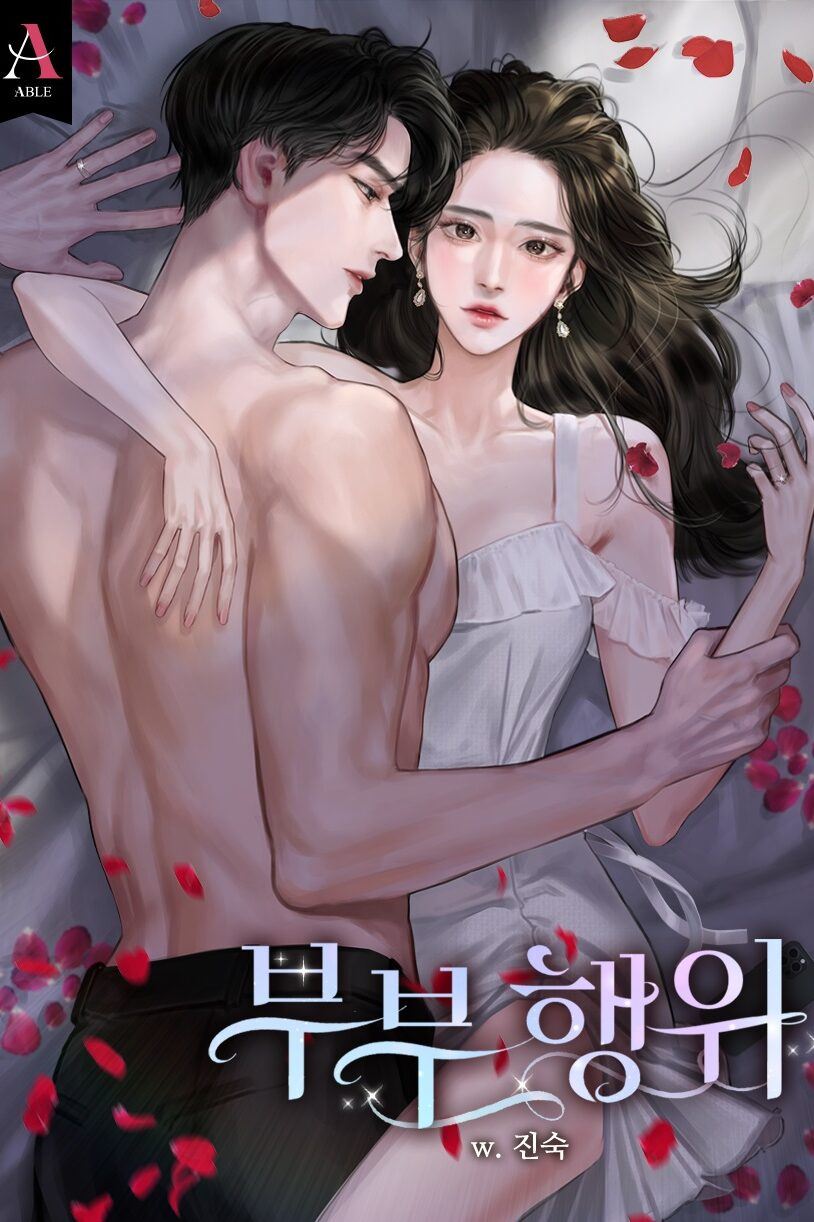
... Read More
I need to talk about Jinhee because this woman is absolutely unhinged in the most fascinating way. Watching her casually recount how she spent YEARS trying to steal Professor Kyung away from Seungmi—while calling that woman a 'pathetic b*tch' and a 'parasite'—is genuinely chilling. She says it with pride, actually. And then Da-hye's reaction? She's crouching in the DARKNESS overhearing this entire conversation and slowly realizing her entire life has been built on lies. That moment when Da-hye thinks 'They were not human. They were devils wearing human skin'—that's not just anger, that's a fundamental rewriting of her entire world. But here's what really got me: the mother-daughter dynamic between Jinhee and Hyejung. Hyejung says 'In that accident... if that hadn't happened, she'd probably still be refusing to divorce him by now'—and Jinhee just agrees like 'Exactly. When a person's heart becomes that twisted and obsessive, they're bound to meet a miserable end sooner or later.' These two are practically mirroring each other. Hyejung literally admires her mother, saying 'Look at your mother. Do you know how many years I spent?' And Jinhee feeds right into it: 'That's right. That's my daughter. If you take after me, you'll succeed.' This isn't a family. This is a cult of two sociopaths training their successor. And poor Da-hye, who spent her whole life believing her father was the best in the world, who trusted him completely with her mother's legacy. The line that absolutely destroyed me was 'What were the chances of a father betraying his own daughter? It was something she had never once imagined possible.' That's the real horror here—not just the business scheming, but the COMPLETE erosion of every relationship she thought was real.
... Read More
I need to sit with the symbolism in these chapters for a bit. The central image is literally a transaction of souls. Da-hye says she'd sell hers for revenge. Seo-hoo says: sell it to me. But what does that MEAN in the context of everything else? Yoonjung spent her whole life being afraid — of her husband, of his family, of losing her son's standing. She carries her fear silently. Red eyes, careful words, rigid posture. She is a woman who has already sold parts of herself to survive. Seo-hoo is the opposite — he throws his life away provocatively. Mocking the chairman. Dodging teacups. Demanding marriage on his own terms. But what is he really doing? He's performing rebellion while staying exactly where he needs to be. He's playing a game his grandfather taught him. And Da-hye — she sees the beasts upstairs and instead of confronting them, she lets Seo-hoo pull her away. She could have made a scene. She could have screamed. Instead she drank and listened and said "I want revenge." And he offered to be her weapon. The teacup. Shattered. Useless. A symbol of Kyungtae's broken authority? Or just a prop in a power play? "Unlike her own life, which had been torn apart, the world outside remained cruelly beautiful." That line about the glittering city… it's not just atmosphere. It's the thesis of the novel. The world keeps shining while individual lives are destroyed. Beauty has no empathy. And ending on that investigation call — "Find out everything about him. Leave nothing out." Seo-hoo is already building his arsenal. Revenge is coming. But at what cost to the souls involved? This story isn't asking whether revenge is justified. It's asking what revenge turns you into.
... Read More
I am still not okay. I am genuinely not okay right now. Let me just say: the moment Da-hye heard Ji-hoon's voice through the door and realized he was telling her he was “ten minutes away” while standing RIGHT THERE—my soul left my body. That specific detail where she's holding her phone, listening to his voice, and then the door cracks open and WHAM, there he is with someone else's arm around his waist. I physically recoiled. The worst part isn't even the cheating itself. It's the casual cruelty of it. Ji-hoon saying things like “I'm only using her until she's no longer useful” while stroking another woman's stomach like some kind of rom-com villain who forgot he's in a drama. And Da-hye? She doesn't scream. She doesn't confront them. She just stands there, frozen, fingers turning white on her skirt, listening to every single word. The silence is SO LOUD. Then Han Seo-hoo appears and drags her away. I know I shouldn't be feeling anything for a guy who just watched her entire world collapse, but there's something about the way he handles her—gentle, almost careful—that hits different. When he says “It's practically like a morning drama” with that faint smile? My heart broke AND skipped a beat simultaneously. I can't believe I'm typing that. The emotional whiplash in this passage is unreal.
... Read More
Let me just say — the pacing in these chapters is chef's kiss. You open with a FULL-THROTTLED family confrontation. Grandfather vs grandson. Teacups flying. Threats about sending him overseas. Marriage demands. This is high-octane drama and it grabs you immediately. Then — BAM — you're suddenly in Da-hye's POV, exhausted, visiting law firms, getting nowhere. The shift is jarring in the best way. You go from "I will destroy you" energy to "I don't know what to do anymore" energy. That emotional whiplash is intentional and it works. And then the most devastating moment: she's leaving the lounge, about to go to the elevator, and she sees THEM. Kang Ji-hoon and Hyejung. Arm in arm. Laughing. Whispering. Like she never existed. The text doesn't even describe what she does next — it just cuts to someone grabbing her wrist and saying "Where exactly are you planning to go?" We don't need to see her confrontation. We don't need the drama. Seo-hoo intercepts it before it happens. The author is so smart about this. The scene that WOULD have been explosive gets replaced by something even more interesting — her being pulled into Seo-hoo's world instead. Then the bar scene unfolds almost in real time. Drink by drink. Conversation by conversation. Revelation by revelation. "Then sell your soul to me." And then she leaves. The chapter ends with him ordering an investigation. The structure is: CONFRONTATION → DESPAIR → TEMPTATION → REJECTION → AFTERMATH. Every beat lands. I did not want to stop reading at any point.
... Read More
The dialogue in these chapters is NOT subtle but it doesn't NEED to be because that's the point—these people are predators who don't bother hiding anymore. Jinhee's voice is particularly remarkable. She's speaking freely now that Da-hye is hidden away, and her lines are devastating in their casual cruelty: 'Seungmi, that pathetic b*tch… Do you have any idea how hard I worked to tear her away from Professor Kyung?' 'That makes you the winner.' 'Honestly, it suits her.' This woman doesn't just lack empathy—she lacks any awareness that what she's saying is monstrous. She's proud of her manipulations. And the most chilling part? She says all of this within earshot of her supposed victim like it's nothing. That's the voice of someone who has NEVER faced consequences. Then there's the daughter Hyejung, who mirrors her mother perfectly: 'I don't understand how someone could be that desperate' about her own mother's suffering. The intergenerational transmission of sociopathy captured in three lines of dialogue. Ji-hoon's voice is different entirely—performatively sweet, almost cartoonish in his fake warmth: 'Son-in-law Kang! You seem to get more handsome every time I see you.' But then there's the line that changes everything: when he says to Da-hye 'Where were you? I've been looking everywhere for you' with 'his usual gentle smile'—and you realize this is the person she TRUSTED. The dissonance between his dialogue and his true nature is what makes it hurt. And Seo-hoo? Minimal dialogue but maximum impact. 'I'd rather toast with your girlfriend instead.' One line. That's all it takes to shift the entire power dynamic in the room.

Leave a comment

You must be logged in to leave comments. or
