Love Reservation [Entertainment] - Reviews

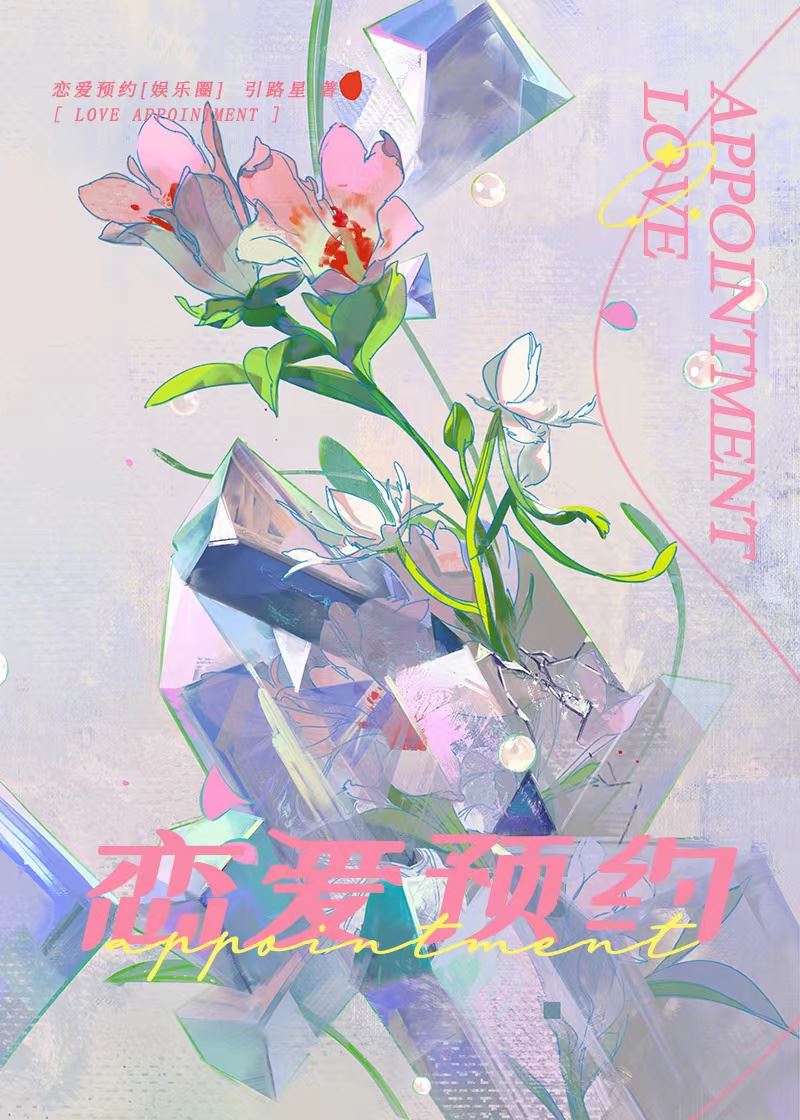
Love Reservation [Entertainment]
+Add to Custom List
Sort
Add review
... Read More
The stakes in this sequence are layered in a way that keeps you genuinely worried, and not just for one reason. On the surface, it's straightforward: Wu Qi wants something from Jiang Liusui, and Jiang Liusui keeps saying no. The external conflict is clear. But what makes it so tense is that the author makes you understand exactly why saying yes might seem like the rational choice. Wu Qi controls access to resources—He Yujing's MV is a massive break, but Wu Qi offers the next step. In an industry where you're only as good as your last opportunity, turning down a powerful director isn't just principled, it's risky. Jiang Liusui's internal conflict is equally compelling. He's disgusted—"suppressed his disgust, his tone even"—but he's also smart enough to know he can't afford to lose his cool. He sends Ding Yan out to protect him, not the other way around. He's playing a game where one wrong move could define his entire career trajectory. And then there's the question hanging over everything: what does Jiang Liusui actually say at the end? The chapter cuts off right as he's about to respond, and that silence is louder than any confrontation could be. Because however he answers, the power dynamic doesn't change—Wu Qi still holds the cards, still has the authority, still gets to decide whether Jiang Liusui succeeds or stalls. The real stakes aren't just about this one encounter. They're about whether a young person with talent and integrity can survive in a system designed to wear them down.
... Read More
The structural pivot in these chapters is genuinely impressive. We start grounded in a university setting — students, campus life, therelatively intimate world of Jiang Liusui and his friends. Then suddenly we're downstairs in a nightclub on the second floor of some venue, surrounded by laser lights and industry insiders, and He Yujing is talking about album releases and stock prices. How does the author pull this off without it feeling jarring? Scene transitions. The Shen Sijia dialogue about He Yujing rumors acts as a bridge. She's the narrative conduit, literally carrying us from the campus scene to the music industry scene through her obsession. Genius-level plotting right there. The pacing within each scene is also tight. No filler. Every line of dialogue serves either character development or plot advancement. Even the comedic beats — like the QR code misunderstanding — aren't allowed to drag. Jiang Liusui defuses the situation quickly, gives the girl an out, and we're moving on. The author respects the reader's time. What I love most is the cliffhanger energy without actually ending on a cliffhanger. Su Wan mentions knowing a suitable actor for the MV, can't quite remember the name, promises to ask her sister. That's a hook that doesn't feel manipulative. It feels organic. Like the story is just naturally pulling you forward.
... Read More
"'Yu-ge.'" Just two syllables. Jiang says it like he's testing whether the word fits in his mouth before he lets it out. And He Yujing—cold, dangerous He Yujing who probably makes grown men sweat just by looking at them—whispers back "What's wrong?" like he's genuinely worried. The way Jiang lowers his head and buries his face in He Yujing's neck during the scene, catching his new floral scent... I literally stopped breathing. The script calls for lip-syncing a quiet conversation but their real conversation underneath is so much heavier. Jiang is trusting him with the truth about Wu Qi while physically pressed against him. This isn't just proximity, this is vulnerability and He Yujing's reaction to it matters more than anything else on screen. And He Yujing, noticing the shift in his own scent and how it changes his aura—that author doesn't even need to write He Yujing's inner thoughts for me to understand. The intimacy is already there. I kept re-reading that part and my heart rate wouldn't go down. They're literally performing a scene about closeness while something real is happening inside it, and neither of them is pulling away. Just the fact that Jiang even considered who to turn to and chose He Yujing over staying silent... that's a whole emotional arc in itself.
... Read More
Can we just take a moment to appreciate how perfectly written He Yujing's dialogue is? Because the author has given him one of the most distinct voices in the text and I am obsessed. Look at his exchange with Chi Lianxi. Seven figures. Friendly rate. You said the same thing three years ago. Go dream about winning Best Actor. A hundred times better looking than you. That is rapid-fire, merciless, affectionate-roasting dialogue that establishes in seconds exactly who this person is. He Yujing doesn't mince words. He doesn't sugarcoat. But the underlying current is clearly that he's comfortable enough with Chi Lianxi to be brutally honest, which in this world is basically a love letter. Compare that to how he speaks to Jiang Liusui. Totally different register. Shorter sentences. More controlled. 'Yu-ge.' 'Mm.' 'Just keep calling me that.' Every word is weighted. He's not performing for an audience here—the Chi Lianxi banter is public performance, but with Jiang Liusui he's curating distance while also, paradoxically, pulling him closer through those carefully chosen words. And Wu Qi's dialogue! 'Make sure you give it your all.' Casual on the surface, but that slight squeeze on the shoulder paired with the lingering gaze tells a completely different story than the words themselves. The author is using subtext as a primary storytelling tool here, and it's masterful. The narration itself also deserves credit—phrases like 'his lashes were naturally long and thick, but with the makeup and light-colored contact lenses, his eyes looked hazy, as if they were randomly casting flirtatious glances'—that's not just description, that's voice. The narrative itself is doing the same kind of layered observation that the best characters do. Every sentence is doing double or triple duty.
... Read More
'The feeling of being liked was like being wrapped in a soft, gentle cloud.' Before he knew it, the corners of his mouth had lifted into a small, unconscious smile. I need to just sit with that sentence for a moment. Jiang Liusui, who spent so long in quiet isolation watching movies alone as a child because nobody was there to keep him company—here he is, suddenly receiving waves of goodwill from strangers, and his body betrays him with happiness before his mind even catches up. That's not acting. That's just... being human. What made this hit me even harder was the fan dynamic. Normally, when a hot idol starts hanging out with a less famous actor, you'd expect chaos. Drama. Fan wars. But instead, He Yujing's fans are actively defending Jiang Liusui, telling their more extreme members to behave, burying the harsh comments. One fan literally thanked He Yujing for "playing matchmaker." Matchmaker! As if He Yujing intended this all along! And Jiang Liusui—he's not some calculating person feeding into this. He genuinely didn't expect any of it. He posted that simple "Thanks for the hat, ge" and got flooded with warmth he didn't know he was hungry for. That unguarded moment of surprise, the unconscious smile, the way he just sat there processing it all—this is the most vulnerable I've seen him. Not the professional actor pretending on set, but the actual person underneath.
... Read More
Okay so this chapter is wild because it hinges on something so small—a baseball cap. Zhou Xun hands Jiang Liusui his black cap to hide his face, and then the ENTIRE scene spirals from there. The blond guy knocks it into a puddle, steps on it, and that's when He Yujing shows up. He Yujing then gives him HIS red cap. I keep thinking about how the cap is basically the MacGuffin of this whole scene—first it's Zhou Xun's protection, then it's destroyed, then it's replaced by He Yujing's gift. The plot is basically running on these tiny objects passing between characters like little love letters. And the escalation is so well paced. You've got the uncomfortable flirtation, the physical crossing of boundaries (grabbing the shoulder, the spilled drinks), and then—BAM—He Yujing appears with that "Don't start trouble" line. I love that he doesn't make a huge dramatic speech. He just... handles it. One grip on the wrist, one shove, and the guy is gone. Then the crowd goes absolutely feral and suddenly Jiang Liusui's camouflage is completely blown. That transition from "I'm safe incognito" to "OH GOD EVERYONE KNOWS WHO HE IS" is masterful tension building. The ending with the album tickets promise feels like a plot hook for later. It's not resolved, it's just planted. I'm curious whether this favor exchange is going to come back to bite anyone.
... Read More
I need to talk about the emotional undertow in these chapters because it is SUBTLE but it is EVERYWHERE and I am wrecked. Let me start with something small that somehow hit harder than any grand confession could have. Jiang Liusui is getting makeup done, the artist compliments his features, and he stares at his own reflection thinking: 'Why does it feel a bit... provocative?' Not arrogant. Not excited. Self-conscious. He's putting on a persona—'a fox spirit,' as the artist calls it—and he's acutely aware that this version of himself is performative. He knows it suits He Yujing's vision. He knows it might even suit him. But there's something vulnerable in admitting to yourself that you look deliberately alluring for someone else's project. Then cut to the set. The love nest. Canvases everywhere, soft cushions, intimate lighting. Jiang Liusui is supposed to approach He Yujing from behind, wrap his arms around his neck, create this image of tender devotion. And he can't do it. Not because he's bad at acting, but because the fiction demands an intimacy he hasn't earned and He Yujing won't help him fake convincingly. Wu Qi keeps cutting. The atmosphere grows stiff. And then He Yujing says those words: 'Is it really that hard to play lovers with me?' Notice he doesn't say 'you.' He includes himself in the difficulty. There's a moment of genuine frustration there—I can feel it—not just at Jiang Liusui's performance but at his own inability to just make this feel real, or to make it feel easy, or to not care how it feels at all. The chemistry isn't in grand gestures. It's in the silence between takes. In He Yujing choosing to speak up rather than stay comfortable. In Jiang Liusui wanting to say something but not knowing how. This is the kind of slow-burn emotional writing that makes you want to reread every scene twice just to catch what you missed the first time.
... Read More
The stakes in this story are quietly devastating, and I think that's what makes it so compelling. Let's break it down: Jiang Liusui's career is already precariously positioned — he's playing second male lead roles, not leading man material (yet). If his relationship is exposed, does he lose the anonymity that lets him navigate the industry? Does it become his entire public narrative? His confidence suggests he's thought about this, but that doesn't mean the fear isn't there. Zhou Xun's stakes are different but equally real. As a presumably established figure, his personal life affects his professional relationships. The man is clearly comfortable in his skin, but comfort doesn't equal immunity from consequences. Shen Sijia's conflict is comedic on the surface — her idol might date the wrong person — but underneath it lies a deeper tension about authenticity versus fantasy. She wants He Yujing to be real, but only on her terms. And He Yujing? The highest stakes of all. At twenty-five, at the peak of his career, every personal decision is amplified a thousand times. A relationship scandal could shake his brand. Yet the text suggests he's already tired — 'been busy for almost half a year. I'm exhausted.' Even the powerful have breaking points. Su Wan's suggestion about the actor feels innocuous, but what if it's a test? What if she's subtly pushing for something she can't quite articulate? The unspoken tensions here could detonate at any moment.
... Read More
I keep replaying the moment Jiang Chuan calls with the news. "They've chosen you directly! No auditions, no competition." This is huge, and not just because it's a once-in-a-lifetime opportunity. This is about what the choice itself reveals. He Yujing didn't just agree to let Jiang Liusui be in his MV. He personally selected him. After that night—after He Yujing's protective behavior, after the whole hat incident where he shielded Jiang Liusui from the crowd—something shifted between them, and this casting decision is the proof. It's not just professional courtesy. It's intention. But then you layer on the script's content and suddenly He Yujing's choice looks ambiguous. He's asking Jiang Liusui to play someone who gets loved, used for inspiration, and then abandoned in the rain. Is He Yujing aware of this parallel? Does he care? Or is he just seeing an actor who fits the role, and the tragedy is purely artistic? The assistant Ding Yan calls the script "unapologetically scummy" and honestly, same energy. The painter character is selfish to his core—using love as fuel, then discarding it when the suffering becomes productive art. If He Yujing is playing that role, I'm suddenly very interested in watching how he navigates his real relationship with Jiang Liusui during these shoots. Is he the painter, or is he something else entirely? Because the author's note says A'Jing fell for Suisui through interactions, not at first sight—that suggests the opposite of the script's story. One is consumption. The other is gradual, patient knowing. And I have a feeling that distinction is going to matter.
... Read More
What strikes me most about these chapters is how the author turns something invisible—the internet, social media buzz—into a scene you can literally walk through. The Weibo trending list isn't just described as a list, it's described as "neatly lined up as if flooding the screen." The comments section becomes a crowded room. Fans swooning, CP shippers, He Yujing's actual fans attacking everyone, sarcastic netizens accusing Jiang Liusui of buying his way onto the chart. It's a ecosystem. Then you cut from that digital chaos to the physical bar street at midnight—"bright and lively even past midnight"—and the contrast is everything. One world is loud in a digital way, the other is loud in a human way. Both are overwhelming. The nightclub scene itself is barely described, which is brilliant. We only know it through the aftermath: the video clips, the questions, the hat. The actual event happens off-screen, and that's somehow more powerful. The red baseball cap becomes this almost mythological object—an artifact passed between two people who just met. "Don't start trouble." Three words from He Yujing that apparently carry the weight of an entire scene. You don't need to see the fight. You already know who won.
... Read More
There's this recurring theme running through these chapters that gets under your skin the more you think about it: the way the entertainment industry packages predation as opportunity. Wu Qi doesn't walk in and threaten Jiang Liusui outright. He frames it as helping. "I genuinely want to help you." He wraps his demand in the language of mentorship and career advice, talking about how fierce the competition is, how many people would kill for the chance he has. The manipulation is so polished because it comes from someone who understands exactly how this world works. And He Yujing's response to Shen Jie's concern about Wu Qi's excuses is telling: "From now on, whatever Wu Qi says, if I think it's good enough, then it's good enough." That's not just being protective—it's acknowledging that in this industry, the official narrative (the director's word) is what matters, not the truth. The system is rigged, and He Yujing is willing to rig it back. Meanwhile, the title of the drama being discussed—"The Glass Mirror"—feels like it's hovering over everything like an unconscious motif. Glass is transparent but fragile. Mirrors reflect but distort. This whole industry operates on surface appearances, on what looks true versus what is true. Wu Qi's behavior is designed to leave no trace, to be plausible deniability wrapped in professional language. And Jiang Liusui's challenge isn't just saying no—it's navigating a world where saying no might cost him everything, and the system is structured to make that cost feel reasonable.
... Read More
Okay can we just take a moment to appreciate how smoothly Jiang Liusui handled that whole situation? The girl asks for his number, Shen Sijia is over there making panicked face gestures like a human marionette, and Jiang Liusui just casually drapes his arm around Zhou Xun and drops the bombshell that he doesn't give out his contact info to others. The way Zhou Xun just sat there like '…?' while the girl completely misread the entire situation and apologized to Zhou Xun for disturbing 'the couple' — I laughed so hard I nearly spilled my tea. And then Shen Sijia's follow-up comment about Zhou Xun being only 'decent-looking' next to He Yujing? chef's kiss. The subplot threading is also doing a lot of work here. We get the He Yujing-Su Wan rumor mill churning in the background, which feels like it's setting up some kind of parallel narrative. Su Wan mentioning she knows an actor who might fit the MV role? That feels like a plot device waiting to go off. The author is clearly building multiple threads simultaneously — the secret relationship, the celebrity rumor industry, and now this potential intersection through the MV casting. It's not messy, it's layered. Like someone carefully placing chess pieces.

Leave a comment

You must be logged in to leave comments. or
