Summary

... Read More
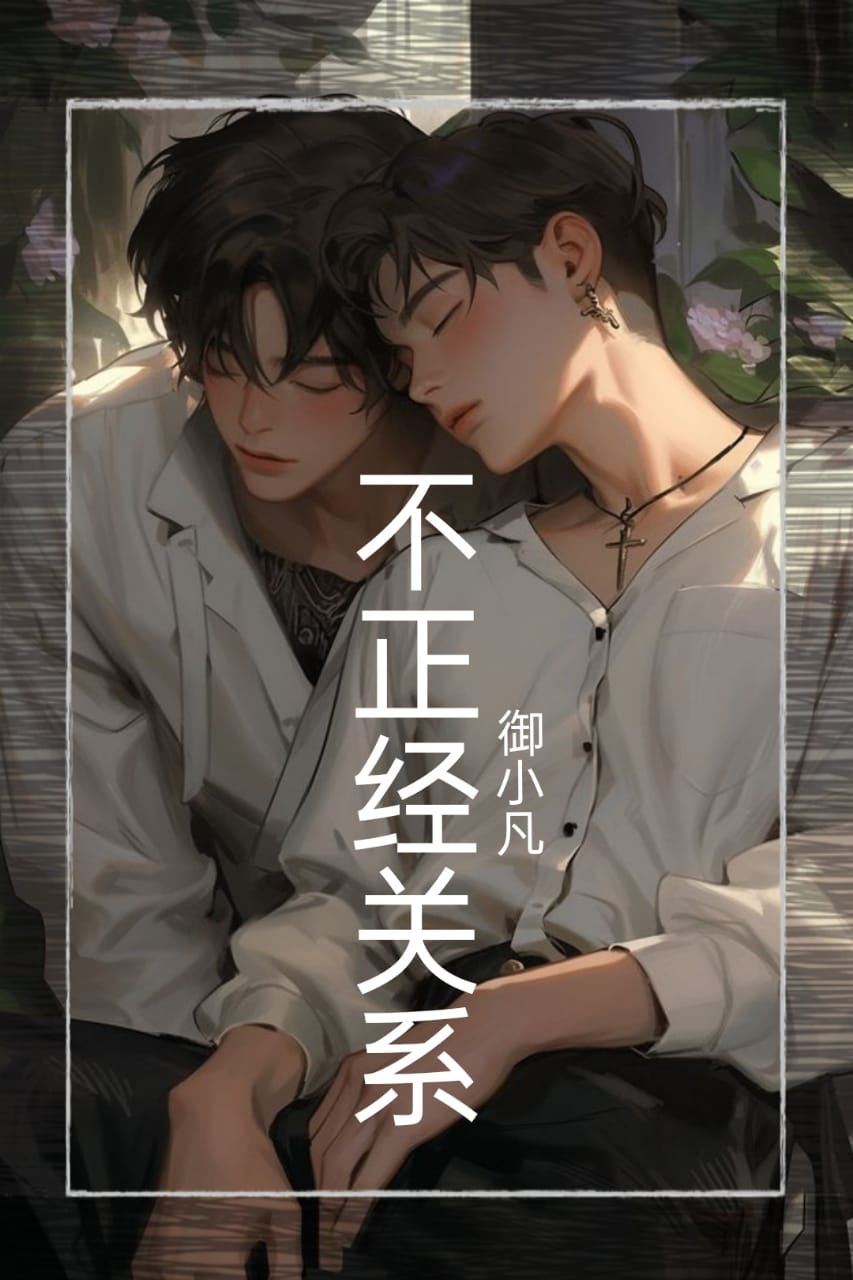
Yan Hai'an serves as the manager and caretaker for Mo Yisheng, a talented but socially naive painter. The two run a modest studio together, with Yan Hai'an handling all business and social interactions while Mo Yisheng focuses exclusively on his art. The story begins at the opening of gallery owner Li Qing's new exhibition space, where Mo Yisheng's work is displayed. During the event, Yan Hai'an notices the arrival of Sun Yan, the heir to a wealthy real estate family known for his playboy reputation and lack of moral restraint. Yan Hai'an immediately identifies Sun Yan as a threat to Mo Yisheng's innocence and attempts to shield his friend from any entanglement.Sun Yan, captivated by Mo Yisheng's beauty and artistic talent, openly declares his interest in acquiring his paintings and pursuing him romantically. Despite Yan Hai'an's cold reception and attempts to deter him, Sun Yan persists, visiting the studio unannounced and spending hours simply watching Mo Yisheng work. Yan Hai'an grows increasingly anxious, fearing that Sun Yan's wealth and status will inevitably corrupt or exploit the pure artist. He arranges for Mo Yisheng to participate in a group painting expedition to an ancient village, hoping that distance and professional obligations will keep the two apart.The trip takes place in a remote, undeveloped village where locals are beginning to relocate due to upcoming commercial development. Yan Hai'an and Mo Yisheng stay at the home of Wu Ningshu, an elderly resident. During their exploration of the village, Yan Hai'an unexpectedly encounters Sun Yan, who reveals that he has also purchased property in the area for development purposes. Sun Yan follows them to the residence, intruding on their private stay and forcing Yan Hai'an to maintain a facade of hospitality while internally seething with resentment.Tensions rise when Sun Yan and Yan Hai'an are accidentally attacked by a protective goose in the courtyard. Sun Yan shields Yan Hai'an from the animal, an act that momentarily shifts the dynamic between them. Later, Sun Yan charms Mo Yisheng with friendly conversation and gifts, successfully breaking down the barriers Yan Hai'an had erected. Mo Yisheng begins to view Sun Yan as approachable and kind, unaware of the darker intentions beneath his polished exterior. Yan Hai'an watches this transformation with growing dread, realizing his efforts to protect his friend are failing.As evening falls, Sun Yan insists on joining Mo Yisheng for a soak in the village's natural hot springs, disregarding Yan Hai'an's attempts to intervene. The situation highlights the power imbalance and Yan Hai'an's growing sense of helplessness. Meanwhile, Yan Hai'an reflects on his own past and his decision to step back from painting to support Mo Yisheng, a sacrifice that has left him emotionally isolated. He occasionally seeks solace at a local bar, where he encounters Li Xi, an old acquaintance who offers companionship without demanding emotional commitment. However, Yan Hai'an remains focused on navigating the immediate danger posed by Sun Yan's relentless pursuit.The narrative establishes a complex triangle of desire, protection, and manipulation. Sun Yan represents the intrusive force of wealth and privilege, capable of reshaping Mo Yisheng's world with a single gesture. Yan Hai'an occupies the role of the vigilant guardian, whose love for his friend is expressed through control and avoidance. As the sun sets over the ancient village, the proximity of the three men creates an electric atmosphere of unspoken conflicts. Sun Yan's interest appears to be shifting, suggesting that Yan Hai'an himself may become a target of the playboy's attention, further complicating the already tense relationship between the two men.

Latest Release
DateGroupRelease
2026-09-26knoxt c12
2026-09-26knoxt c11
2026-09-26knoxt c10
2026-09-26knoxt c9
2026-09-26knoxt c8
2026-09-26knoxt c7
2026-09-26knoxt c6
2026-09-26knoxt c5
2026-09-26knoxt c4
2026-09-26knoxt c3
2026-09-26knoxt c2
2026-09-26knoxt c1

Community Reviews

Rating(4 / 5.0, 211votes)
5 stars
64(30%)
4 stars
78(37%)
3 stars
69(33%)
2 stars
0(0%)
1 stars
0(0%)

Popular reviews

... Read More
Okay so let me just start by saying—I replayed the daisy scene in my head for like ten minutes after reading it. You know those moments in books where something tiny becomes this huge emotional anchor? That's what happened here. Yan Hai'an looks at this bunch of plain daisies, wrapped in kraft paper, and instead of throwing them out like he probably should have, he says 'No need. Put it in a vase.' He specifically asks for the green one—the thick glass vase. And then he crumples the cards and tosses them. Just like that. The detail that got me: 'It lost to the delicate beauty of those bouquets before, but it had a new kind of lively and lovely look.' He's talking about flowers but... isn't he? There's something so deliberate about him choosing to keep the humble thing over the flashy thing. And then when he returns almost a week later and sees the flowers wilting—that's the part that wrecked me. 'No matter how well-cared for the flowers, the flowers will still wither away.' He says he'll buy another bunch because 'he was used to seeing flowers here before.' Not because the current ones matter. But because the absence would bother him. Also: Li Qing's tea house scene? A small yard, a view of a small bridge and flowing water underneath, beauties in ancient costumes playing the zither among shadowy plants. 'The artistic conception and forceful style are very suitable for Li Qing's needs.' I could literally see this. This feels like a film set. Every frame. The contrast between the daisy vase at the front desk and the opulent tea room with zither players—it's like the book is showing you two different worlds coexisting, and you just have to decide which one Yan Hai'an actually belongs to.
... Read More
The stakes in these chapters are terrifying precisely because nothing explosive is happening on the surface. Everyone is just... existing. Eating dinner. Going upstairs. Saying the same lines. And yet the tension is so thick you could cut it with a knife. Sun Yan's internal conflict is the main battlefield here. He knows he's interested in Yan Hai'an — "this interest is from the inside out" — but he also knows that going deeper means risking everything he has left. The cost-effective method. Sex friends. No more, no less. This is a man who has already lost everything once and is now building walls so high that even affection has to be transactional. The stakes aren't about whether he'll sleep with someone — they're about whether he'll let himself WANT someone, and that is infinitely more dangerous for a guy who's already a "dead dog." Sun Ling's conflict runs parallel and is equally agonizing. He's fighting a battle he can't win — trying to save his brother from himself while respecting boundaries he doesn't want to respect. "To actually have someone close to you, it's not such a horrible thing, isn't it?" He's begging. Not demanding. BEGGING. The stakes for Sun Ling are losing the last person he has in this world, and he knows it. Every conversation with Sun Yan is a tightrope walk where one wrong step and his brother retreats completely. And Yan Hai'an? He's the outside force disrupting both of these dynamics. He shows up, Sun Ling dismisses him as straight, Sun Yan tries to reduce him to a convenient arrangement, and yet that flower card at the end proves none of that simplification holds. The real conflict hasn't even started yet. It's just simmering. And I am NOT ready.
... Read More
I keep coming back to the painting. Not just because it's the object that brought these two together, but because it functions as the story's central metaphor for how we let people see us. Yan Hai'an gave up painting because he felt he lacked talent. But the real wound wasn't artistic failure — it was the belief that his work, his expression, his inner self, wouldn't be valued. And Sun Yan, of all people, held onto something Yan Hai'an had already abandoned. That's not just loyalty. That's devotion to the version of someone that even they've stopped believing in. There's a line that keeps echoing in my head: "There has always been a tacit understanding between the two of them that is beyond ordinary relationship." Beyond ordinary. That phrase does a lot of heavy lifting. It suggests their connection exists outside the categories we normally use — friends, lovers, acquaintances — and settles somewhere older and stranger. The painting survived. That matters. Because what it represents — Yan Hai'an's desire to be understood — survived too. And that, honestly, is the whole story.
... Read More
There's this one sequence that I keep coming back to and I can't pinpoint exactly why it works so well. Yan Hai'an is in Sun Yan's bathroom, bent over rinsing his mouth, and he looks up into the mirror and sees Sun Yan standing behind him. Men's skincare products on the shelf. A disposable toothbrush in his own hand. This domestic tableau of two guys who just slept together pretending like it's no big deal. The sensory details are so specific and grounded. The smell of porridge downstairs. The steam from the shower. The visual of Sun Yan smoking at the bathroom door. These aren't cinematic set pieces—the author isn't trying to make you see a movie. They're making you feel like you're accidentally walking in on someone's morning routine. That's harder to pull off and honestly more impressive. Then you cut to the airport waiting room and the world shrinks down to this one small detail: a phone screen, a blue sky at 8 o'clock, a single heart icon. The contrast between the physical space of Sun Yan's house (full of other people, family dynamics, Porridge, siblings) and Yan Hai'an's isolation in that waiting room is devastating. He's surrounded by 'people coming and going' and yet he's completely alone with this realization about Sun Yan. The five-city exhibition tour is mentioned in passing but it paints a whole picture—transient hotels, constant movement, Yan Hai'an carrying the emotional labor of logistics while Mo Yisheng chases inspiration. You understand this relationship dynamic without it ever being stated outright. The author builds worlds through atmosphere and detail rather than exposition. I always appreciate that.
... Read More
I am absolutely obsessed with how each character's voice is so distinctly different in this chapter, and the dialogue carries so much subtext that I keep having to reread lines to unpack them. Let's start with Sun Yan, whose voice is effortlessly provocative. When he says "Isn't it normal for guys to take a hot spring together? If I really want to do something, do you think you will be able to stop me?" — he's being deliberately obtuse, deliberately challenging, and he delivers it with this casual sarcasm that makes Yan Hai'an's teeth grind. And then he caps it off with "But after all, I'm a good person" like he's just made a harmless joke. The tonal whiplash is incredible. Yan Hai'an's voice is the complete opposite—formal, restrained, always using titles like "Mr. Sun" even when he's seething internally. His dialogue is almost painfully polite: "You can wait for a while. I have something to talk about with you later, okay?" and "We already said that we would chat." But the author gives us these brilliant internal asides that shatter the polite facade. Like: "He paused at every word, almost gritted his teeth." Or that gorgeous line I quoted earlier—"Who the hell wants to take a hot spring with this fellow?" — which is Yan Hai'an's internal monologue, and it's so vividly distinct from his external politeness that you feel like you're reading two characters in one body. Mo Yisheng's voice is sweet, natural, completely unguarded. "We talked about some misunderstandings... Is the meal ready? I can smell it. It smells good!" He has this childlike directness that makes him the perfect foil to everyone else's games. And that's what makes the dramatic irony work so well—he genuinely believes Sun Yan is "humorous, approachable, and did not have the bad habit of overwhelming others." The tragedy and comedy of that line is absolutely perfect.
... Read More
Okay, let me just say it—this chapter is a masterclass in indirect courtship and I am HERE for it. Sun Yan basically pulls off the most elaborate workaround in literary history. Instead of pursuing Yan Hai'an directly (which he apparently finds "boring" now that he's had a taste of something new), he strategically befriends Mo Yisheng. The flower-giving scene is pure genius. He doesn't give the flowers TO Mo Yisheng—he gives them to the STUDIO. Brilliant move. It's subtle enough that even Mo Yisheng's own brother can't immediately see the pattern, and yet it's calculated to position himself as a warm, caring figure in Mo Yisheng's orbit. And then the hot spring setup? Chef's kiss. Wu Ningshu mentions the small hot spring that can only fit two people at a time, and immediately you can see Yan Hai'an's eyes widening with panic. He tries to intervene, tries to monopolize Sun Yan, tries to control the narrative—and Sun Yan just sits back and watches him squirm like a cat playing with a very stiff, very upright mouse. The author writes: "Who the hell wants to take a hot spring with this fellow?" — and I literally laughed out loud. That's Yan Hai'an's internal monologue, and it's so painfully accurate. But here's what's really bothering me about the plot trajectory: Sun Yan's interest in Yan Hai'an is clearly waning. The text says his "interest never lasted long" and that he's "reached the limit." Yet somewhere beneath that, he still feels "pity" for Yan Hai'an's "stray dog" energy. That contradiction is WHERE the story lives. This isn't a clean break—it's a messy, complicated tug-of-war where Sun Yan is deliberately creating distance while Yan Hai'an is desperately trying to maintain proximity. And Mo Yisheng, sweet oblivious Mo Yisheng, just thinks they're all getting along beautifully. The dramatic irony is absolutely delicious.
See all reviews

Custom lists

See all custom Lists