I’m Still Practicing Martial Arts, But How Did My Daughter Become an Immortal? - Reviews

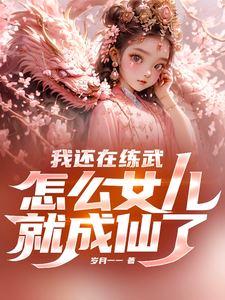
I’m Still Practicing Martial Arts, But How Did My Daughter Become an Immortal?
+Add to Custom List
Sort
Add review
... Read More
Honestly, the system activating right when Lin Tian needed it most felt almost too perfect, but then I realized that was exactly what made it work. If it had shown up earlier during those starving months, there'd be no tension. The author deliberately made us sit with his suffering for three full years of the narrative, so when those golden words finally appeared, I actually felt relieved. But here's what really surprised me — the way he handled the two bandits. This isn't some overpowered protagonist who one-shots everyone. He was literally bleeding, his chest blown open by a Thunderclap Pearl, and he still chased down a fleeing enemy. That moment when he cut off the bandit's head and the head rolled to his feet? I had to put the book down for a second. And then the Second Leader analyzing the fight scene like some kind of forensic report — watching his brothers debate whether the attacker was Second Rank or Third Rank based on blade notches? Chilling. It elevated this from a simple revenge scene into something that felt strategically weighty. The bandits aren't just cannon fodder; they're organized, they have leaders, they have plans. And the subplot about the Marquis of Nantian recruiting them for something bigger? That's a thread I'm absolutely going to follow.
... Read More
I need to process what just happened. Yan Qing comes in ready to kill, has actual skill, breaks through Qingyi's defenses, and Lin Tian doesn't even kill him. He threatens to strip his corpse and spread rumors that he died having sex with ten pigs. This man weaponized gossip as a torture method and the assassin is genuinely terrified. Not of pain—of BEING MEMED AFTER DEATH. And it works. Yan Qing just... stops trying to commit suicide. His 'psychological defenses instantly collapsed' when Lin Tian drops the Innate Expert fake-out. The way the narrative describes Lin Tian's Deterrence Attribute draining a massive chunk of his internal energy but him maintaining a composed exterior while internally panicking? That's tension I can feel in my chest. But the bigger stakes are looming. Marquis of Nantian sent the assassin. Seven Absolutes Hall is backing them. And Lin Tian now knows enough to connect it all—but the text explicitly says 'living is sometimes a luxury' and 'a lone wolf will eventually escape the siege of a pack of wolves.' We're not done. None of this is over.
... Read More
The imagery in these chapters is doing a lot of heavy lifting without the author realizing it, honestly. That opening description of July heat—'The earth steamed with heat, as if trying to boil people alive'—you can literally feel it. And Lin Tian sitting shirtless in the courtyard devouring watermelon while his daughter sleeps inside with two souls bouncing around in her head? That contrast between the lazy, warm domestic scene and the hidden supernatural complexity inside is chef's kiss. Then the text just pivots to the morgue, dark red palm prints on corpses, and suddenly the warmth is gone. The world feels dangerous now, and not in an abstract way—you can taste the difference between the noodle shop with Yu Lian doing accounts and the county government where autopsies are being performed. I also love that the author keeps grounding us in food. Small Skin Wonton is mentioned as a new product twice, and every time it appears it's like the world is reminding you that normal life goes on even when body count is rising. The detail about the scarred man working as a servant at the noodle shop—clearly someone with a past, clearly connected to something bigger, but the author just drops it and moves on like it's nothing. That's how real worlds work, right? You notice things casually that turn out to matter later. And Qingfeng Stronghold, the Marquis of Nantian, the Dragon Guards, the Zhang family of Beiliang—suddenly this small county feels like it's sitting at the intersection of massive political forces. The world has expanded without the author ever saying 'and then the world expanded.'
... Read More
I need to talk about how efficiently this chapter raises the stakes without ever feeling forced. It starts with Zhang Dingding refusing to do horse stance—lowest possible stakes, a kid being a brat—and by the end, Lin Tian has been put on a must-kill death list by a marquis, dozens of families have been exterminated, and there's an implied storm coming over all of Great Liang. That's a huge escalation in just a few thousand words. But here's what I found impressive: the author never lets you forget what's at personal risk. Every political maneuver, every factional threat, gets filtered back through Lin Tian's relationship with Nannan. He's not some wanderer seeking glory—he's a father who wants a stable life for his daughter. When Zhan Rixing delivers the warning, Lin Tian's first instinct isn't 'how do I fight this,' it's 'we're in trouble now.' That framing makes the conflict deeply personal instead of abstract. And the suspense techniques are solid—the family exterminations happen off-screen, we only see the aftermath through Fang Qingxue's autopsy work, which is far more unsettling than if we'd watched the killings. The missing children detail is deliberately left hanging, which is exactly the right amount of horror to make you uneasy without being gratuitous. Lin Tian's refusal to join the Dragon Guards also raises an interesting internal conflict: he has power now, but he doesn't trust the institution that ignored him before. That tension between personal loyalty and systemic obligation is going to bite him eventually, and I'm here for it.
... Read More
I keep coming back to the system prompts in this chapter and what they represent. On the surface, it's a cool gaming mechanic—'Ding! Hatred Value increased by 10 percent'—but the more I think about it, the more unsettling it becomes. Lin Tian is essentially farming people's fear and hostility like crops, turning human suffering into quantifiable points. 'You killed two bandits with a Hatred Value of 20 percent, rewarding four sign-in lottery draws.' This isn't heroism; it's a transaction. The chapter keeps circling around themes of survival and what you're willing to sacrifice—Zhang Erhe offers half his wealth and his wife, the constable Pang Shan risks his life for a few dozen copper coins, the bandits kill indiscriminately because they have nothing to lose. And Lin Tian? He's operating on a completely different level where even his compassion is gamified. The line 'Sometimes living in this world, you must be crueler than others' isn't just an action beat—it's a philosophical statement that echoes through everything he does. The teahouse storyteller talks about immortals and great masters, but the real power here belongs to a man who treats morality like a spreadsheet.
... Read More
The dialogue in this chapter is such a distinctive flavor and I think it's because Lin Tian's voice sits somewhere between a modern person and a ruthless martial artist, and that friction makes EVERY scene pop. Listen to this exchange: Zhang Erhe is desperately trying to negotiate for his family's lives, offering property and his wife, and Lin Tian responds with 'Not inte... what did you say, say it again' followed by 'I agree.' The comedic timing of that interruption—where Lin Tian's polite pretense completely cracks to reveal his true (and deeply weird) priorities—is absolutely perfect. It doesn't feel scripted; it feels like a real person whose brain short-circuits in the funniest possible way. Then there's Li Erniu, the bandit, who spits 'Talking about credit with bandits, go talk to King Yama, idiot' while literally spitting phlegm on a dead man's face. Brutal, colorful, unforgettable. And the woman with the sword—her dialogue is sharp and cold, immediately identifying the enemy's martial art ('Golden Dragon Gang's Shadowless Kick') with the confidence of someone who's been in hundreds of fights. Each character's voice is distinct enough that I could've guessed who was speaking without name tags.
... Read More
I need to talk about Nannan because THAT scene at the end absolutely wrecked me after everything that just happened. You've got Lin Tian coming home covered in blood, having just dismantled an entire bandit squad like it was nothing, and his first instinct isn't to check his injuries or process the fight—he runs inside wondering if he forgot to buy sugar hawthorns for his daughter. The man is a walking weapon and his brain still defaults to dad mode. And then Nannan grabs a turtle and shows it to him like nothing happened. The turtle scene! The author takes this whole detour about turtle-raising lore—something about descendants of the Black Tortoise, accumulating blessings, the difference between old turtles and baby ones—and it seems random until you realize it's actually Lin Tian processing his world through the only lens he knows. He's a father trying to build a safe home for his kid, and even his spiritual guidance comes through as practical parenting advice. But the real gut punch? When Nannan whispers that there's an older sister in her head who chased the bad guys away. What does that even mean? Is this some kind of hidden power awakening? A spirit bond? A plot device waiting to explode? I have so many questions and zero answers and I need to know RIGHT NOW. Also, the black-clad man and woman (Fang Jingshan and Fang Qingxue, apparently)—they're clearly on a separate mission entirely, investigating the Blood Demon Pavilion. Their glance exchange before disappearing shows this kind of unspoken partnership that I'm genuinely curious about. Are they allies? Rivals? Future complications for Lin Tian? I don't know yet but I'm already invested.
... Read More
This batch of chapters does something really smart with its structure. Let me break it down because it's not obvious at first. We start with Lin Tian and Nannan — domestic, soft, almost fairy-tale. He's telling her Journey to the West stories. Sun Wukong fighting the White Bone Demon. This is the calm before everything. Two paragraphs of pure warmth, and then — bam — we cut to Beiliang City, Zhang Erhe writing a desperate letter. That transition is BRUTAL in the best way. One moment you're thinking about a father reading bedtime stories, the next you're reading about family intrigue, betrayal, and a man who's been forced into a corner. The contrast between Lin Tian's peaceful life and Zhang Erhe's political nightmare creates this incredible tension. You feel both worlds simultaneously, and it makes you worry about how they'll collide. Then we go to Pang Tong, the comic relief arc. This could have been pointless filler — and honestly, some parts of it are just plain funny, the kid eating like a Taotie, crying all the way to work — but it serves a structural purpose. It gives the reader a breather between the heavy Zhang family drama and the heavier Yu Lian execution plotline. Speaking of which — the Yu Lian storyline. Lin Tian overhears two old men at the market, finds out about the deserter's wife facing execution, gets angry at the corrupt system, and immediately starts planning something. This arc moves FAST. Within what feels like a single afternoon, he goes from curiosity to outrage to action. And then — the cliffhanger. A stone thrown through the County Magistrate's window with a threat written on it: 'Beiping Chong Wang.' The pacing here is masterful. Each thread advances independently but they all feel connected by Lin Tian's growing power and moral compass. The Zhang family letter sets up future conflict. Pang Tong sets up a long-term disciple arc. The Yu Lian rescue sets up an immediate confrontation with the county government. Three separate storylines, all moving forward, none dragging. My only complaint? Maybe the Zhang Erhe section felt slightly disconnected from Lin Tian's world. But that might be intentional — the author is building a larger web of relationships, and we're just starting to see the threads.
... Read More
"Hic~ Brother Lin, what kind of wine is this? Why is it so strong? Back then, I wouldn't get drunk even after three jars, and I've only drunk a few bottles now." I am deceased. Pang Shan is the funniest character to ever walk into this novel and he only appears in a few scenes and I need more immediately. His dialogue is perfectly calibrated — each line sounds like a real person who's had too much to drink and is saying things he normally wouldn't. The hiccup markers, the slurred speech, the way he starts casual and spirals into political ranting about the magistrate, then pivots to his son like it was the whole reason he came over. Lin Tian internally notes: "You probably had this idea from the beginning. Looking at Pang Shan's embarrassed look, Lin Tian smiled helplessly." This man orchestrated an entire drunken confession under the guise of a casual drink invite and he knows it and Pang Shan knows that he knows it and they both pretend it didn't happen. Then there's Lin Tian's actual voice throughout — the dry internal commentary, the sarcastic observations ("If I hadn't been there, I would have really believed it" about the bull demon story), the genuine tenderness when he's with Nannan and Qingyi. He switches registers so naturally from cynical observer to protective father figure and it never feels forced. Old Man Li at the Listening Wind Pavilion also gets a moment: his storytelling voice is a character in itself, the way he dramatizes every detail — "three layers of flesh were scraped off his body, which was terrible to see" — like he's performing for an audience that is completely eaten up by it.
... Read More
Lin Tian's dialogue is razor-sharp when he needs it to be. The bandit threatening his daughter is the moment everything changes, and his response — 'You ate the dog I raised. You robbed the sweet potato I dug. You didn't leave me a single copper coin I earned. If I had a wife, you would probably even rob my wife.' — this isn't just dialogue, this is three years of accumulated humiliation spoken in one breath. It's funny, it's tragic, it's furious, and it's the most honest thing in the entire chapter. Nannan's brief lines are perfectly calibrated too. 'Daddy~ I'm thirsty' carries so much weight because it's the first time she's said it in three years. The bandit Second Leader's clinical analysis of the dead bodies is almost comically detached — 'The wounds are very clean and neat' — which makes him feel like a serious threat rather than a cartoon villain. And Zhan Rixing's dialogue in particular stands out. 'Chess pieces, when they become ruthless, can also bite off a piece of his flesh' — this young man speaks like he's already three moves ahead of everyone else. The boss lady's momentary spark of interest in Lin Tian before her son interrupts was also nicely written — a brief, almost humorous beat that humanizes her without making her a stereotype. Every character has a distinct voice here.
... Read More
'The sweat on her face solidified into ice crystals, attached to the half of her face that was burned, forming a different kind of beauty.' That line. THAT LINE. I had to stop and re-read it three times. This woman is literally losing her life force right now, forcing her internal energy to form freezing True Qi, and the author describes it like she's some tragic goddess frozen mid-motion. The visual is so specific and so wrong in the best way—ice crystals on a burned face, black hair with strands turning silver. This isn't pretty in a conventional sense. It's devastating. And the contrast with the latrine scene five paragraphs later?? One moment we're getting poetic imagery of a woman becoming ice, and the next it's 'throw this guy into the latrine and let him reflect on himself.' The tonal whiplash is incredible. The world feels real because it's not consistent—it's messy, it shifts from operatic to crude in a heartbeat, and that's what makes it breathe.
... Read More
Okay, can we just talk about Pang Tong for a second because this kid is honestly one of the funniest characters in the whole novel and I love him already. Lin Tian says the first thing he looks for in a disciple is perseverance, then nature, then respect. And Pang Tong? He has none of those three things apparently. He shows up, eats everything in sight, steals ten steamed buns to-go, gets assigned wood-chopping duty, comes back drenched in sweat, and his first words are basically 'I ate, can I go now?' But here's the thing — and this is what makes him so compelling — he's genuinely trying. When Qing Yi tells him 'Master likes disciples who do practical things,' he doesn't argue. He doesn't make excuses. He just goes out there and chops wood like his life depends on it. That's not zero perseverance, folks. That's a different KIND of perseverance. He's motivated by food and survival, sure, but he's also motivated by not getting beaten to death by his own father. And honestly? That's relatable. His parents too — the Pang couple are hilarious in their own right. His dad sent him to Lin Tian specifically because 'if you don't learn something, don't come home.' His mom is worried about feeding him because 'the grain in our house isn't enough for him alone.' They're not cruel, they're just poor and desperate. And when Pang Tong comes home sweaty and says he already ate at the Master's house, their entire expression softens. Of course it does. Their son finally got a free meal. There's this moment where Pang Tong reflects on his old life — clear soup, little water — and contrasts it with the Master's house which has 'two meat dishes and a soup for every meal, either chicken or elbow.' He basically decides in that instant to be filial. Not because he loves Lin Tian, but because Lin Tian feeds him. That's not shallow — that's survival instinct, and it's beautifully honest. And Lin Tian's attitude toward him is fascinating. He's harsh, he calls him a 'rice bucket,' he tells him to get lost if he can't chop wood to the wall height. But he doesn't kick him out. He keeps feeding him. He lets him stay. I think Lin Tian sees something in this kid — not traditional martial arts potential, maybe, but raw honesty. Pang Tong doesn't pretend to be anything he's not. The relationship between them is still in early stages, but I'm genuinely invested in seeing where it goes. Will Pang Tong actually become useful? Will he evolve beyond just being a gluttonous comic relief? Or will he remain this chaotic force of nature who somehow becomes indispensable through sheer unpredictability?

Leave a comment

You must be logged in to leave comments. or