I'm Immortal, So I Speedrun Horror Games - Reviews

I'm Immortal, So I Speedrun Horror Games
+Add to Custom List
Sort
Add review
... Read More
There's something deliciously ironic about throwing a room full of convicted murderers into a supernatural death trap where their real-world power means absolutely NOTHING. These people waltz in thinking they're apex predators—daggers at their waists, poisons in their pockets, used to getting what they want through violence. And then the rules change. The lights go out and suddenly the weakest prey are the ones who survive longest. The book keeps coming back to this theme of role reversal. Even Wu Wang—'A crooked body fears no proper shadow'—he's one of them, a criminal, but he's operating on a completely different level. The Spotlight on the lectern is interesting too. It's the only safe zone, the only light, and everyone FLOCKS to it like moths, willing to kill for it. Human nature doesn't change just because the context does. And the folk song—'Light! A phoenix flying against the wind! Light!'—feels almost religious, like worship in a haunted church.
... Read More
There's a scene — actually two scenes — that I can't stop thinking about. The mother opening the wardrobe and finding her daughter's head staring back at her. Not the whole body, just the head, positioned specifically so the camera would capture it. And the line 'Every room had a part of my daughter' — it's so brutally simple but it completely destroys you. Then there's Captain Li at the barbecue stall, ordering brains and kidneys to grill himself, that dark chuckle about 'how can you, an ingredient, also be the cook.' The author builds this world where the supernatural and the mundane occupy the same space without flinching. The Spirit Tablet is described almost casually — stained with mud, palm-sized — which makes it feel terrifyingly plausible. The lecture hall scene with the fifty murderers lying on the floor like discarded bodies, the harsh fluorescent lights, the lone microphone on the lectern — it reads like a nightmare version of a school assembly. Every setting feels alive with menace, and I'm convinced the author has a knack for making ordinary spaces (apartments, barbecue alleys, escape rooms) feel like places where anything could happen at any moment.
... Read More
There's this moment—maybe three paragraphs into the second half—where Wu Wang is just holding a faded, washed-out school uniform and the Red Vertical Pupil on his wrist BLINKS at him, and the fabric starts changing right in his hands. The description is clinical at first ("all sorts of colorful filth") but then it hits you: the red isn't paint. It's old blood. A metallic stench. And the panel text rewrites itself in real time. This is the book at its best—taking something mundane, something almost comically ordinary (a high school uniform), and slowly corrupting it until it's a death sentence with a countdown. The worldbuilding detail I keep coming back to though is the timestamp manipulation: thirty minutes in the instance equals a single moment in reality. The game compresses time so aggressively that Wu Wang's entire life outside the instances is essentially hollowed out. He studies, he eats instant noodles, he interacts with his sister—but everything happens in those compressed gaps. The world feels alive because it's HOSTILE and indifferent, which is honestly more believable than any cozy fantasy setting. Also: the cat. Dick Cat does a backflip for a treat stick and Wu Wang rewards it with exactly zero treats. The worldbuilding extends to his sense of humor, apparently.
... Read More
I need to talk about how this chapter handles betrayal and trust, because it hits different when you're stuck in a ghost school where nobody can be trusted. Wu Wang's relationship with Teacher Yao is basically a hostage negotiation wrapped in school politics. The teacher's desperation to keep his position, his transformation into something monstrous when afraid - it's tragic how the system corrupts even its victims. But the real emotional gut-punch comes with Li Yang. This kid gets dragged out of the Little Black Room, explodes violently, and splatters all over Baili Dao. It's not just gross - it's horrifying how quickly someone can go from classmate to corpse. The fact that Baili Dao has to spend ages washing up afterward shows the lasting psychological damage, not just physical. And then there's the cafeteria attack. Baili Dao gets sliced nearly in half, and while he's bleeding out, none of the other students look up from their books. That's the emotional core of this story - isolation in a crowd. Everyone's so obsessed with studying they don't notice their classmates dying. The horror isn't just the ghosts; it's the apathy. Tuxing Sun's line about getting depressed after five days says everything. These kids aren't just fighting monsters - they're fighting to stay sane in a world that doesn't care if they live or die.
... Read More
This ghost school isn't just a setting. It's a metaphor so sharp it cuts. "This Little Black Room was a place for disposing of garbage, of everything unrelated to studying." Every student who enters loses something they care about. Clothing interests go first. Then parents. Then friends. And what's left? A learning machine. Perfect scores. Empty eyes. The author keeps showing us this through different lenses. The students outside are already like this — dark circles, no laughter, no art class needed in a place where creativity is a distraction. "In this oppressive academic atmosphere, a place like the Art Building shouldn't even need to exist!" Baili Dao says that line casually, but it's the thesis of the entire chapter. The school doesn't just want your grades. It wants your humanity. It systematically strips away everything that makes you a person until only the function remains. Wu Wang's choice to die rather than lose his parents is the ultimate act of resistance. Not because death is noble — but because refusing to become a hollow shell is the only victory available. When he says "I choose death," he's really saying "I choose to remain human." And the plane crash imagery? That's not just backstory. It's the original trauma that shaped him — the moment he learned the world can take everything from you in seconds. The school is just accelerating that lesson. "The legend is right here among us!" — Qinghe Yikan's warning isn't about a ghost story. It's about the system itself being the horror.
... Read More
The Little Black Room. It keeps coming back like a bad song you can't stop humming and honestly I'm not mad about it. So here's what we know and what it means: a fish has slipped through the net. Some entity escaped from that sealed room, it's out there creating tentacled ghosts, and Principal Wang knows exactly who's responsible because he's already pinning it on Teacher Yao. The principal isn't just some scary boss — he's running a covering operation and Yao is the designated fall guy. Do a good job, Old Yao. Someone has to take responsibility. The implication is crystal clear: find the real culprit or YOU become the scapegoat. Meanwhile Wu Wang has his own agenda. He manipulates Teacher Yao with a framed suggestion that simultaneously helps Wu Wang get the Art Building's location AND gives Yao a false sense of control. He burns the note immediately after — no evidence, no paper trail, just pure verbal manipulation. This kid is playing four-dimensional chess while everyone else is still learning the rules. The structural brilliance here is how multiple plot threads converge: the escaping entity, the exam they're supposedly preparing for, the dorm lockdown, the chain-dragging creature patrolling at night. Every scene advances at least two storylines simultaneously. And then the bait-and-switch with Wu Wang's identity — we think he's dead, he's actually a secret OP player with a level-one skill, he escaped the Little Black Room through some ability he won't reveal, and he's somehow both the most vulnerable newbie and the most dangerous person in the school. The narrative keeps flipping what we think we know. The cliffhanger ending where Teacher Yao is genuinely tempted to betray his principal, Wu Wang has burned his evidence and moved on, and the group realizes they can't pass a high school test — it's chaos and I need the next batch immediately.
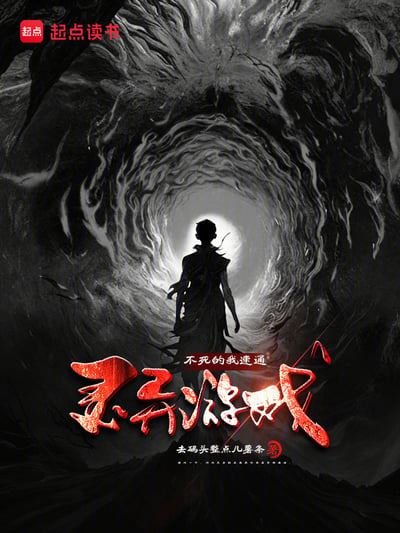
... Read More
This entire sequence is really about how institutions control and destroy individuals. The school rules aren't just guidelines - they're weapons. Teacher Yao can't violate them even when threatened with death. The principal monitors everything through these rules. Even Wu Wang's rebellion has to work within the system. The symbolism is overwhelming. Li Yang's head exploding like a watermelon - that's the academic pressure finally shattering someone. The rainbow tentacles infecting students - diversity becoming monstrosity. The clocks ticking everywhere - time itself as an enemy. But the deepest theme is about complicity. Everyone in this school is trapped by the same system: the students studying until they transform, the teachers enforcing rules that kill, the principal monitoring from above. No one is innocent, but no one is truly guilty either. They're all pawns in a Calamity of Spirits game where the only winning move is survival. Wu Wang's realization that the principal is "unbelievably immense" in power ties it all together. This isn't just a haunted school - it's a metaphor for any institution where rules matter more than human life. The ghosts aren't the horror; the system that created them is.
... Read More
There's something deeply symbolic about how the bodies are arranged in these murder scenes. The mother's daughter isn't just killed — she's dismantled and distributed throughout every room of the house, with her head placed directly in front of the security camera. This isn't just sadism; it feels like a statement about visibility and invisibility, about how victims are made to watch their own destruction. The Spirit Tablet itself is such a rich symbol — it literally blocks observation, creates a space where the killer can exist unseen. There's a whole commentary on surveillance culture embedded in that. Captain Li leading the investigation while being the murderer represents institutional corruption in the most literal way possible — the system designed to protect you is the system that's hunting you. And then Wu Wang enters this world of immortals and instances, where death rules govern everything, and the recurring question becomes: what does it mean to be human when you can't die? When your body heals instantly but your soul is apparently worthy of being dragged into a supernatural game? The opening line about every room containing a piece of the daughter — I think that's the thesis of the whole story. People get broken apart, scattered, stripped of agency, and the narrative keeps asking who has the power to put things back together.
... Read More
Let me just list what Wu Wang is facing right now and then you tell me this isn't maximum stakes: (1) A 24-hour deadline to enter an instance or his sister gets dragged in instead. (2) A passive skill called Vision of Truth that forces him to see truths he might not want to see, described as a curse from Lord Cthulhu. (3) A mysterious woman who built the entire instance now wants him dead—or alive for ten million dollars—and she has resources, connections, and enough rage to crack a phone screen with her fingers. (4) His Undying ability, which sounds cool until you realize the text explicitly says it can become torture—sealed in a concrete barrel, drowning repeatedly forever. (5) He hasn't slept in five years and uses suicide as an energy drink. Every conflict in this chapter feeds into every other conflict. The instance isn't just dangerous, it's PERSONAL now because of his sister. The bounty isn't just a threat, it's an organization-level problem. And his own power? It's a double-edged sword that the narrative keeps reminding him could become a curse. The suspense isn't maintained by one big threat—it's maintained by six different threats all breathing down his neck at once.
... Read More
Wu Wang's voice is the most distinctive thing about this book and I'm already obsessed with it. Here's a guy who just got stabbed multiple times, pulls his hand out of someone's chest, tosses the heart into a trash can, and his first concern is that he ruined the floor he just cleaned. The humor is so dry it could dehydrate an ocean. His internal monologue reads like: 'Ah! My 24K titanium-alloy dog eyes!' when his vision returns, or comparing the system voice to 'a Sadako with a thousand-year-old phlegm ball stuck in her throat.' The dialogue with other characters is equally sharp — when he tells the wake-up murderer 'Congratulations, the frontal lobe severing surgery was a great success. You've already forgotten that you're an idiot,' that's the kind of line that makes you snort-laugh in the middle of a horror novel. Meanwhile, Captain Li's dialogue is completely different — terse, professional, then later that chillingly casual order at the BBQ stall. The author gives each character a distinct voice and never lets them blur together. Even the system messages have their own tone — cryptic, almost playful in their cruelty with lines like 'May you all find the death that belongs to you.'
... Read More
I need to process what just happened with Wu Wang. Completely. The way this kid went from someone they all assumed was a dead newbie to honestly the most dangerous person in the entire cast? Chef's kiss. Think about it. They all thought Pending Death was killed. Then he shows up in the infirmary, has his wrist already severed, and when the doctor refuses to give him a certificate because procedure is procedure — this guy Gouges his own eye out. In front of witnesses. Like it's nothing. And then casually explains the anatomy of eyeball removal with the tone of someone describing a recipe. "You need to hold the eyelids still and pry open the gap between the common tendinous ring and the orbital bone." What is WRONG with this kid. But the real relationship shift happens with Teacher Yao. Wu Wang doesn't just blackmail him — he offers him a PROMOTION. Frame someone Yao despises, become the hero who uncovers the truth, impress the principal. And Yao is genuinely tempted. His veins bulge, his fingers elongate into ghost claws, but he's CONSIDERING it. This is such a brilliant character moment because it shows us that even the minor antagonists have their own agendas, their own petty hatreds, their own ambitions. And Baili Dao's reaction to all of this? He immediately shuts down the conversation about Wu Wang's secret. "Personal information is private." But internally he's losing it — he's already planning how to recruit this kid into the Abnormal Affairs Bureau, already imagining the bragging rights. The man is a bureaucrat to his CORE. Then the comedy hits like a truck when they realize none of them can actually pass a high school exam. Tuxing Sun graduated junior college. Shi Gandang never went to school. Their survival against Fierce Ghosts means nothing if they fail a test. That contrast between cosmic horror and academic inadequacy is genuinely hilarious.
... Read More
"Chen Baili and Sun Jia, is it? Your grades are decent. I hope you'll keep it up in tomorrow's exam." Said by a man who just devoured a horde of tentacled ghosts and still had school uniform fabric stuck between his teeth. THIS is what I call tonal whiplash and I am HERE FOR IT. The author's dialogue writing is effortlessly sharp. Every character has a completely distinct voice. Principal Wang's lines carry that bureaucratic menace — polite on the surface, absolutely lethal underneath. He goes from "take care" to threat in two sentences without raising his volume once. The man weaponizes administrative language. Then there's Wu Wang, and wow. The dead-fish eyes. The monotone delivery of horrifying information. "I heard that after we split up, you went around telling everyone I was fucking dead?" Said with a slight smile. Not angry. Not offended. Just... stating facts while radiating predator energy. And then the eyeball explanation? Delivered with the same flat affect as ordering takeout. "It's just too much trouble." THE AUDACITY. Shi Gandang's narration of his own horror is perfectly pitched — the bitter smile, the trembling voice, the genuine inability to unsee what he witnessed. He's the relatable anchor, the one experiencing normal human reactions to abnormal situations. But my absolute favorite exchange has to be the academic reality check at the end. The way Baili Dao goes from confident "seventy or eighty shouldn't be a problem" to the dawning horror that his companions can't do basic high school work. The pacing of that reveal — one answer after another, each worse than the last — is masterful comedic timing wrapped in dialogue. "I've never been to school." Three words. Absolute devastation. The narrative voice itself is this perfect blend of breathless urgency and dry humor. The author doesn't take themselves too seriously even at the most terrifying moments, and that's exactly why the horror lands harder.

Leave a comment

You must be logged in to leave comments. or
