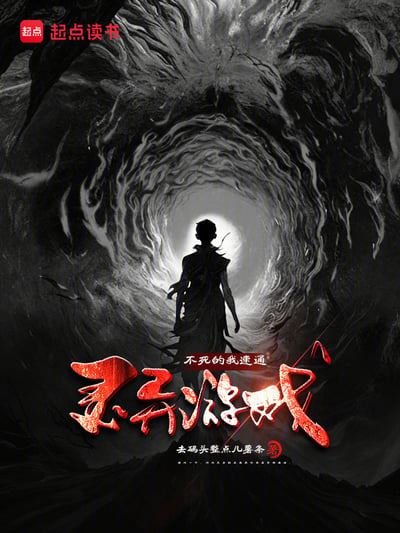
I'm Immortal, So I Speedrun Horror Games
Novel Info

Summary

... Read More
Wu Wang is a twenty-year-old man who possesses an anomalous ability: he cannot truly die. Since first discovering this condition at age eighteen, his body instantly resets to peak physical condition upon death, erasing any injuries or lost blood. This power has led him to adopt a nihilistic lifestyle, using self-inflicted fatal wounds to combat fatigue while studying and training with relentless efficiency. He lives with his second sister, Wu Xiaoyou, the only family member he cares for deeply. His existence is interrupted when a serial killer, Captain Li Guoqiang of the Major Crimes Unit, hunts him. Li Guoqiang wields a Spirit Tablet, a supernatural artifact that屏蔽s surveillance and traps victims in inescapable spaces. When Li attempts to murder Wu Wang in an escape room, Wu Wang allows himself to be stabbed repeatedly, only to revive and kill the captain in self-defense. From Li’s body, Wu Wang retrieves the Spirit Tablet.Upon touching the tablet, Wu Wang is forcibly pulled into the Spirit Calamity Game, specifically a pre-registration instance titled Hide-and-Seek. He awakens in a lecture hall alongside forty-nine other participants, all of whom he deduces are murderers armed with similar Spirit Tablets. The instance’s main quest is to find three Death Rules within a time limit. The rules are lethal and shift between day and night cycles. In darkness, a ghost kills based on sound, forcing participants into silence. In light, the ghost attacks via shadows, erasing those who touch agitated shadows. Wu Wang survives by using his undying trait as a testing mechanism, deliberately triggering deaths to map the rules while maintaining a facade of insanity to keep other players off-balance.As the instance progresses, the duration of night cycles shortens, threatening to eliminate the opportunity for accusation before the rules are fully understood. Wu Wang discovers a hidden fourth rule: the person who accuses the ghost at the microphone will also perish. Recognizing that none of the selfish murderers would sacrifice themselves, Wu Wang orchestrates the culmination of the instance. He confesses the rules to the others, luring them into a false sense of security while secretly fulfilling the personal main quest conditions. He accuses his own shadow, identifying the ghost within it. This act triggers the purge of all other participants, clearing the instance but marking Wu Wang for death.However, the instance collapses due to external interference from a higher entity, an abyssal god represented by a red eye in the sky. The system fails to delete Wu Wang, and he is forcibly logged out but retains his items and skills, including the Shadow Mutual Combat Art and Vision of Truth. He returns to reality to find that the Spirit Calamity Game has marked him with a quarantine tag. Furthermore, the Vision of Truth skill has corrupted the compensation item he received: a school uniform now stained with blood and bound to a deadly quest. If he does not wear the uniform at a specific high school within twenty-four hours, the instance will descend upon his sister, Wu Xiaoyou. With no choice but to comply, Wu Wang prepares to enter the Gao Shan High School instance to survive and protect his sister, setting the stage for his continued journey through the deadly games.

Latest Release
DateGroupRelease
2026-10-03summon by truck c246
2026-10-03summon by truck c245
2026-10-03summon by truck c244
2026-10-03summon by truck c243
2026-10-03summon by truck c242
2026-10-03summon by truck c241
2026-10-03summon by truck c240
2026-10-03summon by truck c239
2026-10-03summon by truck c238
2026-10-03summon by truck c237
2026-10-03summon by truck c236
2026-10-03summon by truck c235

Community Reviews

Rating(0 / 5.0, 33votes)
5 stars
0(0%)
4 stars
0(0%)
3 stars
0(0%)
2 stars
0(0%)
1 stars
0(0%)

Popular reviews

... Read More
Tuxing Sun opens the bathroom scene with "I was about to burst! Are those kids even students? They're like tireless newborns!" and I laughed out loud because that is SO specifically the kind of thing an exhausted guy would complain about during a break. It's funny, it's gross, it's human. Baili Dao's voice is completely different — analytical, precise, laying out theories like he's solving a puzzle. "We can see from the side quest that there's some kind of shameful secret between the Principal and our class teacher." This guy doesn't panic. He connects dots. Shi Gandang's dialogue is more measured, but when he describes seeing the Principal's malice, the narration shifts and you feel the weight of it. His abilities aren't explained through exposition dumps — they're revealed through what he says and doesn't say. But the real dialogue masterpiece is Wu Wang's parents. "Why won't you come and be with us? How can you live so happily, walking over our dead bodies?" There's something almost reasonable about their tone. They're not raging demons — they're hurt. That's what makes it terrifying. And Wu Wang's response, delivered quietly: "Even though you're a false illusion, I still want to say this. Mom, I've really missed you." One line. That's it. But it carries more emotional weight than any monologue could. He acknowledges they're fake and chooses to respond anyway. That's the difference between a good dialogue writer and a great one.
... Read More
This chapter is weirdly multi-speed and I love it. It opens at maximum velocity—skill descriptions, panel notifications, rapid-fire deductions about the fake instance, the uniform transformation—all of it hitting you like a fire alarm. Then it CUTS to this other woman, the one who built the instance, having a full meltdown on a villa floor, blood everywhere, typing out a ten-million-dollar bounty with cracked phone screen energy. That section is almost comedic in its extremity, which throws you off balance right when you need a breath. Then it cuts back to Wu Wang, who is just... eating instant noodles. On a balcony. Like nothing happened. The pacing here is doing something clever: it lets you forget how dangerous everything is by showing Wu Wang being domestic, training a cat, talking to his sister, before the knife appears and the whole thing snaps back into tension. And then—the chapter ends on a note that's basically a deep breath held too long. He locks his door, opens his computer, starts studying metaphysics, gets sleepy, and stabs himself to stay awake. No cliffhanger, just the quiet horror of someone who has normalized self-mutilation as a productivity hack. The structure is: explosion → absurdity → domesticity → quiet horror. Who writes like this?
... Read More
Let me just say this: the stakes in this chapter are so high they make my chest hurt. Wu Wang is trapped in a room with three ghosts who represent everything he cares about. Catch one and it disappears forever. Catch none and you die. The only way out is to kill yourself — and even that doesn't guarantee survival, because Teacher Yao is already outside waiting to collect the body. But the external conflict is equally tense. Baili Dao and the guys need to find the traitor teacher who's helping students escape, but they can't investigate the Principal directly because his malice level would wipe them instantly. "A total party wipe would be instantaneous." That's not a threat — it's a statement of fact. Qinghe Yikan literally crawls through the hallway bleeding from an eye socket and missing three fingers just to warn them: "The Little Black Room's legend... it's related to the students who jumped..." She collapses before she can finish. She knew she might not make it back to the infirmary and came anyway. And the most brutal part? Every single conflict is unwinnable in the traditional sense. Wu Wang dies. The escapees probably won't succeed — no one has ever escaped Gao Shan High School. The teachers are either complicit or too dangerous to confront. The suspense works because the author never lets up. Just when you think Wu Wang's arc is resolved (he chose death, he's dead), Teacher Yao shows up and the door opens by itself. What the hell opened the door? Is Wu Wang actually dead, or is this part of the game? The unanswered questions pile up faster than the body count. I am not ready for what happens next.
... Read More
The stakes here are NOT subtle and I love it. We open with people already dead. Not 'in danger of dying'—one person is ALREADY dead and the camera just pans over them like 'yep, gone.' Then within minutes of darkness, TWENTY MORE drop. No drama, no last words, just THUD THUD THUD and silence. The Death Rules operate with this terrifying indifference—they don't care who you are, what you did in the real world, whether you're holding a knife. You step wrong, you die. And the worst part? These are MURDERERS. People who've killed before. But supernatural death recontextualizes everything—'humans and ghosts. It was clear who should be afraid of whom, unless you were a complete idiot.' The livestream viewers betting on outcomes, the woman in the hammock treating this as a ritual ingredient collection—every layer raises the stakes. You're not just fighting ghosts, you're fighting an ENTIRE SYSTEM designed to kill you, and someone out there is watching for fun.
... Read More
Okay so let me just... I need to talk about this scene. I don't even know where to start. The way the author describes Principal Wang eating those tentacled ghosts was genuinely horrifying. Like, he doesn't just say he ate them — no, we get the CRUNCH. Crunch... crunch. That single sound on its own page, that's some next-level horror writing right there. And the visual of this fat, nouveau riche principal with rings on every finger, jiggling as he walks, looking like some corrupt school administrator you'd expect at a private academy — and then he just EXPANDS into a mountain-sized Fierce Ghost and starts feasting? The contrast between his ordinary appearance and what he becomes is chef's kiss. Absolutely chef's kiss. But here's what really got me — the atmosphere shifted so smoothly. One moment they're running down those stairwells, counting floors, and you can feel the desperate hope building. Grade 12 Office. Safety. Then the door creaks open on its OWN and everything just... drops. The silence he creates isn't just lack of noise — the wind stops, the leaves stop rustling, even AIR itself freezes. Only four people can move. That's not just a power display, that's pure cosmic dread. And the dorm scene? The chain dragging? Snort-khhrrr-snort? The shadow pressing its face against the observation window? I actually had to pause and look around my room. This author understands that the scariest moments aren't always the big transformations — sometimes it's the quiet, patient thing checking every door in the dark while you're pretending to sleep. Then there's the morning. The air-raid siren wake-up bell. Of course a ghost school's alarm sounds like an air raid siren. That detail alone tells me everything I need to know about this world. It's not spooky for the sake of it — every environmental detail reinforces the oppressive, institutional nightmare that this setting is.
... Read More
This cafeteria scene in Chapter 58-60 is absolutely terrifying! The author completely transforms what should be a mundane school setting into something nightmarish. One moment it's lunchtime with students eating quietly, the next it's chaos as Baili Dao gets attacked and the contagion spreads. The visual details are so vivid I could almost smell the blood on that pristine white floor. The tray clattering, the chill running down Baili Dao's spine - those small sensory moments build dread better than any jump scare. And then the real horror hits: the infected students don't die, they TRANSFORM. Their skin splits open, blue tentacles sprout, rainbow-colored gore everywhere. This isn't just violence - it's body horror that violates everything normal. What makes the worldbuilding work so well is how the author establishes rules before breaking them. We learn about the school's oppressive atmosphere, the clocks on every wall, students glued to books while walking. Then the rules shatter when a simple tray bump triggers death. The contrast between order and chaos makes the horror hit harder. The cafeteria itself becomes a character - that cacophony of ticking clocks, the oppressive lunch rush, the sudden transformation into a hellscape of frenzied ghosts. It's like watching a peaceful day turn into a nightmare in real time. The author understands that the most terrifying scenes happen in places where you feel safe.
See all reviews

Custom lists

See all custom Lists