I’ll Make Him My Favorite!
+Add to Custom List
Genres:
Novel Info
  • Author:
  • Status:Ongoing

Summary

... Read More

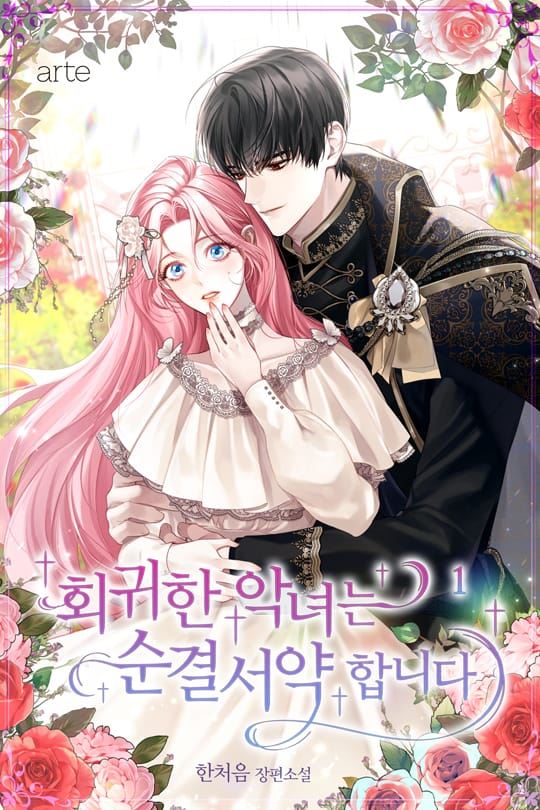
Jang Hye-a, a South Korean archery athlete, awakens in a dense forest with no memory of how she arrived. She possesses an unfamiliar bow and realizes her surroundings are not her own world. After saving a masked, injured man from a beast, she escapes the forest with his help. Servants soon locate her, addressing her as Lady Eloa Rumania. Upon collapsing, she learns she has transmigrated into the body of Eloa Rumania, a character from a romance fantasy novel titled "The Lady Who Holds the Leash." Eloa had attempted a soul-swapping ritual to escape an arranged marriage to the predatory Marquis Ter Giuo, a plan that inadvertently brought Hye-a into this world. Hye-a discovers that her favorite character, Siobhan Akane, exists within this novel as a gentle knight, and she decides her new goal is to marry him.

Hye-a navigates her new life as a noblewoman, enduring the persistent advances of Ter Giuo, who coerced the original Eloa into the engagement for family gain. At an imperial social party, Hye-a seeks to break off the engagement. During the event, she encounters Duke Eden Cler Hylus, the novel’s cold and terrifying antagonist known as the "Black Rose of Enchantment." To evade Ter Giuo, Hye-a hides behind Hylus and presses her thumb to her own lips, mimicking a kiss. Hylus interprets the gesture literally, captures her hand, and kisses it himself, creating a scandalous misunderstanding. When Ter Giuo confronts them, Hylus intimidates the marquis, leading to rumors that Hye-a seduced the duke. Hye-a confronts Hylus at his residence, demanding he take responsibility for the defamation. Hylus, intrigued by her audacity and recognizing her archery skills from the forest incident, proposes a contract marriage instead.

Hye-a agrees to a two-year marriage of convenience to facilitate her divorce and eventual union with Siobhan. Hylus assists in ending her engagement to Ter Giuo, and they proceed with preparations for their own ceremony. During the journey to the temple for the engagement ritual, their carriage is ambushed by bandits in a dangerous forest. Siobhan Akane, who is serving in the ducal knighthood under Hylus rather than the imperial order as in the original novel, rescues Hye-a from an arrow aimed at her chest. The battle disrupts the timeline significantly; Hylus reveals that Siobhan’s transfer to the imperial knighthood is delayed, indicating the story has diverged from its original plot due to Hye-a’s presence.

Amidst the attack, Hye-a’s communication stone, a gift from Hylus, is shattered by a blade, releasing a burst of magical energy that enters her body. She collapses and wakes in the ducal residence, where the duke’s physician, Schmitz, discovers that Hye-a possesses an extremely rare constitution capable of absorbing magical energy from stones. This condition explains why she did not die when the stone exploded but also warns that excessive exposure could be fatal. Hye-a realizes her arrival has altered the novel's events, particularly regarding Siobhan’s career trajectory and her own magical potential. Hylus questions her knowledge of future events, suspecting she may be a spy, but she attributes her insights to dreams. He ultimately chooses to trust her, and the engagement ceremony is held shortly after, solidifying their alliance as they face the unknown consequences of their changed destiny.

Latest Release
DateGroupRelease
2026-10-03dusk blossoms c29
2026-10-03dusk blossoms c28
2026-10-03dusk blossoms c27
2026-10-03dusk blossoms c26
2026-10-03dusk blossoms c25
2026-10-03dusk blossoms c24
2026-10-03dusk blossoms c23
2026-10-03dusk blossoms c22
2026-10-03dusk blossoms c21
2026-10-03dusk blossoms c20
2026-10-03dusk blossoms c19
2026-10-03dusk blossoms c18

Community Reviews

Rating(0 / 5.0, 36votes)
5 stars
0(0%)
4 stars
0(0%)
3 stars
0(0%)
2 stars
0(0%)
1 stars
0(0%)

Popular reviews

... Read More
The four directional gardens sequence is one of those moments where the worldbuilding sneaks up on you and hits like a truck. Four gardens, each with flowers that carry symbolic meaning — roses for love and passion to the north, nasturtiums for loyalty and victory to the south, carnations for health and respect to the west, and acacia for friendship and loyalty to the east. This isn't just decoration; it's a language. Every step Eloa takes through this estate is mapped with meaning. And then the eastern garden reveal — white acacia blooming densely across the ceiling, artificial moonlight pooling on a dome-shaped pergola that looks like it was designed specifically for romantic declarations. "Even love that does not exist would come into being" — and right there, Siobhan is standing. The author sets up this almost fairytale atmosphere and then drops your protagonist's actual emotional chaos right into the center of it. But the worldbuilding doesn't stop at flowers. Alb's exposition about the great noble families is seamlessly woven into the garden tour. The Istria family's intellect and foresight, the Hylus bloodline's physical superiority and natural charm, the Herrmann family's financial genius — each dynasty's traits explain why certain marriages make political sense and others don't. When Alb casually mentions that strategic marriages happen once every six generations, and that this year was supposed to be Eden's turn, the entire political landscape of Ermensel becomes suddenly visible. The engagement isn't just personal; it's a seismic shift that upended centuries of tradition. And the ducal residence itself — ceilings and floors decorated with unified but varied art, works by famous painters hanging along walls, an outdoor greenhouse and indoor garden — this isn't just a house, it's a living museum of power and taste.
... Read More
The wisteria garden scene is everything. Like, the author just drops this one detail and suddenly the whole atmosphere shifts. "Not long after leaving the dining room, a small garden with wisteria in full bloom caught my eye. Perhaps it showed that my heart had been captured by those wisteria blossoms. My footsteps slowed without my realizing it." This is Loa experiencing something genuine—beauty stopping her in her tracks—and it's framed as her heart being CAPTURED. Not by Eden, not by the political situation, but by WISTERIA FLOWERS. And then Dias tells her this is "a garden the late Duchess cherished very much." Eden's MOTHER's garden. She's walking through HER space, and Eden finds her there, and the whole emotional weight of that location just... hangs in the air without anyone saying a word about it. Then there's the moonlight detail. So many times I noticed the moonlight reference—it's not accidental. Eden's hair "turned silver beneath the moonlight." His eyes "resembled moonlight." There's this whole ethereal quality to how he's described in this chapter, like he's almost not entirely human when the moon is involved. The Hylus bloodline bewitchment Alb mentioned—could that be connected to the moonlight imagery? Is there a literal supernatural element or is it just atmospheric prose doing heavy lifting? Either way, it works. The dining room scene is also surprisingly vivid. The steaming food, Alb's skillful service, the servants chatting about the master and prospective mistress—the whole household feels ALIVE. This isn't just a castle with NPCs; it's a place with history, with people who care about their lord, with a late duchess whose memory lingers in garden paths. Alb's twenty years of service matter. The fact that he was the servant Eden saw last time (when Loa first arrived) creates this through-line of continuity. And the forest earlier—though we only see it through Eden's POV—there are these sharp, violent images: Loa's slender fingertips trembling, the bandit's blade, the transport magic stone inside the carriage that he had to retrieve. The chaos of it contrasts so sharply with the quiet garden scene. One moment he's ordering mass executions, the next he's chasing his fiancée through flowering vines because she won't meet his eyes. The imperial palace summons is mentioned but not described—we're told the emperor is "about ready to die of curiosity" about the engagement, which tells us everything about the political stakes without needing a full court scene. The world feels lived-in because we get these fragments: a mother's garden, a butler's twenty years of worry, a duke who hasn't slept on his sofa in fifteen years, a prospective duchess who gets assigned a knight who turns tomato-red when Loa kisses her hand. "The late Duchess. That would be referring to Eden's mother." This small realization from Loa—connecting the name to the person—gives us access to the history of this house without an info-dump. We learn about the late duchess the same way Loa does: through fragments, through garden paths, through the quiet spaces where memory lingers. It's atmospheric storytelling at its finest. The setting isn't backdrop—it's emotional architecture.
... Read More
This whole section moves like a rollercoaster that someone keeps pulling the emergency brake on and then suddenly accelerating again. You start with the aftermath of the engagement ceremony — relatively calm, lots of dialogue-driven exposition about the bandit attack and Ter Giuo's involvement. Eden's matter-of-fact delivery of "I extracted their testimony and had them all killed" is such a casual way to dispose of people it immediately recalibrates your understanding of who this man is. Then we get the garden tour, which is slower, more atmospheric, and deliberately designed to let you breathe. Alb's narration about the noble families feels almost gentle in its pacing. Siobhan's entrance lands perfectly here — after all that setup, he appears like a light breaking through. Their conversation is warm, funny, emotionally rich. And then BAM. Eden walks in. Right when she's just had this beautiful moment with her favorite character, the romance plot slams back into her face. But the real pacing masterstroke comes at the end. She starts connecting dots — Herrmann, the name, the female lead's surname — and her thoughts race faster and faster until the prose itself seems to panic. "Good heavens. The story of the novel is changing." Every previous assumption she'd built her strategy on is unraveling in real time. The engagement she planned to divorce in two years was supposed to be with Hesse Herrmann's family. The original meeting between Eden and the female lead hasn't happened yet. And the divorce plan? Completely irrelevant if the whole narrative has already shifted. The chapter ends mid-thought with Eden asking "What do you mean by 'how it was supposed to be'" and that unfinished question hangs there like a blade. Perfect cliffhanger. The pacing here knows exactly when to speed up and when to linger, and it never lets you settle into any single emotional register for too long.
... Read More
Okay so Siobhan. SIOBHAN. You know that tragic supporting character you always wished had a happier ending in the original novel? He literally CRASHES into the heroine in this scene like some kind of knightly anime protagonist. The author did NOT come to play. Let's talk about that first impression moment because omg. She's extending her hand for a polite handshake — normal social behavior, you know? — and Siobhan just GRABS her and pulls her into his arms like 'arrow incoming, sorry not sorry.' And then an arrow WHISTS past where her chest would have been if he hadn't moved. That is the most aggressive, most efficient, most romantic rescue in the history of romance novels and I am HERE for it. But here's what actually got me — Siobhan is wearing the ducal knighthood uniform instead of the imperial one. That's a MASSIVE deviation from the original story. In the book, he only joins the imperial knighthood AFTER meeting Hesse Herrmann, and Hylus was the one who originally sponsored him based on his battlefield performance. So something is seriously different now. Either the timeline has shifted because Eloa didn't marry Ter Giuo, or Hylus made different choices than in the original. This means Siobhan's entire arc is changing — he's still loyal to Hylus, still a commoner who rose through the ranks, but now he's physically present in this moment protecting Eloa instead of being a background tragedy. And then — AND THEN — when a bandit charges at Siobhan from the side and knocks him flying, leaving Eloa defenseless with a blade coming at her... he still tries to get back to her. I swear to god. The man is a saint. He's a tragic hero who's supposed to die sad and alone in the original, and here he is throwing himself into danger for the heroine without hesitation. Meanwhile Hylus is interrogating Eloa like a suspicious husband and Siobhan is just over here playing bodyguard. The dynamic between these three is going to be SO interesting. I need to know what happened between Hylus and Siobhan that changed the timeline, and whether Siobhan's loyalty to Hylus will ever be tested. Also can we just appreciate that Eloa immediately asks about Siobhan's well-being before asking about her own injuries? Priorities.
... Read More
The word 'responsibility' gets thrown around like ten times in these chapters and it's clearly doing heavy thematic lifting. At first it seems like a comedic misunderstanding—she accidentally kisses him, he demands accountability—but by the end it transforms into something far more significant. She says 'I have someone I must take responsibility for' and means both her family AND her own survival. Hylus claims the same word to describe his claim on her. Both are using it as justification, but neither is entirely wrong. The blue butterflies in the greenhouse fascinate me too. They're beautiful, delicate, ethereal—and they're in a GLASS enclosure. Trapped beauty. Our protagonist is literally hiding behind someone's body while butterflies flutter around, and later she visits the Hylus estate which the world fears. There's a parallel between freedom and imprisonment running through every scene. And the newspaper headline—'Duke Hylus Spends a Night of Pleasure with an Engaged Woman, Shattering Her Betrothal!' The media as a weapon. Ter Giuo didn't just lose face; he weaponized scandal to destroy her reputation. The theme of women being judged differently for the same actions is right there in that headline. She's the one 'shattering' her betrothal, but the duke gets the romanticized treatment. The founding families themselves represent different kinds of power—money, diplomacy, war—and our protagonist is caught between them all. She's a count's daughter with no real political leverage trying to navigate a world where every interaction is a transaction. The moonlight, the greenhouse, the gloves, the whispered threats—it all builds this world where love and danger are indistinguishable.
... Read More
Okay, I need to talk about the atmospheric whiplash in these chapters because wow. We start in a forest—dark, dangerous, immediate. The prose is visceral: 'a chilling sound of a beast reached my ears from nearby. Grrrr.' Just that single onomatopoeia and you're hooked. The archery competition scene is where the worldbuilding really expands and becomes its own kind of character. The hunting competition detail is *everything*. I love that the first prize is a dead rabbit on a string being dragged through a windy field. It's so mundanely hilarious and so perfectly captures a world where nobility treats deadly archery as entertainment. 'This distance must be about twenty meters or so. It was far too close a distance for a South Korean archery athlete.' The narrator's internal voice here—comparing the competition to actual professional archery standards—creates this incredible contrast between the mundane and the extraordinary that defines the entire tone of the book. Then we cut to the imperial social party and the world just EXPANDS. There's a whole ecosystem of noble families, political marriages, social hierarchies, and regional territories all implied through casual dialogue. 'The daughter of Marquis Tepe,' 'Count Rumania,' 'Viscount Russell'—names drop and the world builds itself. The text never gives us an info dump. We learn about the society by watching people navigate it. I also want to highlight the forest exit scene. The protagonist helps the masked man out, he says 'Someone will come soon,' and then walks away into the shadows. This moment—where the world reveals its first layer of conspiracy (the beast wasn't native to this country)—feels like the story is winking at the reader and saying 'you're not just in a romance novel anymore.' The setting itself is becoming a puzzle, and that transition from simple forest survival to political intrigue is seamless. No genre whiplash, just organic expansion of the world's scope. I'm invested.
See all reviews

Custom lists

See all custom Lists