I Would Rather Die Than Become the Crown Princess - Reviews

I Would Rather Die Than Become the Crown Princess
+Add to Custom List
Sort
Add review
... Read More
I need to talk about this one scene where Blair is sitting under a willow tree after riding, and the prose just... stops and lets you breathe. 'She closed her eyes and listened to the wind for a while.' Just that. Three sentences doing a thousand miles of work. It's the only moment in this whole chapter where the palace walls seem to dissolve, and Blair is just a person instead of a political pawn. The green scent of grass and new growth brushing her cheek—suddenly I could feel it. I could feel the spring air. And then Kalintz appears. Of course he appears. The riding competition scene is another standout visually. All of these nobles in their riding habits, the horses, Lake Reuden in the distance as the finish line. It reads like a painting. And then there's the description of Kalintz on Nox: 'Horse and rider alike looked like something out of a painting.' The author keeps coming back to visual art metaphors for him, which is deliberate and interesting. He's framed as something to behold, almost objectified in his own right. The Leaves of Tamira bracelet description was genuinely mesmerizing too. An emerald said to hold 'a mysterious light like the leaves' of the sacred oak that grew where the goddess died. That lore dropped in naturally through dialogue, not exposition dumps. The fact that it's split into three pieces—a bracelet, earrings, a necklace—already feels like foreshadowing. Three pieces, three potential recipients. I'm already theorizing and I haven't even finished this chapter.
... Read More
Okay can we talk about how Blair clearly has zero illusions about this man? The chapter opens with her calling him 'completely out of his mind' and honestly, same, Blair, same. But here's the thing that actually made me sit up—she's not wrong. The man postponed a banquet multiple times just to wait for her. Multiple times! That's not interest, that's something else entirely, and Blair's own maid even notices it before she does. Lucia, bless her, is practically vibrating with excitement about the princess consort rumor, but Blair? Blair looks like she just received a death sentence. And that's the most realistic reaction I've ever seen in fiction. If some guy kept bending rules and moving dates around just to include you, I'd be suspicious too. Then there's Kalintz himself. His interaction with Blair in the stables is... something else. He watches her with this unreadable expression, teases her about being ill when she clearly isn't, and then casually mentions that he brought Nox out specifically because Fitz was there. 'Chances can be made.' What does that even mean, Kalintz?! Are you plotting or are you flirting? Because it feels like both simultaneously, which is honestly terrifying and fascinating. The dynamic between Blair and the other frons is also gold. Olivia? Absolutely venomous wrapped in silk. 'He has always been so fair-minded' my ass—she just manipulated a compliment into a subtle dig at Blair's expense. And Tilda? Poor thing is gripping those reins so hard her knuckles are white. Everyone has their own agenda around this prince, and Blair is somehow both the center of it and completely unaware of half the currents swirling around her.
... Read More
That amethyst brooch. Kalintz sitting alone in his study, turning it over and over, remembering Blair insisting it wasn't hers while secretly stealing glances at it. The woman who claimed zero interest in becoming princess consort is holding onto some dead man's keepsake and refusing to admit it matters. What is that? Grief? Nostalgia? A first love she can't outrun? "Allen, was it." Two words. That's all. And Kalintz's reaction—his amber eyes darkening, an "irritation he couldn't account for"—that's not jealousy of a rival. That's jealousy of a ghost. Someone who's already gone but still occupies space in her mind. The brooch becomes this tiny, heavy symbol of everything Blair hasn't told him, and he hates that he can't solve it by ordering people around. Then there's the Leaves of Tamira itself—three pieces divided among three women, but the necklace goes to Blair, not Olivia, not because of competition results but because of moral courage. The Queen explicitly frames it as a lesson: "The friendship and courage you showed that day, I hope you will carry that with you and never lose it." But then she adds, almost as an afterthought, that she hopes the others will also cherish one another. Translation: stop being vicious crows at each other. And the Queen herself—a former frons who survived bloodshed in the royal family—is handing out jewels while weaponizing gentle words. "It seems to make young ladies, in the bloom of their youth, far too aware of each other as rivals." She knows exactly what she's doing. The system is being questioned even as it continues. Brilliant.
... Read More
What I love about this section is how the danger keeps shifting. One moment it's real physical danger—wolves in the hunting grounds, horses losing control—and the next it's social danger, which is somehow worse in a palace setting. Being carried bridal-style in front of everyone? That's a death sentence for Blair's plan to stay invisible. The rumors are already spiraling. But the stakes escalate quietly. The Queen giving Blair the necklace isn't just a reward—it's a target painted on her back. You can feel it. Olivia's gaze going cold. Selina's envy thick enough to cut with a knife. Every act of kindness in this palace comes with a price tag. And Kalintz's private conflict? Oh, it's there. He's investigating an unnamed lake because Blair muttered a name she shouldn't have known. He doesn't understand why it bothers him. "Was it because he still hadn't gotten the answer he wanted from her?" The author doesn't spell it out—they just let the question hang there like a blade over someone's throat. The tension between what's said and what's meant is where this book lives. Blair pretending she doesn't care about the wager while obsessing over it for a week. Kalintz pretending he doesn't care about the brooch while ordering a full investigation. The Queen pretending she's being warm while dismantling her rivals' positions with smile-faced diplomacy. Everyone is performing. Everyone is hiding something. And I am HERE FOR IT.
... Read More
Let's talk stakes because they are quietly massive. On the surface, this is a 'light riding competition.' Sounds fun, right? Wrong. The prize is the Queen's most treasured jewel, the Leaves of Tamira bracelet. Not just any jewel—a piece of royal regalia with actual mythological weight behind it. Winning it would elevate Blair's status overnight. Losing (or refusing) would mark her as ungrateful or unworthy. But the real stakes are invisible. Kalintz arranged this entire event knowing exactly who would show up. He specifically invited others to dilute the competition so Blair wouldn't look bad. That's not just consideration—that's control. He's curating the narrative of how she appears in front of everyone. Every angle is accounted for except Blair's own agency. And then there's Blair's actual goal here, which the author handles perfectly. She doesn't want the bracelet. She's not riding to win. She needs 'a chance to speak with Prince Kalintz' alone and 'find out, once and for all, what he actually wanted from her.' She walked into a trap she didn't know was a trap, hoping the trap would give her answers. The dramatic irony is killing me. The final image—Blair realizing Kalintz isn't in the starting line, scanning for him, and then his voice speaking from right beside her—'Looking for someone, it seems'—the tension there is surgical. She came looking for an opening to confront him, and he was standing three feet away the entire time. The predator-prey dynamic just flipped again, and neither of them seems to notice.
... Read More
Okay so this whole sequence is genuinely well-constructed. You've got Blair sneaking out of the palace, the riding competition as cover, her going off-trail into the forbidden hunting grounds, finding the cub, getting cornered by wolves, and then—BAM—the mother leopard showing up. That escalation is chef's kiss. The author doesn't waste time. Blair could've just turned around, but her character (we learn) literally cannot walk past something in distress, and that's what sends her down this path. Which means every subsequent danger is earned by her choices, not contrived. Smart writing. But the layer I love most is the reveal happening mid-action. We get her memories of her sister Rania, the suicide, the promise broken, and Allen—all while she's literally about to die from a wolf attack. That simultaneity is brilliant. The inner monologue "Blair, don't live the way I did. Find your freedom. And live enough for both of us." hits different when you're watching the wolf's fangs coming. Then she closes her eyes and—THE ROAR. The cliffhanger on the mother leopard is exactly the right note to end on. It resolves the immediate threat but opens three new questions simultaneously. Did the mother recognize the cub? Is Blair now indebted to a wild beast? What happens when Kalintz processes this? The plot here is doing double duty—advancing the external story AND peeling back Blair's backstory. That's efficient storytelling.
... Read More
This chapter does something I rarely see done well—it transitions from romantic comedy energy to survival thriller without any tonal whiplash. Let me break it down: It opens with them bantering. She's embarrassed about sneaking out. He's teasing. There's wind, red hair, flushed cheeks. This is basically a meet-cute if you squint. Then two sentences later and Blair is gone, taking a different route. Kalintz finds the brooch. He's suspicious. Good, we're building intrigue. Then the riding competition starts. Fast. Action. She bolts into the forest. The atmosphere shifts—the trees grow dense, the path goes untended, Fitz's condition worsens. The author controls the temperature here by introducing unease before introducing danger. That's craft. The wolf pack appears almost casually, but by then we're already tense enough for it to land. And the fight sequence? Short, brutal, efficient. Three wolves down before Blair can fully process it. Kalintz is competent and fast, which makes the danger real—we know he's good, so when the blind-spot wolf appears, we believe the threat. Then the stillness. The slow acceptance of death. The sister. Allen. Him. And the roar. Each beat earns its place. No filler. No dragging. The only section that lingers is Blair's death-approach monologue, and that's deliberate—it's the emotional pause before the payoff. The structure is basically: curiosity → attraction → danger → near-death → revelation. Tight.
... Read More
I need a minute. I genuinely need a minute. Blair's final moments before the leopard appears—this is one of the most heartbreaking sequences I've read. She's lying on the ground, the wolf is coming for her, and she's not even panicking anymore. Her hands stop trembling. She thinks of her dead sister Rania: "I was almost there. Almost living the way you wanted me to." She thinks of Allen, her secret lover (or was he?), and says "Looks like I'm following you after all." She's making peace with death. She's ready. And then the last thing she sees before her eyes close is Kalintz running toward her. Not her sister. Not Allen. The prince who's been poking and prodding and annoying her since chapter one. That is DEVASTATING. Because it means somewhere beneath all her schemes and secret escapes and guarded conversations, HE is the person she notices in her final moment. And he— Kalintz, who she called reckless, who she argued with, who carried her through a wolf pack—was sprinting toward her with desperate urgency. Neither of them said it. Neither of them had to. The black leopard cub in her arms, looking up at her with those golden eyes, reminded her of Kalintz: "Strange." She literally thought of him while holding a black-furred beast. While dying. The narrative is laying this SO thick and I'm here for it. "Shh... good. Just hold on a little longer." She says that to the cub. She was trying to save something while dying herself. That is WHO SHE IS. Even facing death, her first instinct is to protect the vulnerable. No wonder Kalintz couldn't look away.
... Read More
Can we just take a moment for the scene where Blair asks for the brooch back and Kalintz sees her looking at it? I swear to you I got genuinely warm reading that. Not because of anything dramatic—just because of the quiet devastation in Blair's voice. She stole glances at that amethyst brooch while her words kept shrinking smaller and smaller. And the narration tells us her green eyes looked just a little too tender. Kalintz notices. Of course he notices. He always notices everything about her. This is the kind of romantic tension that doesn't need grand confessions or dramatic declarations. It lives in the space between what they say and what they feel. He teases her. She gets flustered. He watches her leave and laughs to himself because he knows exactly what he's doing and also maybe—just maybe—he's the one who's more affected than he intended to be. The worst part emotionally is Blair alone at night, unable to sleep, turning over his proposal in her head. A contract marriage. Two years. Safety afterward. She knows it's a good deal. She also knows it's enormous. And underneath all of that rational calculation is this tiny, aching thought: if only Allen were here. We could have worried about it together. I love that line. It's so Blair. Even in a moment of romantic tension with a powerful prince, her mind goes to the man she loved and lost. That's not just character consistency—that's emotional honesty. She isn't ready to replace anyone. But she's also not immune to the pull she feels toward Kalintz, and that contradiction is where the real emotional story lives. There's also this undercurrent of fear that runs through everything. Olivia wants her destroyed. The queen is scrutinizing her. The whole palace seems to be turning against her. And into this vortex steps Kalintz offering safety in exchange for partnership. Is that romance? Is that manipulation? Maybe it's both. Maybe that's the point. The embarrassment she feels later, thinking about him sweeping her up and pressing his face close to hers—that's the most relatable thing in the whole passage. You know that feeling. You're trying to have a serious life-altering conversation and someone does something unexpectedly intimate and suddenly your brain short-circuits. Lucia notices her face is red and Blair denies it. Of course she denies it. I just keep coming back to how tender and terrifying this emotional landscape is. Blair is standing on a knife-edge between grief and possibility, between survival and self-respect, and Kalintz is the only one who seems to understand both the danger she's in and the person she actually is. That's intoxicating. That's also potentially very dangerous. And I cannot stop thinking about it.
... Read More
The dialogue in this passage is genuinely excellent, and I want to break down exactly why because it's easy to overlook how hard this is to do well. Kalintz has a very specific voice. He speaks in short, deliberate phrases with a teasing edge that never quite hides his intelligence. "Well. Your situation isn't exactly favorable for that." The pause after "well" is doing so much work—he's not actually considering her refusal seriously. He's Enjoying it. "Then don't make yourself so interesting." That line is pure Kalintz: technically advice, genuinely flirtatious, and delivered with such casual confidence that you can't tell if he means it or if he's toying with her. And that's the point. He's probably doing both. Blair's voice is equally distinct. She's internally chaotic but externally disciplined. When she's talking to Lucia, she lets the chaos show—muttering about princes dying and chewing her thumbnail and launching into wild theories. But in front of the queen, her dialogue becomes carefully measured. "I was walking in the garden alone." Five words that contain a lifetime of calculated omission. The shift in her speech patterns depending on who she's talking to is a masterclass in character voice. Lucia is the comic relief but she's not one-note. Her horrified exclamation about Blair's dark circles, her quick pivot to romance gossip, her genuine indignation at the poisoning rumor—she feels like a real person, not a plot device. And that moment where she starts to say something revealing about Blair's whereabouts and then catches herself? That's dialogue doing double duty: character development and plot complication simultaneously. The queen's dialogue is sparse and devastating. Almost every line is short. Almost every silence is loaded. "Is there something you cannot say"—that's not a question, it's a verdict delivered in question form. The author trusts the reader to understand that the queen isn't asking for information. She's announcing that she already knows Blair is hiding something. Even the librarians, who appear for maybe six lines total, have distinct voices. One is more incredulous. The other is more matter-of-fact. They sound like two different people gossiping, not like the author's mouthpieces. And the narration itself has a voice—wry, observant, occasionally breaking into Blair's internal monologue with lines like "Anyone who had seen her spin around and walk off without so much as a farewell would have been horrified." That's the author winking at the reader while staying firmly inside Blair's perspective. What strikes me most is how natural everything feels. No one sounds like they're reciting exposition. No dialogue exists purely to inform the reader. Every conversation advances character, relationship, or plot—or ideally all three at once. That's the kind of writing that makes you want to highlight sentences and show them to your friends.
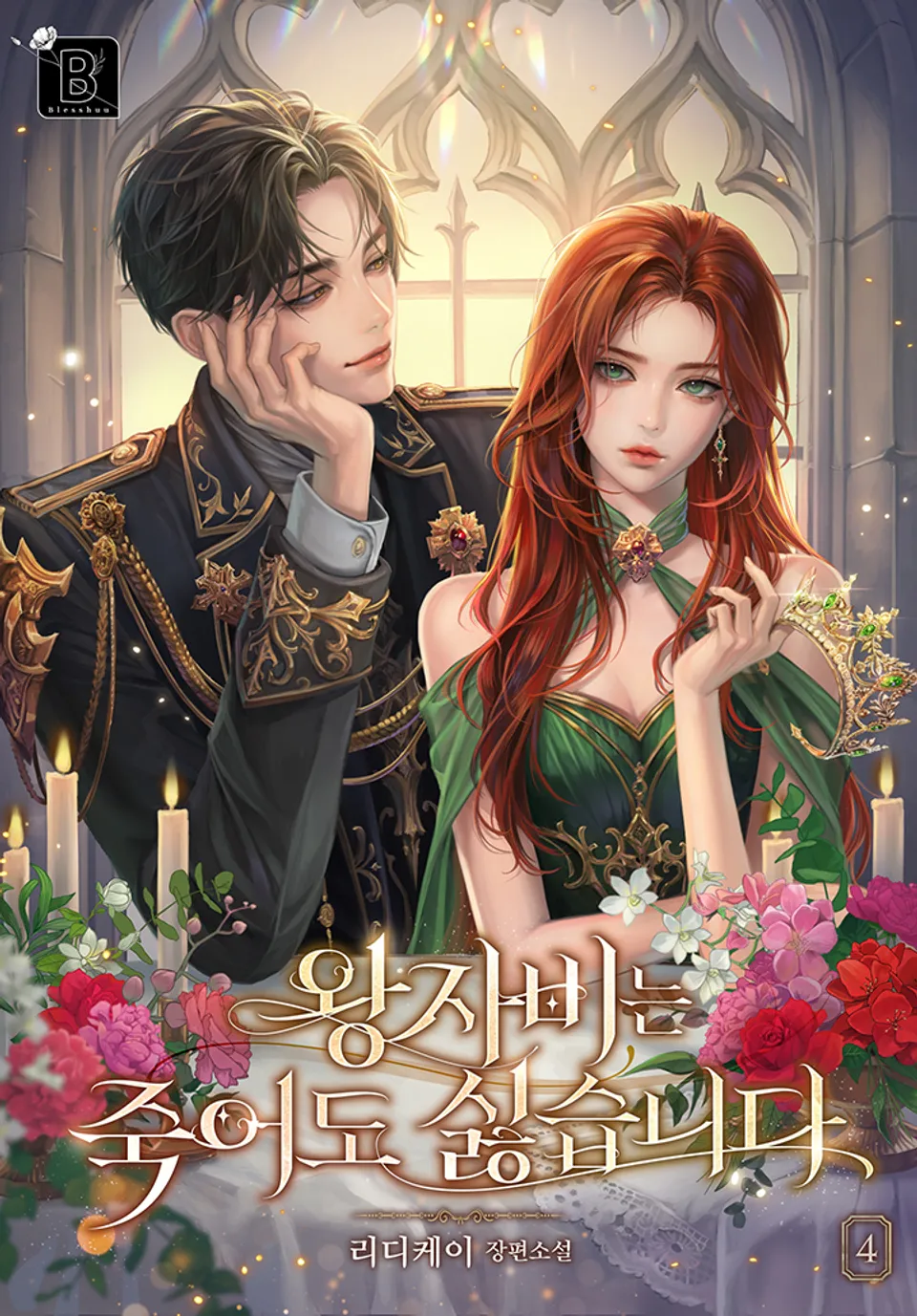
... Read More
Everything in this chapter is about horses and nobody seems to notice except maybe the reader. Blair's Fitz is freedom. It's the one thing in the palace that responds to her without calculating what it can gain. When she rides, she 'can breathe again.' That's not casual worldbuilding—that's her soul leaving her body for a few hours. Kalintz's Nox is completely different. 'Jet-black, glossy coat, exceptional build, and a grace that bordered on regal.' A horse that looks like royalty. And get this—they were raised in the same stable as children. Two animals from different worlds, bonded by proximity before being separated by duty. Now they're grazing side by side 'in perfect contentment' while their riders are anything but. The Leaves of Tamira bracelet ties into this too. A jewel born from a goddess's death, shaped like leaves from a sacred tree. Nature transformed into permanent, cold value. That's basically Blair's entire situation—she's a person being shaped into a political asset by people who see her as something to possess. And Kalintz himself? He keeps saying 'chances can be made' like fate is something you negotiate with. He's trying to engineer serendipity, which is both romantic and deeply controlling depending on how you look at it. The question the chapter keeps asking is: in a world where everything—including love—can be planned and orchestrated, where does genuine feeling actually live?
... Read More
Let's talk about Olivia for a second, because she is absolutely fascinating in this section and I want to unpack why. On the surface, Olivia is the composed, elegant girl who shows up at Blair's door trembling and crying. She just discovered her canary dead from the same poison that killed Anais. Anyone would be shaken. But here's the thing that keeps bothering me — the moment Blair reflects on Olivia and thinks, quietly, that Olivia was the frontrunner for princess consort after Anais. And then Olivia says it herself. Calmly. Almost clinically. That's not someone who's falling apart. That's someone who's calculating while also being genuinely afraid. Blair notices this. She thinks, She's something else. A different sort from Selina. And honestly? I agree. There's something unsettling about Olivia's fear — it's real, I believe it's real, but it's also wrapped up in ambition. She came to Blair specifically, not to Selina or Tilda. Why? Because Blair poses no threat. Blair is the safest person to confide in because Blair wants nothing from the throne. That's a smart move by Olivia, whether she's consciously aware of it or not. Then at luncheon, Olivia's behavior shifts completely. She goes from the girl who couldn't stop crying to someone wearing a face carved from stone, watching Selina perform her grief with an expression so cold it's frightening. Blair catches this and thinks the thought might cross her mind that Olivia could actually be connected to Anais's death. That's a serious accusation, even in Blair's head, and the fact that it occurs to her tells me everything about how unreadable Olivia has become. She's playing a long game and everyone around her is starting to feel it.

Leave a comment

You must be logged in to leave comments. or
