I Woke Up and Got Married - Reviews

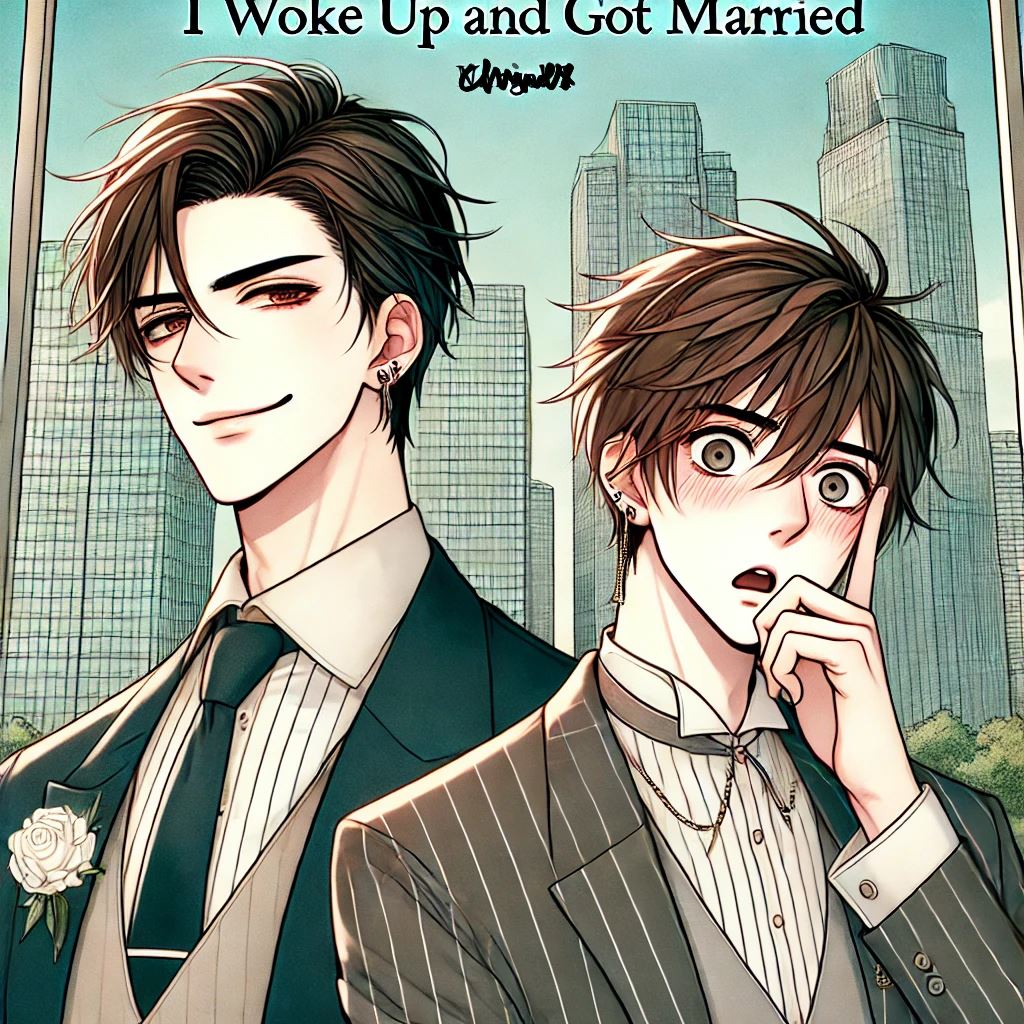
I Woke Up and Got Married
+Add to Custom List
Sort
Add review
... Read More
"The curtains hadn't been closed the night before, allowing the blazing sun to shine directly in. The golden light was blinding, and the combination of a hangover and the brightness made his head throb." This line. This single line. It does SO much work. You've got the hangover — physical discomfort already established — and then the sun入侵 like an unwelcome guest. It's almost comedic, this brutal morning light punishing someone who already can't handle reality. But it's also deeply intimate in its own way. We're in Chi Suinian's bedroom, the same room where everything happened, and now it's just... exposing him. No shadows to hide in. No night to protect his dignity. I also love the detail about the two pairs of black underwear tangled together on the floor. The author doesn't need to describe anything explicit — just those two identical pieces of fabric, indistinguishable from each other, and suddenly your brain fills in the rest. It's elegant. It trusts the reader. That's some serious cinematic economy right there. The moonlight versus scorching heat contrast from the previous night's scene bleeding into the bright morning is such a nice structural echo. Night was darkness and fire. Morning is light and pain. Both are intense. Both leave marks.
... Read More
The charity auction setting is doing so much heavy lifting here. On the surface it's glamour — black ties, silk suits, donors buying entry tickets like they're purchasing theater seats. But the author peels back the layers immediately. Those whispers from the upper-class crowd: 'What does charity have to do with them?' 'Can't wash off the smell of decadence.' These people funded the event AND look down on the attendees? The hypocrisy is so sharp it could cut glass. And then Ding Xuxing standing under the stage lights, that cheerful smile cracking when Tang Jin calls him a 'sleazy fox' — the whole performance of philanthropy falls apart in real time. The balcony scene is framed like a movie set too. Stone pillar, fruit candy wrapper caught in the breeze, Chi Mingyao's balding scalp gleaming under artificial light. There's a cinematic quality to how the author describes Chi Suinian leaning against that pillar, the candy dissolving on his tongue, the distance between him and his uncle physically represented by steps on marble flooring. When Chi Suinian straightens his wrinkled suit before walking away from the confrontation, that's a armor-recovery ritual. The event becomes this pressure cooker where every interaction is performed for an audience, even the private ones on the balcony. Even the 'private' number Ding Xuxing offers. The world feels incredibly lived-in because nobody in it is hiding their judgment.
... Read More
Okay I need to sit down after this chapter because my heart cannot handle the sheer density of romantic tension packed into these pages. So let me back up. Chi Suinian is absolutely fuming. He thinks Lu Zhiyue confessed to him as a joke, that he was set up, that this whole thing was some cruel prank. And then—BAM—Lu Zhiyue drops the bomb that he actually meant it, and has meant it since high school. Since THAT afternoon in the cafeteria when Chi Suinian told him to stop chirping around him. The way Chi Suinian processes this information is everything. He literally sits up in bed, stares at the bathroom where Lu Zhiyue is showering, and his entire world rearranges itself. The anger doesn't just evaporate—it transmutes into something else entirely. Something embarrassing. "I was talking about you." Two words. That's all it takes to dismantle three years of hostility, misunderstanding, and carefully constructed walls. And the flashback! Oh my god the flashback is peak romantic comedy energy. Lu Zhiyue essentially confessing by insulting him, and Chi Suinian taking it completely literally. They've been orbiting each other this whole time, misreading every single signal, and the tragedy and comedy of it both hit at once. But here's what really got me—the part where Lu Zhiyue says "I thought you were rejecting me." Of course. Of course he did. Because how could he know that Chi Suinian would have SMASHED him into a wall if he'd understood? That the silence wasn't rejection but pure unprocessed shock? And then Chi Suinian talks to Lu Heng afterward, trying to frame it as a hypothetical question about "a friend." The fact that he can't even say the name out loud tells me everything I need to know about where his heart actually is. Lu Heng nails it though: "Unless… you don't actually want to reject him." Can't believe I just said this about a character giving relationship advice, but Lu Heng is NOT wrong. The emotional whiplash from "I'm going to beat you" to "my ears are red at 19 degrees Celsius" is genuinely one of the best romantic beats I've read this year.
... Read More
I need to talk about how devastatingly sweet Lu Zhiyue is being while also absolutely tormenting Chi Suinian. Like, after everything—that whole scene where he's being so shamelessly provocative in bed, calling him names, pushing every button—Lu Zhiyue is the one who notices Chi Suinian is uncomfortable, who offers to run the bathwater, who checks his temperature with a cool hand on his forehead. "Are you feeling unwell?" That's the thing that got me. It's this tiny moment of genuine care buried under all the chaos, and it completely disarms you as a reader. Chi Suinian is convinced this is just a transactional arrangement, that once the contract ends they should part ways forever, but Lu Zhiyue doesn't seem to agree with any of that framework. He calls it a marriage. He says their certificate matters. He won't let Chi Suinian walk away. And Chi Suinian keeps telling himself it's just sex, that he's not scared, that he's in control—but his internal monologue is literally fighting with itself. He calls himself an idiot. He corrects his own thoughts about what they are. The emotional whiplash between his defiance and his vulnerability is exhausting to read and I cannot stop. "What are you afraid of? You're still recovering—I won't touch you. No need to be so defensive." Lu Zhiyue literally names the fear Chi Suinian won't admit to himself. That hit different.
... Read More
The dialogue in this passage is genuinely excellent and I want to highlight why. First, Chi Yu's voice—his internal monologue reads like a younger sibling who's been hanging around rough crowds his whole life but still gets intimidated by his own brother's world. His shift from 'Mr. Lu' to 'Lu-ge' is a tiny detail but it tells us everything: he's trying to bridge the gap, to be friendly, to not seem threatening. 'Um… Lu-ge,' he says, and suddenly the power dynamic shifts. It's natural, it's human. Then Lu Zhiyue—his lines are razor-sharp but always with a layer underneath. 'Probably my looks' is the perfect deflection. It sounds arrogant but it's actually a joke, a way to not have to say the real answer. And when Chi Suinian fires back with 'Don't you have a mirror at home?'—that's a married couple's burn. You know each other's buttons. But the real star here is how Chi Suinian's dialogue changes depending on WHO he's talking to. With his parents? Cold, legalistic, almost mocking—'I personally signed the documents.' With Lu Zhiyue? There's history in every loaded remark. 'You used to always praise my looks. You even said that whenever we argued, you'd slap yourself after seeing my face.' That's intimate. That's people who know each other's worst and best stories. The narrative voice itself is also doing heavy lifting. It's third-person limited but it dips into different characters' heads—Chi Yu's fear, Lu Zhiyue's calculations, Chi Suinian's simmering rage. The author doesn't announce these shifts. We just SLIDE into someone else's perspective mid-scene and it works because the emotional logic is clear. One line that made me laugh out loud: 'Slap your damn uncle.' That's the narrator stepping in with attitude. The voice isn't neutral—it's opinionated, it's on team Chi Suinian, and that makes reading it feel like having a conversation with someone who gets it.
... Read More
The pacing in this chapter is absolutely surgical and I have so much respect for how the author controls the rhythm. It starts deliberately slow—with office gossip, employees whispering about who this fierce-looking young man might be, building this false sense of normalcy. Then Lu Zhiyue walks through the office and everything shifts instantly. The employees freeze, the atmosphere tightens, and suddenly we're in serious territory. Chi Suinian slams the documents down and the pace accelerates into pure conflict. The author then does something brilliant—they slow the scene down during the wall pinning moment. Everything becomes almost suspended in time. Lu Zhiyue calling Chi Suinian's name by itself, the hoarse quality of his voice, the way Chi Suinian notices these tiny details despite being furious. It's like the story hits the brakes right when it should be speeding up, and that creates this unbearable tension. Then Chi Suinian delivers his jerk line and the author lets it sit there for a beat—"He felt a guilty sense of conscience being interrogated"—before Lu Zhiyue fires back with the bed comment. That back-and-forth builds and builds until Chi Suinian shoves him away, and then there's this strange calm after the storm. The collar-fanning moment, the pen-breaking, the trash-can toss—all of these smaller actions serve as exhales between the big emotional punches. And then the ending knock on the door? Perfect cliffhanger placement. Just as the reader thinks they can catch their breath, BAM—new complication. The structure is so intentional that every moment feels earned, every pause serves a purpose, and the chapter ends exactly where it should. Masterclass in pacing.
... Read More
The atmosphere in this chapter is absolutely TOP TIER. Let me just paint the picture for anyone who hasn't read it — dim lighting, the chaotic energy of a Jin City nightclub, dice clattering, music thumping, and this golden boy of the Chi family slouching around looking like trouble in human form. The author really knows how to set a scene. Chi Suinian 'slouched casually' with his healing legs hidden, the 'wild and carefree Chi family heir from a year ago' — we immediately understand this is someone who presents a certain image to the world while secretly dealing with physical vulnerability. And then Lu Zhiyue walks in. The text specifically calls out how 'upright, out-of-place' he looks among these privileged kids. He's described as famous 'purely for his personal achievements,' making him 'a high, untouchable figure.' The visual contrast between these two — one lounging and provocative, the other standing rigid and commanding — is so cinematic. I could literally see this as a film scene. The dim light catching Chi Suinian's 'striking features' making him look 'almost devilish,' the stranger licking his red lips — these details create a world that feels alive and dangerous. And that final image of Lu Zhiyue walking through stunned onlookers with Chi Suinian draped over his shoulder? Pure movie moment. The author doesn't over-describe but every detail chosen serves the mood perfectly.
... Read More
"Lu Zhiyue, if you dare leave another mark on me, I'll carve a few on you too!" The chapter ends with THIS line and I am DEAD. Chi Suinian goes from full-on screaming accusation to that razor-sharp comeback like it was nothing. The man is wild. But let's talk about how natural the dialogue flows throughout this thing. The bathroom banter at the start: "Where are you going?" "None of your—" [cut himself off] "The bathroom. You gonna come there too?" "I'm feeling the urge as well. Why don't we go together?" This is peak couple energy. Lu Zhiyue is being deliberately provocative, Chi Suinian is flustered and furious, and they're both completely aware of what the other is doing. The subtext is thicker than the plot text sometimes. Then Qin Suitian's phone call shifts gears completely—professional, efficient, but with that warmth underneath when he says "Chi Group is half my blood, too." And then the Ning Chen wedding trip reveal? Qin's voice going soft, tender, saying he can't risk losing him again—that's a completely different register. The author can write serious AND sweet without it feeling forced. And Lu Zhiyue during the confrontation—calm, measured, almost helpless: "That's a public fact, Suinian. You have your own circle—you can ask people for the truth." He's not defending himself aggressively; he's genuinely confused why Suinian doesn't already know. The dialogue here does double duty—it's both plot information and character revelation. Lu Zhiyue isn't the kind of guy who lies or manipulates conversations. He states facts. Which makes whatever happened even more devastating. Every character has a voice that doesn't blur into the others. The author clearly understands how different people speak under pressure.
... Read More
Let me just say this upfront: the stakes in this chapter are doing triple duty and the author doesn't even seem to notice how hard they're working. On the surface level, we have the Ding family situation. Ding Xuxing is detained. The evidence is irrefutable. The father's bribes, the corrupt dealings, the specific details down to transaction methods—it's comprehensive enough that it reads like the author spent actual time mapping this out. When Chi Suinian reads it and immediately types "I won't let anyone who wants me dead walk free," that's not just plot progression. That's a character making a choice that will define everything that comes after. But the real tension—the actual edge-of-your-seat stuff—is happening in the bedroom doorway. While the political thriller subplot is being resolved with a folder and a text message, the interpersonal conflict is reaching a fever pitch that has nothing to do with crime or revenge. Chi Suinian walking into that guest room and finding decay instead of renovation. That's the conflict of a man who trusted someone to fix something, and it wasn't fixed. The broken glass door. The mold. The heat pouring in. It's all of that accumulated neglect made visible. And then the date—a voluntary act from both parties, under unusual circumstances, with all the baggage of their history between them. What are they actually agreeing to here? A conversation? A confrontation? Something neither of them can name yet? The sun outside is scorching enough that the author specifically notes anyone going out in it must be a god or an idiot. And these two are about to walk into it together, on a date, with enough unresolved tension between them to power a small city. I am not okay.
... Read More
I need to talk about how this chapter plays with pacing because honestly it's masterful. We start with Chi Suinian walking away from Chi Kaidong - that cold elevator moment where his expression immediately turns cold? Chilling. Then we get this whole sequence at Xiaoyaoke that seems like it's just going to be character interaction, right? But wait for it... Ding Xuxing shows up and suddenly everything changes. The author is basically building this tension like a rubber band - first Chi Kaidong's return, then the creepy Yuan An situation, then the whole drink pressure thing, and finally Ding Xuxing exploding. Each scene adds another layer. And that ending? 'Chi Suinian! What will it take for you to stop?!' - I literally had to put the book down and breathe for a second. The way the author controls when to reveal information is spot on. We don't know what Ding Xuxing did wrong, we just see his reaction, and now I'm dying to find out what happened. That's how you keep someone turning pages at 2 AM.
... Read More
Let me just say this upfront: the pacing in these chapters is absolutely masterful and I am here for every second of it. The chapter opens with a car ride that takes an hour and a half. AN HOUR AND A HALF. And the narrator makes it clear—Lu Zhiyue is driving at a "ridiculously slow pace." Most authors would rush through this. Instead, we GET the slowness. We feel the drag of those minutes. And honestly? It works perfectly because it mirrors the emotional state of both characters. Nothing is being resolved here. Nothing is being said directly. They're just... moving forward at the speed of whatever unspoken thing is passing between them. Then Chi Suinian falls asleep. Wakes up. The garage scene. And BOOM—the confession reveals start landing like dominoes. Each beat follows the last with impeccable timing: 1. Chi Suinian accuses him of messing with him 2. Lu Zhiyue denies it 3. Chi Suinian calls him out on the person he likes 4. Lu Zhiyue admits it and then... drops the truth bomb 5. The flashback 6. The realization on BOTH sides 7. Chi Suinian's meltdown 8. The blanket retreat 9. Lu Zhiyue's devastating final line: "Then chase everyone else away, and torture me." NINE beats in one scene. And yet it doesn't feel rushed at all. Why? Because the author knows exactly when to linger (Chi Suinian lying awake at 10pm, mentally replaying everything) and when to let dialogue carry the weight. The pool hall scene acts as a perfect pressure valve—a comedic counterpoint to the bedroom confrontation that still advances the emotional arc. Lu Heng's conversation gives Chi Suinian (and us) space to process what just happened without the intensity of the bedroom scene. And that ending line from Lu Heng? The text cuts off mid-sentence almost deliberately. "But if you're this torn up over it, then maybe—just maybe—you've..." I needed more. Immediately. This chapter structure is exactly why I can't stop reading.
... Read More
Alright let's talk about the absolute WAR zone that is this negotiation scene because the stakes are genuinely escalating in every direction at once. On the surface, it's about a bank password. Chi Suinian needs it for business reasons. Simple, right? Wrong. Because underneath that is the entire power dynamic between these two men. Lu Zhiyue is holding something Chi Suinian desperately needs, and every condition he adds shifts the balance further in his favor. This isn't just a transaction — it's control. But the REAL stakes are internal. Chi Suinian is struggling with amnesia AND attraction simultaneously, and neither is on his side. He remembers enough to feel the pull — "Warm skin, damp kisses, burning breaths against his ear" — but not enough to understand why he's fighting himself this hard. When he thinks the water was drugged and gets frustrated, that's actually him trying to rationalize away feelings he can't process. The amnesia isn't protecting him; it's making everything more confusing. And Lu Zhiyue? His conflict is subtler but just as sharp. He could just refuse to give the password and watch Chi Suinian suffer. But instead he's negotiating, teasing, offering alternatives — "I can give you the password directly. I don't need you to kiss or hug me." He's giving options, backing down from his original demand. That's not a man who wants to dominate; that's a man who wants access, connection, proximity. The conditions are elaborate借口 to stay close. The third condition hasn't even been revealed yet and I am already sweating for both of them. Who is going to crack first?

Leave a comment

You must be logged in to leave comments. or
