I Seduced the Male Lead’s Lover - Reviews

I Seduced the Male Lead’s Lover
+Add to Custom List
Sort
Add review
... Read More
Okay so the terrace scene. I need to just... sit with this for a second. Luca pushing Maria into that semi-elliptical space with the marble and moonlight—on paper it should be romantic, right? Classical setup. But it's not. It's a predator circling its prey and he KNOWS she knows it. The most chilling part isn't the venom—it's the kindness he wraps around it first. He asks if she's uncomfortable. He smiles. He compliments her. And each gesture is a thread tightening around her throat. She literally thinks his kindness might be 'the last kindness before killing her.' That line gave me actual goosebumps because it's so clearly how trauma rewires your nervous system—you can't trust softness when your body remembers pain. And then the switch flips. One moment he's gentle, the next his mask cracks and that 'chilling hatred' surfaces. His question—'How have you been all this time?'—is supposedly casual but it's loaded with eight hundred pages of fictional history. She's carrying guilt for sins committed by someone else's hands, and he's punishing her for it anyway. What killed me was the ending. He hides his true feelings AGAIN, puts the mask back on, says 'I'll be waiting' like some kind of threat wrapped in courtesy, and walks away. She's left standing there realizing she's essentially signed her own death warrant. 'I'd be opening a coffin lid soon'—no exaggeration there.
... Read More
This section is a masterclass in controlled pacing. The author gives us three distinct POVs—Maria, Luca, and Claude—and weaves them together like threads in a tapestry. Maria's internal monologue opens things, and her desperation to fix things feels almost comedic at first, then suddenly heartbreaking. Then we cut to Luca, bitter and calculating, and suddenly we understand why Maria's apology hits different. The structure here is brilliant: each chapter ends on a note that makes you want more. Claude's rage, Luca's isolation, Maria's anxiety—they all converge toward this inevitable collision. The scene where Claude confronts Luca is the emotional climax of this section, and it's paced perfectly. We start with his anger, move to Luca's discomfort, escalate to the mana reaction, then drop into an almost intimate moment that's somehow more disturbing than any fight. The return to Maria and her nervous preparation for the supplier meeting creates this wonderful tension. You know they're going to meet, you know it won't go well, and you can't look away. What I found especially effective was how the author uses silence. Luca not looking at Claude. Maria not daring to drink the tea. Those moments of restraint build more tension than any dialogue could. The chapter endings are particularly strong—the Luca ending with his blood and his bitterness, the Claude ending with his patient, dangerous patience. This pacing made me lose hours of my life.
... Read More
The pacing in these chapters is honestly incredible. It's so weirdly specific. You've got this enormous, looming dread about having to apologize to Luca, right? She's been putting it off for two weeks. She's swollen-faced from lack of sleep, dressed in gloomy clothes, practicing her pitiful look. It's heavy. It's stressful. And then the author just… stops. She takes Maria to this gorgeous mansion, and suddenly we're spending time on the curtains. And the carpet. And those chair armrests with every stitch visible. I literally laughed out loud. It's such a deliberate choice. By focusing on Maria's internal monologue about the price of the decor and the deliciousness of the tea, the author gives us a breather. It's comedic relief, sure, but it's also character development. Maria is still Maria—distractable, obsessed with practical things even in dire situations. The line about the tea being 'extremely precious tea they could drink once just before death' is hilarious and heartbreaking at the same time. It shows her mindset: she hoards beauty and comfort because she never expects to have them. Then, just as she's getting comfortable (and getting free premium tea!), the scene shifts abruptly. Two weeks later. The text says 'But Maria was still putting off…' and the pace slows down again into this heavy, sticky introspection. She's staring out the window, drinking honeyed water essentially, dreading the appointment. The transition from the bright, sparkling Sackelpine mansion to the gray, dull palace reception room is jarring in a good way. It mirrors her emotional drop. And then the pacing accelerates again with Ian's arrival. Short sentences. 'Crash.' 'She felt increasingly strange.' The silence stretches. The author controls reader engagement through these rhythm shifts perfectly—letting us breathe, then tightening the noose.
... Read More
Okay can we just talk about how this whole sequence completely rewired how I see Luca? Like, throughout the earlier parts of the book he's all cold and calculated and furious at Maria, right? But here—this one scene just absolutely demolishes every wall he had up. The way the narrator keeps circling back to the word 'curse' is wild because it's clear Luca himself is trying so hard to convince himself this is punishment, not desire, when clearly his body has already made up its mind. And Maria! The fact that she's physically struggling, saying 'wait,' but then also having her body respond like that—it's so messy and human. There's this moment where she thinks 'maybe it's not entirely my fault' and immediately thinks 'but that's just her argument, and not a very convincing excuse.' That self-awareness! She knows she's making excuses. She knows she enjoyed it. The text literally says 'they explored each other more passionately than anyone'—that's not something that happens when you're forcing someone. Their bodies were screaming things their minds were too panicked to admit yet. The aftermath is what gets me though. She's lying about it with Sylvie, hiding marks, and then she gets the letter and she's literally saying goodbye to her maid like she's a death row inmate. That desperation, that 'it was a good life' moment—that's not just guilt. That's her heart already doing backflips even though she's terrified. This isn't a romance that's easy. It's feral. It's ugly and hot and complicated and I can't stop thinking about it.
... Read More
Okay so I need to talk about how this chapter just masterfully pivots. Maria's entire plan is to meet Noah Sackelpine, plant a good image, and use him to indirectly heal her reputation with Luca. Classic, smart, step-by-step scheming. And then BAM—Emily walks in. The author completely sidesteps the expected scene. Instead of a potentially cringey or awkward meeting with Noah, we get this bizarrely polite verbal dressing-down from his sister. It's brilliant because it actually serves Maria's goal in a roundabout way. Emily's hostility makes Maria seem like a harmless, confused victim rather than the poisoner everyone remembers. I love that the 'twist' here isn't some big reveal, but a social deflection that Maria immediately latches onto because she's desperate for any win. But then the plot does this thing where it takes away one threat only to replace it with a much scarier one. Luca isn't at the palace; he's at House Aemon. And he *wants* her to come. The moment Ian says 'I'll be going now' and leaves her there, the plot tightens like a spring. We know Maria is terrified—she's literally praying to God, thinking about being cursed into a butterfly or whatever. Yet she goes. Why? Because the plot has put her on a track where standing still is worse than facing the lion. The ending where they take her to an innermost, deserted room instead of the research lab is such a classic horror-adjacent trope, but it works perfectly here. It signals that this isn't a normal social visit anymore; it's a confrontation she can't prep for. The author really knows how to keep you turning pages by constantly shifting the ground beneath the protagonist's feet.
... Read More
There are so many layers of symbolism here I can barely contain myself. The supplier relationship itself is such a rich metaphor—it's about intimacy, trust, and the willingness to give of yourself to someone who may not deserve it. Maria offering her life as payment for sins she didn't commit speaks to something deeply human about guilt and redemption. And Luca? He's trapped in his own cycle of resentment, feeding on another person's power while hating the source. The mana that reacts on its own when Claude appears—that's not just magic, it's emotion made visible. His body reacting before his mind can stop it. Maria's transformation is perhaps the most powerful symbol: the timid villain becomes the person who actually takes responsibility, while the protagonist's friend remains cold and distant. The sword master who wields overwhelming power but can't wield tenderness without destroying everything he touches. And those tears—jewel-like tears in Luca's reddened eyes that Claude wipes away—what a devastating image. It represents everything neither of them can properly express. The contract between Maria and Luca, conducted in whispers and secrecy, is such a perfect symbol for how trauma and obligation bind people together. And Claude's patience, waiting like a predator—not rushing, not forcing, just knowing that eventually Luca will come to him—that's the darkest form of love I've seen in this story. This book is really about identity, consequence, and the terrible beauty of human connection.
... Read More
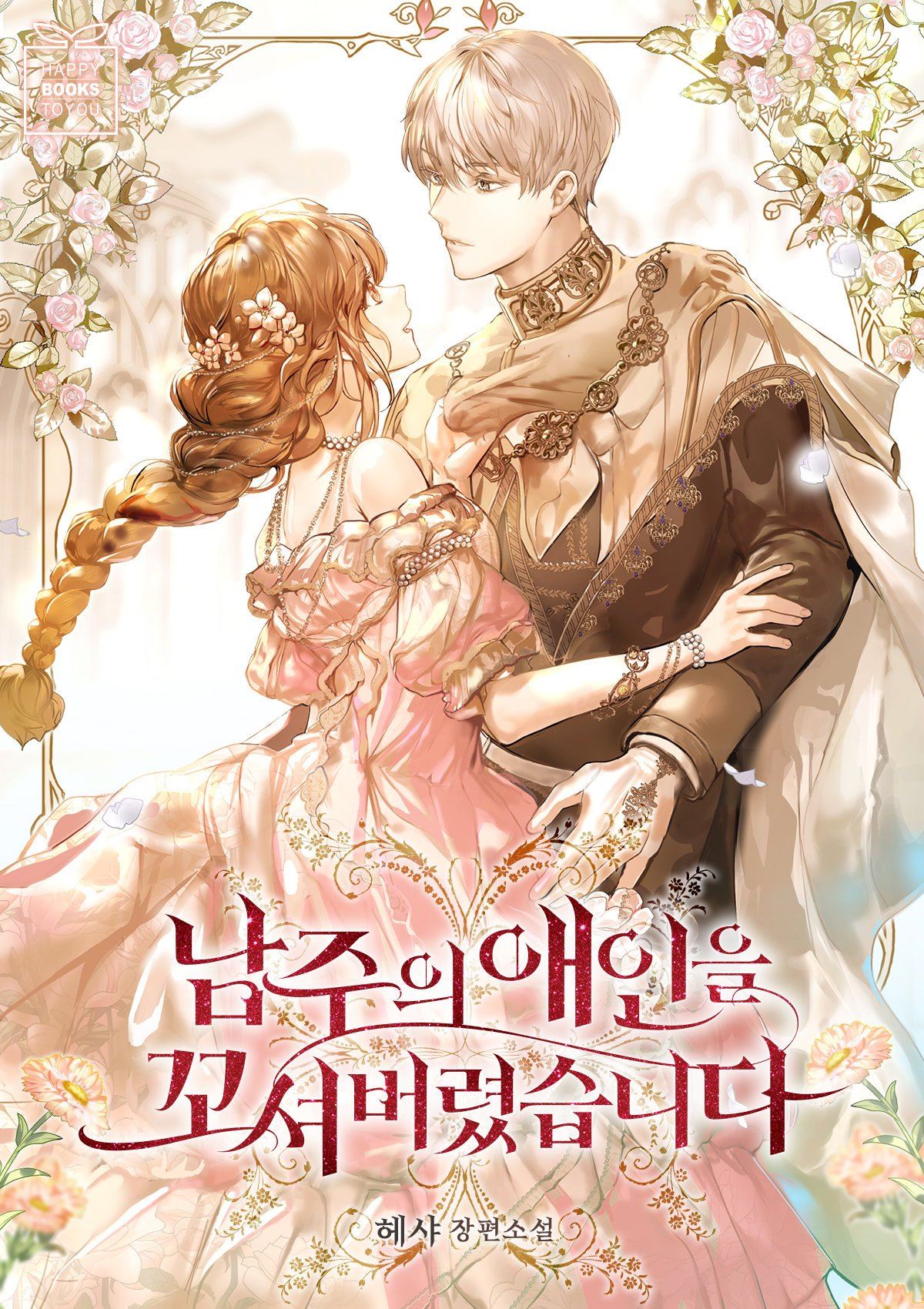
There's this one sequence in chapter seven that I need to sit with for a minute because the sensory writing is next level. Maria is getting ready for her debutante ball, and instead of just saying 'she put on makeup,' the author takes us through her entire preparation ritual. The pale pink dress that 'had milk mixed in'—already I'm visualizing this fabric, this color, this weight on her shoulders. The half-updo with crystal ornaments and 'thin crystal strands [hanging] between the strands of hair.' That's not just description, that's a painting. I can see the light catching those crystals. I can see Maria's brown wavy hair in this specific, deliberate arrangement. And then—the mascara. Oh god, the mascara. The author doesn't just tell us she made cosmetics, they take us back through the entire creative process: crushing powder, mixing it with toner, experimenting with cream, the petroleum-residue-and-coal-dust historical reference that nearly blinded her, the panda-eyed failures. This is worldbuilding THROUGH CHARACTER ACTION. We learn about this world's technological limitations, we learn about Maria's patience and curiosity, we learn about the gap between her modern knowledge and this world's resources—all without a single exposition dump. 'Today she'd finally take the stage with that result.' That line hits different because everything we just read was building toward this moment of self-made confidence. She didn't inherit beauty tools or buy them. She INVENTED them. Four years of boredom and isolation turned into practical knowledge that she's now deploying for a single night of social re-entry. The café scene from chapter one also deserves mention—the milk tea spilling on the floor, the noble ladies watching with 'great interest,' the ambient murmuring that grows louder as the confrontation escalates. Small details like 'her former fiancé's face turned red and blue' paint this entire social ecosystem in miniature. We understand immediately: this is a world where reputation is currency, where public scenes have real consequences, where a single gesture (the middle finger) can either destroy you or liberate you. The world feels lived-in because we see it through Maria's hands—her makeup, her teacup, her crystal hairpins, the cold milk tea she regrets not throwing harder.
... Read More
I can't stop thinking about the symbolism in this batch. It's layered but subtle. Take the tea, for instance. The 'Romantic' tea from Mount Chainey isn't just a plot device for comedy; it's a symbol of the refined, unreachable world Maria is trying to infiltrate. Emily offers it generously, almost pityingly. Maria drinks it with religious devotion, saving the leaves for her great-grandchildren. It represents the grace and elegance she was denied by her past actions and her low-status family. By accepting the tea, she's accepting a temporary truce with the nobility, even if it's just liquid. Then there are the carriages. Early on, Maria watches 'gleaming carriages that looked better than House Certi's' pass by. This establishes the visual hierarchy of the world. The Sackelpine mansion itself is a U-shape, a giant embrace or perhaps a cage, sparkling in the sunlight. It's beautiful but imposing. Maria is an outsider looking in, both literally and metaphorically. Her fascination with the 'every stitch of the craftsman's touch' on the chair armrests shows her yearning for perfection and order, things her chaotic, villainous past destroyed. But the deepest symbol is probably the darkness and light contrast. The Sackelpine home is full of sunlight and gold; the palace is barren and practical; House Aemon is dark, isolated, and filled with ominous crashes from behind closed doors. Maria moves from light to shadow. And the 'sweet' taste of the tea? It's a cruel juxtaposition against the bitter guilt she's carrying. The author seems to be saying that in this world, sweetness and poison are often served in the same cup. Maria is trying to carve out a better path, but she's constantly reminded that her past is a curse she can't just drink away. The imagery of her face being 'swollen and dull' versus the glittering mansions reinforces her internal state: she feels ugly and broken inside a world that values surface beauty above all.
... Read More
Okay can we just talk about Luca for a second because this man went from wanting to murder Maria to literally devouring her like she's the last meal on earth and then acting all bitter about it?? The man is a walking contradiction and I love it. First of all, he literally thinks about killing her and then five seconds later his body betrays him completely. The scene where he opens his eyes mid-act and immediately closes them again because he's overwhelmed with regret?? The author wrote that in a way that felt so raw and awkward and真实. He hates what happened, he resents her for the poison, he feels disgusted—and yet his own mana CHOSE her. That's the whole dynamic right there. He's furious at being dependent on the very person he despises. And then he shows up at her house like a neglected boyfriend?? 'You ignored my contact.' Maria's inner monologue calling him an 'unnecessarily obsessive male lead' had me dying. The power balance between them is so messy. He has all the social authority, the family prestige, the magical superiority—but functionally, he NEEDS her. She knows it too, which is why she's being deliberately difficult. That's her power in this relationship. The moment where he says 'you should have let me go' and she retorts 'You were the one who held onto the person trying to leave' is such a perfect exchange. Both of them are right. Both of them are also wrong. They're both trapped by choices they made, and now they're stuck navigating the aftermath together. I also want to talk about how Luca's anger isn't just at Maria—it's at himself. He's mad that he lost control, that his body responded to HER of all people, that after all his research and suffering, the answer turned out to be someone he considers his enemy. That self-directed fury makes him so much more interesting than a generic brooding male lead.
... Read More
Let me just say this upfront: the pacing in these first seven chapters is dangerously good and I don't trust it. Chapter one is basically a masterclass in establishing crisis. We get three major blows in rapid succession—bad boss, ghosting boyfriend, transmigrates into a porn novel—and by the end of the chapter we're already in the middle of Maria's engagement being destroyed. There's no warm-up, no gentle introduction. The author just PULLS THE RUG and says 'welcome to your new life, try not to die.' And it works because Maria's voice is so immediate and funny that you forget to be overwhelmed. 'I should've dumped it on him when it was hot'—that's the kind of line that makes you keep reading because you're invested in HOW this woman will survive. Chapter two does something I really appreciate: it slows down. After the emotional whiplash of the breakup, we get a chapter focused on Maria processing alone, remembering what she knows (or doesn't know) about the world, and slowly building her understanding of the danger she's in. The pacing breathes here. We learn about the BL novel's structure, about Luca and Claude, about the poison incident—and it all comes through Maria's increasingly panicked internal monologue rather than an info-dump. 'Kyaa. Not just the gong, but people who were somebodies in the country would fall for Luca at first sight.' The 'kyaa' interjections are such a perfect character voice choice. They're silly, they're genuine, they remind us this is a woman who READ TOO MUCH BL AND NOW HAS TO LIVE WITH IT. Chapters three through six compress time efficiently—we see the engagement dissolution, the social fallout, the growing relationship with Sylvie, Maria's decision to stop hiding—and then chapter seven explodes into action with the ball preparation. Each chapter ends on a note that pulls you forward: not always a cliffhanger, but always a sense that something is ABOUT TO HAPPEN. The structure is essentially: crisis → processing → acceptance → preparation → (implied) action. It's a classic hero's journey skeleton, but wrapped in contemporary snark and transmigration chaos. And the fact that the protagonist's main 'power' so far is her modern knowledge and her willingness to make her own mascara? That's fresh. That's fun. That's the kind of pacing that makes you open another chapter and then another and then realize it's 2 AM.
... Read More
I need to talk about Sylvie because the author just slipped in the most wholesome character dynamic and I wasn't ready for it. Maria is this sharp-tongued, slightly unhinged transmigration survivor who just got her engagement blown up by a coward who confessed his homosexuality to her like it was some kind of personal offense, and what does she do? She gets mad, she flips him off, she goes home and processes it. But then—Sylvie appears. And suddenly Maria has to shift from 'how do I survive this world' mode into 'how do I not cry in front of my maid who's basically my sister' mode. The scene where Maria tells Sylvie she's giving up on marriage and might just enter a monastery and Sylvie starts crying and Maria has to comfort HER is genuinely touching. It's funny, it's warm, and it grounds the whole fantasy premise in something real. 'Miss, I'm already married, so I can't go to the monastery with you...' That line wrecked me a little. This woman who's been by Maria's side through four years of isolation and social ostracization, who stays anyway, who massages her scalp and secretly buys her ball gowns and cries because she's worried about her best friend's future—this is the kind of friendship that makes transmigrating into a hostile world feel less lonely. And then there's Maria herself, who I was initially reading as this sassy revenge-girl energy, but she's got layers. She's self-deprecating to the point of almost self-loathing ('Stupidly only followed my instincts'). She's generous with her time and energy despite having nothing—she spent days inventing cosmetics in a world that doesn't have them, not for profit, but because she was bored and wanted pretty things for herself. That's the kind of detail that tells you who she is: she doesn't hoard her creativity, she uses it for small beauties. When she tells Sylvie 'don't cry, you're making me upset,' that's not dismissiveness—that's someone who's learned to mask her own vulnerability to protect the people she loves. The fiancé, meanwhile, is just... pathetic. Not even worth analyzing. 'I love Luca Clodence' said with a straight face while offering Maria's family farmland as a consolation prize. He's not a character, he's a plot device dressed as a person.
... Read More
So I need to just sit with what the author did with the worldbuilding here because House Clodence's magic system is genuinely clever. The founder basically cursed his own descendants—not out of malice, but to prevent the family's devastating power from being weaponized recklessly. That's such a cool concept. The most powerful magic family in the world had to limit themselves because unchecked power would've gotten them (and everyone else) killed. It adds this whole layer of historical tragedy to what could've just been a generic 'magic system' explanation. And the supplier mechanism—where the mage literally can't use magic without another person channeling mana into them—creates the perfect structural tension for the story. It's not just a romantic trope grafted onto a fantasy setting. The romance IS the plot mechanics. Maria isn't special because of destiny or bloodline; she's special because her body chemically/magically complements Luca's ruined mana circuit. That's why he couldn't fix himself through any of his tens of thousands of research iterations. It's deeply personal and deeply physical. The detail about Luca being able to use magic without a supplier as a child because his mana was so overwhelmingly powerful is also great worldbuilding. It explains why he was called a genius AND sets up why his fall from grace was so catastrophic. His entire identity as the strongest Clodence mage was tied to his independence, and now he's dependent on the one person he can't stand. I also loved the image of Luca finding cracks in the wall from uncontrolled mana after leaving the reception room. His emotions physically affecting his power output—that's a really visceral way to show internal turmoil without having characters just sit around and explain their feelings.

Leave a comment

You must be logged in to leave comments. or
